
By Mia Gooch
With sweeping countryside views and ancient Roman ruins, traveling along
Hadrian’s Wall is an unforgettable experience.
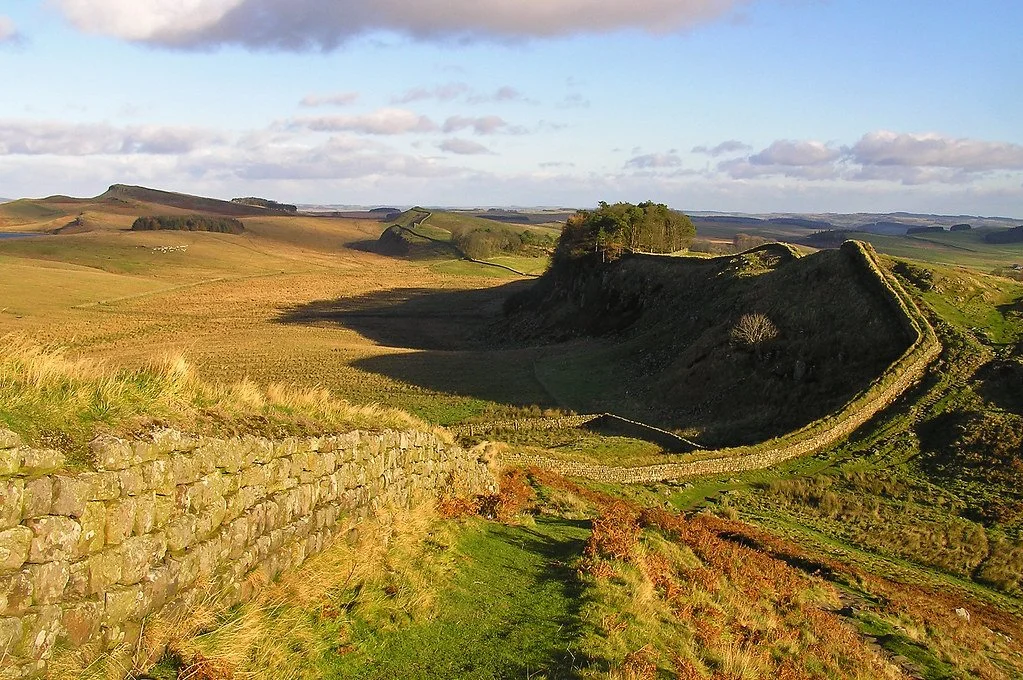
The view along Hadrian’s Wall toward Housesteads Roman Fort. Ian Robertson. CC BY-NC 2.0.
The gravel footpath was slicked over with mud from that morning’s rain. Using stone slabs that made up a crude stairway, I pulled myself upward and clambered into a narrow lookout spot. Once I straightened up from the entryway, I stood with my hiking boots firmly planted on the damp ground and felt a cool October breeze crash over me. I could see pastures all around for countless miles. In a field below, cows fed on the dewy grasses, and behind me, on either side, a wall stretched toward the horizon to become a mere band of stone.
From my vantage point on a ridge, it was surprisingly easy to imagine what the scene might have looked like centuries ago.
The wall that stretched behind me was Hadrian’s Wall. Built almost 2,000 years ago, it was once a massive Roman military barricade, unyielding and fortified, made of stone and turf. Now, it is a UNESCO World Heritage Site; its remains are an emblem of English history.

A view of Hadrian’s Wall under a blue sky in England. Dave Sanderson. Pexels.
While it may sound like a singular destination, Hadrian’s Wall is not a one-and-done stop. The wall itself extends across 73 miles of northern England, through the countryside, cliffs and heathland of Northumberland, and past the distant cities of Newcastle and Carlisle. People can explore these various regions of the wall when planning independent or guided outings in the crisp English air.
Once travelers have arrived at a wall access point, they can wander down the sloping grasses to the paths running alongside the wall and begin their exploration. The journey alongside the wall can be tailored to each traveler’s plans and wishes. Those who find themselves wanting a biking excursion can coast along the Cycleway. For hikers wanting to follow the wall, Hadrian’s Wall Path National Trail follows the sloping curves of the stone-and-turf remains, with the path continuing downwards to the coasts at the wall’s conclusion. Visitor centers and archaeological sites, such as Housesteads Roman Fort and Chesters Roman Fort, are stationed at different path entry points for travelers inquisitive about history.
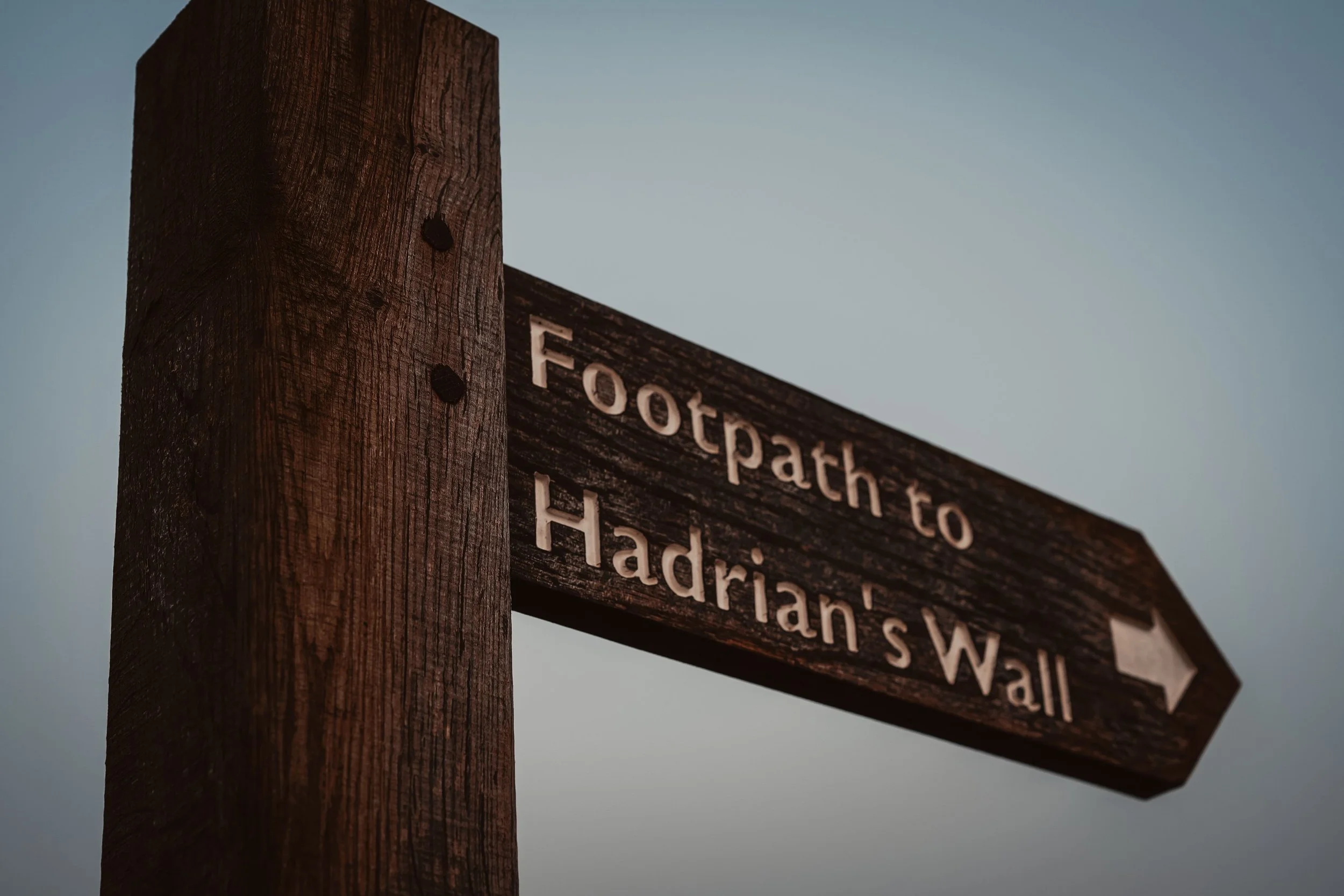
A sign directing visitors toward a Hadrian’s Wall footpath. Nathan J Hilton. Pexels.
Unlike many protected heritage sites, where a barrier of some fashion restricts site access, the only barrier at Hadrian’s Wall is the wall itself. While much of the structure has collapsed with time and ancient conflict, visitors can amble around the forts’ remains and hike alongside the artifact itself.
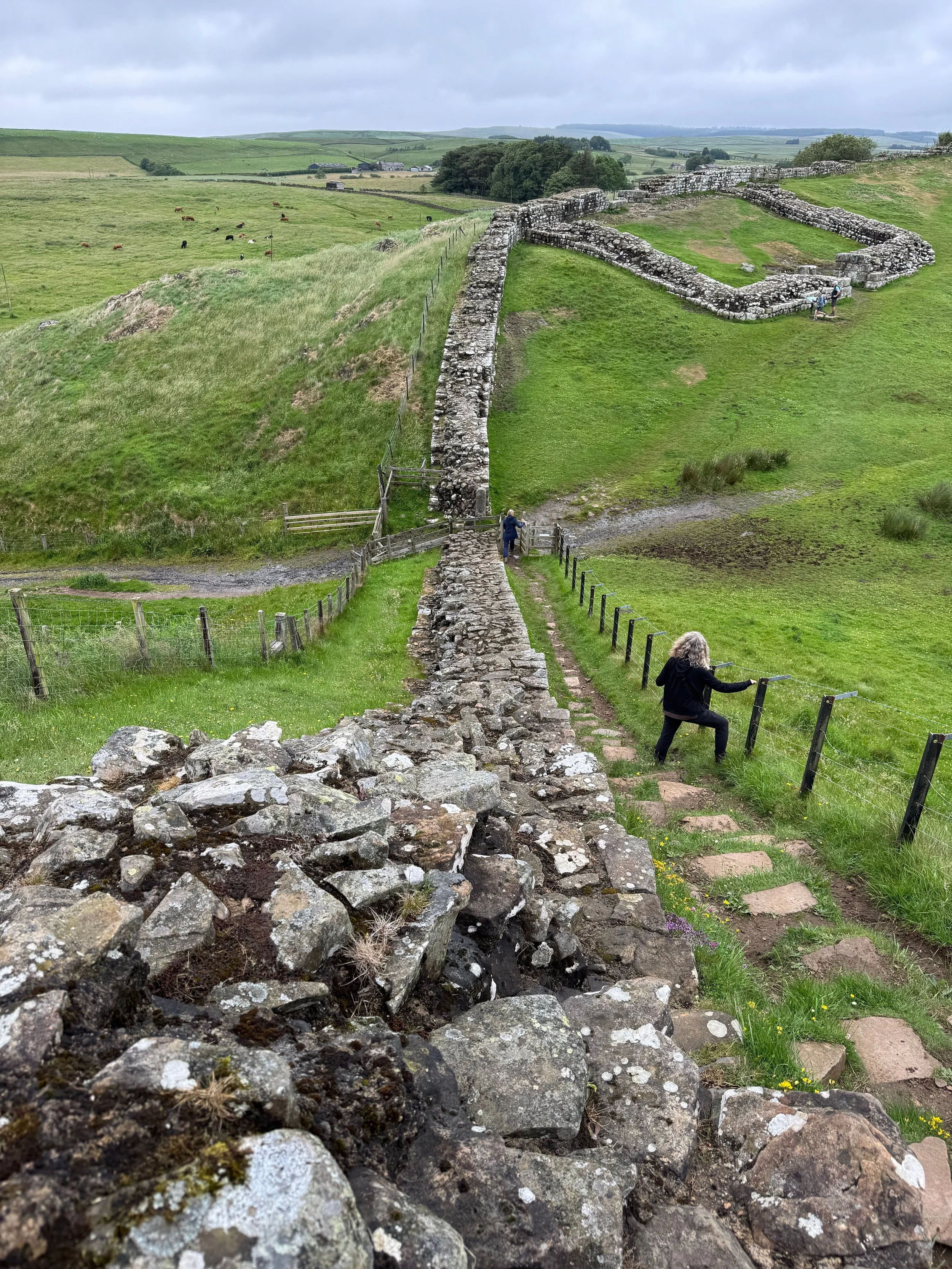
Visitors exploring Hadrian’s Wall on a footpath. Petra Nesti. Pexels.
It is entirely up to the traveler how much they’ll discover. Experiences along Hadrian’s Wall range from taking a brief look at pastures and meadows to making stops at milecastles and ancient Roman bathhouses or arranging an eight-day hike across the ridges. Regardless of the brevity of their stay, adventurers can appreciate the quiet beauty of Hadrian’s Wall’s stone remains, making it one of the most serene outings that England has to offer.
TRAVELING THERE:
Wilderness England: offers resources and advice for travelers curious about navigating Hadrian’s Wall, including directions for the Cycleway and Hadrian’s Wall Path.
English Heritage: a site dedicated to explaining the history, impact and current events of Hadrian’s Wall. It includes extensive information on archaeological sites and Roman history.

Mia Gooch
Mia a student at the University of North Carolina at Chapel Hill, majoring in Media & Journalism with a double minor in Education and Social & Economic Justice. She’s passionate about informal education and creating fun experiences where people of all ages can explore new perspectives and develop new skills. When she’s not in the classroom, she loves contemporary dance classes, spending time with friends and family, baking, and being outdoors!