
By Claire Garvin
Temperature inversions throughout Vietnam’s mountainous valleys have popularized this unique pastime, as tourists and locals alike venture into the sky in hopes of catching a sea of clouds beneath them.
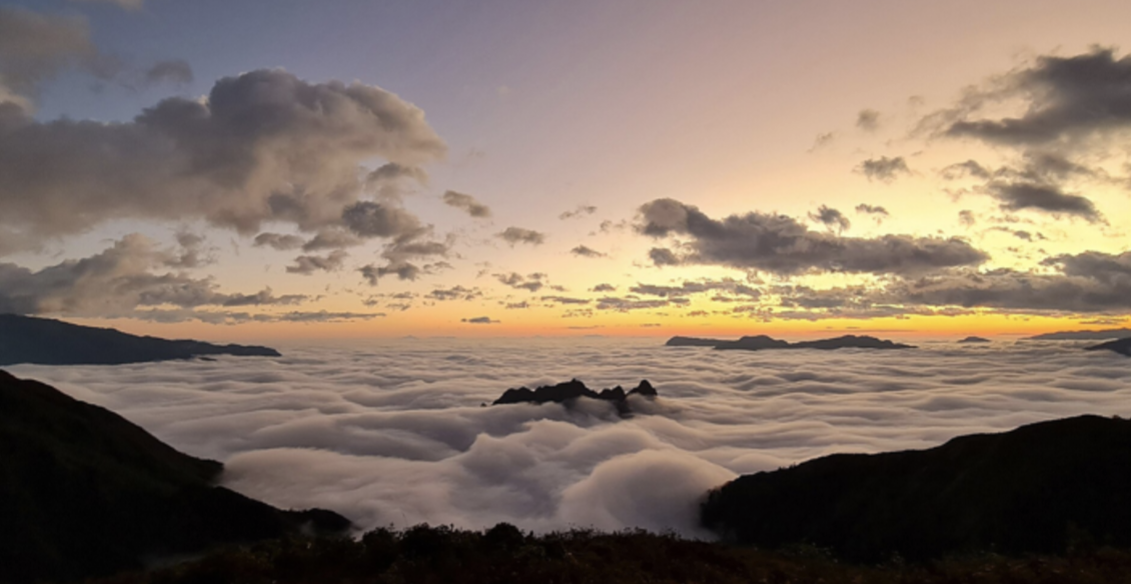
Sunrise from the Ky Quan San Peak, Vietnam. NKSTTSSHNVN. CC BY-SA 4.0.
A sea of clouds swallows the open air between mountain peaks, as shapes instantly materialize and dissolve within the clouds. After rising as early as 3 a.m., the cloud blanket is not only a well-earned reward for a challenging hike, but also a symbol of one’s fortune and good moral character. Not all travelers emerge as lucky. Following the strenuous early morning hike, sometimes the sea of clouds never materializes, hence the name of Vietnam’s alluring pastime: cloud hunting.
Known for its exceptional food scene, motorbike adventures and stunning emerald waters, Vietnam is an alluring destination for travelers of all kinds. Cloud hunting, or san may, adds to this appeal, as travelers and locals alike unite in voyages into the sky each day.
The activity gained popularity in the early 2010s, as bloggers and travel influencers shared images of stunning cloud formations that disappeared almost as quickly as they formed. These sea-like masses of clouds emerge due to temperature inversions, a weather phenomenon that occurs frequently in the hills of Vietnam. Typically, air cools as altitude increases, which allows for snow-capped peaks to remain present year-round. During a temperature inversion, however, a mass of cool air becomes trapped beneath warm air, causing moisture to form low-lying clouds. By hiking above the inversion, cloud hunters can find blankets of clouds below their feet.
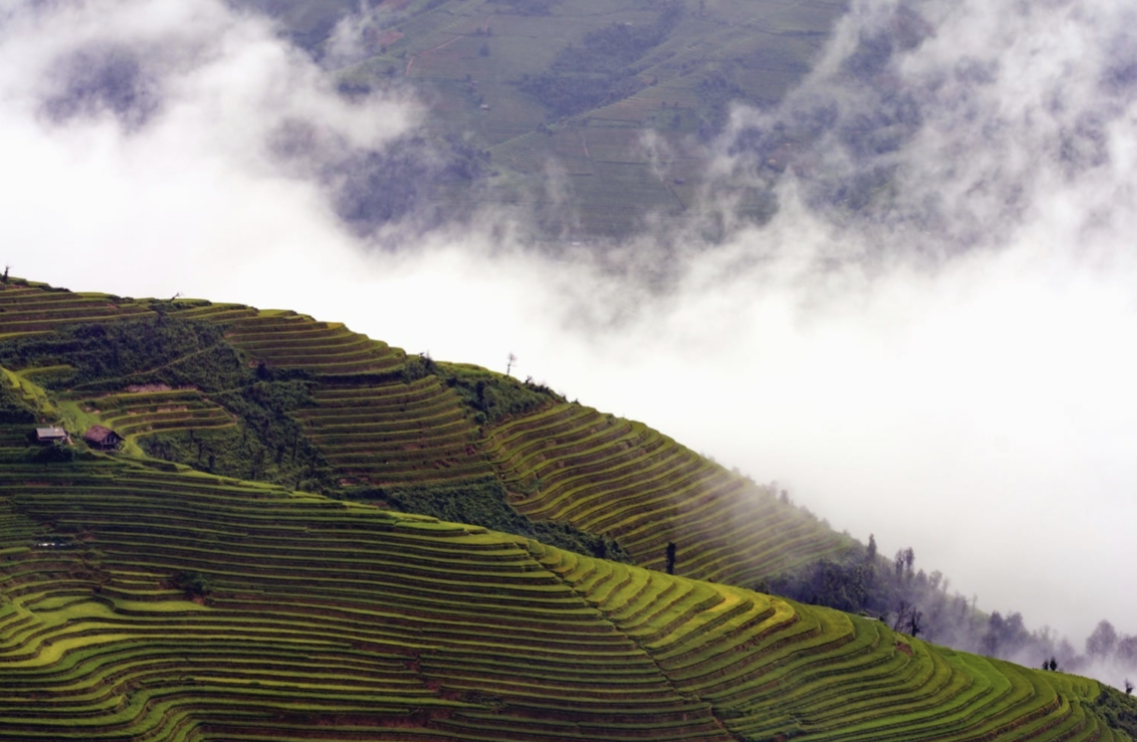
Cliffside rice harvesting valley in Vietnam with foggy clouds. Van Ngoc Tang. Unsplash.
While cloud hunting earned its name and international popularity in the early 2010s, the sea-like cloud formations of Vietnam have occurred for centuries. For instance, among the Tay and Nung ethnic minority groups in northern Vietnam, ancient rituals based upon the Brahmanical rites of ascension involve embarking upon a “journey to the sky.” Following a shamanistic leader, practitioners travel along mountain peaks before reaching villages in the sky on their journey up the highest mountain. While modern cloud-hunting is primarily an aesthetic pursuit and lacks spiritual ties, these shamanistic practices reveal echoes of hiking above the clouds for centuries in Vietnam.
Several regions throughout Vietnam boast excellent cloud-hunting opportunities, ensuring that any trip to Vietnam can include a journey above the clouds.
Ta Xua, or Paradise of Clouds, is cherished among cloud hunters in Vietnam. Located in northwest Vietnam, about 155 miles from Hanoi, Ta Xua is a highland commune in Vietnam’s Son La province, primarily inhabited by the Hmong and Thai ethnic minorities. After hiking the acclaimed Dinosaur Spine to catch the day’s stunning cloud canopy, finish the day with local ethnic minority specialties from Northern Vietnam, including five-colored sticky rice and Tao Meo wine.
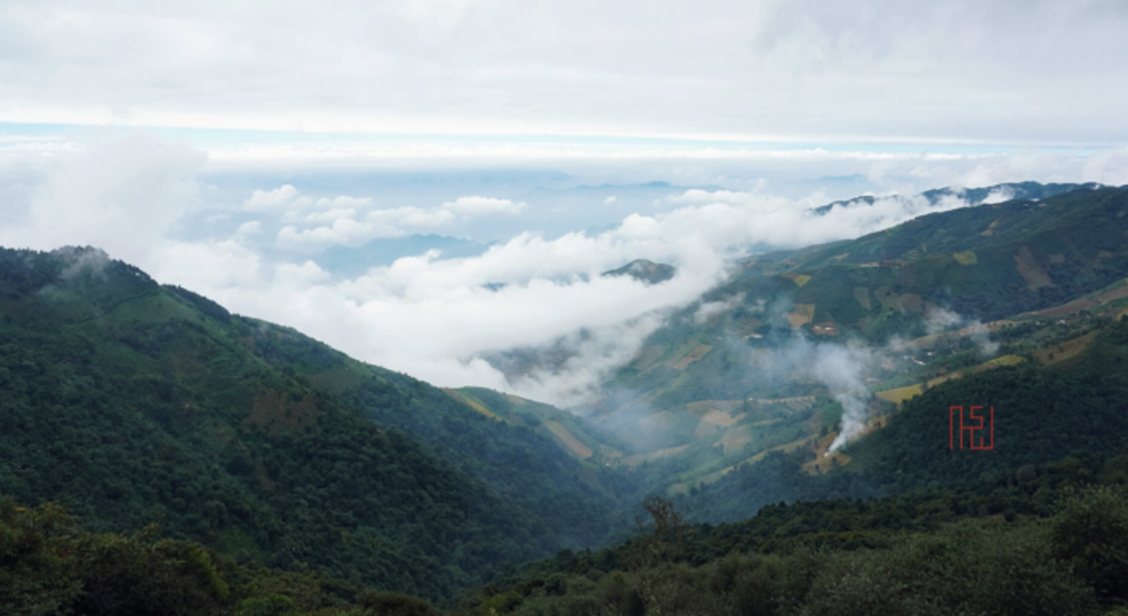
Clouds between mountains from Windy Peak in Ta Xua. NKSTTSSHNVN. CC BY-SA 4.0.
About 186 miles north of Ta Xua lies Sapa, a highland town flanked by rolling hills of rice terraces and local villages. Travelers eager to view cloud formations without enduring a strenuous hike can take the 3.7-mile cable car up to the peak of Mount Fansipan, the highest peak in Vietnam, in about 15 minutes.
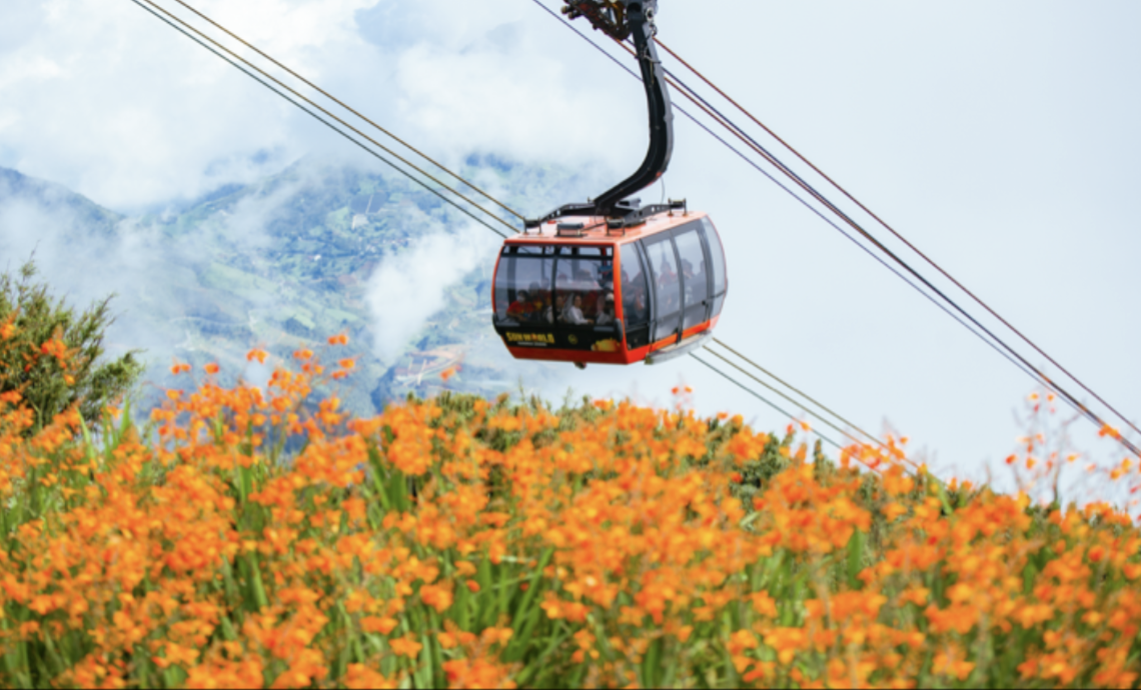
Fansipan cable car ascending orange flower field in Sapa, Vietnam. Vivu Vietnam. CC BY-SA 4.0.
In southern Vietnam, the peaks surrounding Da Latin the Central Highlands have earned a reputation as a “cloud hunting paradise,” as the region’s perennially cool atmosphere creates a misty fog from which cloud formations emerge. Top spots include Langbiang Mountain, the highest mountain peak in the Central Highlands, as well as the rolling valleys of Cau Dat Tea Hill and Da Phu Hill.
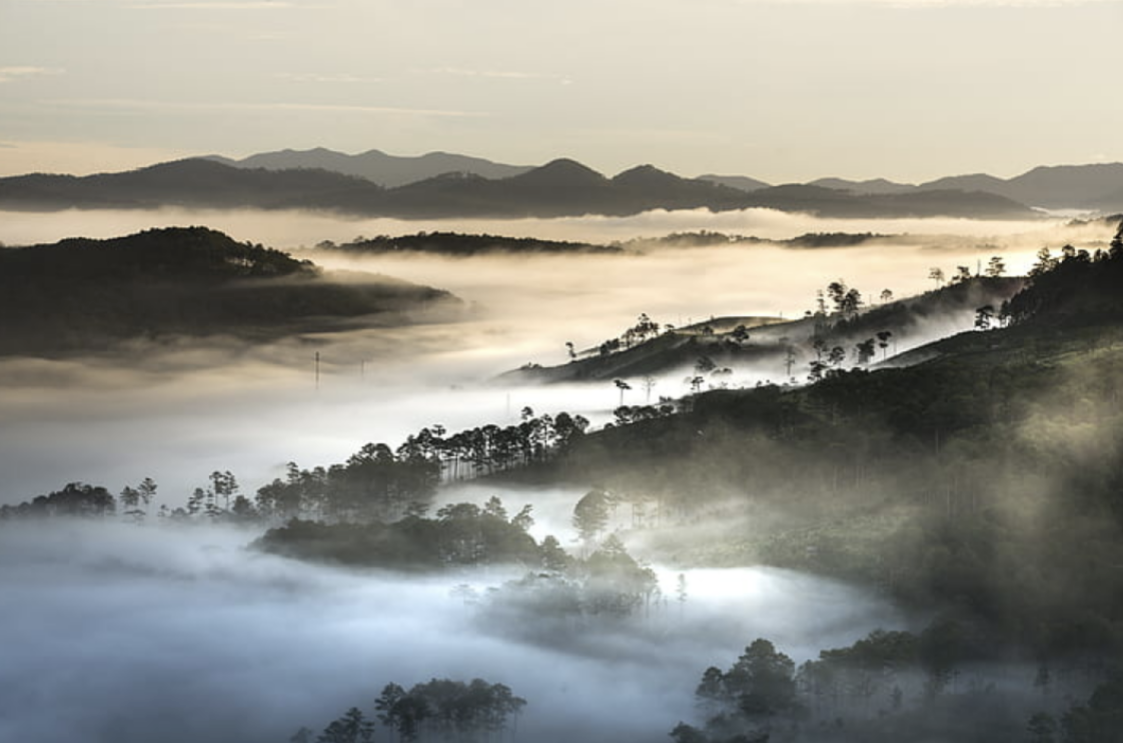
Da Lat mountain landscape covered with foggy clouds. Unsplash.
The rise in popularity of cloud hunting in Vietnam reflects wider shifts in tourism within the region. Vietnam has quickly emerged as one of the top travel destinations in Southeast Asia, gaining around 20% more travelers in 2025 than the year before. Beyond statistics, traveler preferences within the region are shifting toward longer, more immersive stays. As the vice president of corporate development at Asian travel company Klook remarks, "Tourists are seeking out nature-driven and culturally distinct destinations beyond the major cities.”
Cloud hunting continues to gain popularity among travelers eager to explore the natural wonders of Vietnam beyond the popular tourist destinations. Throughout the nation, travelers can find exceptional peaks, valleys and ridges painted with soft clouds right beneath their feet.
Claire Garvin
Claire is a fourth-year student at Barnard College, Columbia University studying Neuroscience. She is interested in writing as a means of understanding the world, and she hopes to ignite meaningful change through her journalism. Outside of class, she enjoys baking, painting, and reading.