
By Suzy Song
A man emulating Patrice Lumumba remained frozen in the crowd during 2026 World Cup matches, honoring Congo's independence leader.

Michel Kuka Mboladinga at a Democratic Republic of Congo 2026 World Cup match. Eznao. CC0.
The 2026 FIFA World Cup games were particularly notable for the Democratic Republic of the Congo. The nation made its first appearance since 1974 and also earned its first-ever point in the internationally acclaimed tournament. Yet, despite such feats, viewers and even some of the most fervent DRC fans found their focus drawn away from the field and instead toward a frozen man in the stands of Congolese matches. Consistently donning a suit in blue, red and yellow, remaining entirely motionless and standing proudly elevated above a sea of fans with one arm raised, the man stood as a live “statue” at the matches. But why?
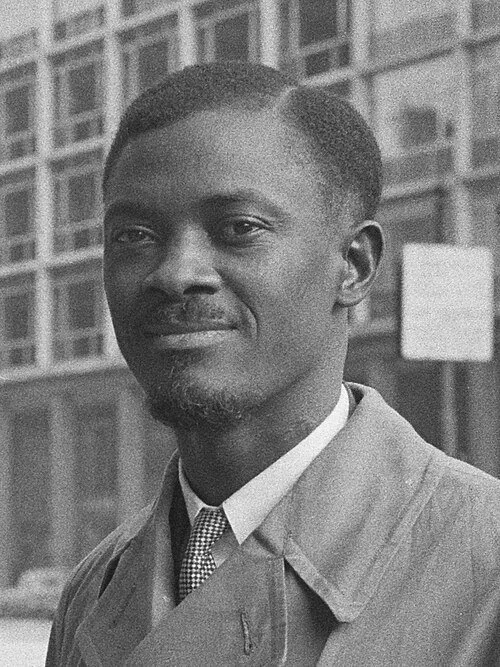
Patrice Lumumba, 1960. Harry Pot. CC0.
Michel Kuka Mboladinga, the statue in question, represents not a Congolese soccer superfan, but Patrice Lumumba. Born in 1925, Lumumba is arguably the most important figure in Congolese independence history for his service as not just the newly independent country’s first elected prime minister, but as a leading voice for Pan-Africanism and Congolese nationalism in mid-20th-century Africa’s anti-colonial revolution.
From 1885 to 1908, King Leopold II ruled the Congo Free State as his personal possession, where Congolese people were subjected to what is commonly understood as one of the most vicious forced labor regimes in history. Historian Adam Hochschild estimates that in just 23 years under Leopold’s reign, an estimated 10 million Congolese people died due to its brutality. Outrage over Leopold’s atrocities forced the Belgian parliament to step in, and Congo was annexed as Belgian Congo in 1908. Congolese citizens reeled from further loss and forced labor through colonial taxes and mandated cultivation. As a co-founder for the Pan-African Mouvement National Congolais, or Congolese National Movement, Lumumba’s leadership transformed him into a continent-wide symbol of optimism.
Protest against the assassination of Patrice Lumumba in Maribor, Yugoslavia, now Slovenia, circa 1961. Danilo Skofic. CC0.
Lumumba’s dismissal just three months into his term as prime minister and later assassination brought international outrage and protests. One month after Lumumba’s assassination in January 1961, Yugoslavia took to the streets to protest against Western imperial forces and the Belgian colonial administration. Demonstrators stormed and set fire to Belgium’s embassy in Belgrade. Today, global calls for racial justice never fail to reverberate with Lumumba’s work. His renowned Independence Day speech resonates particularly strongly as he stated, “We are going to show the world what the Black man can do when he works in freedom,” in the presence of King Baudouin, King Leopold II’s great-great-nephew.
As Lumumba’s legacy is upheld worldwide, the continuation of Western engagement in resource extraction, neo-colonialism and cultural imperialism in Africa stands out as pertinent in Mboladinga’s decision to impersonate Lumumba at World Cup games.

Patrice Lumumba arrives in New York to discuss the Congo Crisis with the U.N., 1960. Onbekend. CC0.
The Congo Crisis and the Cold War saw Lumumba seek military aid from the U.N. and the U.S. against advancing Belgian troops. The United Nations deployed a peacekeeping operation, while Lumumba also sought assistance from the Soviet Union. Threatened by the thought of a mineral-rich DRC receiving Soviet assistance, President Dwight D. Eisenhower’s administration began efforts to remove Lumumba, and the CIA began conspiring to assassinate him. Encouraged by these Western forces, Lumumba’s army chief, Joseph Mobutu, staged a coup to sideline Lumumba. On Jan. 17, 1961, he was killed in Katanga. Mobutu seized lasting power in a second coup in 1965 and became a major Western ally during the Cold War.
With the United States’ direct role in destroying a young independent nation’s democratic hopes and contributing to persistent domestic tensions, Lumumba’s image stood proudly at the center of the post-Cold War world order. In this Western-dominated international framework, Mboladinga’s portrayal of Lumumba highlights the dispute over whether African sovereignty is truly legitimate when external forces like the U.S. still have a hold on the continent’s economies.
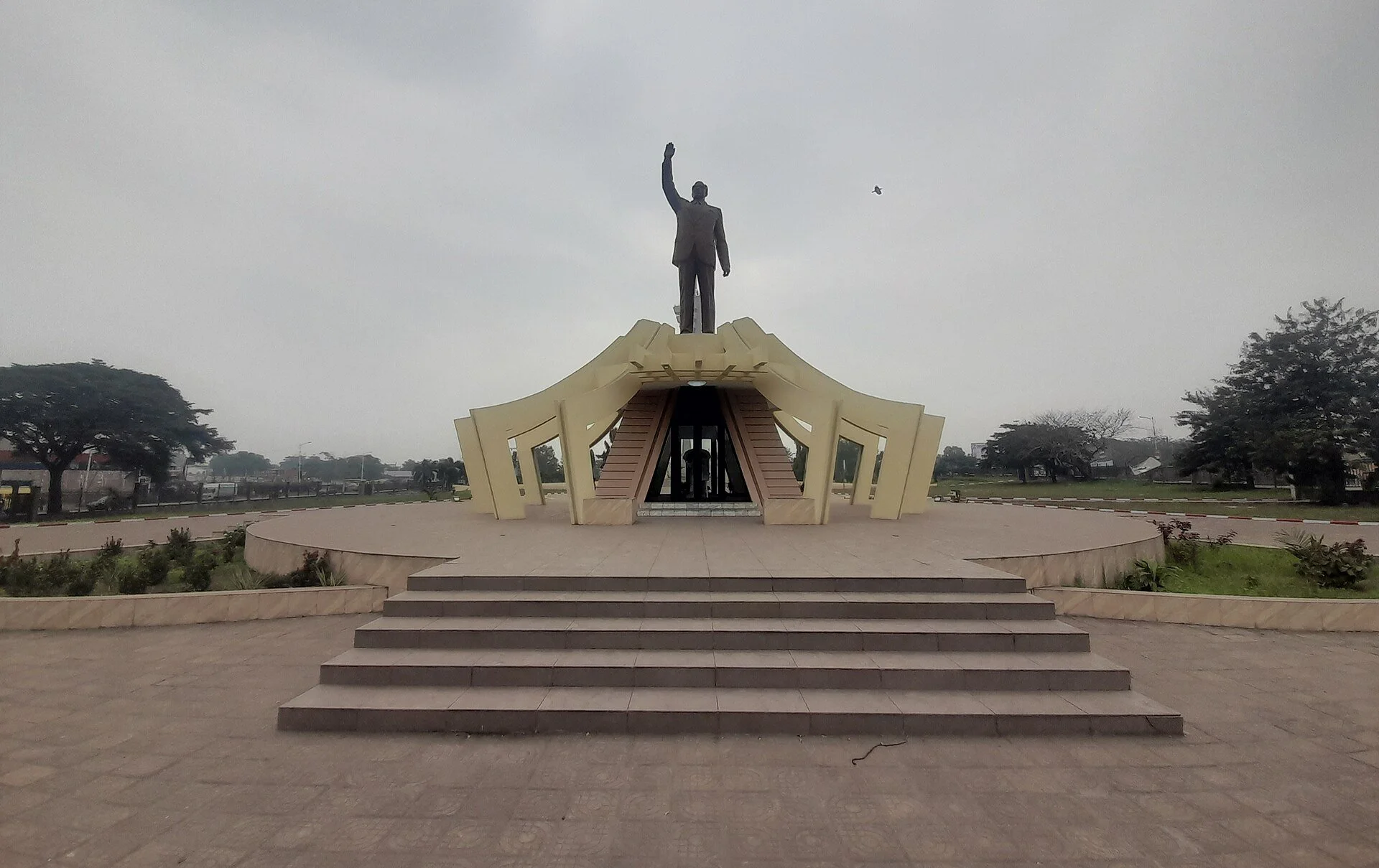
Patrice Lumumba’s mausoleum in Kinshasa, the Democratic Republic of the Congo’s capital. Henri van der Noot. CC BY-SA 4.0.
Mboladinga’s firm stature on this stage demands that spectators do more than simply recognize Lumumba’s name. His raised arm and meaningful conspicuousness ask Americans and global audiences alike to question the very structures in which they work, play and reside, reflecting on whether they themselves have been complacent in continuing these deep-set colonial systems.

Suzy Song
Suzy Song is a sophomore at Tufts University, majoring in International Relations on a pre-law track. Passionate about human rights, international law, and global institutional studies, she hopes to bring meaningful discussions on social justice to corporate fields in the future. From Canada’s Pacific Northwest, she loves travelling, hiking, and vintage film and music.