
By Azhar Kantayeva
From climate protests to human rights movements, young activists are finding new ways to challenge authority, mobilize communities and make their voices heard.

A young activist holds a “Save the Earth” sign during a global climate strike in September 2021. Ivan Radic. CC BY 2.0.
In 2018, a 15-year-old girl sat outside the Swedish Parliament holding a handmade sign demanding action on climate change. Greta Thunberg’s school strike began with one teenager, but photographs of her protest soon spread online, inspiring students in different countries to organize their own demonstrations. Within a year, millions of people had joined the Fridays for Future climate strikes worldwide.
Her story reflects a wider shift in activism. Young people no longer have to wait for politicians, newspapers or established organizations to give them a platform. With a smartphone and an internet connection, they can bring local problems to international attention, question powerful institutions and connect with others who share their concerns.
Challenging Who Gets Heard

A demonstrator speaks out against racial discrimination during a Black Lives Matter protest in 2020. Ivan Radic. CC BY 2.0.
For decades, traditional media played a major role in deciding which social issues received public attention. Today, Instagram and TikTok allow young activists to tell their stories without depending entirely on journalists or political leaders.
This has been particularly important for communities whose experiences are often overlooked. During the Black Lives Matter protests in 2020, videos shared online brought international attention to police violence and racial inequality in the United States. Social media also helped people find protest information, educational resources and ways to support affected communities.
According to a Pew Research Center survey, 45% of Black social media users had looked for information about local protests or rallies in the previous month. This highlights how social media can help people stay informed about demonstrations and become more connected to social movements.
However, these platforms do more than distribute information. They allow ordinary users to become part of public debates that were previously dominated by institutions and influential figures.
A 2018 Pew Research Center study found that 64% of U.S. adults believed social media helped give underrepresented groups a voice. This suggests that digital platforms can create opportunities for people who might otherwise struggle to reach wider audiences.
Still, having a voice does not guarantee being heard equally. Algorithms, language barriers and internet access continue to influence whose experiences become visible.
From Followers to Communities
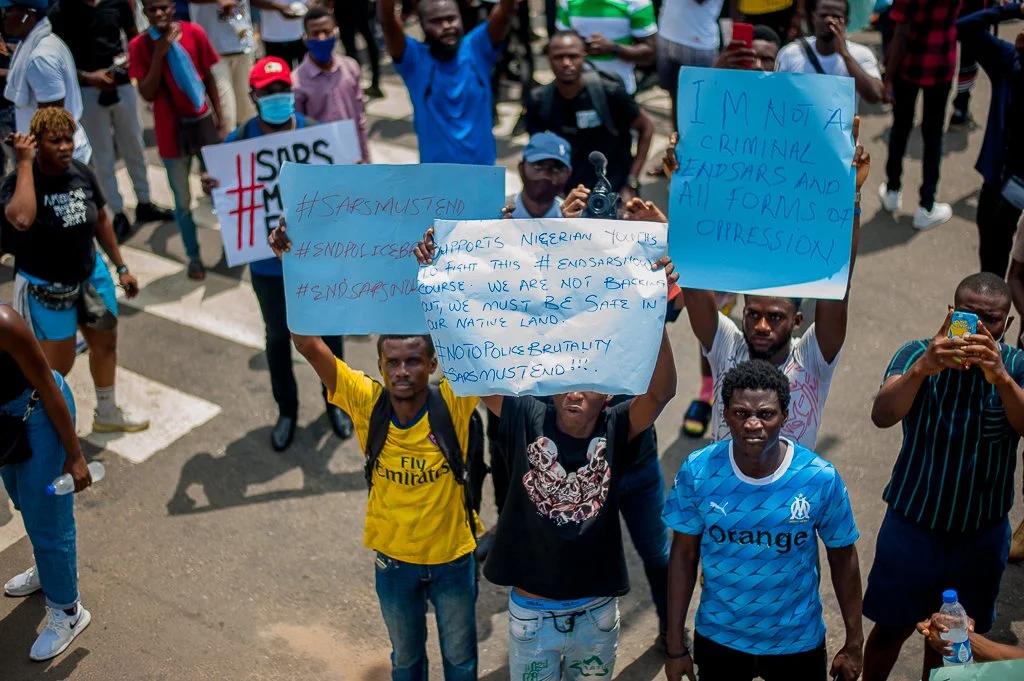
Demonstrators gather during the #EndSARS protests in Lagos, Nigeria. Kaizenify. CC BY-SA 4.0.
One of the most significant developments in youth activism is the ability to organize people across national borders.
Fridays for Future demonstrates how a local protest can develop into an international network. Students in different countries have organized climate strikes, exchanged information and encouraged political leaders to take environmental concerns more seriously.
Another example is the #EndSARS movement in Nigeria, which gained international attention in 2020. Young Nigerians used social media to document allegations of police brutality, share protest locations and coordinate support for demonstrators. Online fundraising also helped provide food, medical assistance and legal support.
The movement showed how digital communication could become a practical organizing tool rather than simply a space for expressing frustration.
Yet the outcome was complicated. On October 11, 2020, the Nigerian government announced the dissolution of the Special Anti-Robbery Squad (SARS), and protesters continued to demand justice for victims of police brutality. One year later, Amnesty International reported that police impunity continued, despite promises of reform. The case shows that even a movement with international support can struggle to achieve lasting institutional change.
The Hidden Cost of Speaking Out

A woman checks her smartphone. Shixart1985. CC BY 2.0.
While social media makes activism more accessible, it can also expose young people to serious risks.
Activists discussing political violence, women’s rights or discrimination may experience harassment, threats and attempts to silence them. Women and members of marginalized communities can face particularly aggressive forms of online abuse. A 2017 Amnesty International survey found that 23% of women surveyed across eight countries had experienced online abuse or harassment. Among women who had experienced abuse, 41% reported feeling that their physical safety was threatened at least once. Although this research examined women’s experiences more broadly, it illustrates the risks faced by people who speak publicly online.
Misinformation adds another challenge. During the 2020 Black Lives Matter protests, misleading images circulated online, creating false impressions about demonstrators. For example, FactCheck.org found that photographs of injured elderly people had been falsely presented as victims of Black Lives Matter protesters. The images were actually several years old and unrelated to the movement. Such misinformation can damage public trust and distract attention from the issues activists are trying to address.
There is also a less obvious problem: activists increasingly depend on platforms they do not control. An account can be suspended, content can be restricted and changes to an algorithm can suddenly reduce the visibility of an important campaign.
These realities raise a difficult question: How independent can modern activism be when its communication depends heavily on private technology companies?
A Different Kind of Political Participation

Students work together using a laptop. Vitaly Gariev. Unsplash.
Not every young person who cares about social issues wants to join a political party or attend demonstrations. Some prefer to create educational videos, support fundraising campaigns or participate in online discussions.
A UNICEF report on digital civic engagement recognizes that online participation can provide young people with opportunities to become involved in public life. For those facing geographical, social or political barriers, digital spaces may offer an accessible starting point.
However, social media is not equally effective for every cause. A campaign built around emotional videos may attract attention quickly, while complex issues such as labor rights, education reform or long-term environmental policy can be harder to communicate in short posts.
This creates pressure to simplify complicated problems into messages that fit the expectations of online audiences. While simple explanations can make information accessible, they can also leave out important context.
For young activists, the challenge is to remain engaging without sacrificing accuracy or reducing serious issues to temporary trends.
What Comes After the Protest?
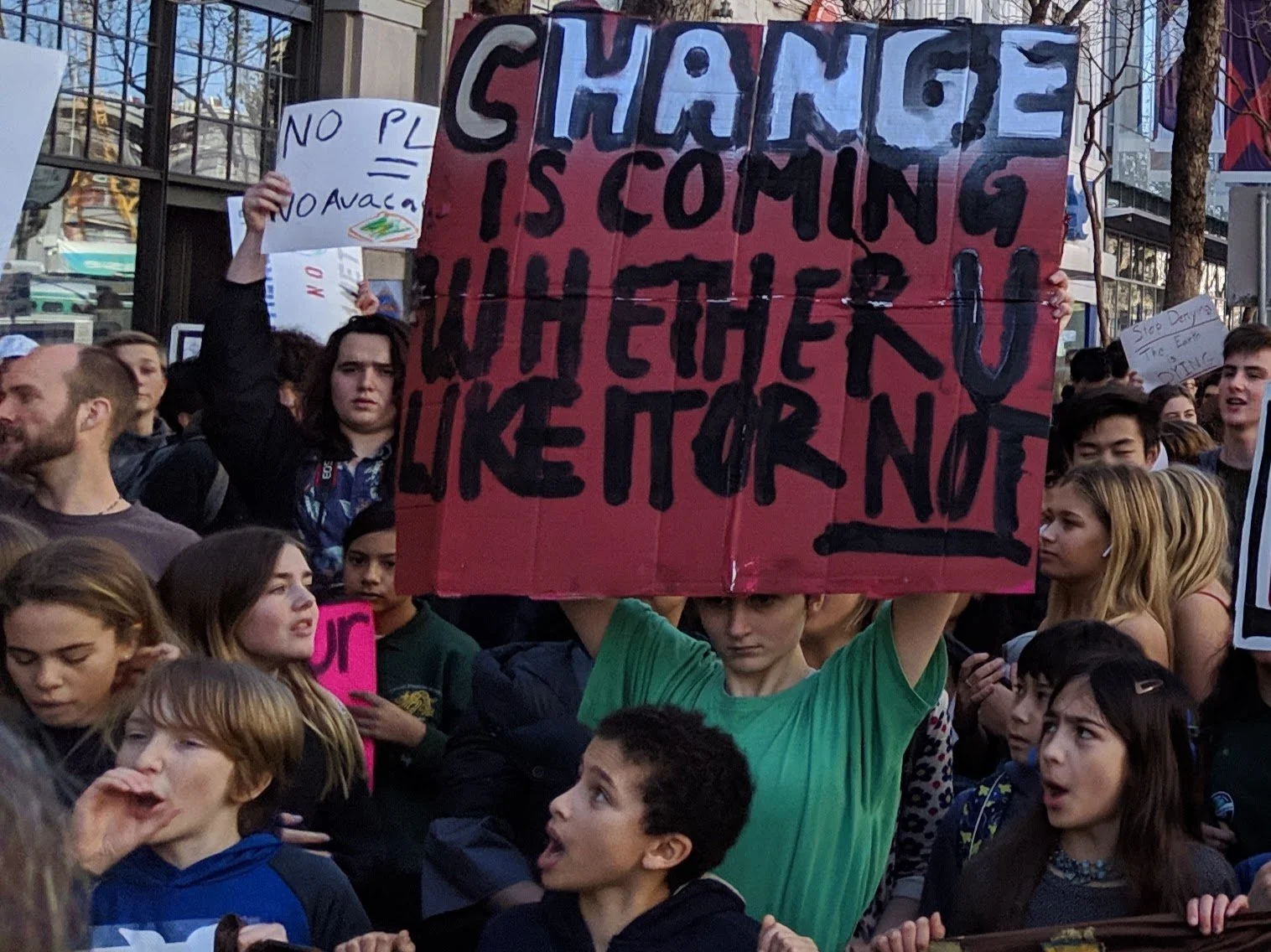
Young people take part in a climate strike in San Francisco. Intothewoods7. CC BY-SA 4.0.
Young activists have already demonstrated that they can organize international campaigns, challenge established narratives and bring overlooked issues into public discussion. But their growing influence also raises questions about responsibility, safety and the future of political participation.
Social media has changed who can speak, how quickly information travels and how movements find supporters. It has not removed the political, economic and institutional barriers that activists must confront.
Perhaps one of the most important achievementa of this generation is not the ability to make a campaign go viral. It is the creation of new spaces where people who were once excluded from public conversations can organize, question authority and demand to be taken seriously.
The platforms may change, but the desire to be heard and to shape the decisions that affect their lives will remain.
GET INVOLVED:
Join youth-led climate campaigns and find local groups through Fridays for Future. Support human rights by signing petitions and participating in campaigns organized by Amnesty International. Young people interested in sharing their perspectives on global issues can also explore UNICEF Voices of Youth, a platform dedicated to youth stories and experiences.

Azhar Kantayeva
Azhar is International Relations student at Dokuz Eylül University in Türkiye and an emerging writer with a passion for journalism, travel, culture, and global affairs. She has experience writing about international issues, destinations, and cultural perspectives. Alongside her studies and writing, she works as an English and Turkish teacher. Her work is driven by curiosity, cultural exchange, and a desire to connect people through stories.