
By Azhar Kantayeva
As Sudan’s conflict continues, women and girls face growing threats to their safety, healthcare and education, while local women work to protect their communities.

“Some women gave birth on the road,” Sa’aida told the United Nations Population Fund (UNFPA). A midwife from Sudan’s Blue Nile State, she fled her own home in 2024. She now cares for displaced mothers at Al Karama 3 camp in Ad-Damazin, the state capital.
Her experience shows how Sudan’s war has changed both the need for care and the people providing it. Since April 2023, fighting between the Sudanese Armed Forces and the paramilitary Rapid Support Forces has disrupted homes, hospitals and schools. Women who need assistance are often also organizing it.
Searching for Safety
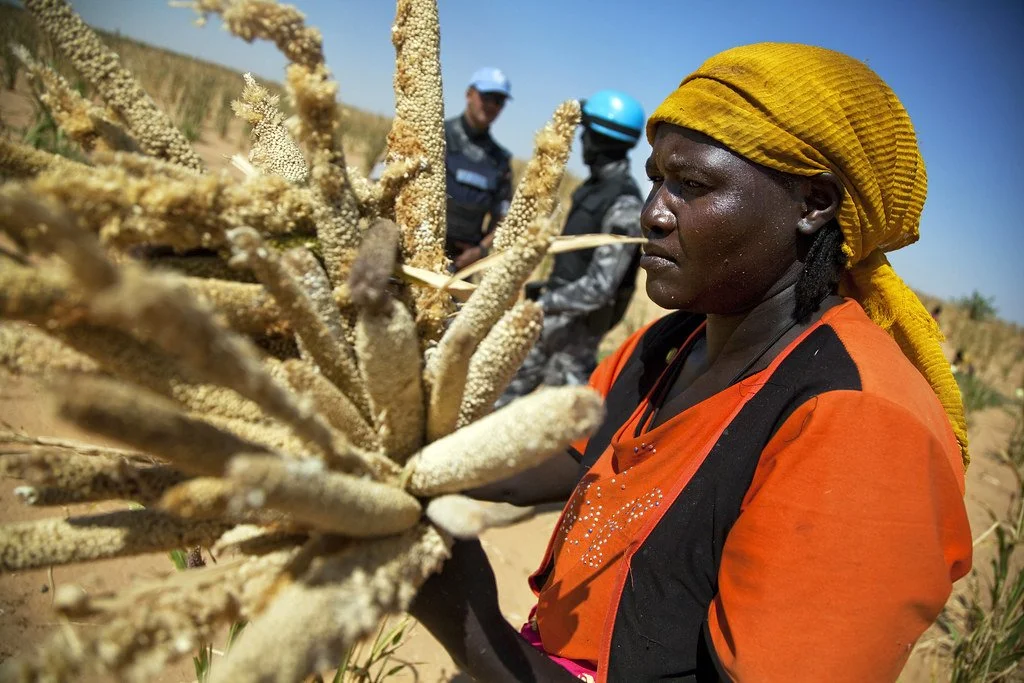
A woman farms under peacekeeper protection near Zam Zam camp, Darfur, in 2010. UN Photo, Albert Gonzalez Farran. CC BY-NC-ND 2.0.
Leaving a battlefield does not end the danger. UNFPA reported that approximately 8.8 million people remained displaced across Sudan in April 2026. In Blue Nile displacement sites, unsafe conditions and weak protection systems exposed women and girls to harassment and sexual violence.
In El Obeid, North Kordofan’s capital, collecting water became particularly dangerous. At a July 2026 briefing, UN Women described how drone attacks on water sources pushed women to go out after dark, when they faced sexual assault.
The agency estimated that 12.7 million women and girls needed gender-based violence services in 2026; four times the number at the conflict’s start. This measures the need for assistance, rather than confirmed assaults. The water crisis shows how violence can make even basic survival tasks unsafe.
Bringing Maternity Care to Displacement Camps
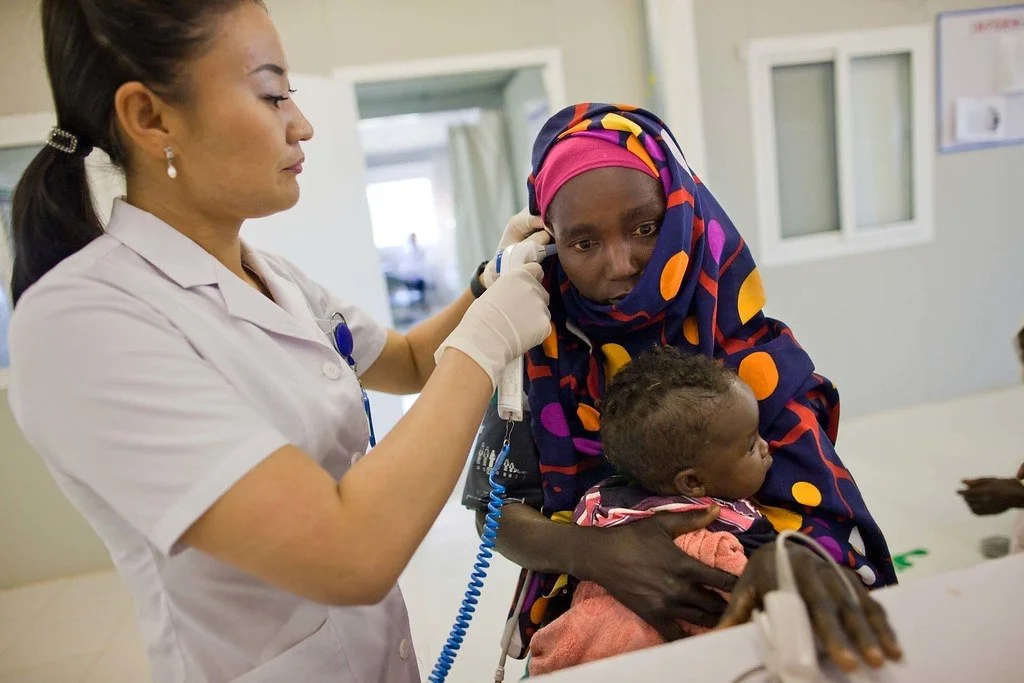
At Al Karama, midwives must recognize emergencies and arrange hospital referrals despite difficult travel conditions. UNFPA documented the case of Al Radyyia, a mother of 11 whose labour became dangerous. Midwife Safya referred her to Ad-Damazin’s maternity hospital, where she delivered safely, then continued visiting her afterwards.
According to the same report, during their first three weeks, the deployed UNFPA midwives assisted 140 safe deliveries and provided follow-up care to more than 700 pregnant women. Their work connects displaced families to the treatment that damaged infrastructure, flooding and insecurity have made difficult to reach.
Returning to School After Years Away
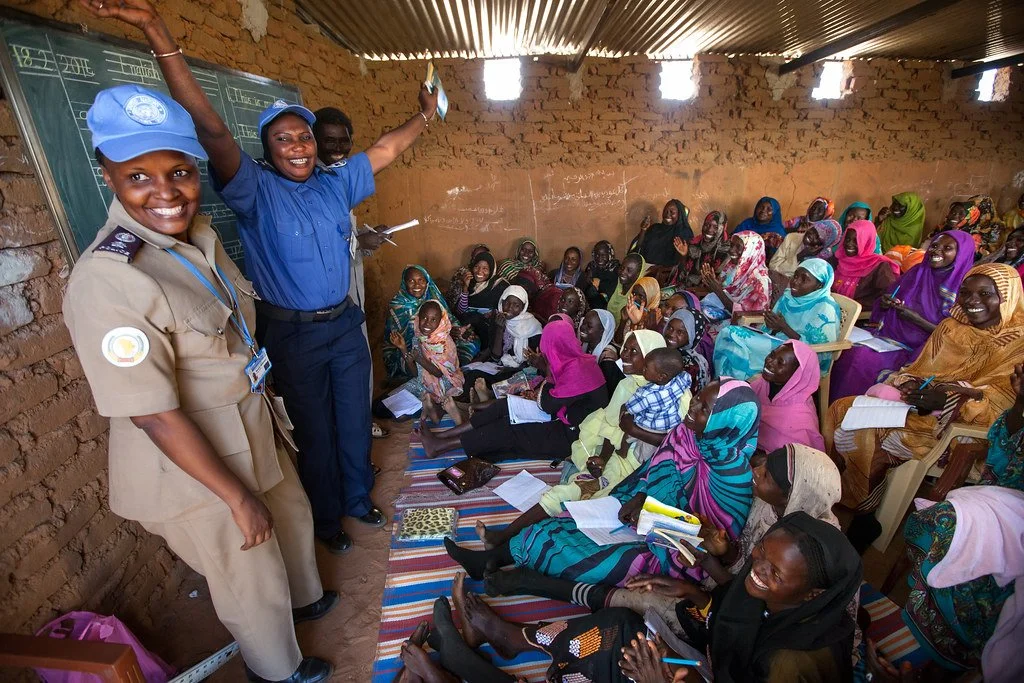
Fourteen-year-old Mariam dreams of becoming a doctor. Fighting forced her from Heglig in South Kordofan and separated her from her mother. Living with her grandparents in Goz Al Salam camp in White Nile State, she resumed learning after more than two years away from school. At night, she studies using her grandfather’s solar lamp.
Her return takes place within a much larger education crisis. In May 2026, UNICEF reported that at least eight million children were out of school, girls and boys. UNICEF, Save the Children and partners launched the BRIDGES programme that month, aiming to restore learning for more than 328,000 conflict-affected children.
For pupils like Mariam, catch-up classes offer a route back toward ambitions interrupted by displacement. But rebuilding education requires teachers, materials and classrooms that can accommodate the arriving families.
A Restaurant Becomes a Lifeline
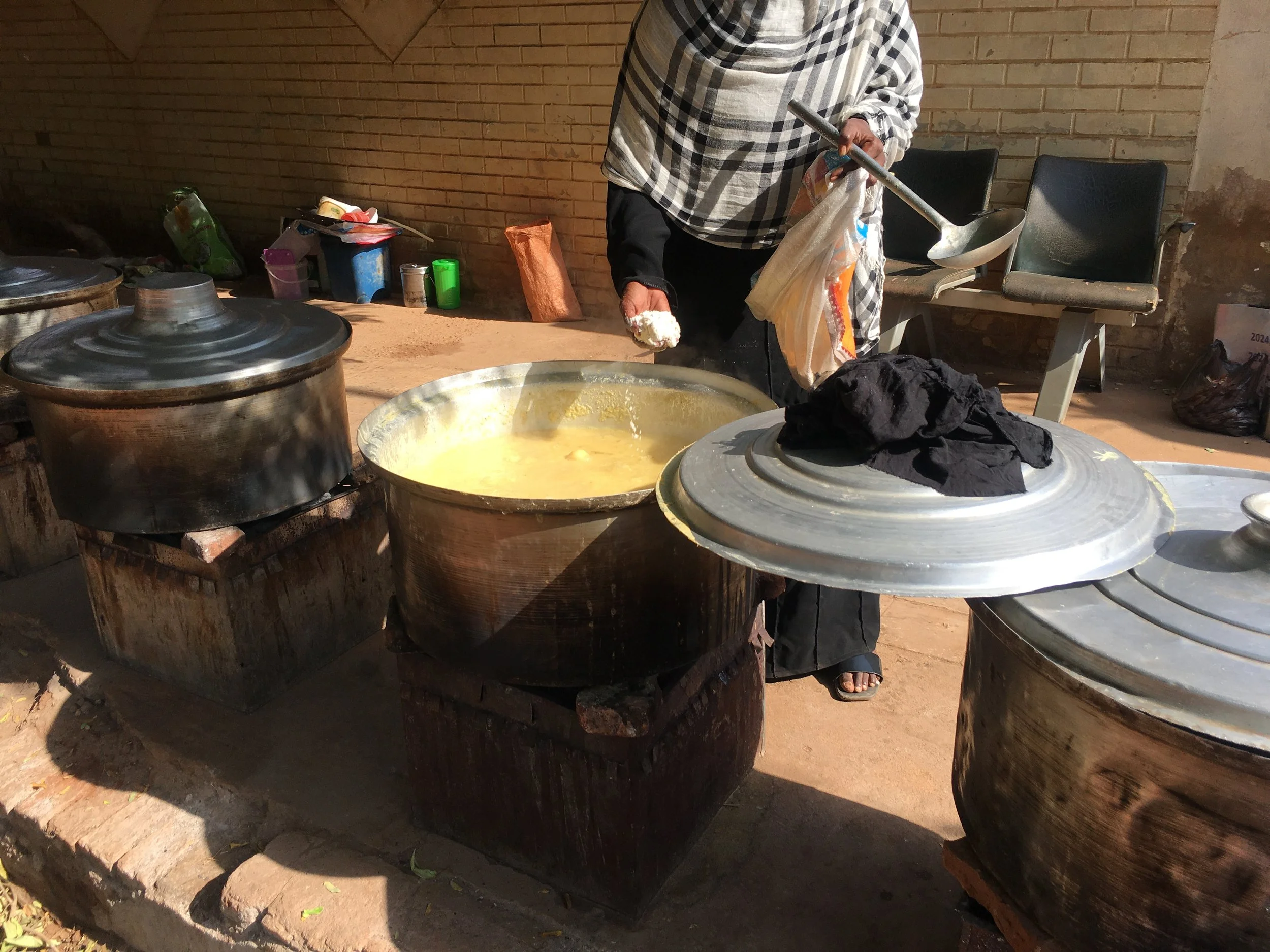
In Karari, part of Sudan’s capital, Khartoum, Ms. Samia and her daughter Abeer turn their restaurant into a volunteer-run Emergency Response Room kitchen each morning. Save the Children describes how 300 to 400 households receive hot meals from them by the end of the day. Paying customers return in the evening. Both names were changed for protection.
Such kitchens depend on money and supplies that are becoming harder to secure. In April 2026, Islamic Relief found that 354 of 844 surveyed kitchens across Sudan had closed. Losing one kitchen means removing a daily source of food from families already struggling to survive.
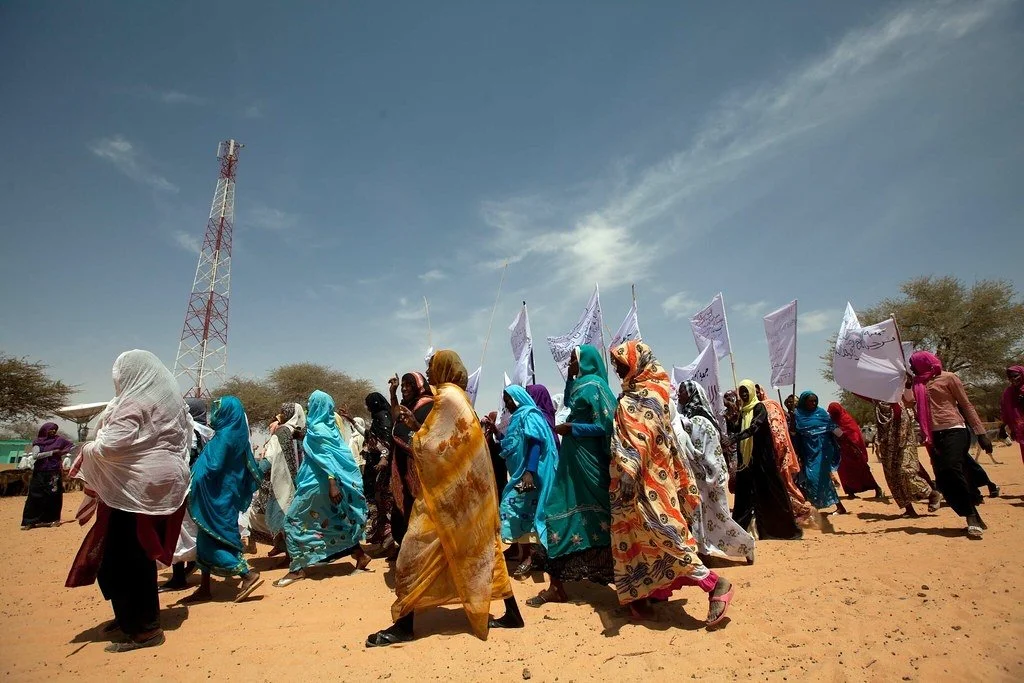
Women mark International Women’s Day in Al Koma, 2013. UNAMID, Albert Gonzalez Farran. CC BY-NC-ND 2.0.
A safe delivery, a return to school and a hot meal are practical gains made possible by people who refuse to abandon their communities. Yet these gains remain fragile when clinics lack supplies and kitchens lose funding. Sudan’s recovery will depend on protecting civilians, restoring essential services and funding local organizations consistently. Women already carry much of the responsibility for keeping their communities alive. Their leadership must be reflected in peace negotiations and decisions about how Sudan is rebuilt.
GET INVOLVED:
Readers can support maternal healthcare and services for survivors of gender-based violence through the United Nations Population Fund. Those who want to help children regain access to education, nutrition and clean water can contribute to UNICEF and follow its updates on Sudan. Women for Women International supports local partners providing reproductive healthcare, psychological assistance and protection services for women and girls affected by the war.

Azhar Kantayeva
Azhar is International Relations student at Dokuz Eylül University in Türkiye and an emerging writer with a passion for journalism, travel, culture, and global affairs. She has experience writing about international issues, destinations, and cultural perspectives. Alongside her studies and writing, she works as an English and Turkish teacher. Her work is driven by curiosity, cultural exchange, and a desire to connect people through stories.