
By Azhar Kantayeva
Beneath Cappadocia’s famous landscapes lies a hidden world of ancient tunnels and underground settlements, where communities created remarkable spaces for shelter, survival and everyday life.
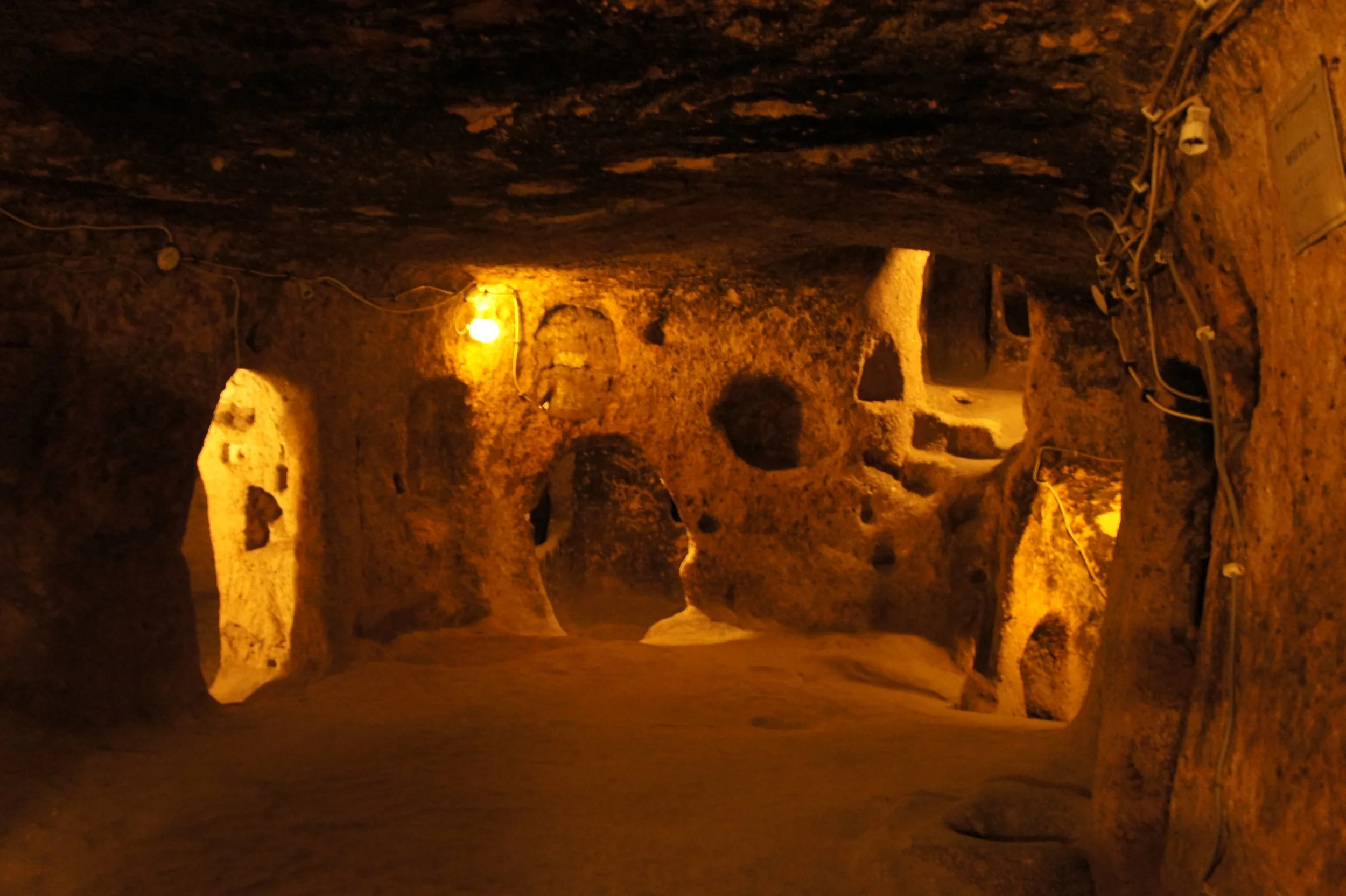
Ancient chambers carved into the volcanic rock of Kaymakli Underground City in Cappadocia. Gaspar Ros. CC BY-SA 3.0.
Located in central Turkiye, Cappadocia is a historical region that stretches across several provinces, including Nevsehir, Kayseri and Aksaray. It is approximately 450 miles southeast of Istanbul by road. Travelers can reach the region by flying from Istanbul to Kayseri or Nevsehir, with flights taking around 90 minutes, followed by a drive to the main tourist towns. Traveling by bus or car is another option, although the journey usually takes between eight and 12 hours.
Cappadocia is best known for its hot air balloons, fairy chimneys and valleys filled with unusual rock formations. But there is another side to the region that visitors can easily miss. Beneath its villages and roads are underground settlements built with kitchens, churches, storage rooms and passages that extend several levels below the surface.
Unlike ordinary caves, these spaces were carefully organized to shelter communities during dangerous periods. Today, several are open to visitors, offering a closer look at how people adapted to life underground.
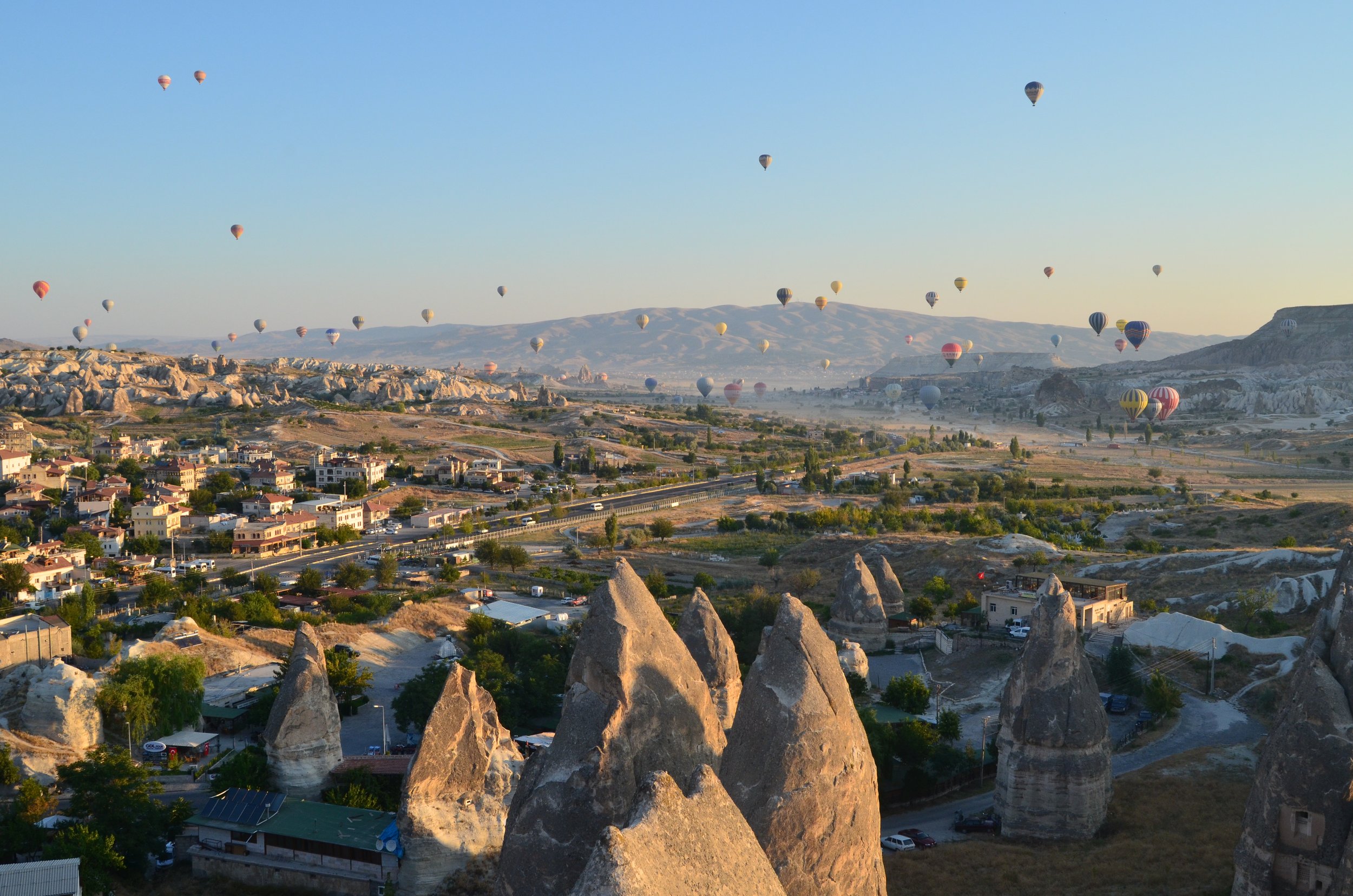
Hot air balloons float above Cappadocia’s ancient rock formations at sunrise. Rumeysaraz. CC BY-SA 4.0.
How Did Underground Cities Develop?
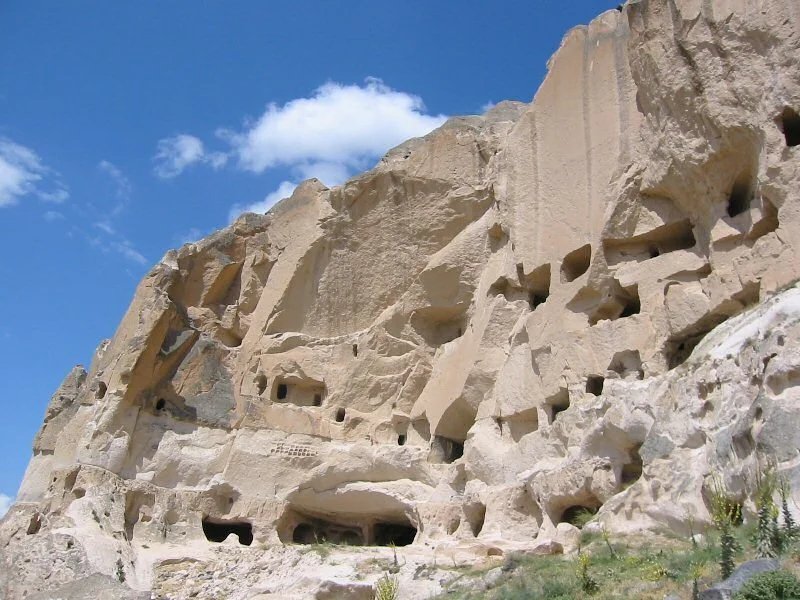
Rock-carved chambers inside Tatlarin Underground City in Cappadocia, Turkiye. Katpatuka. Public Domain.
Cappadocia’s landscape was shaped by volcanic activity millions of years ago. Layers of soft volcanic rock made it possible for people to carve rooms and tunnels using relatively simple tools.
The exact beginnings of many underground cities are still being debated. However, their development continued through different historical periods, particularly during the Byzantine era, when Christian communities used them as places of refuge.
Their architecture was practical. Ventilation shafts supplied fresh air, wells provided water and large circular stone doors helped protect entrances. Some settlements also contained churches and wine-production areas, reflecting the religious and agricultural activities of their inhabitants.
Derinkuyu: Exploring the Deepest Passages
Ancient stone chambers inside Derinkuyu Underground City in Cappadocia, Turkiye. Bjorn Christian Torrissen. CC BY-SA 3.0.
Derinkuyu is one of Cappadocia’s best-known underground cities. Its passages extend approximately 280 feet below the surface, making it especially impressive for visitors interested in ancient engineering.
The city contains a network of stairways, rooms and narrow corridors. Some passages are so low that visitors must bend down to move through them. Among its most interesting features are the ventilation shaft, a religious school area and a church carved into the lower levels.
Derinkuyu’s heavy circular doors were designed to close off sections of the settlement during attacks. Moving deeper underground, visitors can see how different levels were connected while still allowing certain areas to be isolated.
A visit usually takes around 45 to 60 minutes. Because of the steep stairs and enclosed passages, comfortable shoes are important, and the site is not suitable for people who have difficulty walking or feel uncomfortable in confined spaces.
For travelers coming from Istanbul, Derinkuyu is approximately 446 miles away by road. The journey takes around six to eight hours by car, depending on traffic.
Kaymakli: A Closer Look at Everyday Life
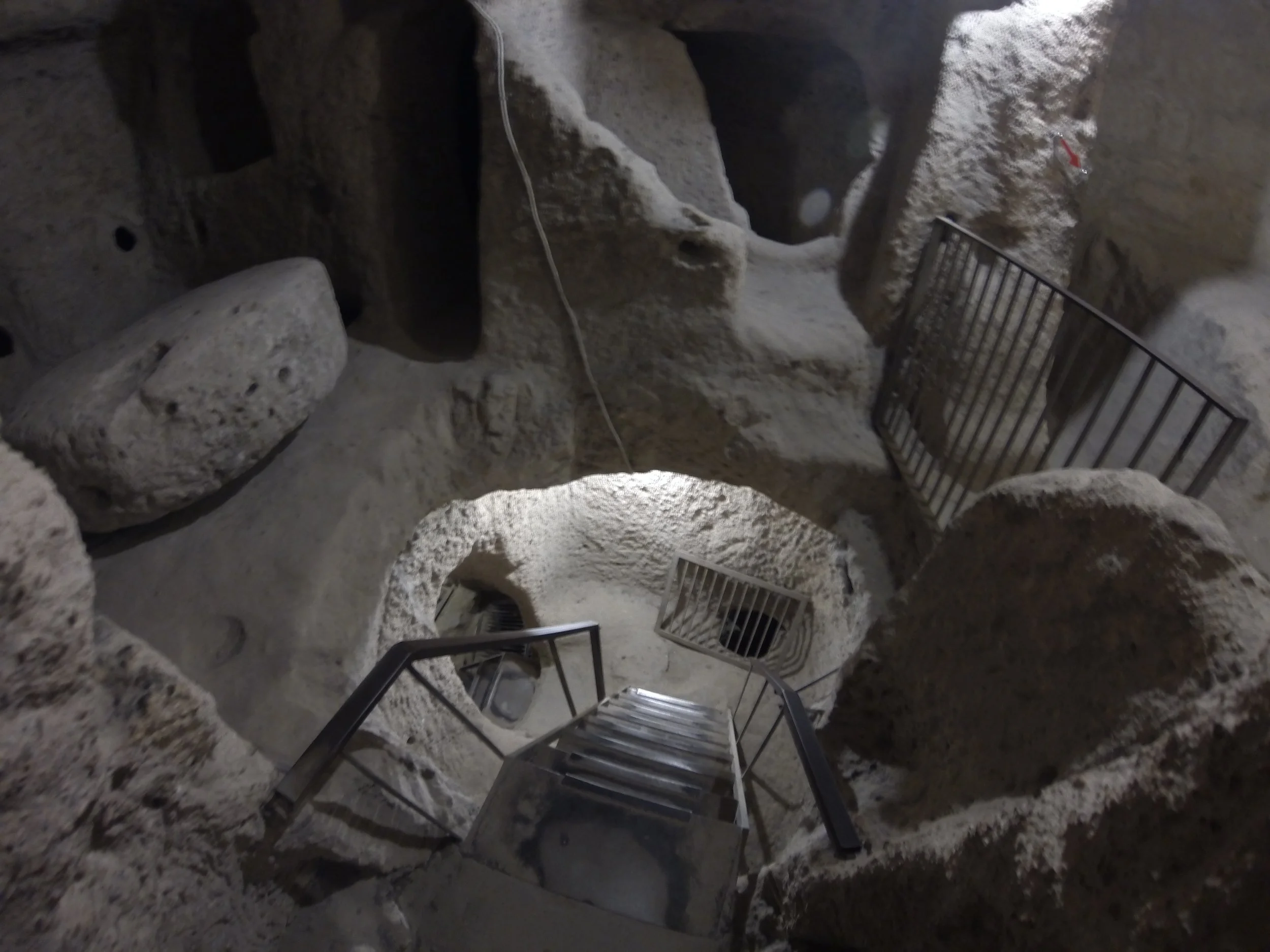
Ancient stone passages inside Kaymakli Underground City in Cappadocia, Turkiye. Nevit Dilmen. CC BY-SA 3.0.
Kaymakli offers a different experience. It has eight known levels, although only four are generally open to visitors.
While Derinkuyu is famous for its depth, Kaymakli is particularly interesting for its arrangement of living and working spaces. The upper areas include stables, while other levels contain food storage rooms, kitchens, wine-making facilities and religious spaces.
The underground rooms are connected by narrow corridors, allowing residents to move between different sections without returning to the surface.
Kaymakli is approximately 452 miles from Istanbul by road. Visitors already in Cappadocia can easily combine it with Derinkuyu, allowing approximately one hour to explore each site.
Ozkonak: An Alternative Near Avanos
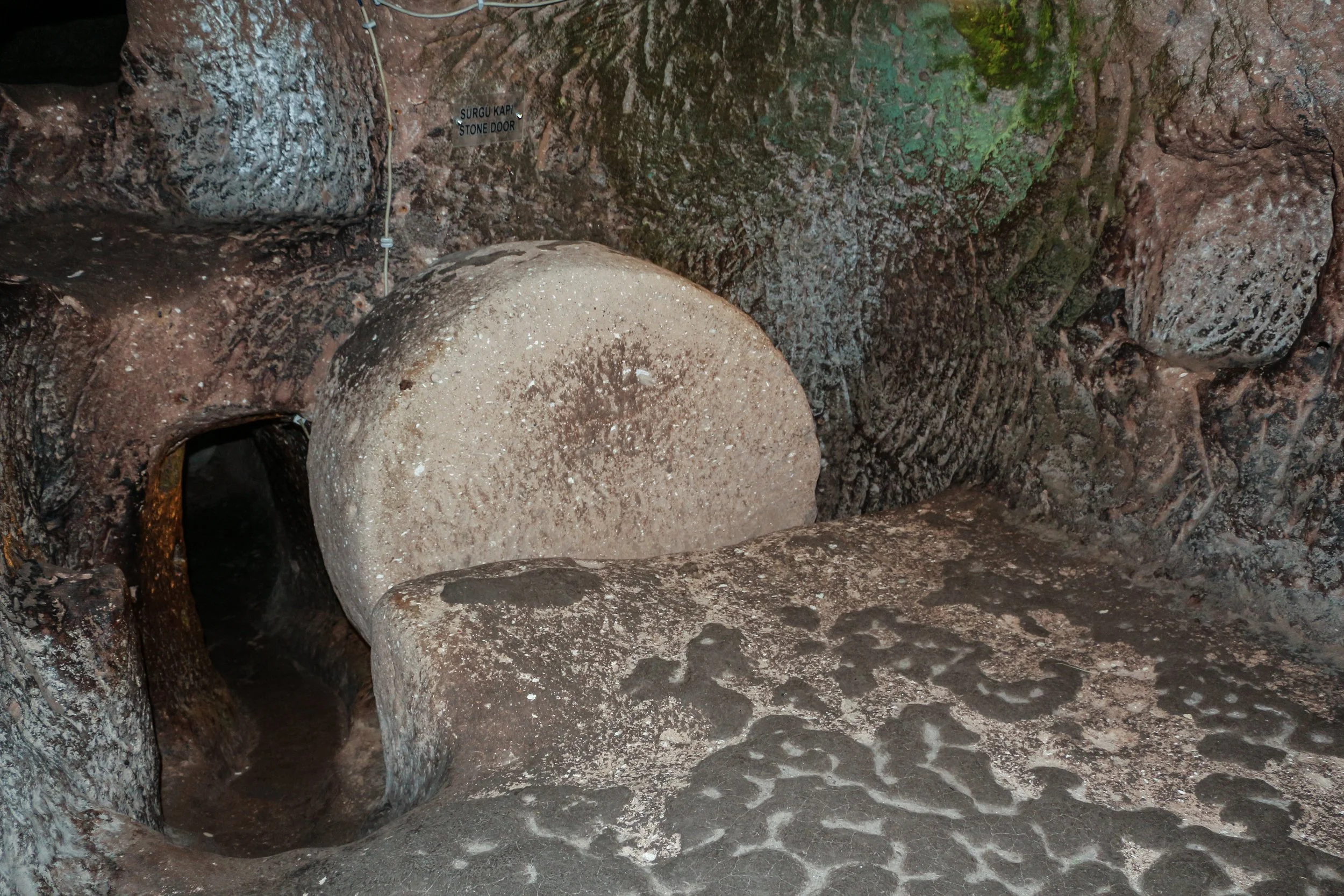
A massive stone door designed to protect the underground passages of Ozkonak in Cappadocia, Turkiye. Bernard Gagnon. CC BY-SA 3.0.
Travelers looking for a less crowded underground city can consider Ozkonak, known for its unusual defensive features.
Small openings between different levels allowed communication, while holes above certain passages could be used against intruders. Like other underground settlements, it also contains ventilation shafts, stone doors and spaces used for food and wine production.
The underground complex was discovered in 1972 after a local resident investigated where irrigation water was disappearing.
Ozkonak is a useful alternative for travelers already visiting Avanos, a town known for its pottery traditions. Combining both places offers a chance to explore two different aspects of Cappadocia’s heritage in one day.
Located approximately 446 miles from Istanbul by road, Ozkonak can be reached by car and is about nine miles from Avanos.
Mazi: A Quieter Underground Settlement
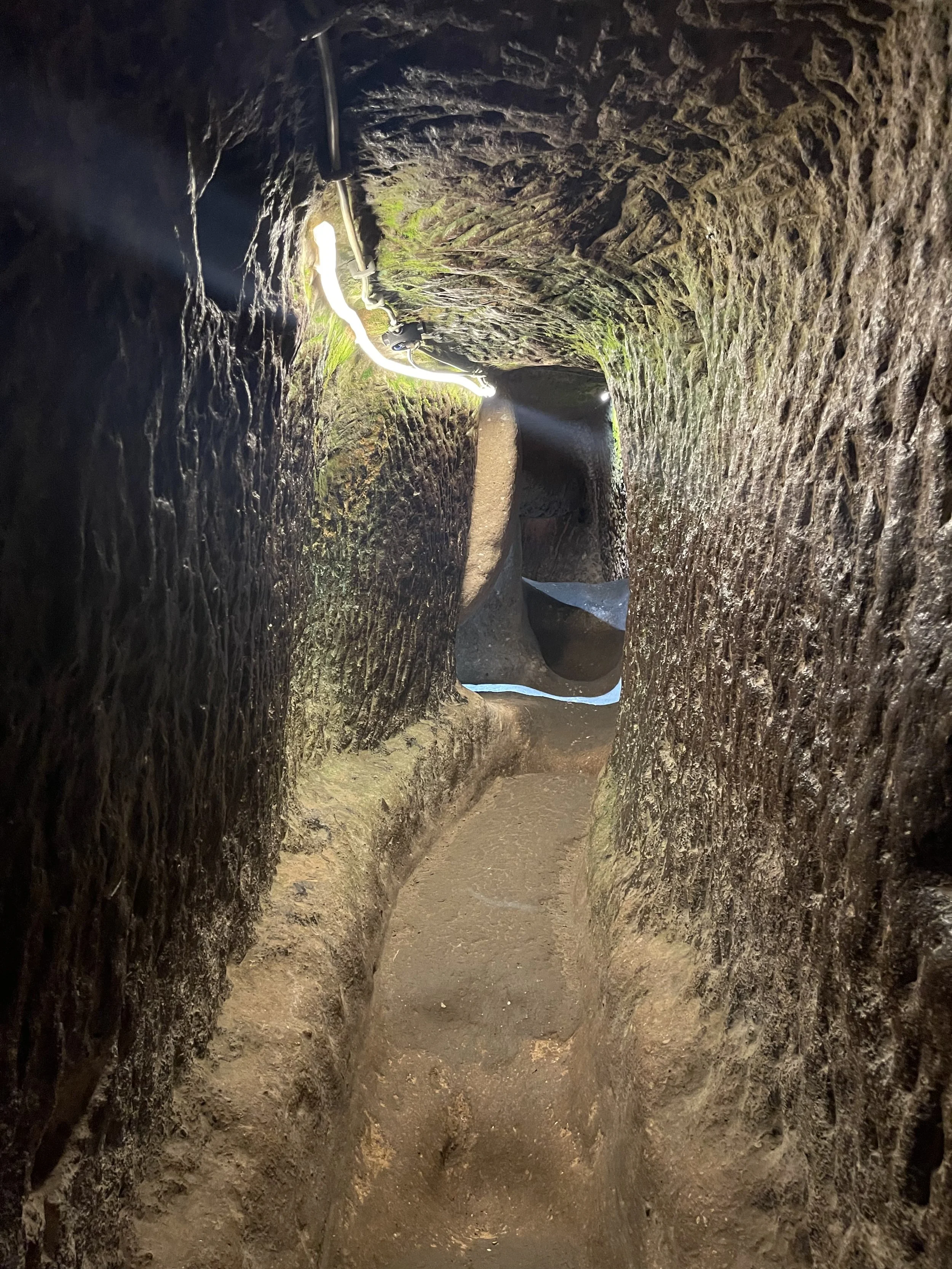
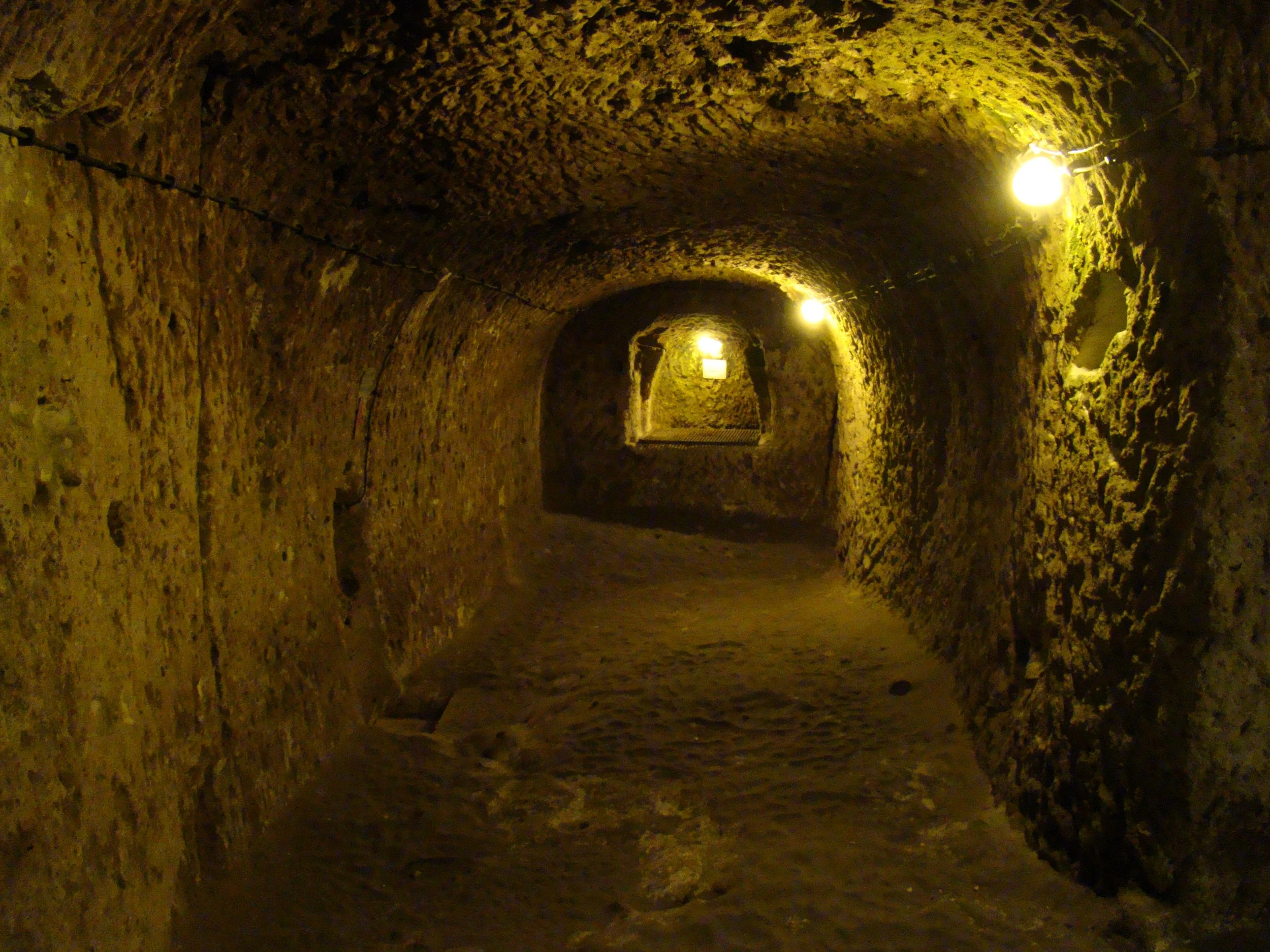
A narrow stone tunnel beneath Cappadocia, Turkiye, offers a glimpse into the region’s ancient underground settlements. Lethiciasouza. CC BY-SA 4.0.
Mazi is another option for visitors who want to explore beyond the region’s most popular attractions.
The settlement contains four identified entrances, interconnected chambers, stables and a rock-cut church. Large stone doors were used to control access to different sections of the underground complex.
Unlike the larger underground cities, Mazi has a more compact visitor route. Only two of its levels are currently accessible, making it possible to explore the main historical features without spending several hours underground.
Compared with Derinkuyu and Kaymakli, Mazi generally receives fewer visitors. It can be a worthwhile stop for travelers with a rental car who prefer exploring at a slower pace.
Mazi is located approximately 11 miles south of Urgup, within the Cappadocia region. Travelers arriving from Istanbul can include it in their road trip through Cappadocia, although the exact driving distance depends on the route.
Why These Places Deserve a Visit
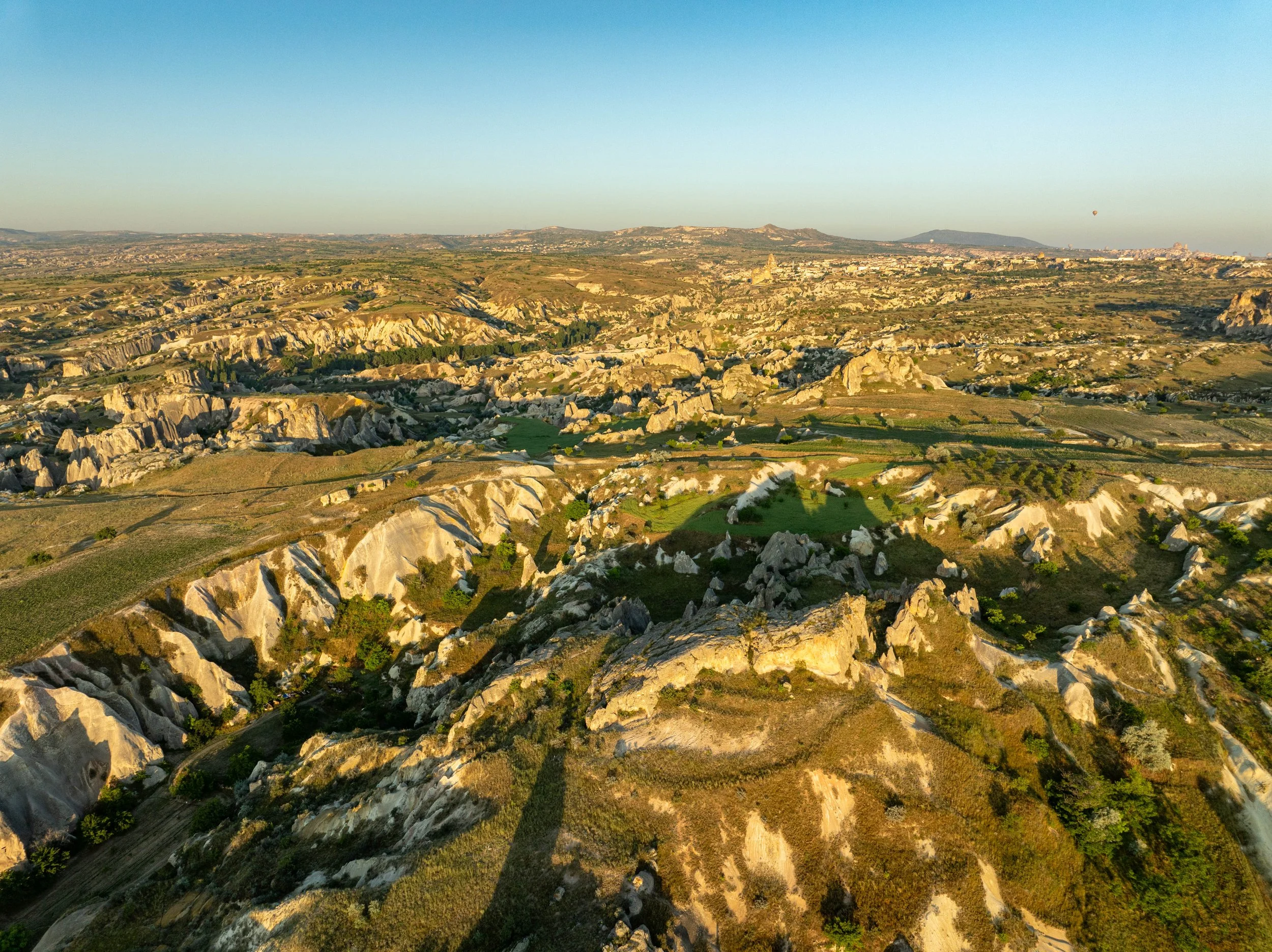
An aerial view of Cappadocia’s remarkable rock formations reveals the landscape above the region’s ancient underground cities. Aquinoxmedia. CC BY-SA 4.0.
Cappadocia’s underground cities offer something different from the region’s more familiar attractions. Their narrow passages and carefully planned rooms reveal how architecture was shaped by the need for safety, rather than beauty or comfort.
What is particularly striking is how much planning went into spaces that were never intended to be seen from outside. Water, ventilation, food supplies and security all had to be considered in an environment with little natural light.
Today, travelers can move through some of these same passages, although only a small part of the original underground network is accessible. Visiting them is a reminder of the importance of preserving sites that have survived centuries of change.
Cappadocia may attract visitors with its landscapes above ground, but its underground cities reveal something just as interesting: how ordinary people used the resources available to them to face extraordinary circumstances. They are worth visiting not simply because they are unusual, but because they make the practical challenges of life in the past surprisingly easy to imagine.

Azhar Kantayeva
Azhar is International Relations student at Dokuz Eylül University in Türkiye and an emerging writer with a passion for journalism, travel, culture, and global affairs. She has experience writing about international issues, destinations, and cultural perspectives. Alongside her studies and writing, she works as an English and Turkish teacher. Her work is driven by curiosity, cultural exchange, and a desire to connect people through stories.