
For such a small island, Sri Lanka offers an incredibly diverse range of experiences. Whether you’re hoping to engage more with local culture and history, or explore some of the country’s vast natural beauty, there are unique opportunities around every corner. In recent years, Sri Lanka has developed rapidly as a popular tourist destination - and with good reason. It offers a fantastic combination of cultural heritage, natural beauty, cuisine, and complex history, concentrated on a small and well-connected island.
Many cultural attractions have become increasingly popular, drawing in large crowds and higher visitor numbers, but it’s still possible to explore these authentically with a local guide. Much of Sri Lanka’s natural beauty remains underappreciated and unexplored, making it possible to strike a balance between popular hotspots and undiscovered trails.
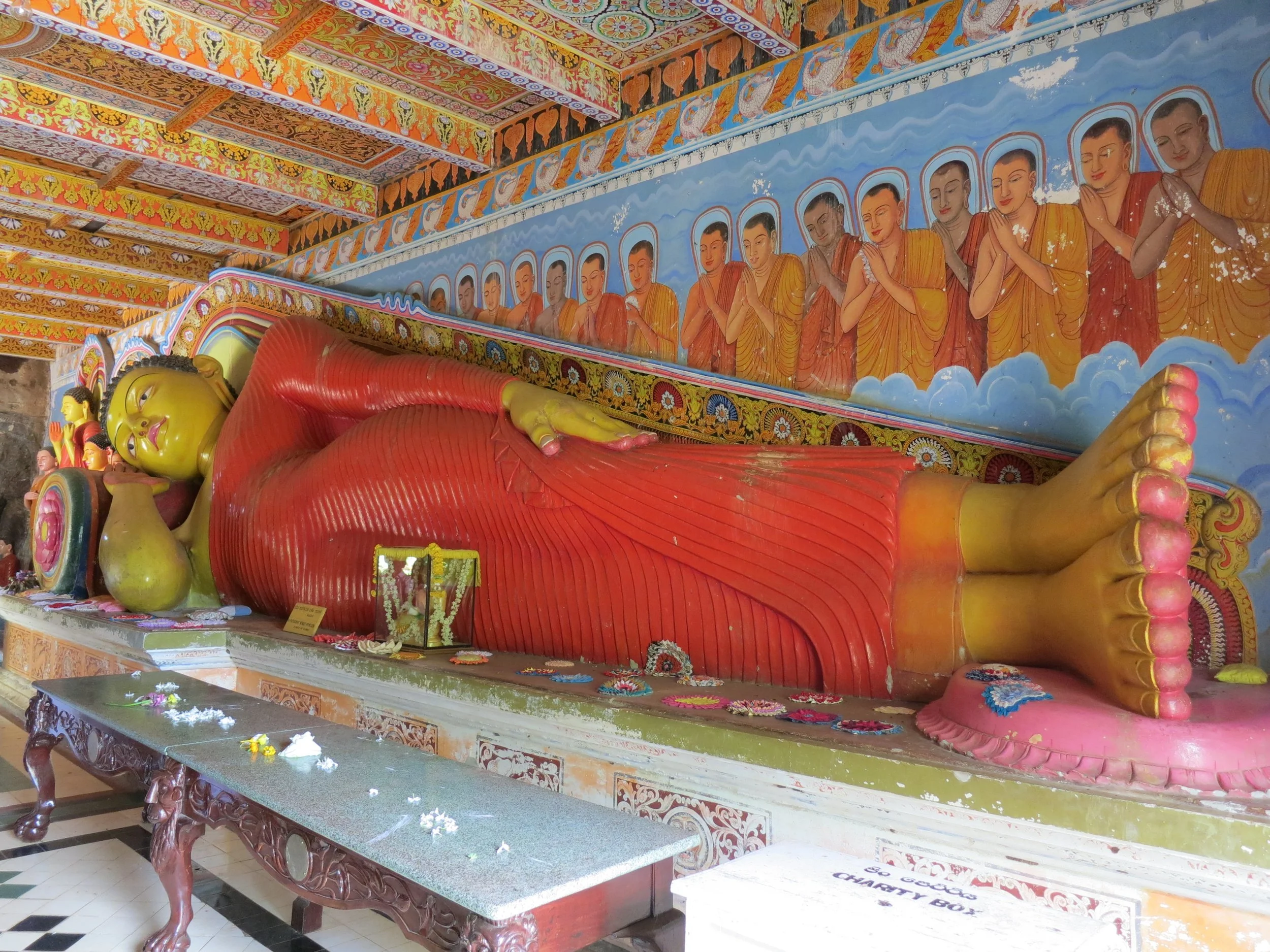
Inside the stupa in Anuradhapura.
Cultural Attractions
Sri Lanka’s rich cultural heritage blends Buddhist and Hindu traditions with Portuguese, Dutch and British influence. The island’s history is dominated by the evolution and incorporation of Buddhism into everyday life, and this is best understood by visiting an area referred to as the Cultural Triangle.
The Cultural Triangle is home to five of Sri Lanka’s UNESCO World Heritage Sites, all of which offer profound insight into the island’s ancient Buddhist history. They are well-connected by road and rail, making it easy to accommodate them into a point-to-point itinerary.
Anuradhapura - One of Asia’s oldest continuously occupied cities and the first capital of Sri Lanka, this ancient city is the historic centre of Buddhism. The city was abandoned after it was invaded and destroyed over 1000 years ago, but its palaces, stupas and monuments were restored and it remains an important spiritual site for Buddhists all across Asia. On Poya days and national Buddhist holidays, families, school groups and worshippers gather here for worship. Entrance fee: $30.
Polonnaruwa - The second capital of Sri Lanka after the destruction of Anuradhapura, this ancient garden-city was home to the royal family for over 150 years. The monumental ruins are remarkably preserved and showcase the creativity and expression of Sri Lanka’s medieval architects. The best way to explore the area is on a bicycle, which can be rented from the nearby town for as little as $3 per day. Entrance fee: $30.
Sigiriya - An ancient rock fortress that dominates the surrounding jungle landscape, Lion’s Rock is Sri Lanka’s globally-recognised monument that has become synonymous with the island’s rich cultural heritage. Climbing to the palace at the summit offers panoramic views of the Cultural Triangle, stretching as far as the Knuckles Mountains on a clear day, and a guided tour unlocks new discoveries of its role in the ancient Kingdom. Entrance fee: $35.
Pidurangala Rock offers incredible views of Lion’s Rock and the surrounding landscape - it is no longer the hidden gem it once was, but the congested climb is rewarded with unrivalled views. It has become a popular spot for good reason. Entrance fee: $3.
Dambulla Cave Temple - Natural caves that have been transformed into awe-inspiring Buddhist temples. This temple complex remains a living Buddhist site that attracts pilgrims and worshippers from all across Asia. It remains a unique tribute to the artistic expression of ancient Buddhists in Sri Lanka, combining expert craftsmanship with meticulous painting. Entrance fee: $10.
The Sacred City of Kandy - The capital of the ancient Kingdom of Kandy, the city was home to Sri Lanka’s last independent monarchy before British rule in the early 19th century. Nestled away in the Central Highlands between jungle and mountains, the city is the gateway to the island’s historic hill country. It served as the spiritual and commercial capital of the region throughout British colonial rule.
The city is home to the Temple of the Sacred Tooth Relic, one of Buddhism’s holiest shrines, around which the city of Kandy continues to develop. Historic Buddhist architecture exists alongside iconic British architecture such as the Queen’s Hotel, marking the contrast between the island’s native and imposed cultural heritage.
Other interesting attractions in the area include the Ambuluwawa Temple Complex and the Royal Botanical Gardens.
The cultural triangle emphasises the importance of Buddhism in the island’s history but often overlooks the key contribution of Hinduism and Tamil culture in shaping our modern understanding of Sri Lanka. Hinduism in Sri Lanka is predominantly focussed in the north of the island and in parts of the hill country, where Tamil migrants were brought by the British from South India to work on the tea plantations. Scattered throughout the hill country, small towns and villages are built around beautiful kovils that tower over homes, shops and schools, connected by historic trails and railways.
The most significant Hindu sites in Sri Lanka are located in the northern cities of Jaffna and Trincomalee. The Nallur Kandaswamy Temple is both spiritually and culturally significant for Sri Lankan Tamils and their diaspora, and has become a timeless beacon of devotion, identity and history in Jaffna. Visiting this Hindu temple is not only a spiritual experience but a social one, showcasing the sense of community that brought resilience during the Sri Lankan Civil War. Entrance fee: Free.
The Koneswaram Temple in Trincomalee is another beautiful example of Hindu craftsmanship and devotion. Perched on a cliff within the walls of an old Portuguese fortress, the temple complex overlooks the Indian Ocean and is an iconic pilgrimage site for Hindus in the region. The iconic Thousand-Pillared Hall that historically hosted ceremonies and religious events is an architectural masterpiece. Entrance fee: Free (donations encouraged).
Modern-day Sri Lanka is also heavily influenced by Islamic culture that was brought to the island by Arab merchants due to its strategic location on historic trade routes. Beautiful mosques are scattered across the island, the most notable being the Jami Ul-Afar Mosque in Colombo’s bustling Pettah district. The mosque is beautifully unconventional in its colour: a vibrant red inspired by pomegranate seeds, decorated with hand-painting white patterns, that stands in contrast to the rest of Pettah’s clustered buildings. Entrance fee: Free (donations encouraged).
Sri Lanka’s cultural heritage is shaped by Buddhism, Hinduism, Islam and colonial rule, and there is no better place to experience these interwoven histories than Sri Pada - or Adam’s Peak. A holy mountain that towers over the hill country, Sri Pada is a sacred pilgrimage site that holds spiritual significance for all religious groups on the island. Climbing its 6,000 steps to reach the peak is not for the faint-hearted, but it is rewarded with unrivalled panoramic views as far as the Indian Ocean almost 50 miles away. Entrance fee: Free (donations encouraged).
During pilgrimage season (January - May) the trail can become very congested - especially at sunrise and sunset when visitors take part in rituals and worship - but understanding the significance of this peak offers a window into the diversity and spirituality of this special island.
Many of Sri Lanka’s cultural attractions remain significant religious, spiritual and social sites for local communities, so visiting these places should be done with respect and sensitivity. Remain aware of your surroundings and dress appropriately, remembering to remove shoes and cover shoulders when entering religious grounds. If you are unsure about any sensitivities when visiting these sites, ask a local guide or staff member respectfully and they will advise you on best practices.
Surfing
One of Sri Lanka’s most iconic activities: surfing! Surfing enthusiasts travel from all over the world to experience the island’s waves. There are plenty of spots for beginners, experienced surfers, and anyone in between. If it’s your first time surfing, Weligama has a vast array of beginners surf schools and a consistent break on a sandy shore, meaning it is safe and easy to get going.
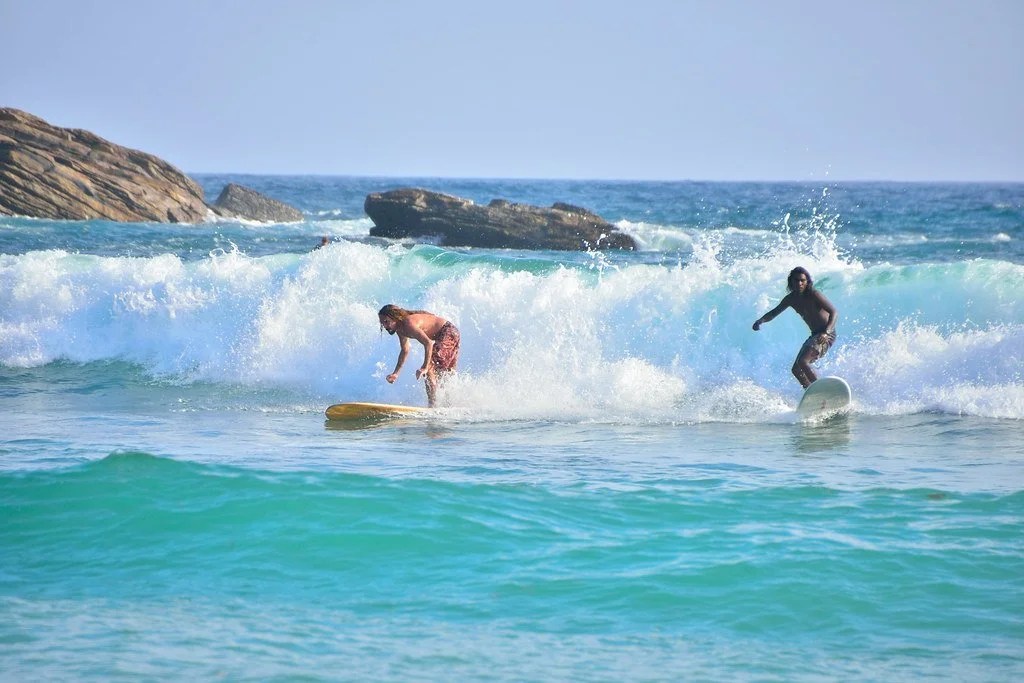
Hiriketiya Bay is a great place to rent a board if you have some experience, but it can become congested very quickly in the mornings and evenings. Early risers can beat the crowds and enjoy a stunning sunrise over the bay. Other popular spots include Marshmellow in Kabalana, SK Town near Matara, and Sticks in Ahangama, all of which offer reliable board rental, clean breaks, and a great sense of community amongst the surf school.
The south coast surfing scene peaks between December and May. Once the Yala monsoon arrives, most surf schools migrate to Arugam Bay in the east between June and October. Peanut Farm Beach and Whiskey Point are reliable spots to learn and gain some experience, while Okanda and Surf Point are best for experienced surfers hoping to escape the crowds. The combination of Arugam Bay and the south coast means that Sri Lanka is an all-year-round surf destination, so it’s possible to ride the waves whenever you choose to visit.
Unique Experiences
The best way to experience Sri Lanka is through its people. Sri Lankan hospitality is truly incredible, and the most memorable experiences are those that embrace the local community, respect the local environment, and give back to the people who offer so much. There are so many personalised experiences that will give every traveller a unique memory, but even among those there are some that still stand out.
While the main tourist trail typically traversed the southern parts of the island, some of the most important recent historical sites are in the north of the island. Ravaged by a 25-year long civil war that isolated many towns and cities from the rest of the island, travelling to towns such as Jaffna, Mullaitivu and Kilinochchi is crucial to understanding Sri Lanka’s recent history. Learning from a local guide offers an entirely different perspective on an island shaped by cultural, religious and lingual divides.
Sri Lanka Click Travel Mate offers a city tour of Jaffna and the surrounding areas, unlocking a whole new landscape of knowledge and cultural understanding. Mohan, the lead guide, is incredibly hospitable and accommodating, tailoring tours to personal interests, and offering a deeper understanding of this complex region. Cost estimate: $30 per day.
One of the most fun ways to experience Colombo is through TropiQuest, a Tuk-orienteering tour that takes you on a journey through the city with riddles and clues, guided by a local driver who immerses you in the culture. It’s the perfect way to learn about the city at a relaxed pace, accompanied by interesting activities and puzzles in a workbook that you can keep as a souvenir. This tour combines light-hearted fun with historical insight, as well as local engagement and some great food. Cost: $30 per person.
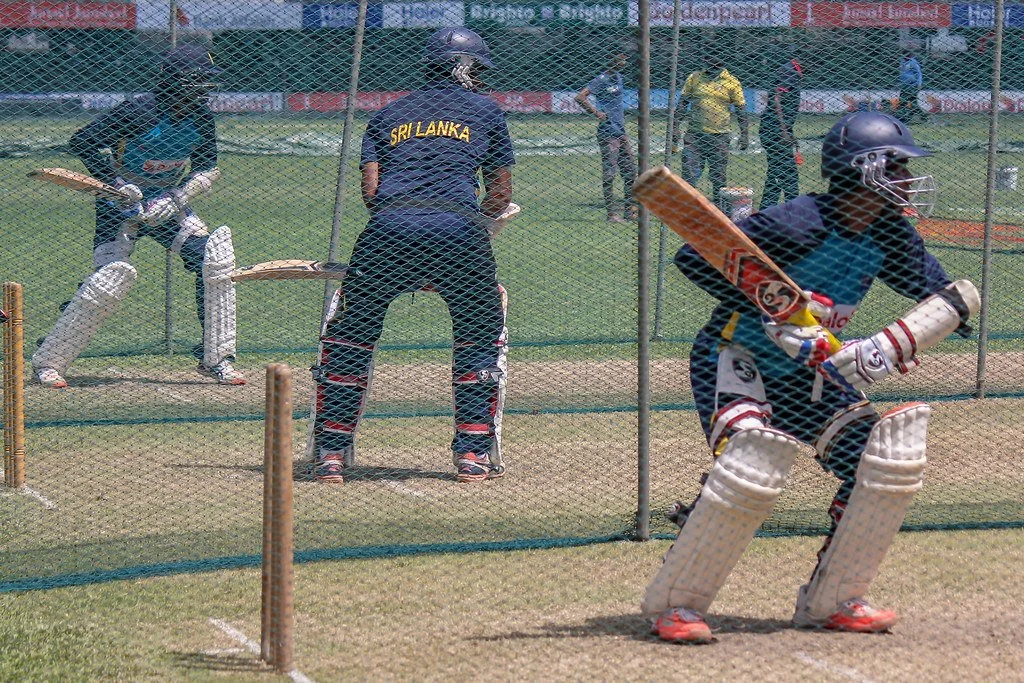
One of the most important parts of Sri Lankan culture is cricket. Everyone you meet is a cricket fanatic, and being part of the crowd at a national team cricket match is a special experience. The island’s stadiums are iconic, including Galle’s oceanfront stadium where spectators decorate the Fort walls, Pallekelle surrounded by Kandy’s rich jungle landscape on the riverbanks, and Colombo’s Premadasa Stadium that hosts rowdy fans singing and dancing to the tune of a brass band. Monitor Sri Lanka’s cricket fixtures and time your trip to align with a game - tickets are easy to get and affordable, and it makes for a memorable night. Cost estimate: $5 per person.
Another key component of Sri Lankan culture is tea. As one of the world’s largest exporters of tea, factories and plantations saturate much of the hill country and have shaped the economy for hundreds of years. At one end of the spectrum is the Grand Hotel in Nuwara Eliya, where high tea offers insight into British colonial history as drinks are served overlooking “Little England”, a former holiday resort for colonial rulers. Cost estimate: $30 per person.
It’s also possible to play snooker on antique tables inside the old hotel, supervised by Nimal Silva, a master’s snooker champion. The tables were transported by elephant over 150 years ago and the snooker hall remains a tribute to Nuwara Eliya’s rich heritage; stepping back in time to learn about the area and enjoy a game of snooker with a former professional is a fascinating way to spend an evening. Cost estimate: $10 per person.
At the other end, social enterprises such as AMBA Estate take pride in building the local economy through organic farming and sustainable practices. The estate focuses on redistributing tourism income into local villages and supporting livelihoods in an otherwise isolated part of the hill country. Their tea tasting and farm tours are hosted by a wonderful team of local staff, who personalise every experience and speak proudly of their economic model. It is a wholesome experience that showcases the importance of farming, tea, and sustainability in the hill country economy. Cost estimate: $10 per person.
These unique experiences go some way in discovering the hidden gems scattered across the island. However, the real list is endless. Meet local people, visit small towns and local restaurants, ask questions, show interest in their community. Every interaction will be unique in its own way, and this is how best to experience Sri Lankan hospitality.