
The food scene in Iceland is very unique in the blend of traditional dishes that are delicious, but also amazing cuisine from other cultures. Street food in Iceland is a big part of the culture. Seafood is also a large focus, from preservation-heavy Viking-era methods to modern, sustainable Nordic cuisine.

Pylsa, Polina Tankilevitch, CC0
Where to Eat – Street Food, Michelin Stars & Hidden Gems:
Local Cuisine:
Overall, Iceland is known for its seafood and its unique meats and cheese dishes. Within the capital city and outside of it, visitors will find it best to try a mix of traditional food and also just wonderful local restaurants with all types of cuisine. Many visitors often buy food in supermarkets and cook as opposed to going out to eat, average prices for groceries and restaurants tend to be expensive. To get the best value, one can shop at budget supermarkets like Bónus or Krónan.
Bæjarins Beztu Pylsur Hot Dog Stand in Reykjavík is one of these must-try spots. They serve the Icelandic hot dog, known locally as pylsa or pulsa. Unlike typical hot dogs, Iceland's version uses high-quality, locally-sourced ingredients, including lamb, beef, and pork. A hot dog with everything costs roughly $6.50 (880 ISK) with Combo Deals, 3 hot dogs, a drink, and a chocolate bar generally costs $20 (2,750 ISK). These costs are considered very affordable in Iceland and on the lower side of dining out for tourists. This stand is famous for having amazing versions of these hot dogs with different toppings and sauces; it’s a must-try when in Iceland.
Fjorubordid is a great option for trying the seafood and the legendary Langoustine: small, orange-pink crustaceans related to lobsters. Whether in tails smothered in garlic sauce or in delicious warm soup, it's an Icelandic must-try. Costs range from $55 to $110+ per person. This restaurant is located close to the epic waterfall Selfoss and around sixty kilometres from Reykjavík.
Unique Food and Drink Experiences:
Sól is a unique restaurant just about 20 minutes outside Reykjavík. Sól is a dining experience inside a vibrant greenhouse, where guests dine above a harvest. This restaurant prides itself on using the freshest local ingredients, including greenery from its own produce, ensuring a farm-to-table experience and a wonderful focus on sustainable dining. Inside Sól lives a delightful, green, and serene ambiance. The fresh food pairs perfectly with their cocktails which they use their own herbs and botanicals for. The prices are roughly $50 to $80+ per person for a main course, cocktails are often $15 – $25 per person.
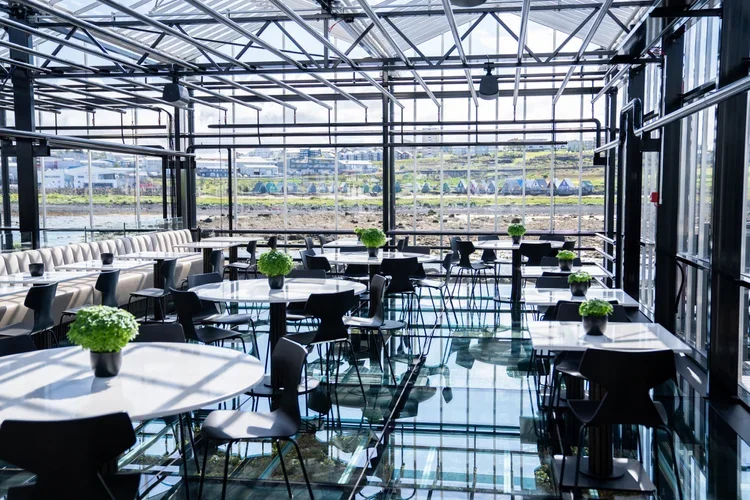
Image provided courtesy of Sól.
Friðheimar is another restaurant with incredibly fresh ingredients behind it. The business is run by a family whose parents are an agronomist and a horticulturist. The tomatoes are a major highlight of this restaurant as they grow them all year round at their farm. The restaurant is also highly dedicated to sustainability. Their efforts include utilizing geothermal energy, pure glacial water, biological pest control, and strict zero-waste practices, so that the farm minimizes its carbon footprint while safely producing a significant portion of Iceland's fresh tomatoes. Prices fall between between $50–$80 for main courses and drinks amongst 1 to 2 people. This delicious stop is located in South Iceland, right on the popular Golden Circle tourist route near Reykholt.
Dietary Restrictions:
If you have dietary restrictions or preferences, Iceland is most definitely accommodating. Due to Iceland’s plant-based and sustainable practices, vegetarians and vegans will be delighted by their delicious options.
Two restaurants with vegan options include Mama Reykjavik, which has inherently plant based Indian-focused cuisine, and Garðurinn, a family owned restaurant with homemade vegetarian, vegan and gluten-free dishes, soups and treats. Both restaurants are found in Iceland’s capital city and prices range from $16-$45.
In terms of Halal food, the capital city of Reykjavík has many options and diverse cuisines that are delicious. While dedicated halal restaurants are scarce, travelers can find halal-certified chicken and meat in supermarkets or food halls. However, the further one ventures outside the capital, the more limited the options can be; it would definitely be possible to avoid pork at the very least because of the plant-forward attitude.
Iceland fuses its dining experience with sustainability and nature so often that it’s an amazing part of the experience.