The Ainu: One of Japan’s Indigenous Groups

In August 2019, the Japanese government passed a law that officially recognized the Ainu as an Indigenous people group. After nearly two centuries of legalized discrimination, the Ainu are reclaiming their identity and history, and they are just getting started.
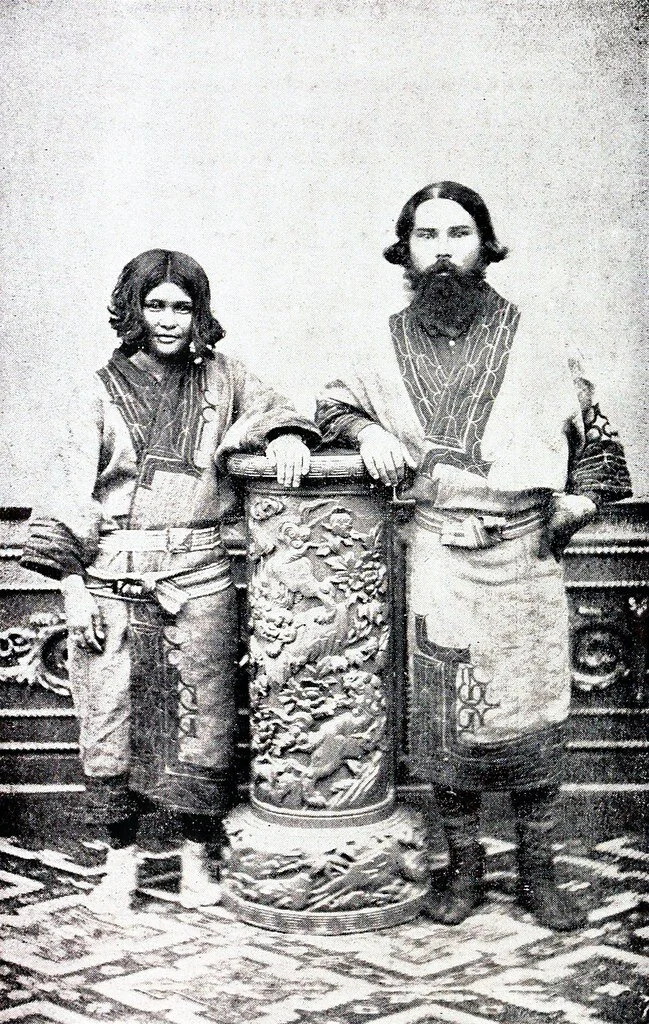
An Ainu couple before assimilation; their features are still different from those of their Japanese counterparts. Stuart Rankin. CC BY-NC 2.0.

In July, Japan unveiled the Upopoy National Ainu Museum, the country’s first cultural center dedicated to Indigenous identity. Located on the island of Hokkaido—one of the Ainu’s ancestral lands—the Upopoy Museum showcases the history of the Ainu through performances and historical relics. What is remarkable about the museum’s opening is not its resiliency amid a pandemic, but that the structure opened at all. Much like the power dynamic between American settlers and Native American tribes, the Ainu endured a legacy of forced assimilation by the ethnic Japanese and their ruling government.

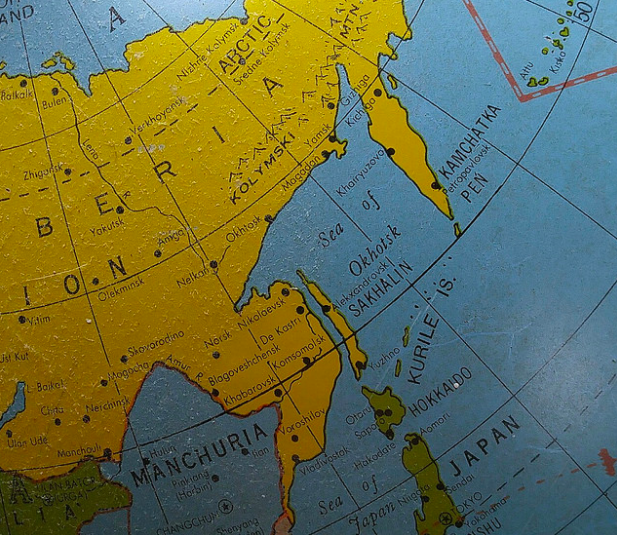
Before this, the Ainu were a hunter-gatherer tribe that inhabited the northern islands of Ezo (present-day Hokkaido), the Kuril Islands and the Russian island of Sakhalin. According to archaeological records, the Ainu called these lands home as early as the 14,500 B.C. The Ainu also had strong ties to animism, a belief that manifested itself in the relationship between the Ainu and the bears on the islands. The Ainu even created a ceremony in which bear cubs were taken, raised and then sacrificed in a ritual offering. These symbolic rites guided Ainu tradition and their balanced connection with nature.
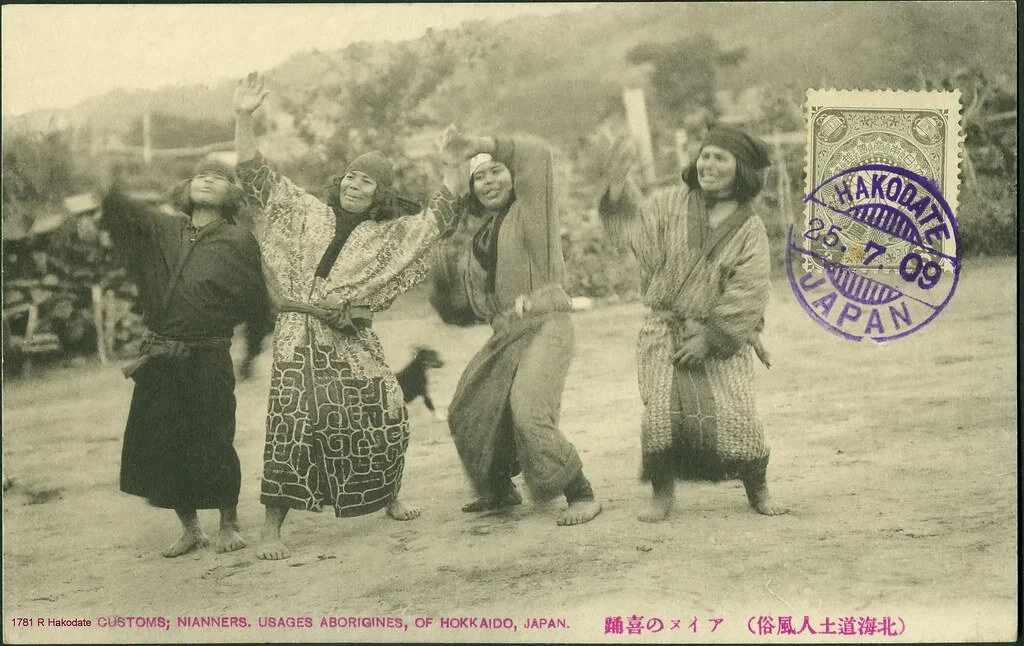
Ainu women performing a welcome dance on Hokkaido. Vladimir Tkalcic. CC BY-NC-ND 2.0.

When the Meiji government annexed Hokkaido in the late 19th century, the Ainu’s pastoral way of life was interrupted. While the Ainu lived in Japan, they physically differed from their Japanese counterparts. The Ainu have a more European look with lighter skin and thick hair. Men sported full beards, and women tattooed their lips once they reached adulthood. Because of this, the Japanese derided the Ainu as backward and foreign. Around this time, Japan also became the first non-European country to have defeated Russia in battle. Flush with victory and newly acquired lands, the Japanese sought to build up a national myth of military might and cultural homogeneity. One of these initiatives included a policy of forced assimilation on the island of Hokkaido.

The Japanese government enlisted the help of American consultants who had reeducated their own North American Indigenous groups. The Ainu were forced into Japanese-speaking schools and were required to change their names. As the land was repurposed for industrial and agricultural uses, the Ainu were pushed into wage labor and became an impoverished and politically disenfranchised minority. Even after World War II, the Ainu were deprived. To participate in the scientific advancements of the mid-20th century, the Japanese government essentially emboldened researchers to rob Ainu graves and remains.  
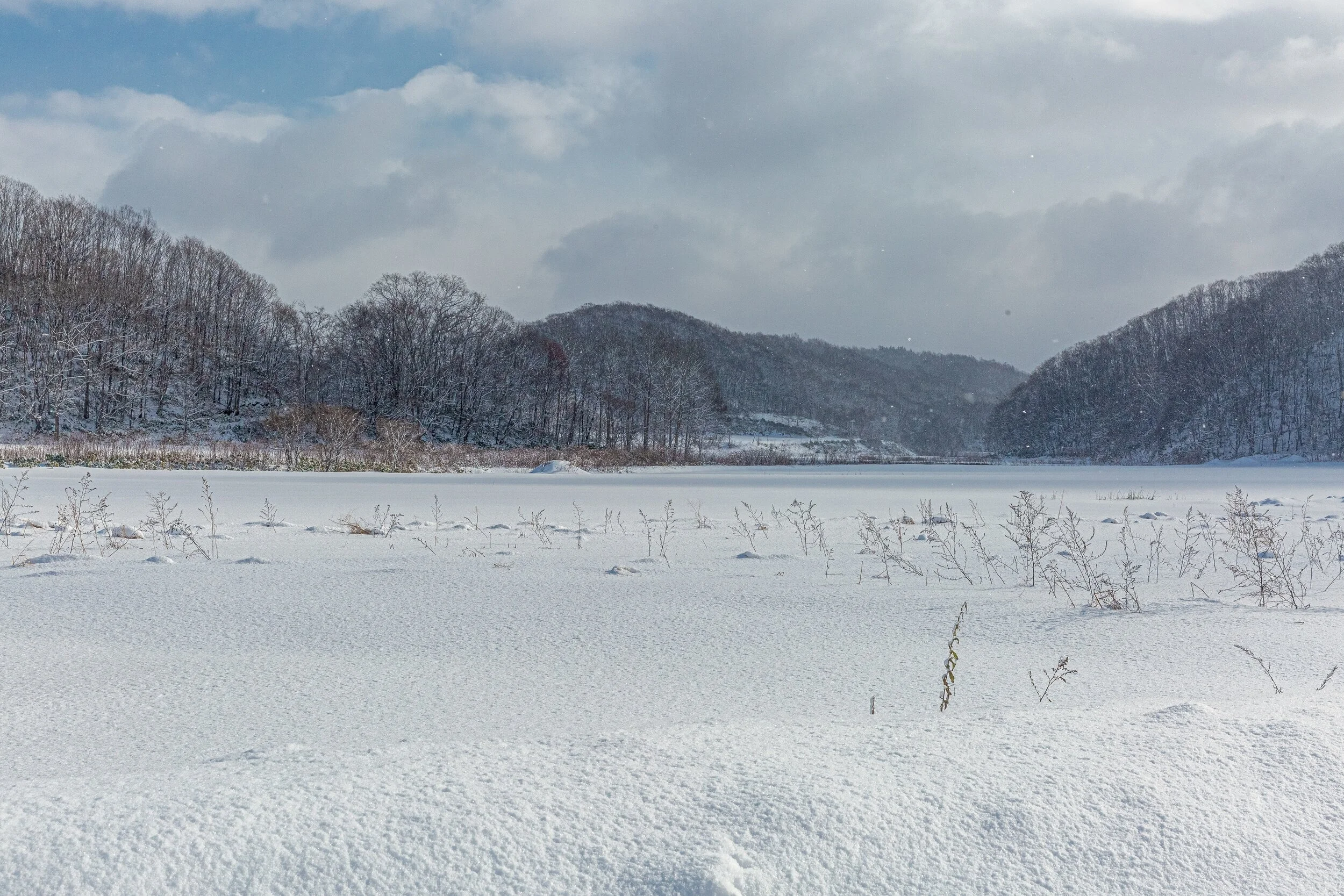
The Upopoy National Museum is housed in Hokkaido, one of the Ainu’s ancestral homelands. Marek Okon. Unsplash. 

In February 2019, the Japanese government introduced a bill that would officially recognize the ethnic Ainu minority as an Indigenous people for the first time. The bill included measures that would support Ainu communities, fund scholarships and educational opportunities, and allow the Ainu to cut down trees in nationally owned forests for use in traditional practices.

While many lauded the proposal, some felt that the bill missed a crucial element: an apology. In an interview with CNN, musician Oki Kano shared that he was only 20 years old when he found out that he was Ainu. Thanks to rigorous assimilation policies, the Ainu in Japan bear more resemblance to ethnic Japanese than past generations. Because of the ugly legacy of discrimination, however, the true number of Ainu still left in Japan is unknown. Due to fear, many of the Ainu have chosen to hide their background, leaving younger generations with limited if any knowledge about their heritage. The Ainu language is also at risk of extinction.

Although the bill became law in August 2019 and Tokyo University returned some of the robbed remains the following year, the fight for the Ainu people’s rights is just beginning. Despite widespread recognition and gradual acceptance of the Ainu, some feel the Ainu culture is at risk of tokenization. Though the preservation of Ainu culture is commendable, the Ainu’s future should also be considered if they are to have a chance at survival.


Rhiannon Koh

Rhiannon earned her B.A. in Urban Studies & Planning from UC San Diego. Her honors thesis was a speculative fiction piece exploring the aspects of surveillance technology, climate change, and the future of urbanized humanity. She is committed to expanding the stories we tell.
The Eerie History and Uncertain Future of Japan’s Rabbit Island

Ōkunoshima and its imperiled bunny population remind us that wildlife and tourism don’t always mix.

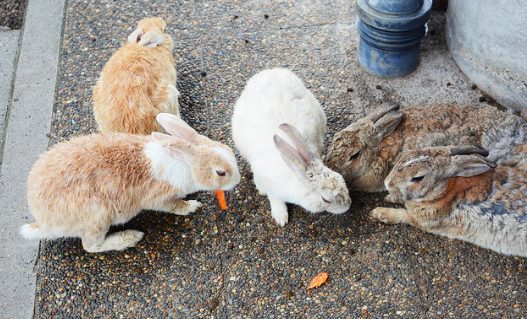
A cluster of bunnies on Rabbit Island. Cindy Pepper. CC BY-NC-ND 2.0

From its many “cat islands,” which boast more feline than human residents, to Jigokudani Monkey Park, where visitors can observe macaques bathing in the naturally occurring hot springs, Japan seems to overflow with fantastical wildlife enclaves. Perhaps the most adorable of all is Ōkunoshima, or “Rabbit Island”—but the cotton-tailed denizens for which this island is known belie its sinister past and ambiguous future.

While Ōkunoshima, located in the Hiroshima Prefecture, is a popular tourist destination for those looking to get their kawaii fix, it was once hidden from maps due to its clandestine status as a World War II military location. Production of chemical weapons in the island’s poison gas factory began in 1929, and apart from factory workers and army higher-ups, few citizens were aware of its existence.

Ōkunoshima was chosen for its location: discreet enough for goings-on there to remain under the radar, and far enough from densely populated cities like Tokyo to prevent mass casualties in case of an accident. The factory there eventually produced more than 6,000 tons of gas—primarily mustard gas and the irritant lewisite—before its closure at the end of the war. Chemicals wereould be shipped to Kitakyushu in the Fukuoka Prefecture to be weaponized, eventually resulting in more than 80,000 casualties (including and more than 6,000 deaths) among Chinese soldiers and civilians.

Despite the fact that Japan was a signatory to the 1929 Geneva Convention banning the use of chemical weapons, none of the country’s citizens were prosecuted for employing poison gas. After Japan’s defeat in the war, most of the Ōkunoshima factory was destroyed, but laboratory buildings, the shell of a power plant, an army barracks, and a few other edifices remain. In 1988, local governmental entities and citizens opened the Poison Gas Museum to pay tribute to this dark and little-known facet of Japanese history. Displays include the ineffective protective gear worn by workers at the factory, which left them vulnerable to exposure and subsequent illness, as well as equipment used to manufacture the gases.

So where did the bunnies enter the equation? We know that a colony of rabbits was brought to the factory during its operational years to test the effects of poisons, but beyond that, theories diverge. Some suggest that the original crop of rabbits was destroyed along with the factory, while others claim that workers set the bunnies free after the war. Another theory asserts that schoolchildren brought eight rabbits to the island in 1971, where they bred until they reached their current population of approximately 1,000.

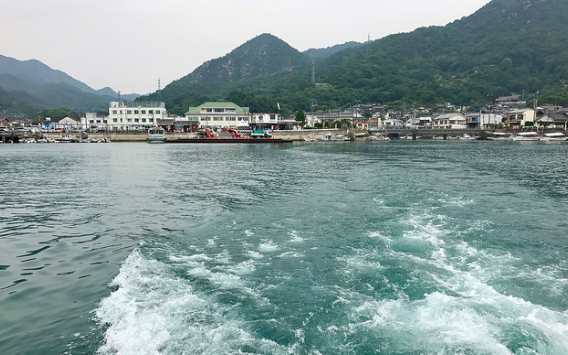
Tadanoumi Port viewed from the ferry to Ōkunoshima. Brian Shamblen. CC 2.0

Today, Ōkunoshima is easily accessible via a 15-minute ferry, and embodies peace, rest, and relaxation for tourists and locals alike. Visitors can easily explore it on foot (the island is less than 2.5 miles in circumference), collect souvenirs, dine, play tennis, swim in the ocean, and bathe in the hot spring—apart from communing with the wildlife, of course. Rabbit Island’s website describes it as a place to seek good fortune for your own family’s fertility, and advertises whipped ice cream and “original rabbit items” for sale, as well as octopus kelp rolls, a local delicacy known to pair well with sake.

Yet even the island’s thriving tourist industry and booming bunny population has a more sinister flip side. The wild rabbits depend on visitors for their food and water, but tourists often come bearing snacks that are harmful to the creatures’ delicate digestive systems—such as cabbage or vegetable peelings, which can cause fatal bloating. And while visitors are keen to share photos of their new fluffy friends online, social media has played a key role in destabilizing the rabbit population: Viral videos and articles have led to a vast influx of tourists in the past decade, and the resultant avalanche of snacks and treats has contributed to a breeding boom that the island’s ecosystem is unable to handle. These factors have combined to lower the bunnies’ life expectancy to only two years, compared to the three-to-five-year lifespan of the average wild rabbit.

The plight of the Ōkunoshima rabbits is just one example of the widespread harm social media has inflicted on wildlife populations across the globe: For instance, viral YouTube videos of slow lorises, wide-eyed nocturnal primates native to Southeast Asia, have led to people taking home lorises from the wild to keep as their own. Unfortunately, captivity is unhealthy for the animals, and they often end up relegated to props in tourist photos—or worse, sold into the illegal pet trade, and possibly slaughtered for use in cuisine or medicinals.

A curious bunny on Ōkunoshima seems to have mistaken the camera for a snack. Brian Shamblen. CC 2.0

Ultimately, bunny lovers need not be deterred from visiting Ōkunoshima, but following the rules is essential in order to treat the creatures kindly and foster their health and wellness. The Rabbit Island website lays out guidelines for responsible rabbit enthusiasts—including “refill water pans” and “check under your car,” as curious bunnies might hide underneath to escape the hot sun—and travelers can use their visit as an opportunity to educate friends and family about the unique perils posed to wildlife in the digital age. Approaching this mystical island mindfully is a small yet important step in helping the myriad diverse populations of the animal kingdom survive and thrive for many years to come.


TALYA PHELPS hails from the wilds of upstate New York, but dreams of exploring the globe. As former editor-in-chief at the student newspaper of her alma mater, Vassar College, and the daughter of a journalist, she hopes to follow her passion for writing and editing for many years to come. Contact her if you're looking for a spirited debate on the merits of the em dash vs. the hyphen.

An Island Disappears off the Coast of Japan

It remained unnoticed until local fishermen investigated.

Vintage globe depicting the Sea of Okhotsk. Robin Ottawa. CC BY-SA 2.0

This fall, Esanbe Hamakita Kojima, a tiny island off the northeast coast of Japan dropped out of sight. The island’s disappearance went unnoticed by inhabitants of the nearby village of Sarufutsu, situated on the northern tip of Hokkaido island only 1,640 feet away.

It wasn’t until September, when author Hiroshi Shimizu traveled to Sarufutsu to gather inspiration for his picture book on Japan’s islands, that authorities were notified of the island’s disappearance. Shimizu had been looking for the island but couldn’t locate it. He informed local fisherman who went out to investigate and finally noted that Esanbe was missing.

When Japan’s Coast Guard last surveyed the island in 1987, it was only 4.5 feet above sea level. Authorities could not confirm how large the island had been before the sea rose around it.

Esanbe is west of Japan’s Northern Territories and part of a set of islands that has been long-contested between Japan and Russia. The islands, called the Kurils by Russia, were taken by the Soviets shortly after World War II, but ownership today remains unclear. According to CNN, Esanbe functions as a marker of Japanese ownership in contested waters. But the strategy of claiming islands to maintain the maritime space around them is not exclusive to Esanbe. In fact, according to the Washington Post, Japan owns 158 uninhabited islands that the country named in 2014 so that the sea surrounding them could remain in Japanese control.

Thus, the disappearance of the island may have a slight effect on Japan’s territorial waters, as according to international law, countries can only claim ownership of the sea around an island if that island is visible at high tide. Coast Guard officials in Japan confirmed that Esanbe’s loss, “may affect Japan's territorial waters a tiny bit.” With the island underwater, Japan will have lost approximately 1,640 feet of territorial water.

The island’s disappearance was likely due to erosion by the wind and drift ice common in the Sea of Okhotsk each winter. According to coast guard official Tomoo Fujii, “There is a possibility that the islet has been eroded by wind and snow and, as a result, disappeared,” Asahi Shimbun of the Japanese Daily reported.

According to the Smithsonian, disappearances of land masses in this area of Japan are not unlikely. The good news for Japan’s border, however, is that this phenomenon can occur in reverse. Five years ago, a 1000-foot long island rose out of the sea, prompted by a landslide.


EMMA BRUCE is an undergraduate student studying English and marketing at Emerson College in Boston. While not writing she explores the nearest museums, reads poetry, and takes classes at her local dance studio. She is passionate about sustainable travel and can't wait to see where life will take her. 

Tides of Change : Japan to Resume Commercial Whaling

For more than thirty years, the island nation of Japan has fought to expand its commercial whaling operations. That fight has mostly been a losing one, with its efforts often being blocked by anti-whaling countries around the world and condemned by the International Whaling Commission, an organization whose members include Japan itself. However, Japan’s recently proposed exit from the commission will allow the country to reclaim one of its most time-honored traditions, and the move is drawing international criticism.

Two Minke Whales being loaded onto the Nisshin Maru. The ship has facilities on board which allow it to freeze and process whales while at sea. Australian Customs and Border Protection Service. CC BY-SA 3.0

In 1982 the International Whaling Commission, or IWC, imposed a global moratorium on all commercial whaling, save for subsistence whaling by Aboriginal communities. The moratorium went into effect in 1985 and was met with opposition from Iceland, Norway, and Japan, countries with strong whaling traditions. In Japan, whale meat generally served the same purpose that beef or lamb served in Western societies and this was especially true during hard times. In the 1940s as the country was recovering from World War 2, whale meat was the single most consumed meat among Japanese people, and it remained so through the 1960s. After the announcement of the IWC’s whaling ban, Japan petitioned for the right to continue whaling in the Antarctic for “scientific purposes” though the specific nature of its research remained unclear. Whale activists claimed that this “research whaling” was in fact, commercial whaling in disguise, and vessels like the Nisshin Maru, Japan’s largest whaling vessel and the world's only factory whaling ship, became a frequent target of animals rights groups, with some going so far as to board vessels of their own and try to disrupt the Maru’s whaling expeditions by obstructing its path. Earlier this year, Japan expressed a desire to develop new ships, fast enough to outrun those of the activists, but the plan appears to have been scrapped, as the Japanese government announced in late December that it will formally withdraw from the IWC, discontinue its operations in the Antarctic and resume commercial whaling operations in its own coastal waters. Though the demand for whale meat has diminished somewhat in Japan, the practice of whale fishing is still considered by many to be intrinsic to the country’s cultural identity.


Environmental conservation hinges on the idea that some of the Earth’s resources are non-renewable. Humans can hunt an animal to extinction, and that extinction creates an imbalance in the ecosystem that the animal once belonged to. The effects of that imbalance can, in turn, come back to haunt humans, either directly or indirectly. These are, however, relatively young ideas, and pitting them against hundreds of years of tradition is sure to be a test for all parties involved.


JONATHAN ROBINSON is an intern at CATALYST. He is a travel enthusiast always adding new people, places, experiences to his story. He hopes to use writing as a means to connect with others like himself. 


VIDEO: Schoolgirls For Sale in Japan

This Thursday at 12pm EDT, Simon Ostrovsky and Jake Adelstein will join 'On The Line' to discuss this story. Ask your questions on Twitter @VICENews with #OnTheLine: http://bit.ly/1Sgvvn2 Japan's obsession with cutesy culture has taken a dark turn, with schoolgirls now offering themselves for "walking dates" with adult men.

In an effort to understand a growing underground trade of school-aged girls, Vice News interviews women who have been caught up in this sinister business.