
By Jeremy Gordon
Anti-migrant groups have vowed to hold demonstrations every week, leading to fear of violence.
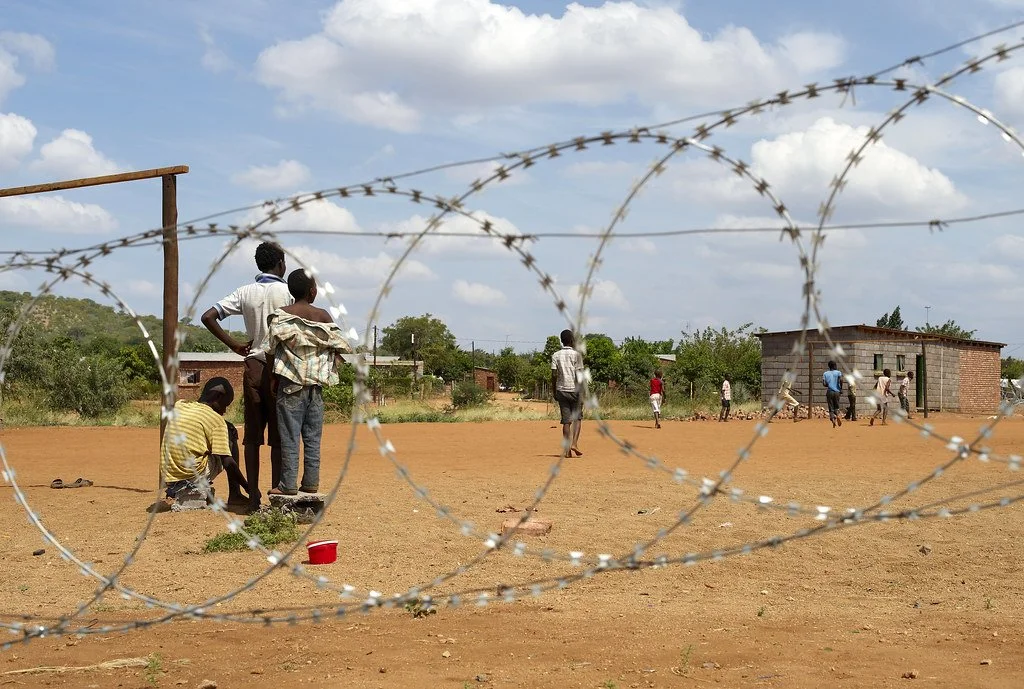
Child migrants crossing between Zimbabwe and South Africa. Dylan Thomas, UK Department for International Development. CC BY-NC-ND 2.0.
In South Africa, a wave of xenophobic rhetoric and violence has risen to precipitous heights. A severe unemployment crisis, a sky-high crime rate and a scarcity of government resources have created an atmosphere of rage and fear throughout the nation. Last month, civilian anti-migrant groups set a deadline of June 30 for undocumented migrants to be out of the country or face consequences. That deadline came and went with massive protests, over 3,000 soldiers deployed and more than 900 arrests made. Now, those same anti-migrant groups are vowing to hold similar demonstrations every week.
The group leading the charge is called March and March, led by Jacinta Ngobese-Zuma, a former radio presenter from the port city of Durban. The group has seized on the feelings of many South Africans who say their country has been too welcoming to refugees and migrants from other nations. And indeed, South Africa has been a haven for many fleeing hardship and instability, allowing refugees to integrate into society and seek gainful employment. And according to Deputy Home Affairs Minister Njabulo Nzuza, many do overstay their visas or otherwise game the system to stay longer.
The swell of migrants has been coupled with an economic crisis that has seen the unemployment rate rocket to 30 percent, and about 60 percent for young people. The crime rate in the nation is also among the highest in the world, and the government is constantly dealing with a shortage of funding and resources. These compounding crises have created an air of hostility and scapegoating. The large migrant camps spontaneously cropping up all over the country provide a visible target.
In recent months, the country has seen a rash of anti-migrant rhetoric spread across TikTok and other social media sites. Residents have seen armed vigilante groups patrolling their cities with sticks, whips and shields, hunting down migrants. Migrant businesses have been vandalized and their homes destroyed. There have even been deaths: Mozambique has said that five of its citizens were killed in xenophobic attacks in May, and a Malawian man was allegedly killed by a mob in Pietermaritzburg.
It all brings to mind the violent riots in 2008 that killed 60 migrants, some of whom were burned alive, and displaced tens of thousands of others. More deadly riots occurred in Johannesburg in September 2019, leaving 12 dead and hundreds arrested. Migrants and human rights groups fear a repeat of that violence, possibly in greater numbers, as these demonstrations threaten to become routine.
Scores of migrants have already fled the country, and thousands more are attempting to. Consulates in Cape Town are being overwhelmed by frightened nationals looking for help facilitating their returns. Malawi, Zimbabwe, Nigeria, Ghana and Mozambique have begun repatriating their citizens, though other countries, some ravaged by civil war, disease and their own economic disasters, have yet to do so. Sprawling camps have sprung up outside the consulates as migrants wait for their requests to be processed. For many, leaving seems better than the violent alternative.
South Africa’s president, Cyril Ramaphosa, has sought to quell tensions by empathizing with those frustrated with the country’s many crises. He has vowed to strengthen the country’s borders, crack down on undocumented migrants and address South Africa’s myriad social and economic issues. At the same time, he has deployed 3,405 members of the South African National Defence Force to ward off any outbreaks of violence. But given the scale of hostility, the organization of the anti-migrant movements and the backlog of migrants attempting to flee, it may not be enough.
Jeremy Gordon
Jeremy is a graduate student at Johns Hopkins University studying Creative Writing. He graduated from the University of Maryland with a bachelor's in Criminology and Criminal Justice and worked for four years as an Investigative Specialist with the Public Defender Service for DC.