
Ashley McDermott
The once-popular trend of living and working in a camper van is now declining amid negative media attention, stricter parking regulations and the widespread return to in-person work.
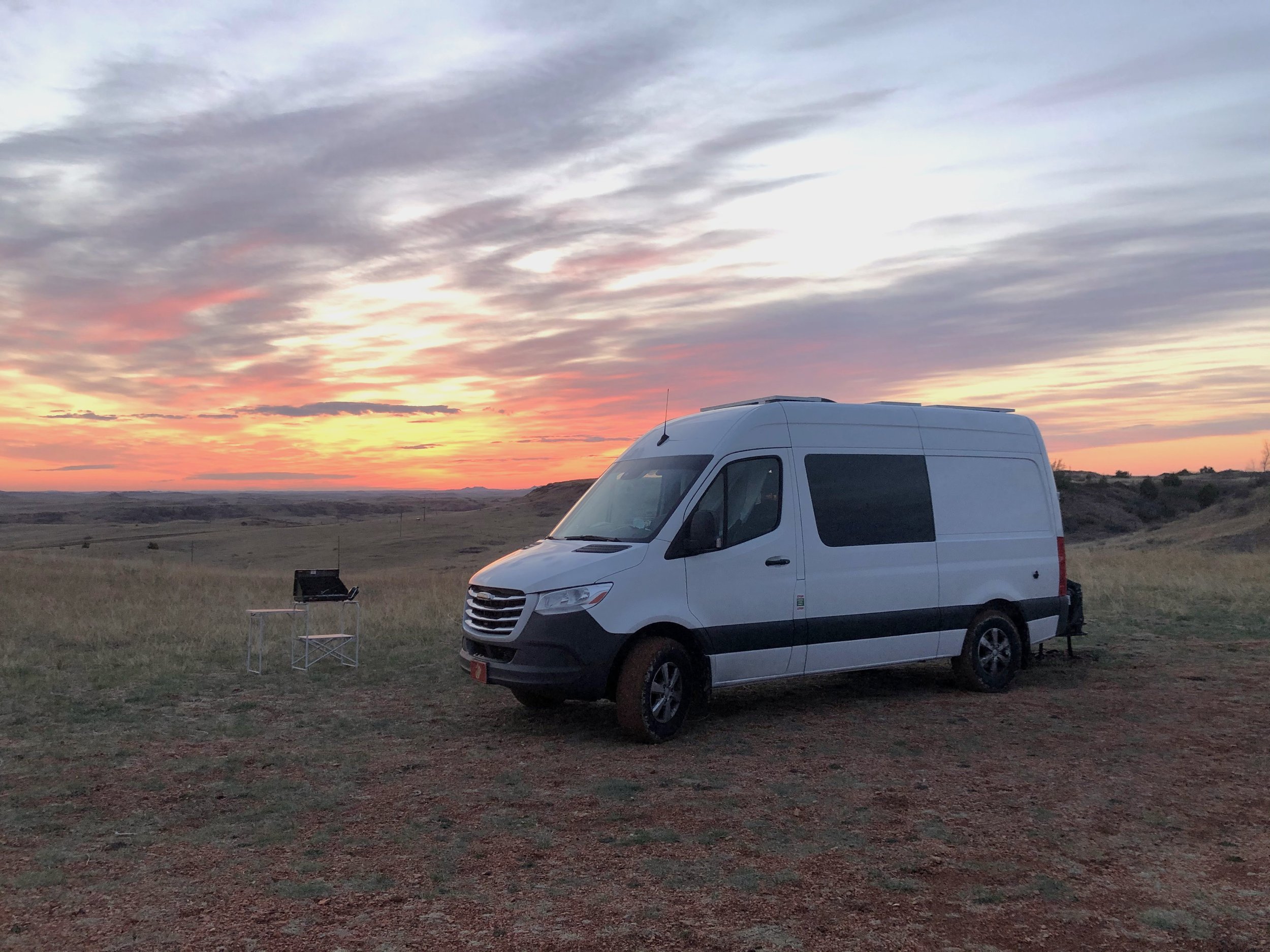
Camper van near Theodore Roosevelt National Park in Medora, North Dakota. Ashley McDermott.
In 2020, I briefly lived the “van life.” My partner and I sold both of our cars, bought an old sprinter van on the outskirts of Chicago, threw a used fold-out couch in it, put some solar panels on top and drove around the U.S. for four months. Though vacationing in mobile dwellings has been around since the Victorian era, traveling while living in a van soared in popularity during the COVID-19 pandemic with the viral #vanlife trend on social media. For us and many other Americans at the time, living and working in a van offered an escape from pandemic restrictions and an opportunity to travel that was otherwise unattainable with a 9-to-5 in-person job.
After four months of exploring the U.S.'s National Forests, Bureau of Land Management lands, state parks and truck stops, we retired our van life. For several years after that, we still used the van for weekend trips. But eventually, we traded it in for an SUV and a teardrop trailer; the van only had two seats, and we now had a family of three. We were not alone in quickly abandoning the trend. Since 2025, van life has slowly declined, as evidenced by falling RV sales and a drop in RV camping back to its 2018 levels. The causes of this decline are due to negative press about the safety of van life, restrictions on parking and the end of remote work for many in the U.S.
Perceptions of an idyllic van life were shattered by reporting on the death of Gabby Petito, a 22-year-old travel influencer who was documenting a cross-country trip in a converted van when she was murdered by her fiancé, Brian Laundrie. Her disappearance in 2021 and the subsequent discovery of her remains in Wyoming sparked widespread media coverage and spurred scrutiny of van life, particularly emphasizing the dangers of long-term remote travel for women.
Cities have also tightened restrictions on overnight parking to discourage camping. St. Petersburg, Florida, for example, passed an ordinance in 2024 that only allows camper vans to park for four hours on weekdays. The city had become a very popular van life destination due to the ease of parking, the high cost of local hotel accommodations and the subtropical climate. Van camping is also seen as undesirable in many communities due to associations with homelessness. During our own van journey, the police were called four times while we were parked legally on residential streets to visit friends. Though we never received the dreaded knock in the middle of the night with an officer telling us we had to move, these experiences made parking anywhere other than a designated campsite stressful.
Decline in van life is also connected to the post-pandemic decrease in remote work. As workplaces reopened and employers implemented "back-to-office" mandates, workers increasingly were required to be in-person, making the logistics of van life unsustainable. As of 2025, 70% of employers have formal return-to-office policies, and only 7% of companies allow fully remote roles.
Ultimately, many also quit van life because full-time van living is challenging. It is difficult to maneuver in the cramped quarters of a van, gas and diesel fuel are expensive and many regions do not have accessible free campsites.
"It was, at all times, piled doors to ceiling with luggage, groceries, bedding, kitchenware and the heavy metal ladder for accessing the rooftop tent, which we tended to throw haphazardly over the whole heap," says Caity Weaver, a reporter from The New York Times. Our van also looked quite different from the trending photos on Instagram, with a growing pile of unorganized coats, maps and two cats. Our fold-out couch took up the majority of the space inside the van, and the faux-wood paneling started to separate from the walls due to the constant shaking of the road. Still, given the challenges, we always talk about a new van in our future.
Ashley McDermott
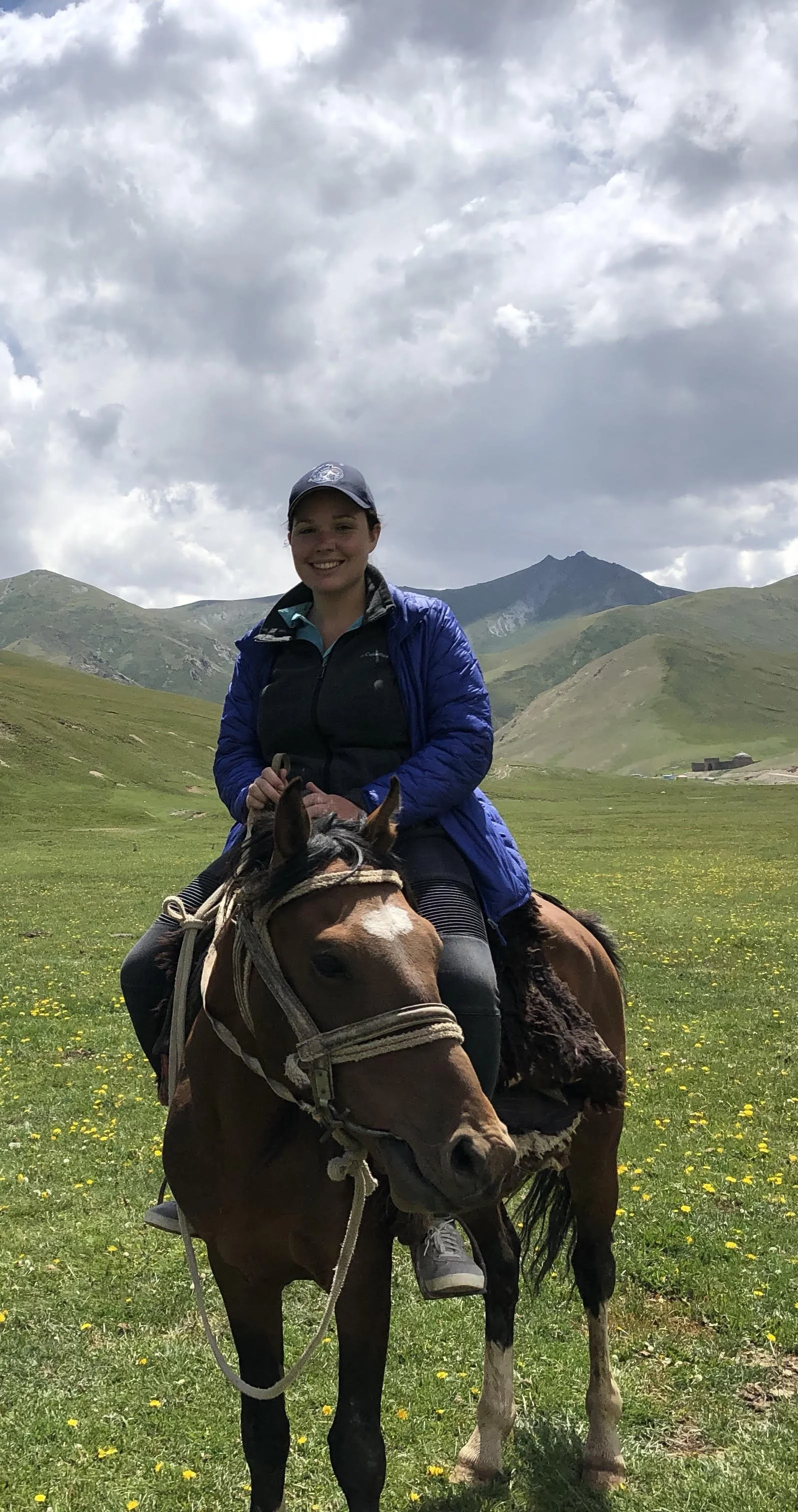
Ashley is a PhD candidate in Linguistic Anthropology at the University of Michigan. She is committed to making her research useful for the communities she works with. Her work explores how families navigate language use and language shift in Bishkek, Kyrgyzstan. When she’s not working on her research, you’ll find her adventuring with her toddler daughter, whose commentary keeps every day interesting.