
By Claire Garvin
Colombia, the predominant asylum nation for Venezuelan refugees, continues to display staggering rates of human trafficking of Venezuelans, despite legal and humanitarian efforts.
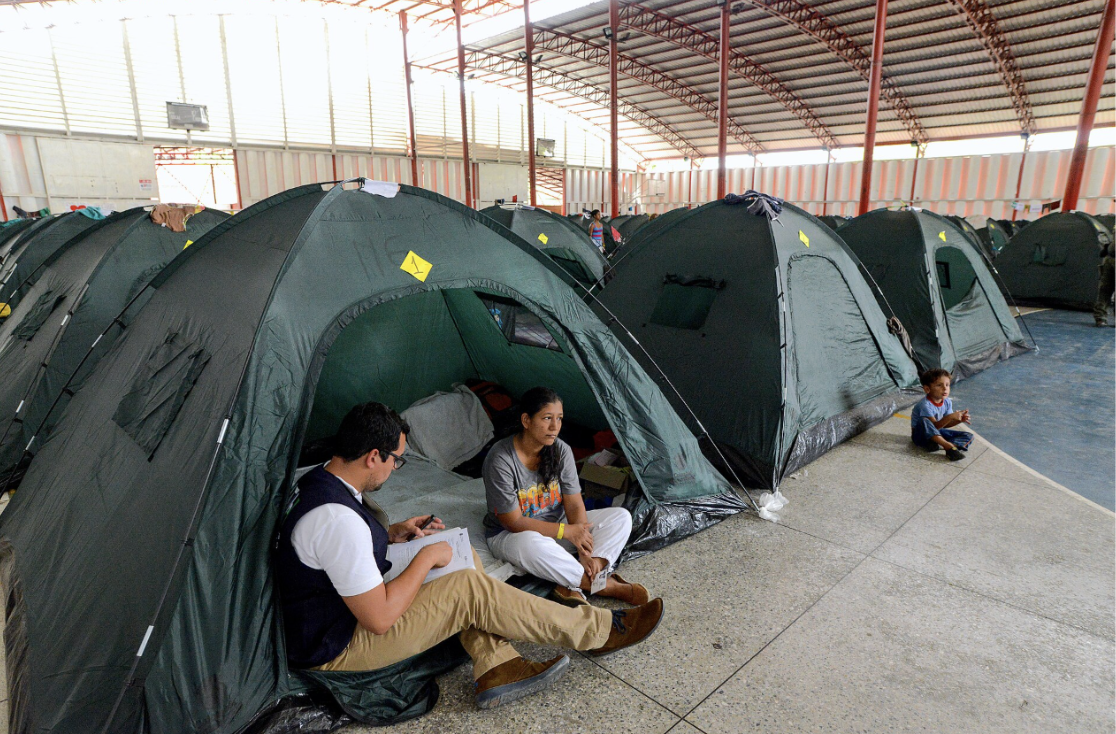
Venezuelan migrant recounting her migration story in a Colombian refugee shelter. Comision Interamericana de Derechos Humanos. CC BY 2.0.
When Angelica* arrived in Colombia, the 36-year-old Venezuelan woman felt free from her old life. Eager for work, lures of employment drew her into a human trafficking ring, where she faced labor exploitation with no clear escape. Her story is not unusual: in Colombia, the number of trafficking in persons cases, or TIP cases, is at a record high and continues to steadily increase.
As of early June 2026, over 7.6 million Venezuelans had been forcibly displaced, making it among Latin America’s largest forced exoduses in recent history. The majority of asylum-seeking migrants have fled to the neighboring nation of Colombia, with nearly 2.8 million Venezuelans in Colombia as of April 2026. The increase in Venezuelan migrants has correlated with a sharp increase in trafficking in persons, also known as human trafficking.
* Names have been changed to protect the identities.
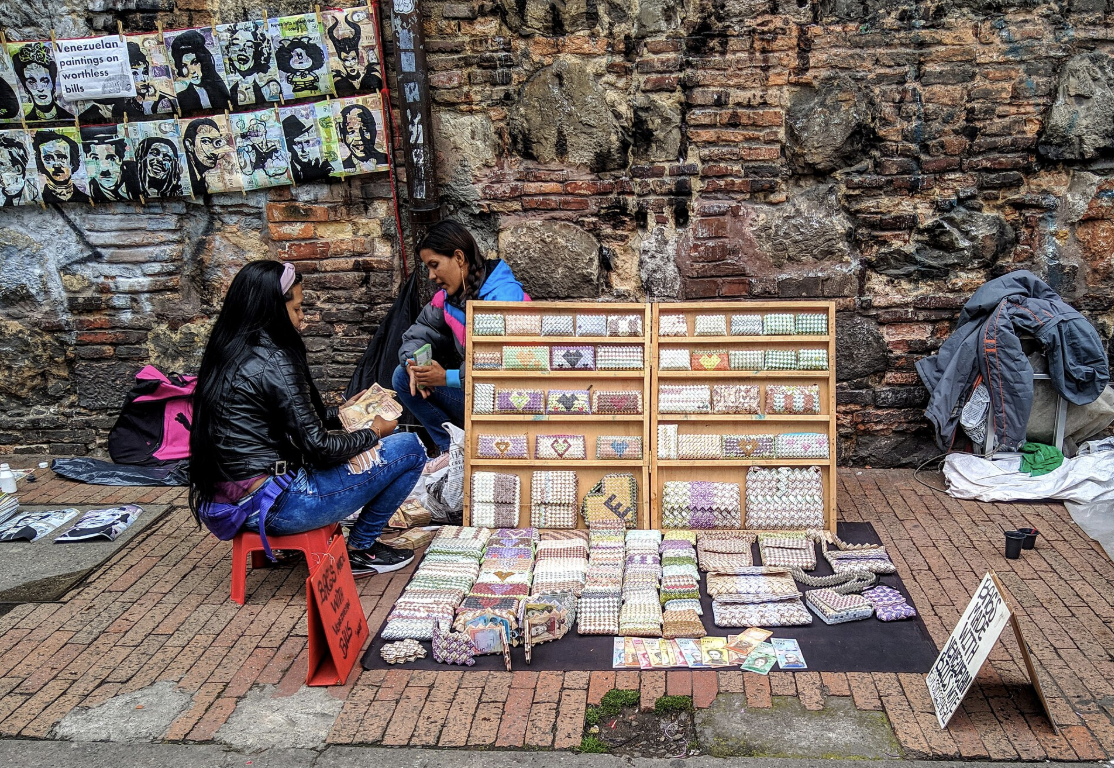
Venezuelan refugees selling crafts made of Venezuelan cash in Colombia. Reg Natarajan. CC BY 2.0.
Human trafficking is defined by the U.S. Department of Justice as “the exploitation of a person for labor, services, or commercial sex.” Today, the U.S. Citizenship and Immigration Services considers TIP a form of modern-day slavery.
While trafficking occurs in a myriad of forms, lures of work in informal sectors remain one of the most prevalent conditions through which the crime occurs. Particularly within the Darien Gap along the Colombia-Panama border, the only connecting landmass between Central and South America, victims are often exploited within the farming, domestic labor and construction sectors. Women and girls remain especially vulnerable, as prostitution frequently strikes a legal gray area in Colombia, which minimizes the prosecution of criminals. Between 2011 and 2016, only around 5% of cases ended in prosecution of the trafficker; many cases are never even brought to court.
Human trafficking not only threatens the safety and well-being of migrants but also harms the stability and security of Colombia. The nation has worked to implement plans to protect Venezuelan migrants, including providing all refugees and migrants with a 10-year Temporary Protection Status, which encompasses access to healthcare and education. Although nearly 2.5 million Venezuelans have registered, and over 60% of those with permits have enrolled in healthcare benefits, many Venezuelans struggle to find stable employment. Migrants are frequently forced to work in sectors of the economy without labor protection and stable income, leaving them vulnerable to trafficking schemes. Discrimination also plays a pivotal role in perpetuating human trafficking. For instance, one study found that Venezuelan families in Colombia were less likely than Colombian families to be chosen by a real estate agent when attempting to rent a home.
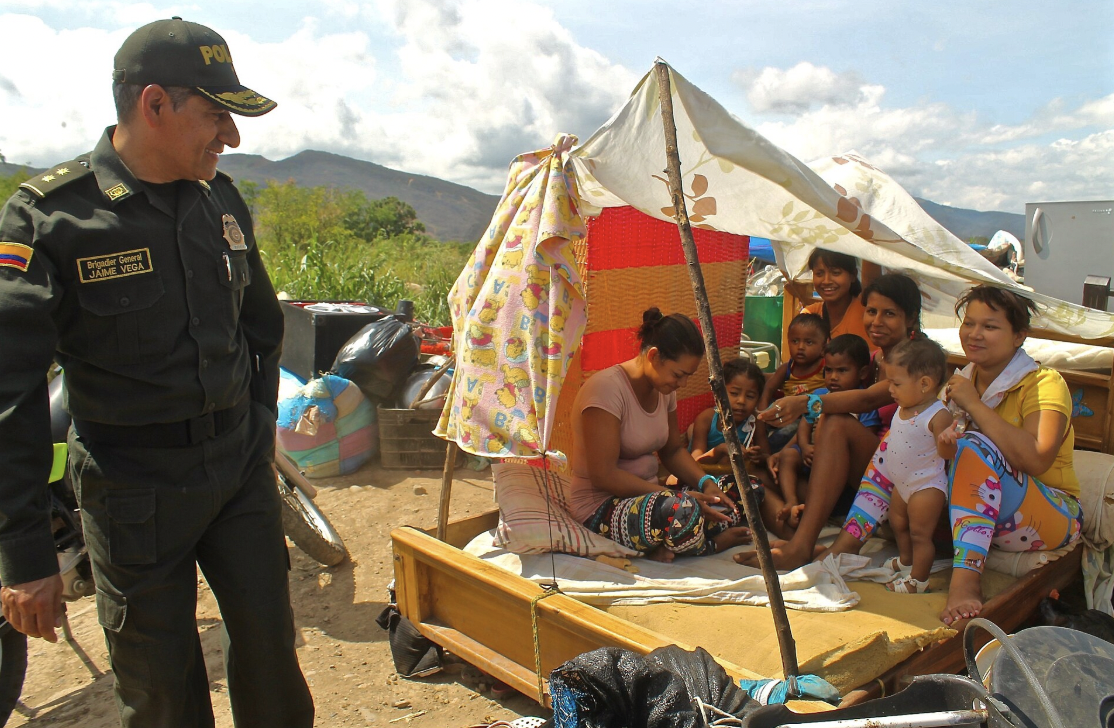
Refugees in Colombia within a constructed tent shelter. National Police of Colombia. CC BY-SA 2.0.
Victims not only fear retribution for exposing trafficking perpetrators, but also frequently note challenges in accessing legal support. Very few victim services are easily accessible, and, as noted by the U.S. Department of State 2025 Trafficking in Persons Report, there is an absence of “specialized shelters for trafficking victims” available within Colombia. Thus, despite progress in expediting access to social benefits and regularizing migrants to the nation, current legal processes in Colombia fail to prevent and intervene in ongoing trafficking.
Although fear, discrimination and worry persist, hope among Venezuelan migrants in Colombia is not lost. After escaping the human trafficking ring, Angelica was able to regularize with Colombia, enroll in school and build a new life. She remarks that she feels as though she has “grown new wings” and hopes that her story “can inspire other women who have endured the same pain.”
GET INVOLVED:
Learn more about the Venezuelan nonprofit Refugiados Unidos, which advances human rights awareness and provides legal assistance to refugees. Discover Fundacion Colombiana de Defensores de los Derechos Humanos, a nonprofit in Cucuta, Colombia, providing food, shelter and victim support to Venezuelan migrants and displaced persons in Colombia. Get involved with Human Rights Watch, an international nonprofit that investigates and reports evidence-based facts about human rights around the world, including violations of Venezuelan migrants.
Claire Garvin
Claire is a fourth-year student at Barnard College, Columbia University studying Neuroscience. She is interested in writing as a means of understanding the world, and she hopes to ignite meaningful change through her journalism. Outside of class, she enjoys baking, painting, and reading.