
By Cove Johnson Rabidoux
Modern technology is not just fueled by electricity but also by Congolese coltan miners, who face exploitation and unsafe working conditions.
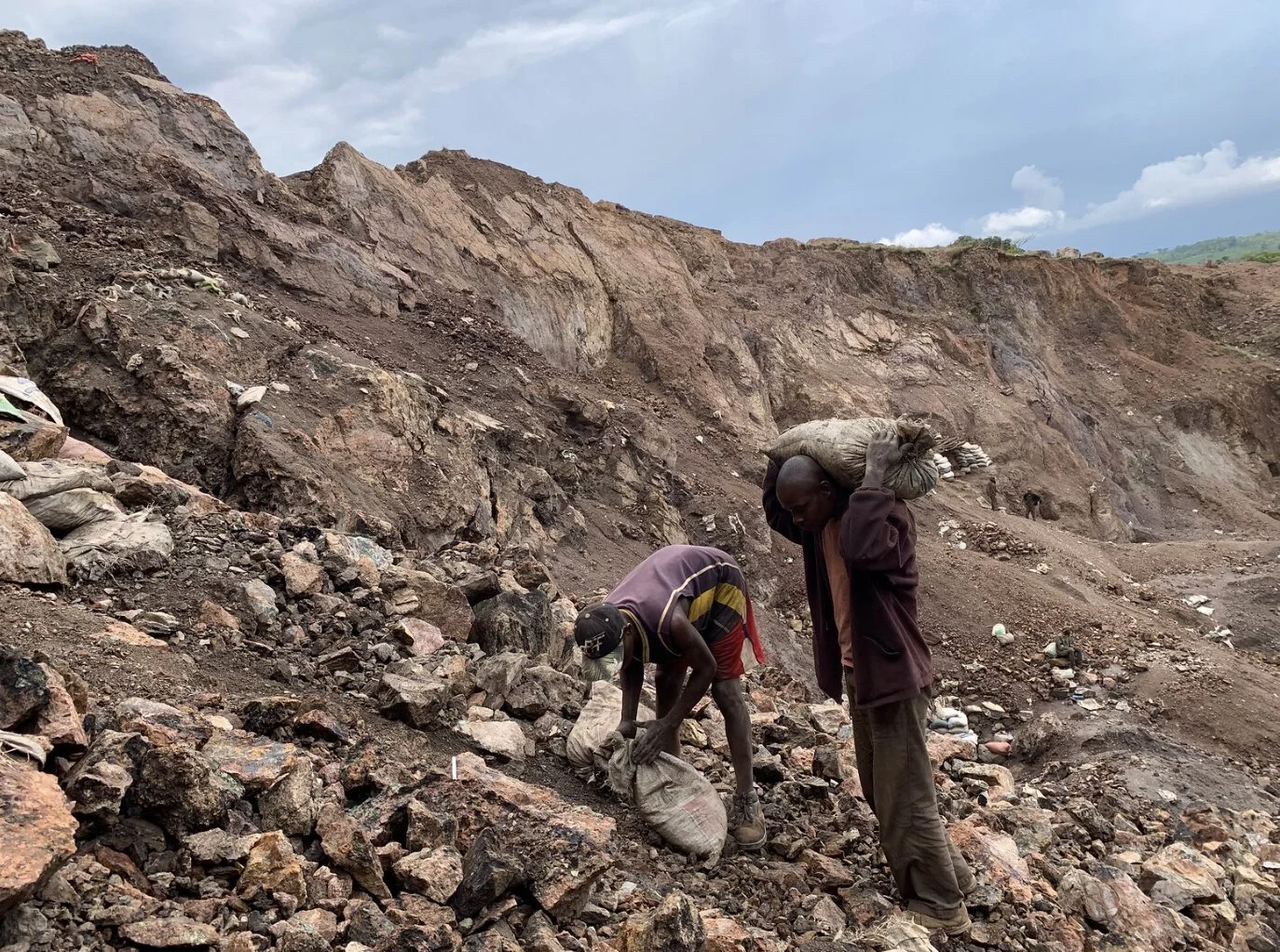
Coltan miners in the Congo. The International Institute for Environment and Development. CC BY-SA 2.5.
The Democratic Republic of the Congo (DRC) produces around 80% of the world's supply of coltan, a mineral commonly used in electronics, such as smartphones, batteries and laptops. Yet the extraction of this resource raises considerable concern, as it often relies on highly exploitative labor.
Nearly all of Congo's coltan is produced through small-scale artisanal mining. At these sites, miners endure physically demanding work with only basic tools, like shovels, pickaxes and their bare hands, to rely on. As a result, most of the mining tunnels are created by the miners themselves. Yet these tunnels are incredibly prone to collapse, with mining disasters becoming increasingly common. At the beginning of 2026, for instance, over 200 Congolese miners were killed after a landslide collapsed multiple mines.
“People dig everywhere, without control or safety measures,” one miner told AP News. “In a single pit, there can be as many as 500 miners, and because the tunnels run parallel, one collapse can affect many pits at once.”
Mine collapses are not the only threat facing coltan miners. Workers are also exposed to unstable terrain, physically demanding labor and dust particles that can result in long-term health complications and serious injuries. Harvard researcher Siddharth Kara commented, “There are hundreds of thousands of poor Congolese people touching and breathing (coltan) day in and day out. Young mothers with babies strapped to their backs, all breathing in this toxic cobalt dust.” This consistent exposure to coltan dust can lead to hard metal lung disease, a potentially fatal condition.
Yet despite these risks, an estimated 2 million people work in Congolese coltan mines, and tens of thousands of them are children. Amnesty International considers mining jobs aimed at children “one of the worst forms of child labour.” However, children are often forced into mining, as their parents can not afford to send them to school.
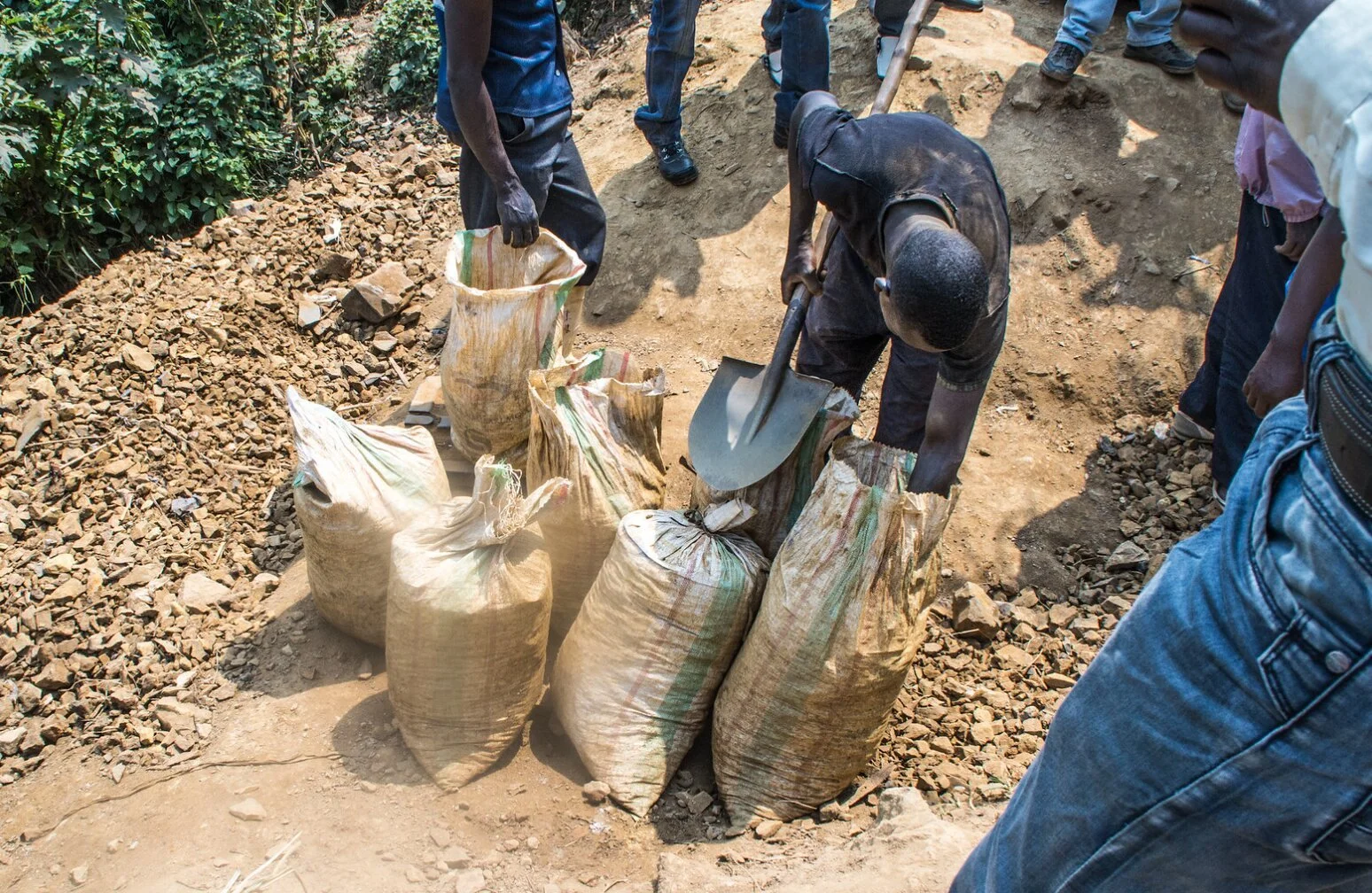
Miners bagging coltan in DRC. Fairphone. CC BY-NC 2.0.
But with daily salaries between just $2.15 and $8.60, most adult miners remain trapped in poverty. In fact, the Congo as a whole remains one of the poorest countries in the world.
While the country sold around $2.6 billion in coltan in 2016, only about 3% of that revenue returned to the economy. This highlights a striking contradiction: The DRC is rich in natural resources, yet its people continue to be impoverished.
Some scholars have described this dynamic as a form of economic neocolonialism, where the wealth generated from Congolese resources is seen elsewhere in the global supply chain. In most cases, it’s Chinese tech companies that reap this wealth. In 2008, China signed an agreement with the Congolese government to establish mining partnerships. Today, Chinese firms are involved in a large share of mining and make over 70% of the world’s electric vehicle batteries.
But this application of coltan is rarely felt by those in Congo, with 80% of the population living without reliable power. “We heard they sell (coltan) to China,” said one miner. “How the product will be used in China is not known. We are only told that this product has several uses. But we don’t know what they are.”
Unless meaningful changes are made to how the tech industry sources its materials, the gap between those who mine the resource and those who profit from it will continue to widen.
GET INVOLVED:
Support the education of children who have escaped the mines through the Congo Children Trust. Join Africa New Day’s advocacy coalition to fight for human rights protection in the Congo. Support miners who have experienced sexual violence through the Panzi Foundation. To stay informed about the Congo, follow along at Al Jazeera.

Cove Johnson Rabidoux
Cove is an English student at the University of California, Los Angeles. Her writing can be found in the Daily Bruin, The Teen Magazine, Piece of Cake Magazine, and other publications. In her free time, she enjoys reading and traveling.