
By Kate Dawson
Behind the vanilla industry lies a struggle in Madagascar, where small farmers face nightly threats on top of poverty, weak governance and a global demand that fuels a thriving black market.
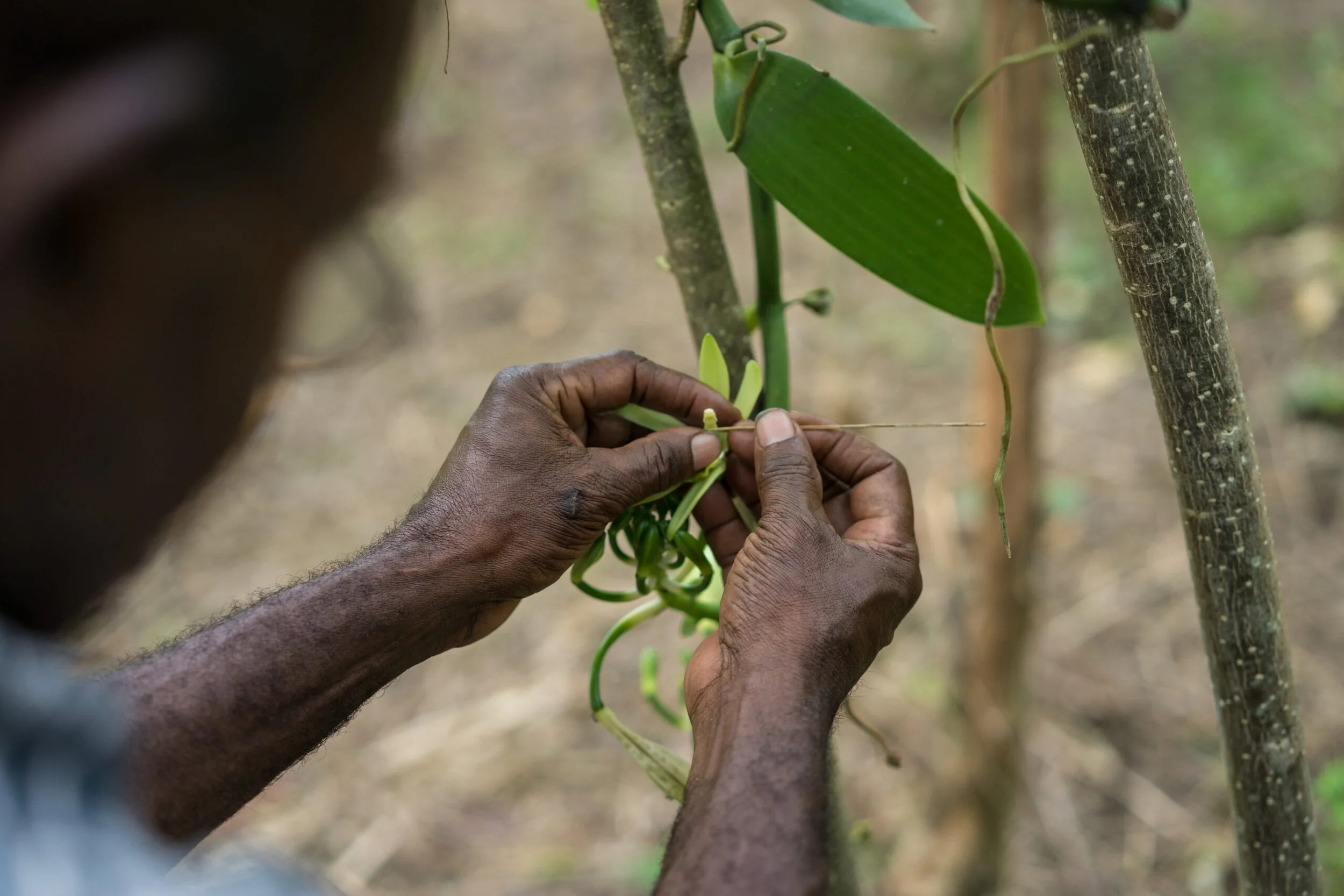
A farmer hand pollinating a vanilla bean. U.S. Agency for International Development. CC0.
Vanilla exists everywhere, from grocery store ice cream to luxury perfumes to scented candles that let you unwind at the end of a long day. It is a multi-million dollar commodity and a familiar global indulgence, and few consumers truly consider where it comes from. In Madagascar’s remote Sava region, which produces roughly 80% of the world’s natural vanilla, the sweet aroma masks a far more bitter reality.
Each night, Ninot Oclin, a farmer in Sambava, walks barefoot through the volcanic foothills with a rifle over his shoulder. He listens for the sound he dreads most; a misstep in the dark lets Oclin know that another thief is after his ripening vanilla.
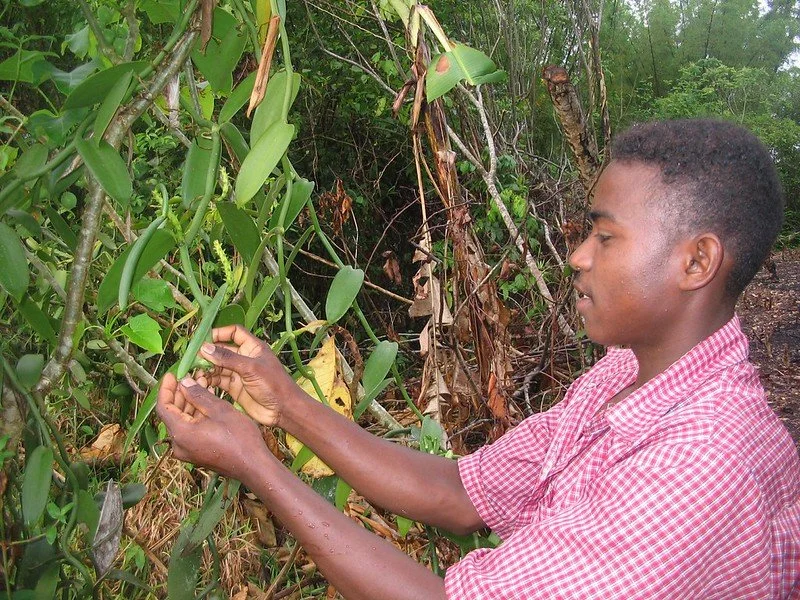
Farmer holding his ripened harvest in Sava, Madagascar. David Darricau. CC BY-NC-SA 2.0.
Vanilla harvesting begins roughly eight to nine months after pollination. Farmers must carefully monitor the pods. Since prematurely picked beans yield less flavor and overripe beans split and mold, the Malagasy government dictates the official start and end dates for harvesting and selling in each locality.
The rustle of leaves can mean nothing, or it can mean the loss of months of work. Every pod hanging from the vine represents hand pollination, careful tending and the income a family relies on for the year. One night of theft can erase an entire season’s earnings.
In a region where poverty is widespread and formal employment scarce, vanilla is a tempting target. As global demand for natural flavorings has surged, so have prices. In peak years, the cost of a single kilogram of cured vanilla reached nearly $600. This kind of value, concentrated on largely unprotected farmland, has fueled a dangerous black market.
Despite producing one of the world’s most valuable spices, many vanilla-growing families continue to live with economic uncertainty. “There is no security of goods or of people,” Michael Lomone, a vanilla exporter in Madagascar, shares. “The system of justice is rotten. There’s total impunity. It’s like cocaine in Latin America. They get the little guys, but not the head.”
As prices climbed, vanilla theft became increasingly dangerous. Farmers organized night watches, slept among their crops and armed themselves against thieves. In some communities, disputes over vanilla have escalated into violence, turning what was once a seasonal harvest into a source of constant anxiety.
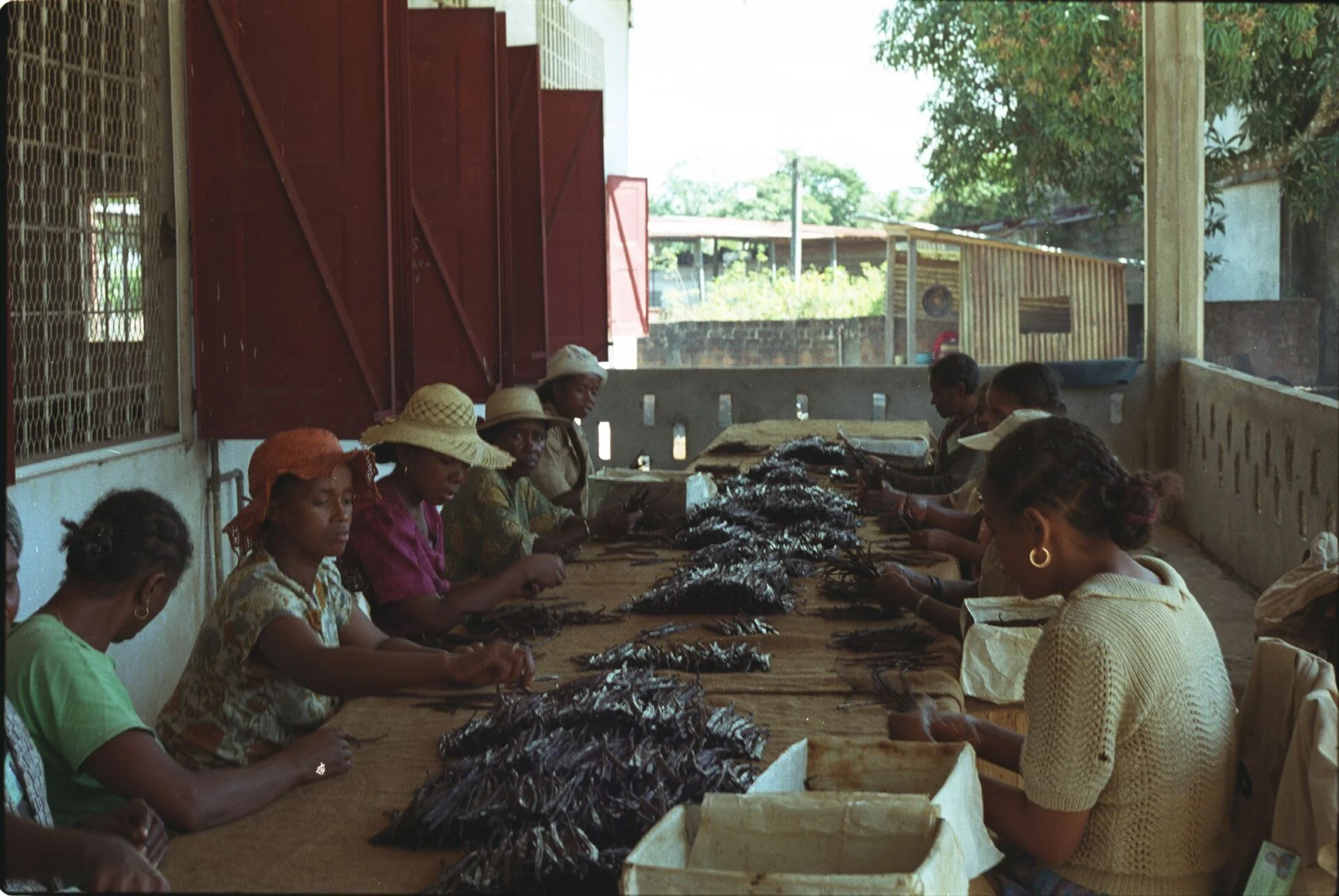
Group of Sambava women grading vanilla beans. Jonathan Talbot. CC BY 2.0.
For many families, stolen vanilla means more than lost profits. It can mean children staying home from school, postponed medical treatment or months without enough income to cover necessities.
Although vanilla products line supermarket shelves around the world, the people who grow the crop often see only a small share of the final value. Consumers may pay a few dollars for vanilla-flavored goods while farmers bear the risks of theft, crop failure and black markets.
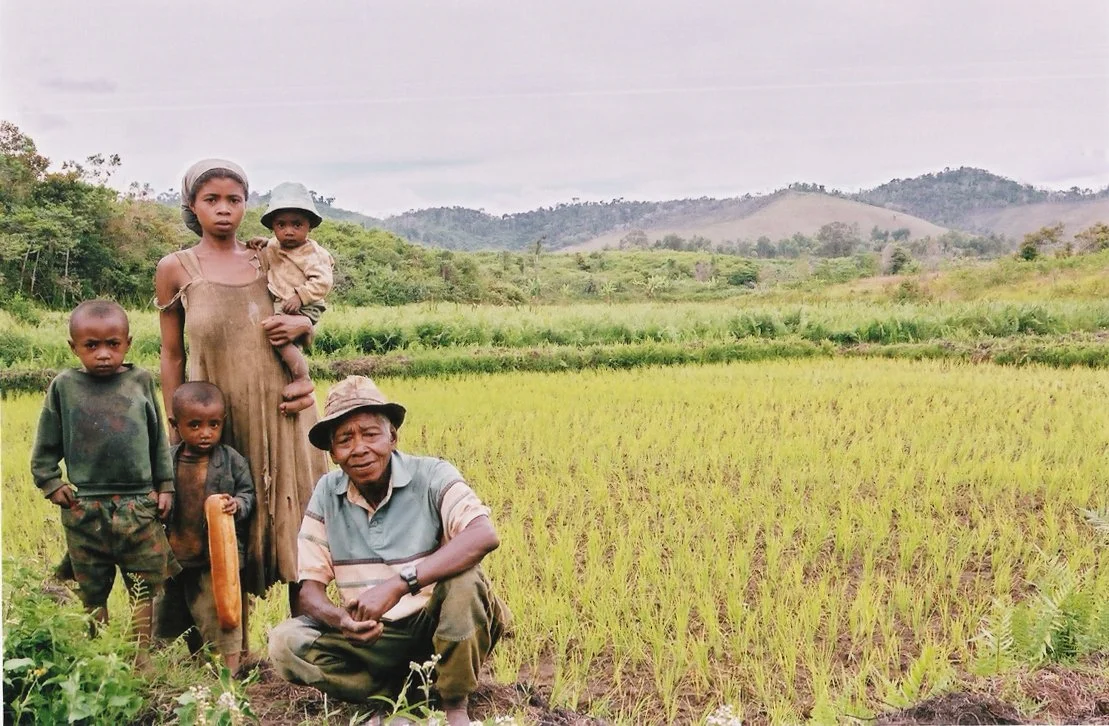
Family standing in front of their harvested land. Jonathan Talbot. CC BY 2.0.
Change is emerging. Some cooperatives now use barcoding and GPS tagging to trace beans from vine to exporter. Growers have implemented preventative strategies, such as physical pod branding, which uses custom-made pin tools to puncture or stamp unique signatures directly onto the vanilla pods.
NGOs are piloting income stabilization programs to reduce farmers’ vulnerability to price swings. The Malagasy government has experimented with fixed harvest dates to curb premature picking and theft. International buyers, under pressure from consumers, are beginning to demand transparency.
GET INVOLVED:
An industry group of major flavor companies and exporters, the Sustainable Vanilla Initiative (SVI), implements supply chain codes of conduct and traceability standards, as well as farmer support programs that help reduce exploitation and improve income self-sufficiency. By supporting the SVI, you are supporting traceability, living income, forest positivity and human rights. Help the SVI reach its goal of 50% of vanilla being sustainably sourced by 2030.
Shoppers can look for ethical branding, such as UJAMAA Spice, which partners directly with cooperatives to ensure profits go directly to the growers rather than middlemen.
Additionally, the Givaudan Foundation, Save the Children’s “Vanilla for Change” campaign and the Livelihoods Fund for Family Farming are NGOs that partner with the local communities.
These organizations operate in the Sava region to break generational cycles of poverty and develop resilient supply chains. This creates less dependency on the dangerous black market and pushes for fairer, more direct market access.
Improving the health and infrastructure of Madagascar’s vanilla industry can alleviate the poverty that often drives local theft.
The path to supporting ethical vanilla is simple: Choose brands that disclose their sourcing, look for fair-trade certifications and understand that “cheap vanilla” often comes at a human cost.

Kate Dawson
Kate is a student at the University of North Carolina at Chapel Hill, double majoring in Public Policy and Journalism. Her passion to share stories and love for environmental justice inspires her writing. She hopes to change the world by empowering others.