
By Cove Johnson Rabidoux
Community involvement and conservation policies are clear indicators of a safari’s commitment to ethical tourism.
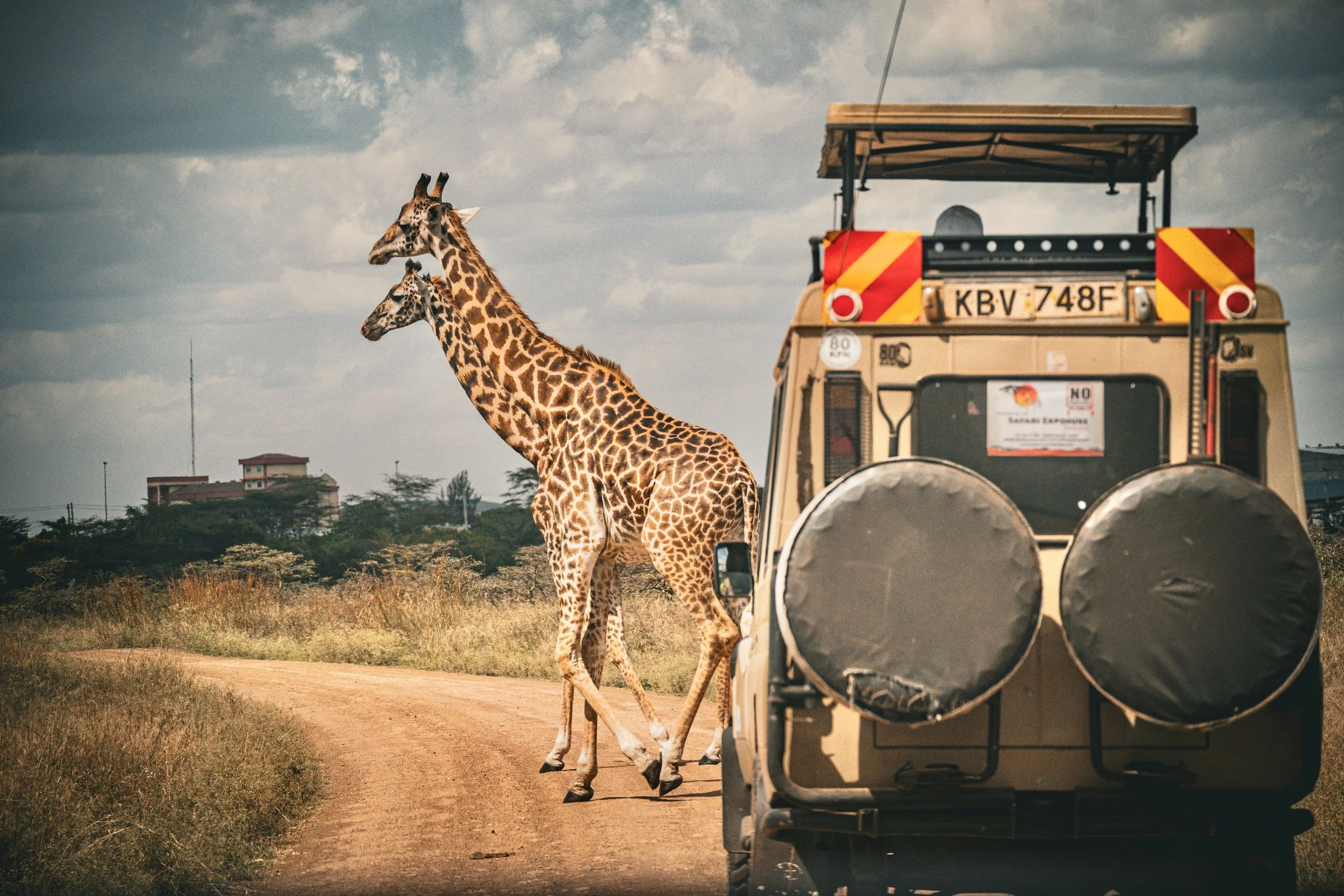
Safari jeep driving near giraffe. Zacchaeus Rains. Pexels.
With around 12 million wildlife tours estimated to occur each year, wildlife tourism has become a major global industry. In particular, African safaris attract travelers from across the world. But while safaris can contribute to conservation and community development, some have been criticized for prioritizing profit over animal welfare. This leaves many travelers grappling with an important question: How can you identify an ethical safari?
While no single standard exists, several factors can help travelers evaluate whether a safari prioritizes animal welfare, conservation and community involvement.
One of the most important things to consider is whether a safari promotes close-contact interactions with wildlife. These interactions include feeding predators, walking with lions, riding elephants and taking selfies with wild animals. While such experiences may appear harmless, conservationists argue that they are detrimental to the animals’ well-being. According to Discover Africa, close-contact animal interactions "often rely on animals that have been ‘habituated’ [to human contact] through unnatural means, predator baiting, or even physical abuse."
Wildlife selfies have drawn particular criticism. Experts note that creating these encounters often requires extensive human handling, including restraint, which compromises an animal’s welfare. In fact, research by an Oregon State University scientist found that animals used for selfies frequently displayed significant stress.
But it’s not just animal welfare that travelers should look at when evaluating a safari. Community engagement also plays an important role. Safari operators that exclude local communities can disrupt their daily lives. Responsible Travel notes that “indigenous groups such as the San, Maasai and Batwa face the very real prospect of losing their traditional way of life, skills and rituals that have been part of their culture for centuries.” Additionally, when operators exclude local communities from tourism revenue, they often exacerbate economic disparities.
For this reason, many argue that local communities should be active participants in safari operations rather than passive observers. According to conservation experts, including locals can create economic incentives for wildlife protection while ensuring that residents benefit directly from conservation efforts.
Conservation initiatives are another indication of whether a safari operator is actually committed to protecting their wildlife. Many ethical safari operators contribute to wildlife monitoring, habitat restoration, anti-poaching initiatives and environmental education programs. While these efforts vary by organization, reputable operators are almost always transparent about their conservation work.
That’s why a final factor travelers should look for is transparency. Ethical safari companies are typically pretty clear about their practices, such as animal interaction policies and community involvement. If information is difficult to find or an operator makes vague claims without evidence, you may want to conduct additional research before booking.
As wildlife tourism continues to grow, travelers have increasing influence over the industry. By choosing safari operators that prioritize animal welfare and community conservation, visitors can help support both local people and the surrounding wildlife.

Cove Johnson Rabidoux
Cove is an English student at the University of California, Los Angeles. Her writing can be found in the Daily Bruin, The Teen Magazine, Piece of Cake Magazine, and other publications. In her free time, she enjoys reading and traveling.