
By Nina Esteghamat
Cologne, Germany, is the unexpected epicenter of European queer celebration, with its gay districts, carnivals and multiple pride parades
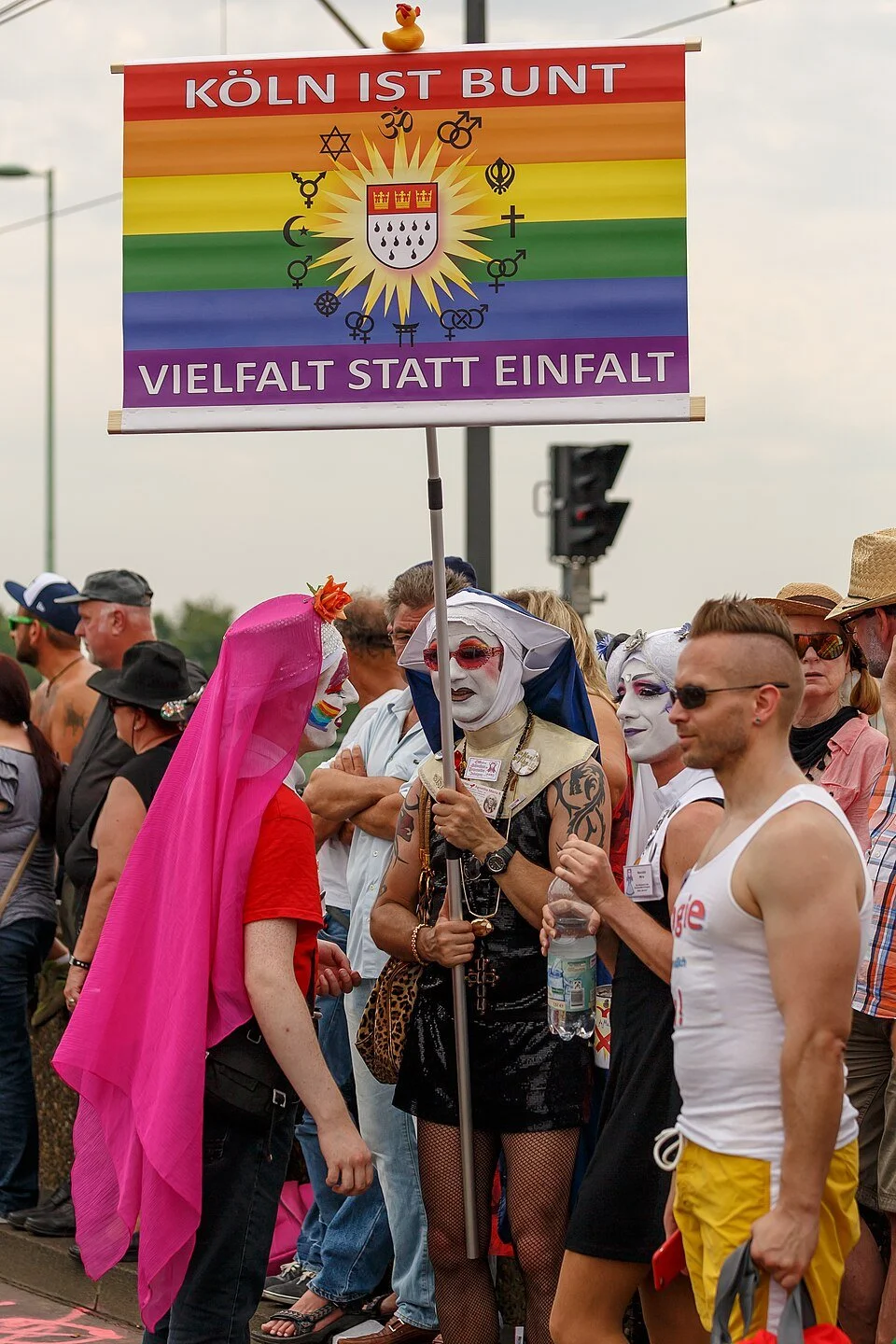
Cologne Pride banner that translates to “Cologne is colorful, plurality instead of simplicity.” Uwe Aranas. CC BY-SA 3.0.
I first learned about Cologne during an oral history project, where one of my peers shared an interview she conducted with her German aunt. They joked about Cologne, hinting at the number of lesbian bars in the city. It turns out that, for those in the know, Cologne is the queer center of Germany. In fact, some say the city holds the spot for Europe’s second greatest pride parade, short only of Madrid. Cologne subsequently has more infrastructure designed for the LGBTQ+ community, including an LGBT Advisory Committee, founded in 2006, and an LGBT office, established four years later, in the city council.
There are two gay neighborhoods in Cologne: Rudolfplatz and Altstadt. Rudolfplatz, colloquially known as the “Bermuda Triangle,” is the newer, more modern district, with lots of restaurants, queer bars and shopping. Altstadt, or “Old Town,” is aptly named for its historical buildings and older, pub-like atmosphere.
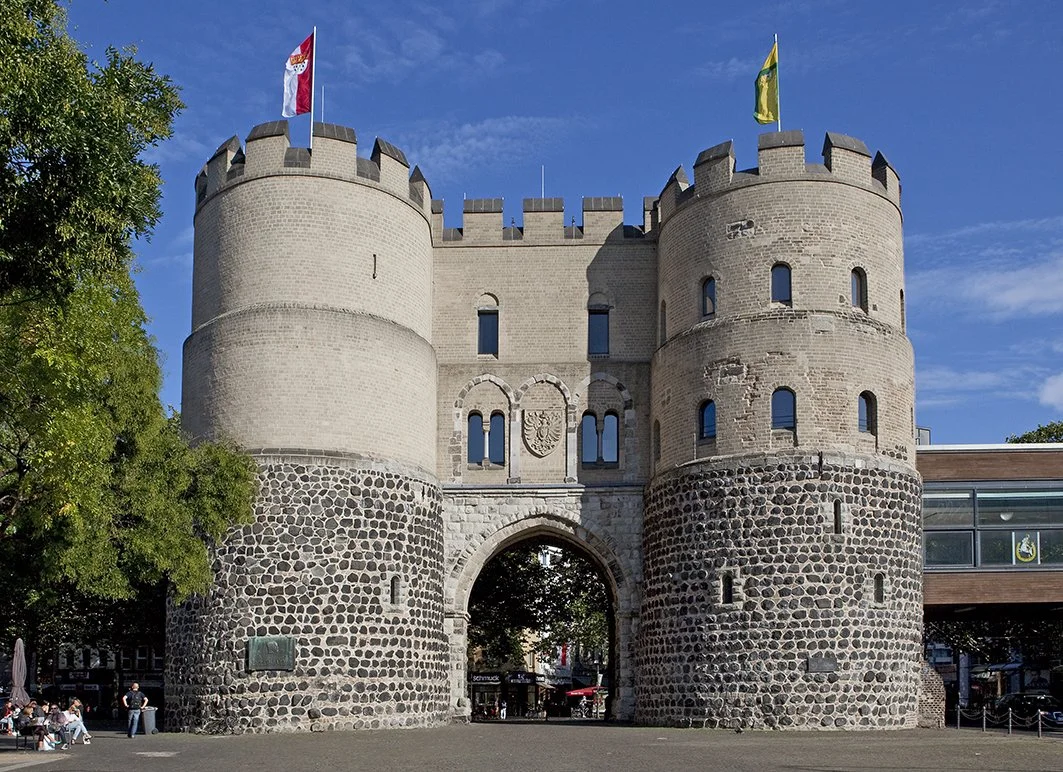
City gates at Rudolfplatz. HP Schaefer. CC BY-SA 3.0.
Cologne’s biggest draw is its celebrations, and there are three main parades hosted throughout the year.
The first event is Roschen Sitzung, a queer carnival and festival held in February. Cologne is also known for its Cologne Carnival Parade, which stretches over the six days before Lent. During this time, the entire city is alive with costumes, various traditions and plenty of celebrating. However, Rosen Sitzung takes place a week after the Cologne Carnival, unique in offering an expressly gay event. Although there are plenty of queer parties and participants in the Cologne Carnival, Rosen Sitzung makes space in the city for drag shows, comedy shows and gay parties with the same level of enthusiasm.
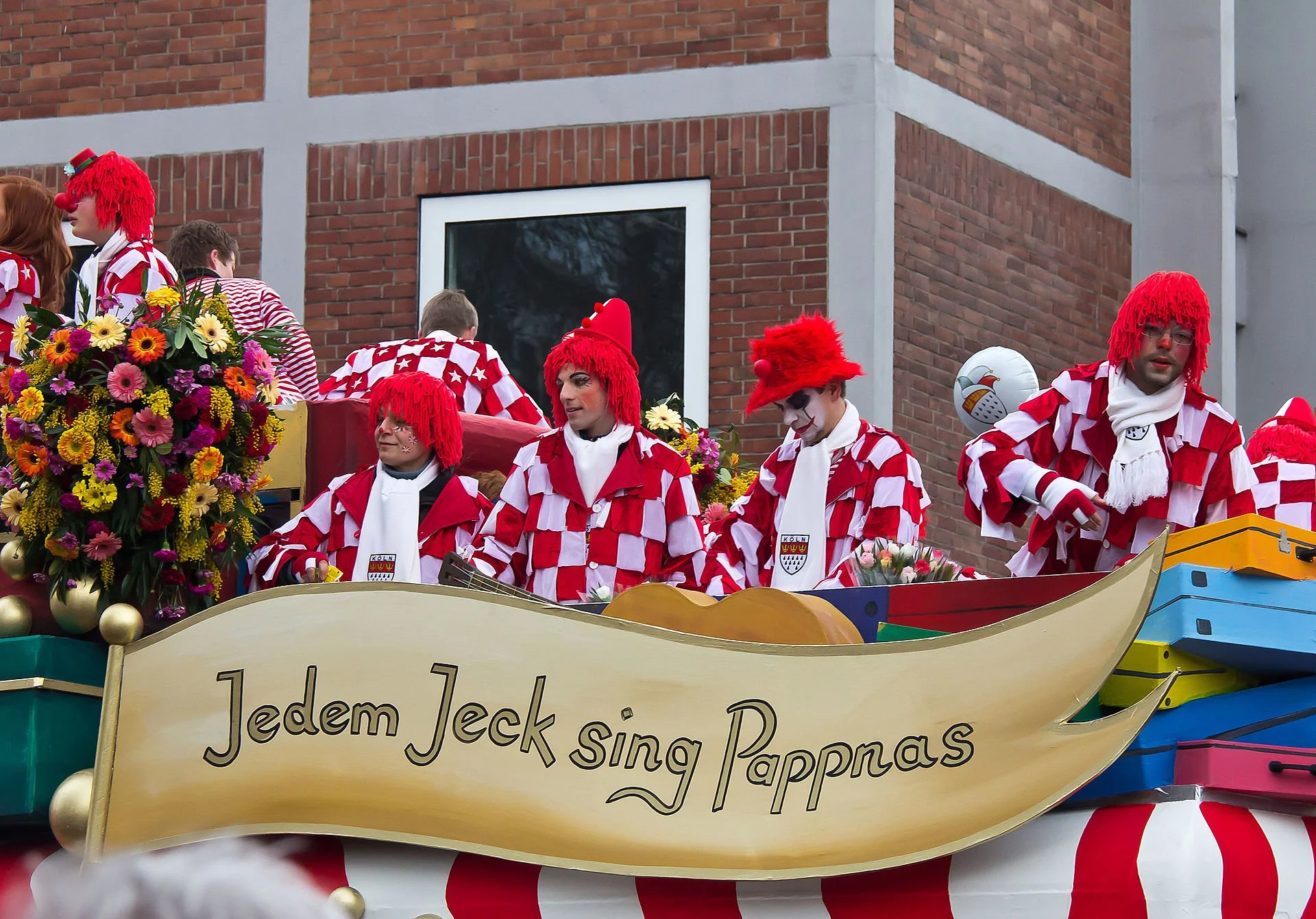
Carnival float in Cologne Carnival. Photo by Raimond Spekking. CC BY-SA 4.0.
The celebrations continue during the summer months, particularly June and July, when the biggest draw is Cologne’s Pride Parade. The parade itself is named the Christopher Street Day (CSD) parade, a direct reference to the 1969 Stonewall uprising in New York City. In 2026, it will span over the course of three days, from July 3-5.
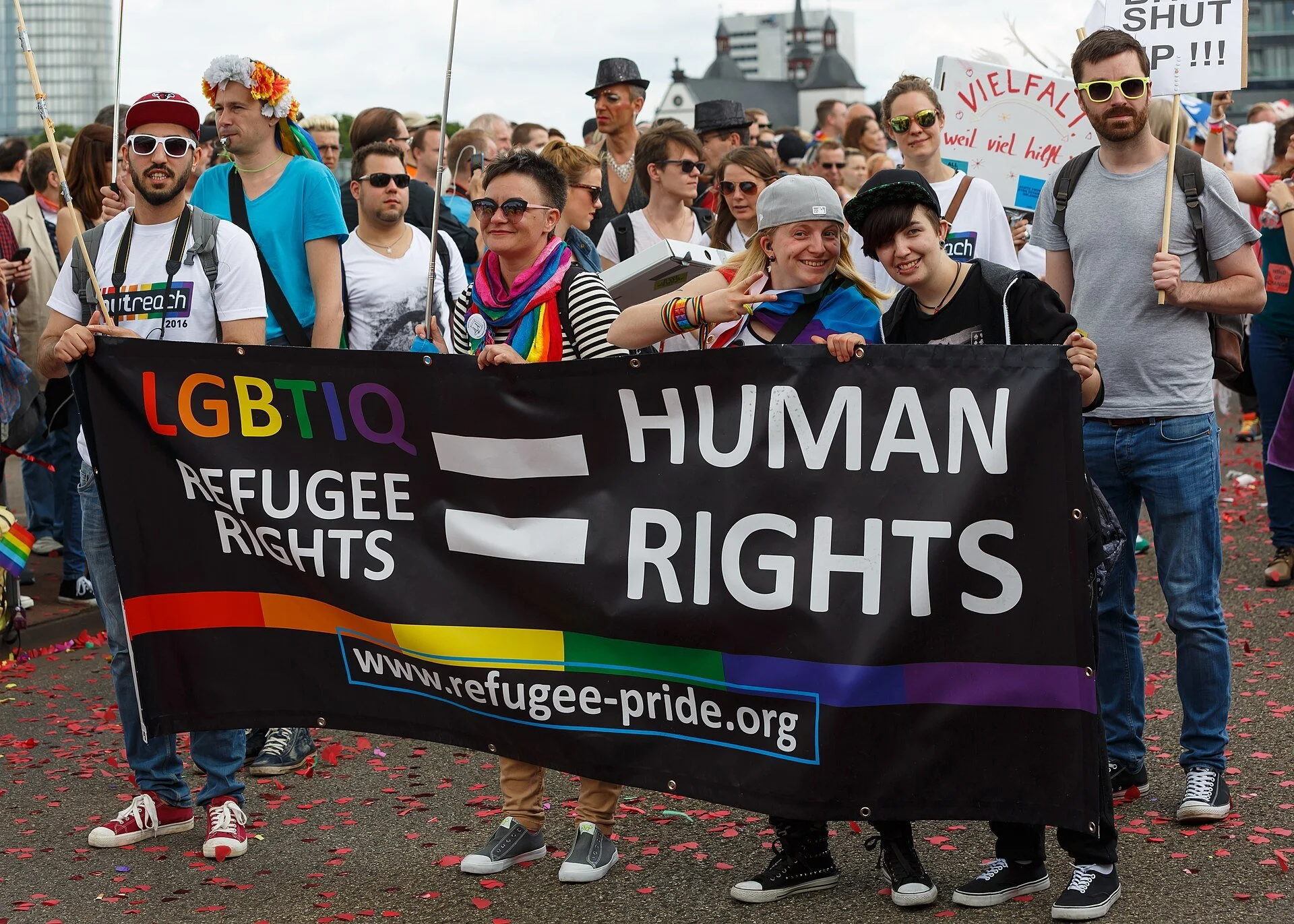
Cologne Pride Parade. Uwe Aranas. CC BY-SA 3.0.
The CSD takes place in Altstadt, but there are queer events, parties and social demonstrations all over the city during the summer months. It is a mix of celebration, mingling and remembrance.
Lastly, Cologne hosts the Dyke* March, to be held on July 4, 2026, to coincide with the CSD festivities. While lesbian and queer women participate in Cologne Pride, the Dyke March is more political. The event is meant to bring visibility and celebration to lesbians, queer women and trans or non-binary people by specifically calling out patriarchal and racial oppression. The first march was held in 2014, and it continues to fight for lesbian visibility and trans rights each year.
Cologne, Germany, has a long history of conflicting Roman and German influence, leading it to become the slightly-Catholic, slightly-medieval city that it is today. This Pride Month, it’s important to highlight cities that are not only safe for queer folks but also celebrate them. Whether you dance along during a carnival or march the streets in June, Cologne will be a city where travelers feel both welcomed and honored.
Nina Esteghamat
Nina is a student at Smith College, where she is double-majoring in English Literature and the Study of Women, Gender & Sexuality. She is passionate about bringing global awareness and a human lens to storytelling.