
By Barrington Jayden Henry
This town in the Czech Republic feels frozen, but not lost, in time.
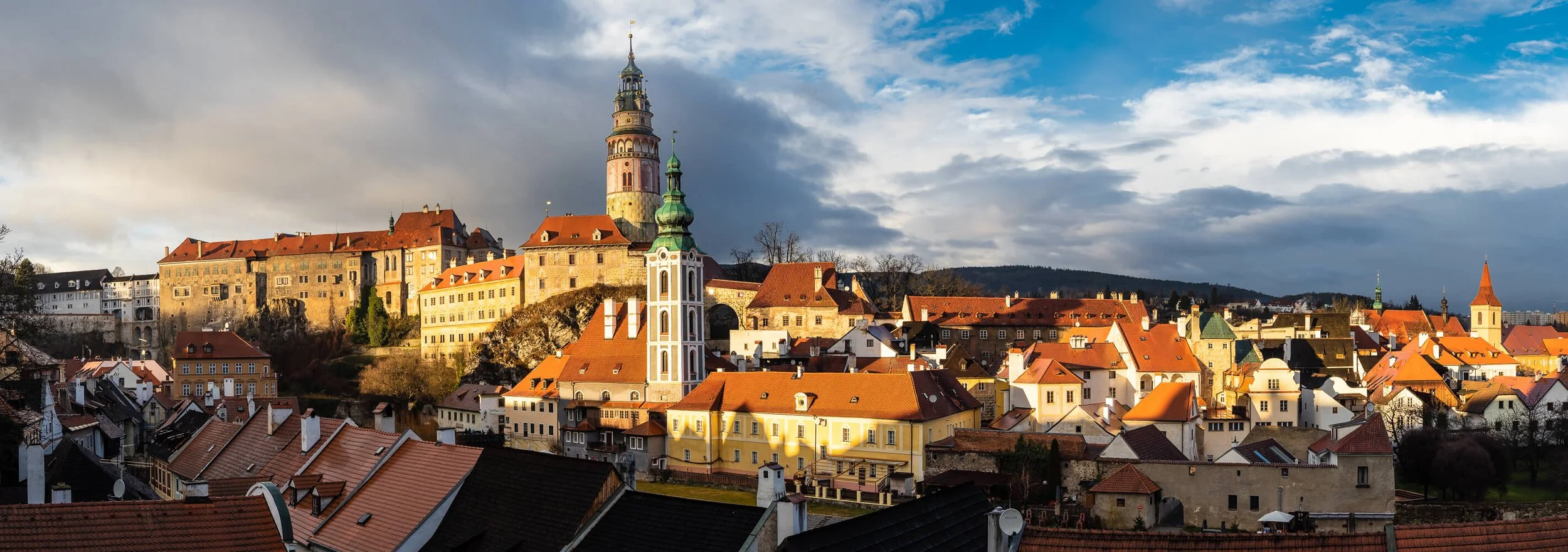
Cesky Krumlov. Danijel Mihajlovic. CC BY-SA 4.0.
On an icy day this past January at the beginning of my semester abroad in Prague, I went on a short excursion to Cesky Krumlov, a small village in southern Bohemia. Cesky Krumlov is exalted as the ideal Bohemian village, with its tiny, romantic streets, its Renaissance and Baroque houses and its castle that has loomed over the valley since the 13th century. The town has carefully maintained its medieval cityscape, the appeal of which draws many visitors year-round from around the world. Despite its current small size, Cesky Krumlov was an important settlement several centuries ago, and the sights and stories of the town do a wonderful job of telling its history.
Cesky Krumlov lies on a stretch of the Vltava River, the same river that snakes through the capital city of Prague, and has been populated for close to 8,000 years. But its history truly starts at the beginning of the 14th century. The noble family Rosenberg left their eponymous hometown, Rozmberk nad Vltavou, to move to the nearby Cesky Krumlov and inherit its castle in 1302 after the end of the Krumlov line. For the next three centuries, the Rosenbergs used their wealth and political clout to transform Cesky Krumlov into a trading hub for southern Bohemia during the Middle Ages, and their castle became the region’s pride. The riches of centuries past can be seen in the Renaissance and Baroque exteriors of the towns’ houses and churches, including many sgraffito facades. At the beginning of the 17th century, the Rosenbergs’ last heir sold Cesky Krumlov Castle and left the town, and in doing so, he took most of its wealth with him. By the beginning of the 18th century, the castle was owned by the Schwarzenbergs, who would add its Baroque theatre, which is the most well-preserved of its kind in the world.
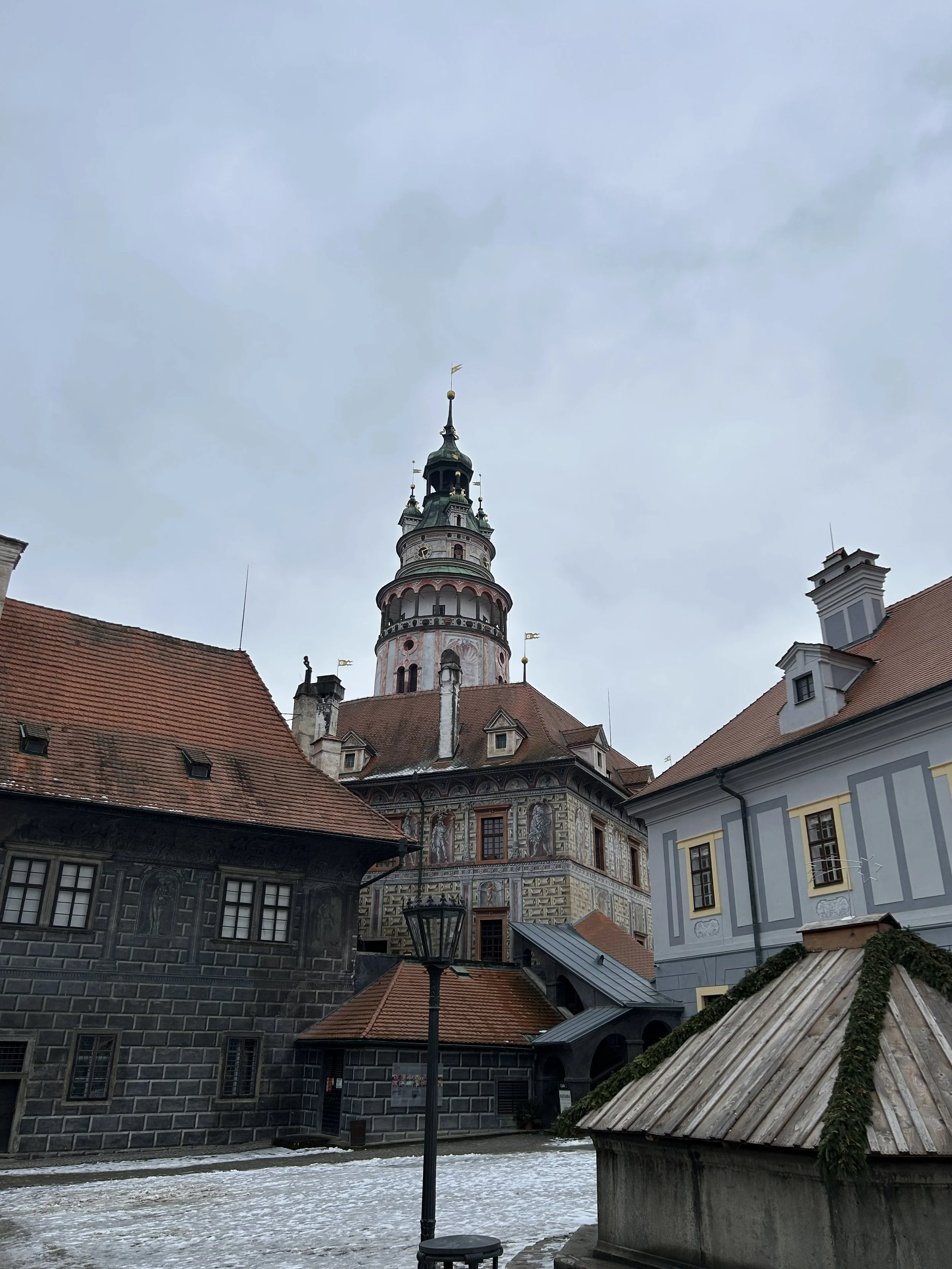
The streets of Cesky Krumlov with its Castle Tower in the distance. Jayden Henry.
In contrast to the glamor of the castle, the town itself slid into near-irrelevance in the modern era. The Second World War left the village unscathed, but the Communist regime that came afterward seized the castle from the Schwarzenberg family and let the town fall into disrepair. Only after the Velvet Revolution and the fall of the Iron Curtain did Cesky Krumlov see a resurgence in public interest. To preserve its centuries-old town center, it was designated as a UNESCO World Heritage Site in 1992. Today, the town benefits economically from the recent influx of tourists who come to see what looks like a fairytale village in the heart of Bohemia. There are some concerns with overtourism, as the town sometimes struggles to withstand thousands of visitors every day in the summer’s peak tourist season, and virtually any house or apartment in the old town is unaffordable for the residents, but the revenue that tourism provides is a crucial source of funding for historical preservation.
For a medieval village, Cesky Krumlov has done very well for itself in the 21st century. Its historic center, once neglected, now attracts tourists from around the world. The village retains its authentic character and allure, and it resists the severe commercialization that plagues Prague. For a traveler who wants to visit a place that is beautiful and all but sealed in amber, Cesky Krumlov is the perfect choice.

Barrington Jayden Henry
BARRINGTON JAYDEN HENRY is from the Atlanta area and is a senior at Vanderbilt University, studying political science and history. Jayden is also the host of the weekly radio program I Want to Tell You Something on WRVU Nashville. In his free time, he enjoys playing tennis, reading, and going to museums.