
By Jeremy Gordon
Oil spilled into the Strait of Hormuz from attacked vessels has damaged the marine ecosystem and the damage could be long-lasting.
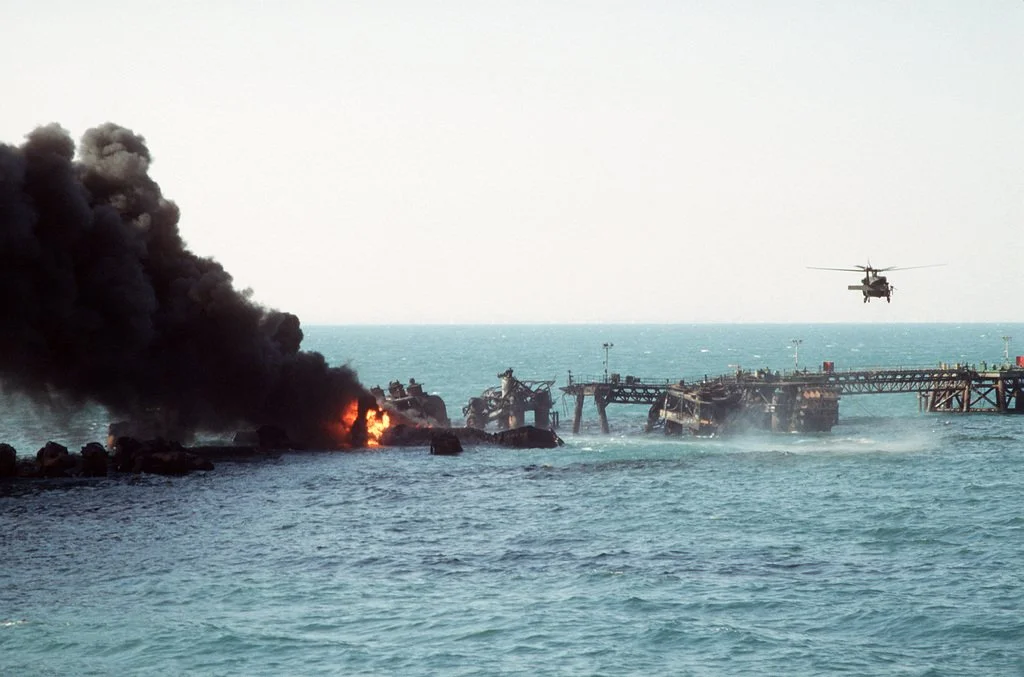
Oil pipeline set on fire in Persian Gulf during the First Gulf War in 1991. William Mol, U.S. National Archives. CC0.
The Iran War has now dragged on for about nine months. It has disrupted global supply chains, sparked chaos across the Middle East and claimed the lives of thousands. It has also resulted in severe damage to the Persian Gulf’s ecosystem, damage which threatens to become catastrophic the longer the conflict persists.
A major site where the war has played out is the Strait of Hormuz, the narrow body of water that connects the Persian Gulf to the Arabian Sea. In the earliest days of the conflict, Iran’s Islamic Revolutionary Guard Corps effectively shut down travel through the Strait, attacking any foreign vessels attempting to navigate it in an attempt to choke the global oil market. The U.S. responded by imposing its own naval blockade, stopping Iran from delivering oil to its allies and receiving supplies for its war effort.
Greenpeace has reported that since the blockade began, there have been more than 600 instances of oil slicks and more than 160 attacked vessels. The damage can only be assessed through satellite imaging, since the war has rendered on-the-ground investigations impossible. According to Greenpeace’s analysis, the cumulative oil that has escaped from these attacked tankers has affected an area of approximately 20,000 square kilometers as a sum of daily observations, nearly the size of New Jersey. That spilled oil has wrought havoc on the natural environment.
The Strait of Hormuz and the Persian Gulf are home to diverse marine ecosystems, including coral reefs, mangrove forests and seagrass meadows that house a variety of organisms from sea turtles to dolphins to countless species of fish. The Strait is crucial for the circulation of water and nutrients between the Gulf and the Arabian Sea and provides a migration route for marine mammals. Even in peacetime, these ecosystems have to contend with disruptions from shipping, oil drilling and coastal development. The war has exacerbated the threats.
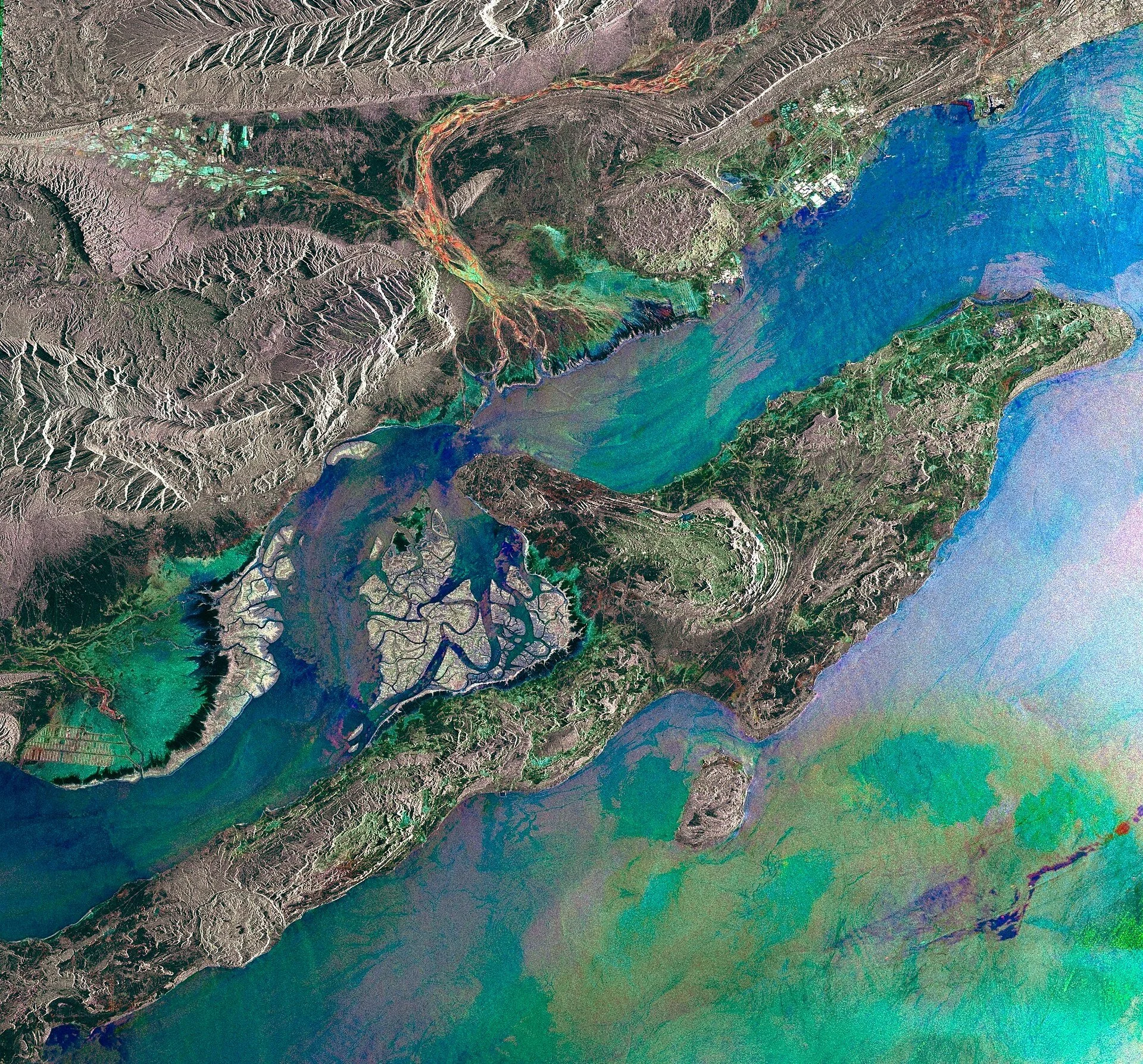
Satellite image of Iran’s Qeshm Island, which harbors the largest stretch of mangrove forest along the Persian Gulf Shoreline. Envisat satellite, European Space Agency. CC BY-SA 3.0 IGO.
Oil spilled has reached several countries’ coastlines since the war began, seeping into the sand, poisoning mangrove tree roots and coating birds’ feathers, making it difficult for them to fly, float and find food. The United Arab Emirates had to close its beaches to launch a massive cleanup effort after a Panama-flagged tanker was attacked in October. Oman had to take similar measures when a Cameroon-flagged tanker was attacked in June, as did Saudi Arabia after an attack on an oil pipeline in September.
Experts have warned that the damage could be lasting. Nina Noelle of Greenpeace pointed out that “oil could remain trapped in sediments, shorelines and mangrove roots long after slicks disappear.” This has been evident from previous spills and conflicts in the region, including the Iran-Iraq War of the 1980s and the First Gulf War of the 1990s. Oil from the Nowruz spill during the Iran-Iraq War still contaminates the sediment on Saudi Arabia’s Abu Ali island, a 2022 study found. These oil residues are detrimental to shoreline and burrowing animals, like ghost crabs and sea turtles.
As the conflict continues to rage on with seemingly no end in sight, the natural environment is increasingly under threat. In a war that has thrown the global economy into chaos and shattered any hope for stability in the region, the natural environment is one more unintended casualty.

Jeremy Gordon
Jeremy is a graduate student at Johns Hopkins University studying Creative Writing. He graduated from the University of Maryland with a bachelor's in Criminology and Criminal Justice and worked for four years as an Investigative Specialist with the Public Defender Service for DC.