
Kelcie Lee
Hokkaido boasts some of Japan’s most stunning natural beauty, with its national parks, fresh seafood and powder snow.
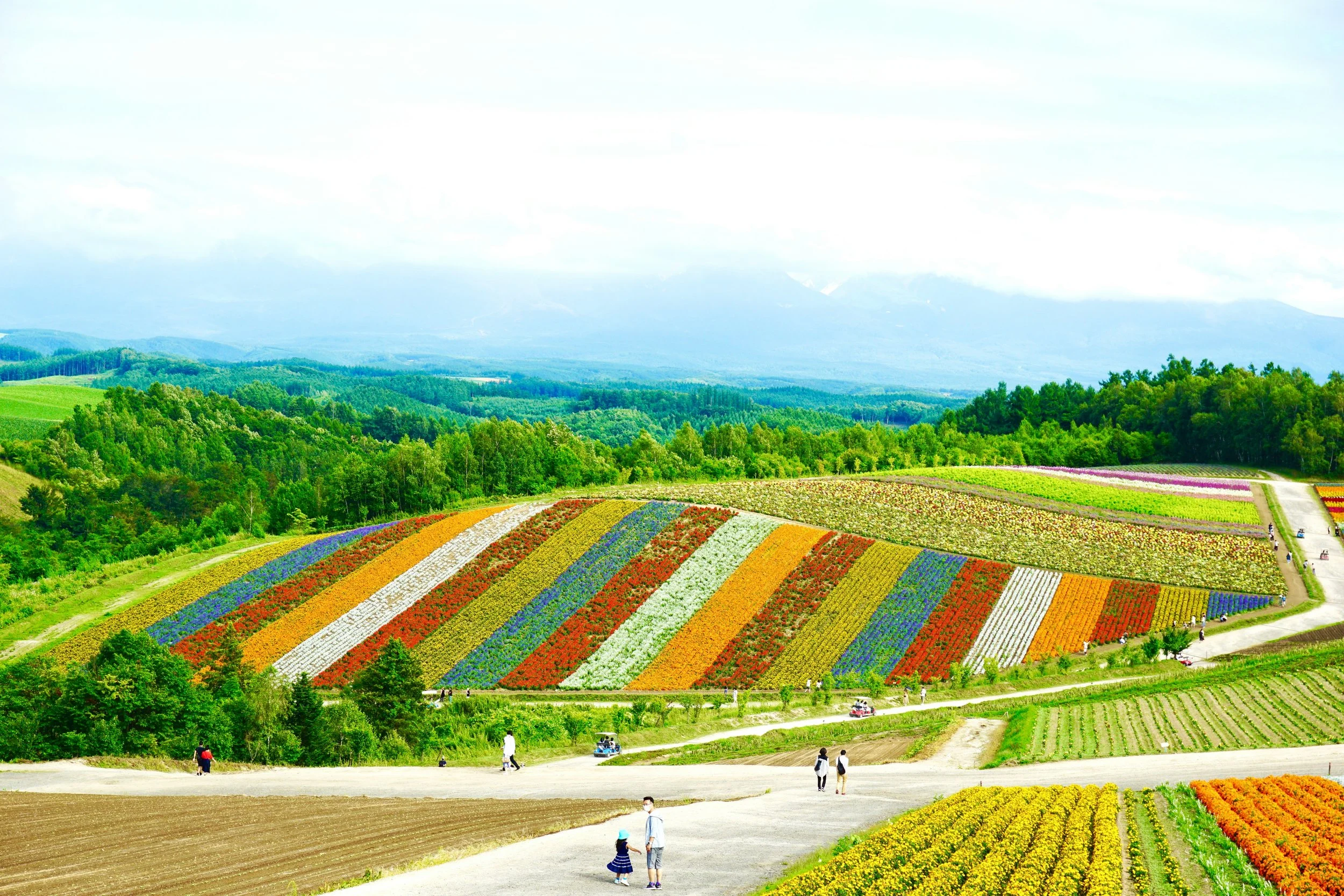
Biei, Hokkaido. Yuri Li. Unsplash.
Amid the recent surge in global travel to Japan, many have come to enjoy authentic cuisine, beautiful landscapes and bustling cities. Among these iconic sites lies Hokkaido, Japan’s northern frontier and one of its greatest natural treasures.
Accounting for more than one-fifth of Japan’s total landmass, Hokkaido is the country’s northernmost of its four main islands. Unlike Japan’s mainland, which thrived off a farming-based culture for much of its history, Hokkaido relied on hunting and fishing practices until about 2,000 years ago. Many centuries later, in 1868, when the Meiji Government initiated land reclamation in Hokkaido, the nation’s modernization policy led to more advanced techniques and technologies that are still used to this day.
Hokkaido is most known for its high-quality powder snow, stunning national parks, natural hot springs and unique Ainu Indigenous culture. Scattered with winter resorts, Hokkaido remains a popular destination for skiing and snowboarding during the colder seasons. With the below-freezing temperatures of its frigid winters, Hokkaido receives up to almost 50 feet of snow per year, which makes for top-quality powder and an extended ski season. Additionally, the 1972 Olympic Winter Games were hosted in Sapporo, Hokkaido, where Japan won its first gold medal.
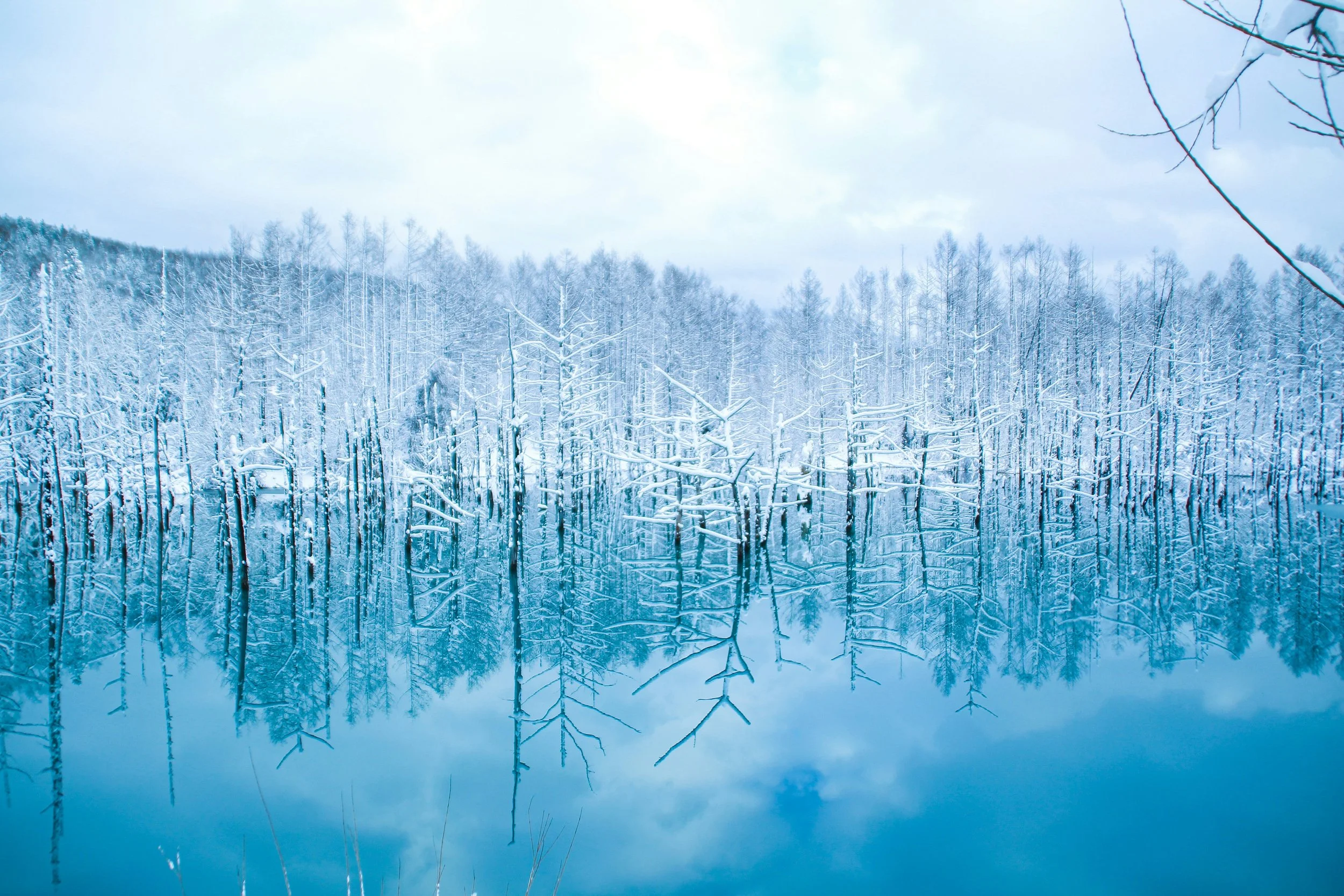
Frozen lake in Hokkaido. Kwon Youn. Unsplash.
The cold climate also offers beautiful snowscapes, including Shirahige Falls, which translates to “white beard waterfall.” White curtains, frosty icicles and snow-covered trees surround a blue underground river where the waterfall flows from. Near the waterfall sits the Biei Shirogane Onsen, a natural onsen, or hot spring, and open-air bath that has been open since 1950. The onsen is rich in magnesium, calcium sulfate and other minerals and is a natural haven in an otherwise cold environment. Another rare natural beauty is Lake Akan’s “frost flowers,” which are unique ice crystals that can form as individual petals or full-bloomed flowers. It is a rare natural phenomenon that requires windless conditions and below-freezing temperatures, which can be seen from December to March in the city of Kushiro.
The island’s natural beauty doesn’t stop there. Hokkaido is home to seven national parks and is filled with a treasure trove of mountain ranges, lakes, volcanoes, untouched forests and wetlands. Daisetsuzan National Park includes the 15-mile Sounkyo Gorge, which boasts a vast landscape formed by volcanic activity. It reveals stunning waterfalls amid vibrant color-changing leaves in the fall.
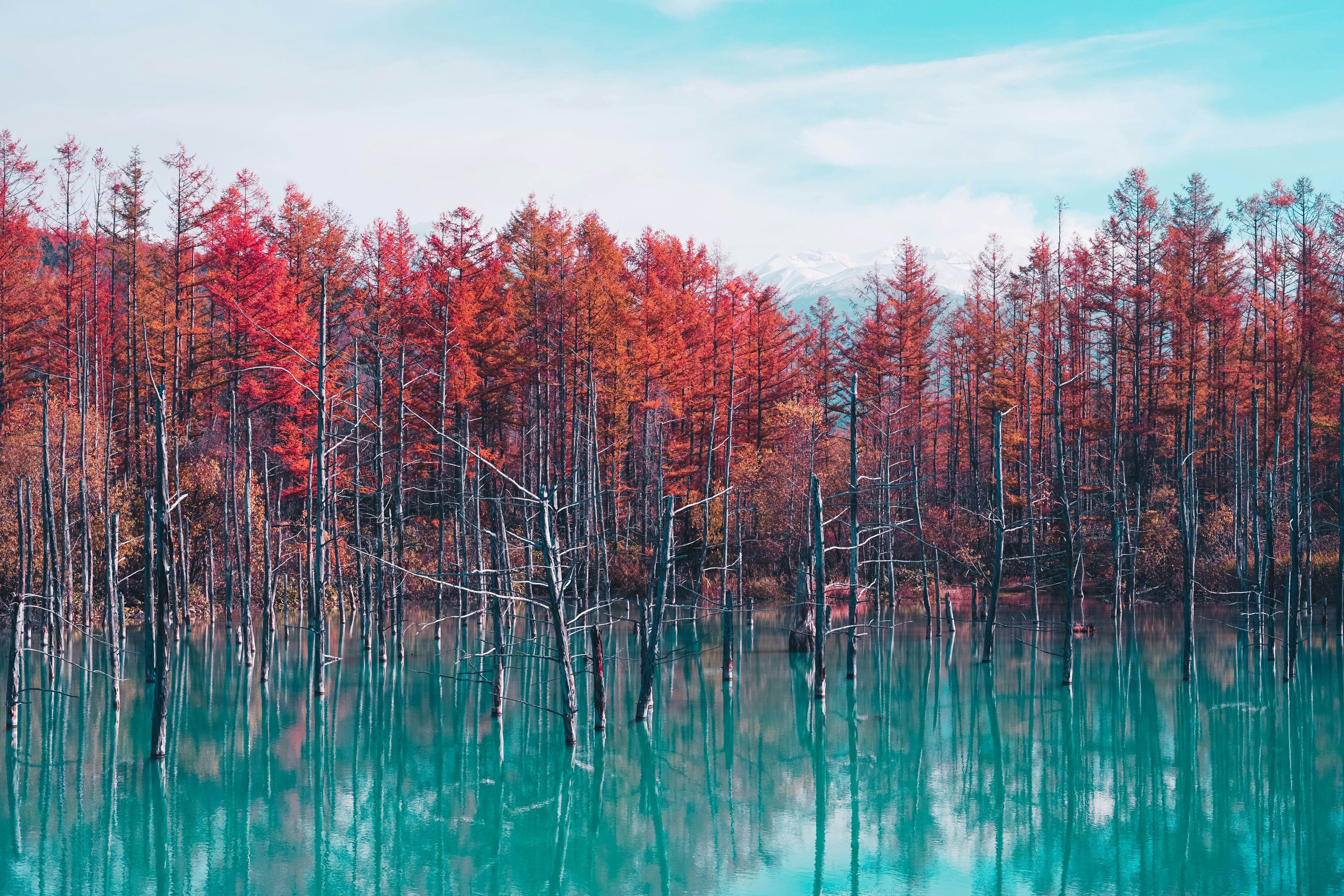
Lake in Hokkaido with red tree leaves. Jarrett Kow. Unsplash.
Hokkaido is also home to the unique Ainu Indigenous culture, which has origins in the Paleolithic era and continues to thrive to this day. The preservation of the Ainu culture and tradition largely lies within the Upopoy National Ainu Museum and Park, with “Upopoy” translating to “singing together in a large group” from the Ainu language. The Ainu people have a distinct language from Japanese, and until a few centuries ago, they continued to focus on hunting and fishing to survive. Honoring nature’s cycles, the Ainu people would often eat salmon, deer, seal meat and seasonal plants.
Surrounded by water, Hokkaido’s cold waters also make the island known for its high-quality seafood, including uni, crab, squid, salmon roe and scallops. Additionally, Hokkaido’s expansive countryside allows it to accommodate a massive dairy industry. The island’s dairy cows produce first-rate milk that is rich, silky, fresh and clean, and they account for about half of the country’s total milk supply. Throughout Japan, several storefronts feature Hokkaido salmon or Hokkaido milk on their menus, associating Hokkaido with the freshest natural ingredients in the country.
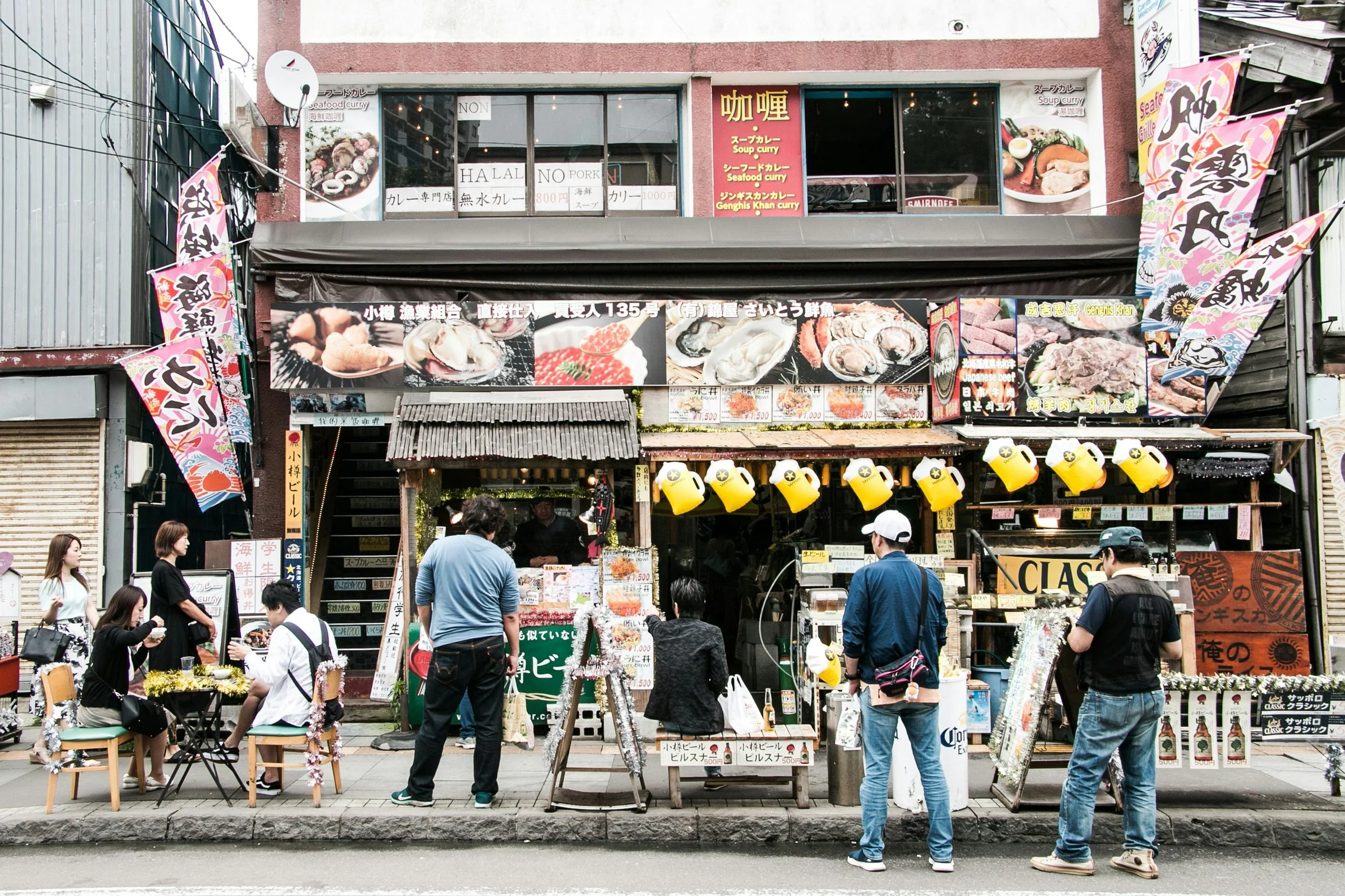
Food stall in Hokkaido. Chi Liu. Unsplash.
GETTING THERE:
From Tokyo, travelers looking to explore Hokkaido can do so by plane, the Shinkansen bullet train or ferry. There are multiple airports in Hokkaido, with the main one being New Chitose Airport, which has both domestic and international flights.

Kelcie Lee
Kelcie is a second-year student at UC Berkeley majoring in history and sociology, with a minor in journalism. She developed her passion for writing and journalism in high school, and has since written for a variety of news and magazine publications over the last few years. When she isn't writing, Kelcie can be found drinking coffee, listening to music or watching the sunset.