
Ashley McDermott
Kazakhstan’s largest city, Almaty offers opportunities to engage with history and culture while exploring its eclectic urban environment and surrounding wilderness.
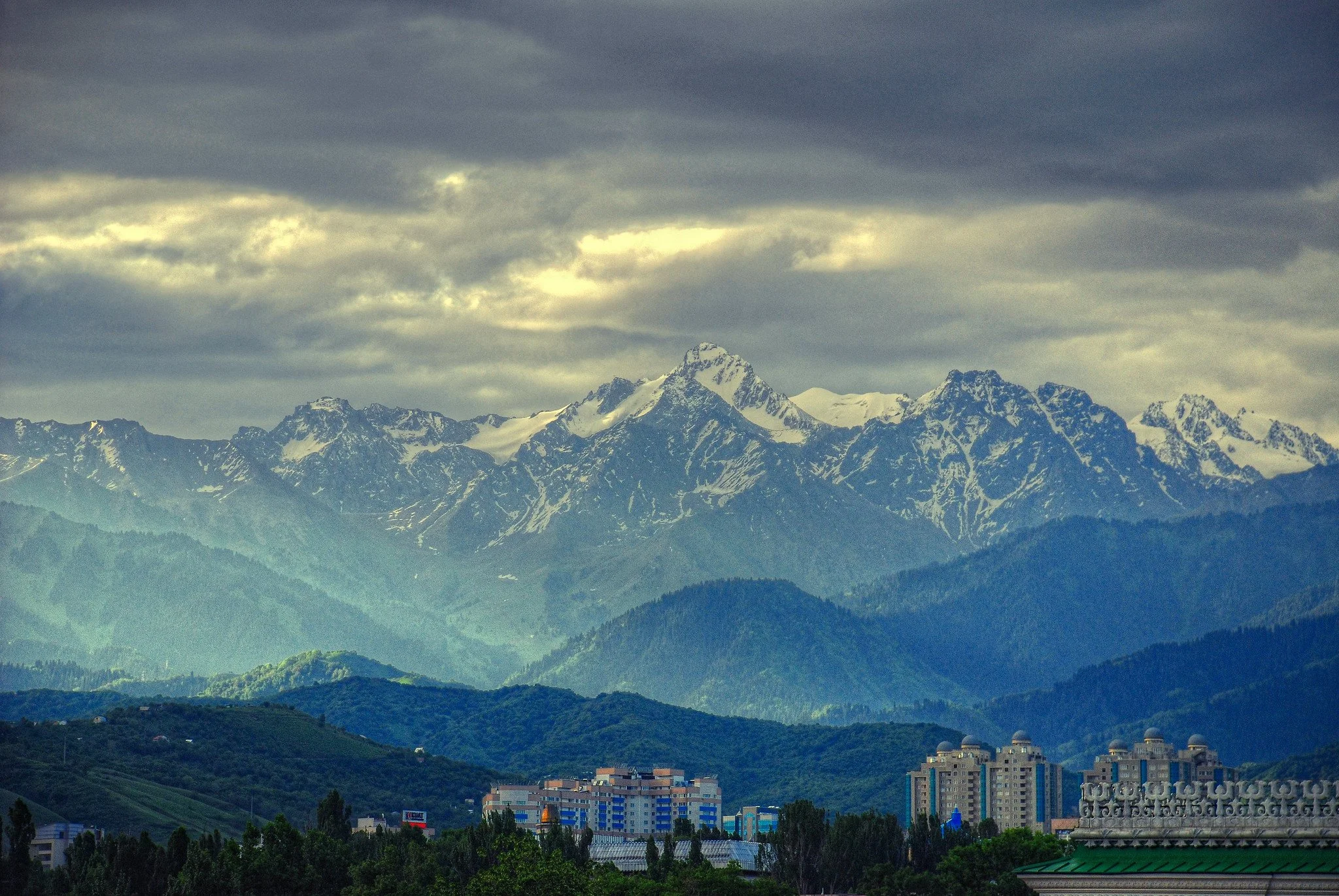
Morning in Almaty. Irene2005. CC BY 2.0.
Almaty is a mix of old Soviet brutalist architecture, Tsarist-era cathedrals and monumental nationalist imagery, all set underneath the towering Zailiyskiy Alatau mountains. As the former capital of Kazakhstan, the urban city offers plenty of things to do, such as sampling food at the bustling Green Bazaar, riding the cable car to Kok-Tobe Hill to see the city from above and visiting museums, like the Central State Museum or Kasteev State Art Museum.
As a researcher in Bishkek, Kyrgyzstan, which is only 140 miles away as the crow flies but at least a half-day's journey in reality, my time in Almaty never seemed enough. If I could go to Almaty just for the sake of seeing the city, with no meetings, no fieldwork agenda and no bus transfers or border crossings, here is how I would spend my weekend.
Day 1
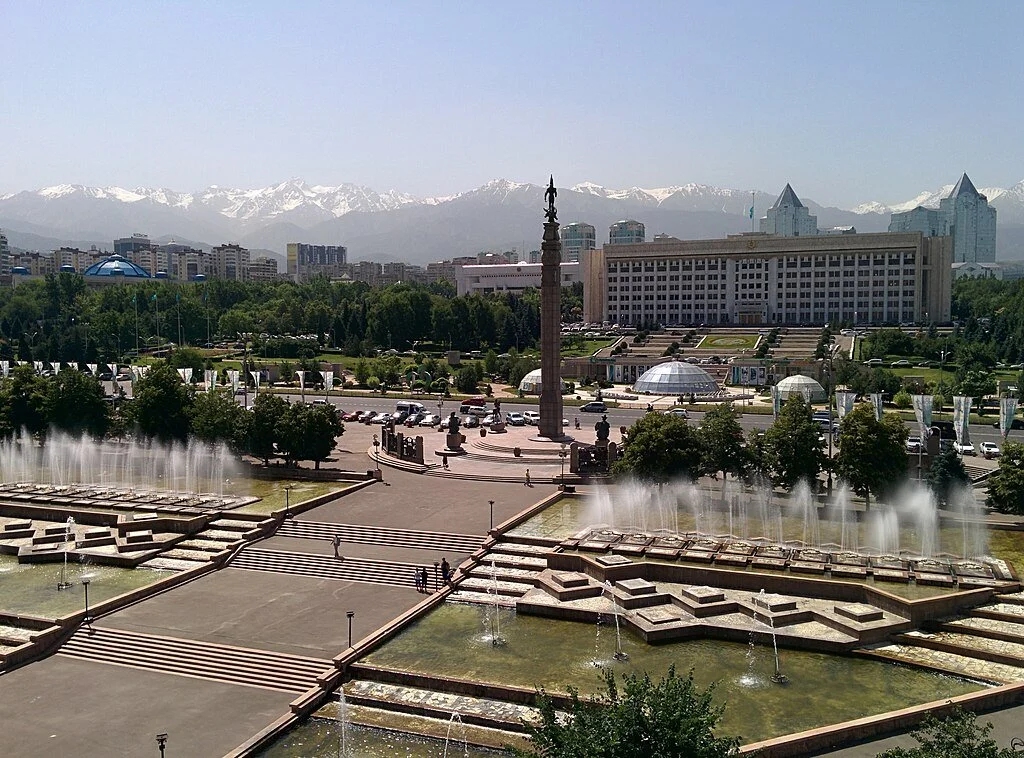
Republic Square, Almaty. mibuchat. CC BY-SA 2.0.
I would start in Republic Square, a massive parade square built in the late Soviet era as a place for military parades, festivals and celebrations. On its south side is the looming Presidential Palace, and in its center is Independence Monument, featuring the Golden Man riding a winged snow leopard. The Golden Man is a representation of a Scythian man adorned with gold, who was found in a 2,500-year-old burial mound near Almaty. Several historic events occurred in the square, such as the 1986 Jeltoqsan protests. The Jeltoqsan began as a peaceful student protest in response to the appointment of an ethnic Russian with no ties to Kazakhstan as leader of the Kazakh Soviet Socialist Republic. Eventually, it grew to include over 10,000 people, and violence erupted after the Soviet army was brought in. After the fall of the Soviet Union, nearly all of the Jeltoqsan protesters were pardoned.
From Republic Square, I would make my way to Almaty's world-class museums, starting with the Central State Museum. The museum presents artifacts and information about the previous mobile-pastoral inhabitants of the steppe, including the Scythians and the Golden Man. It also houses a complete yurt, an example of the round, felt-covered and wood-framed mobile homes widely used in the region for centuries.
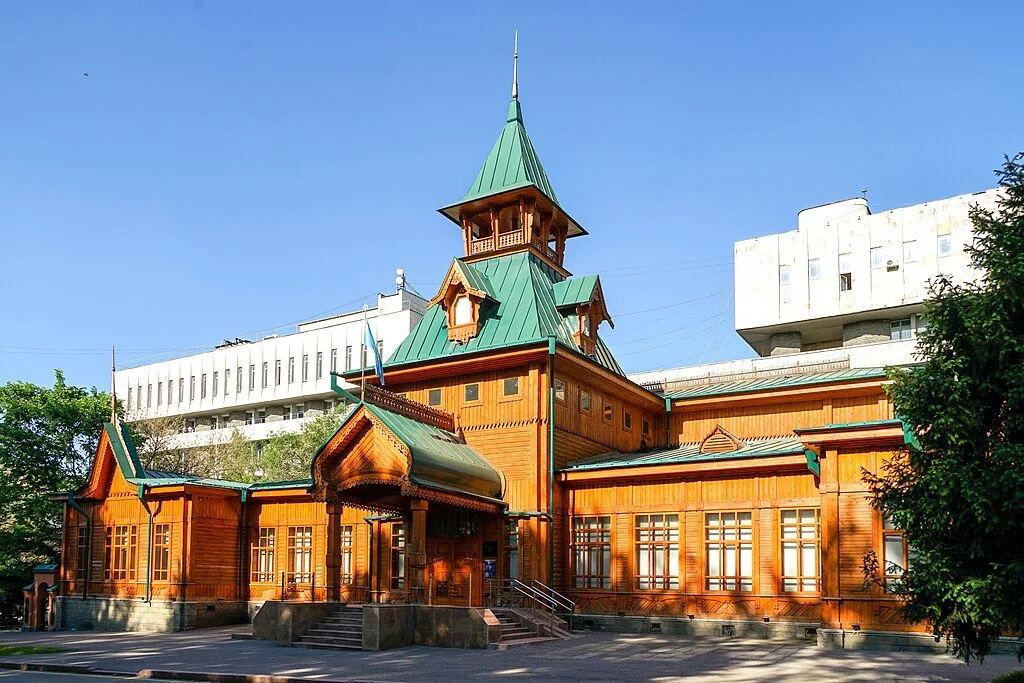
Museum of Folk Musical Instruments. Kalpak Travel, CC BY 2.0
My favorite museum, the Museum of Folk Musical Instruments, is a two-mile walk or short bus ride away from Republic Square, located near Panfilov Park (28 Panfilov Guardsmen Park). The museum is housed in a beautiful wooden structure built in 1908, the same year as the nearby Ascension Cathedral. Inside the museum are instruments widely used in Kazakhstan, like the dombra, a long-necked string instrument, and the sybyzgy, a sideblown flute used by herders.
Panfilov Park also features impressive monuments, including one of its namesake, 28 guardsmen, who stopped the advance of tanks on Moscow during World War II.
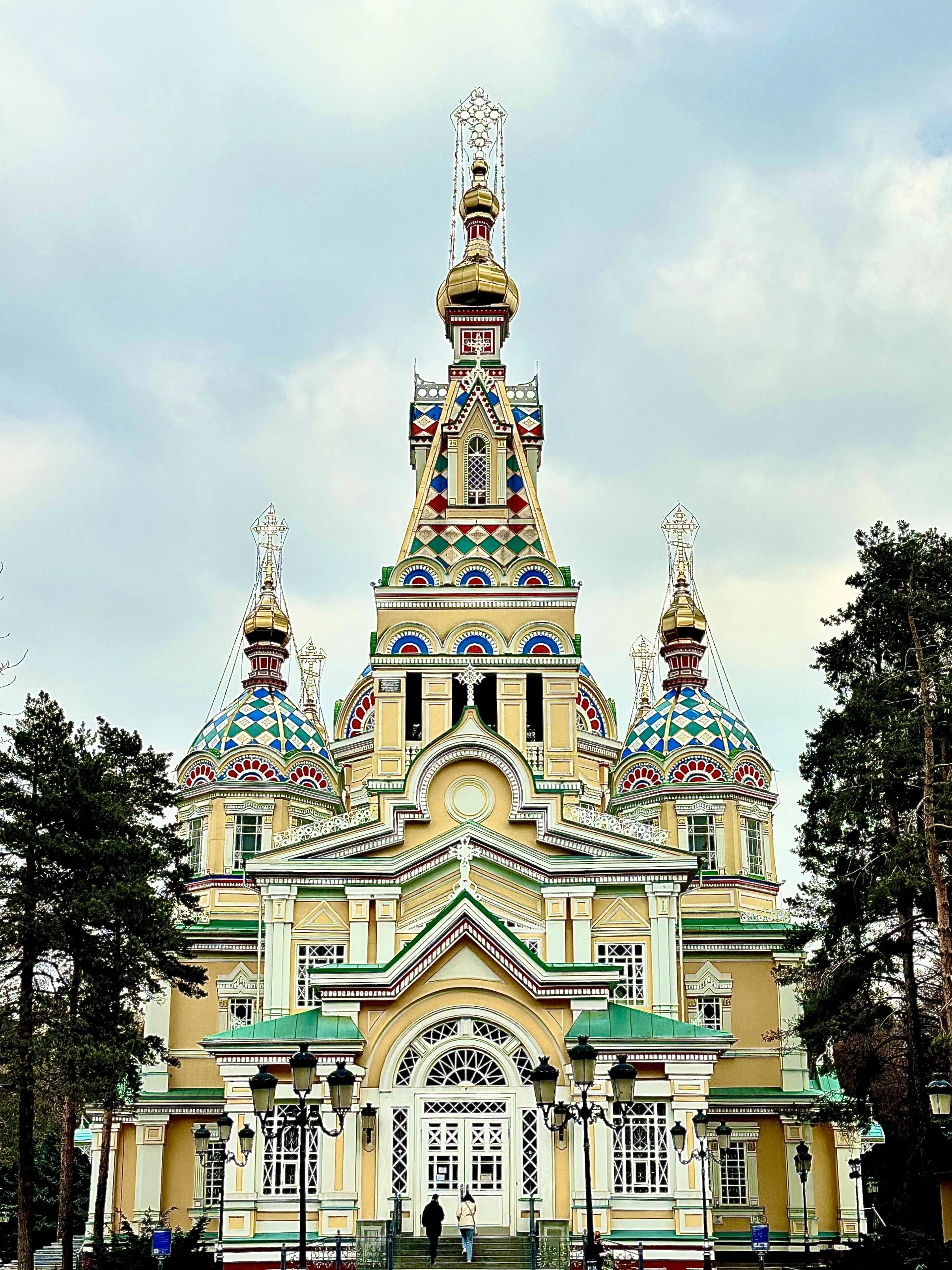
Ascension Cathedral. Ashley McDermott.
I am always fascinated by the spectacular colors of the Ascension Cathedral, one of the tallest wooden buildings in the world. The yellow, red and blue Russian Orthodox cathedral is an active place of worship, and though visitors are allowed to come inside, women must cover their hair, shoulders and knees.
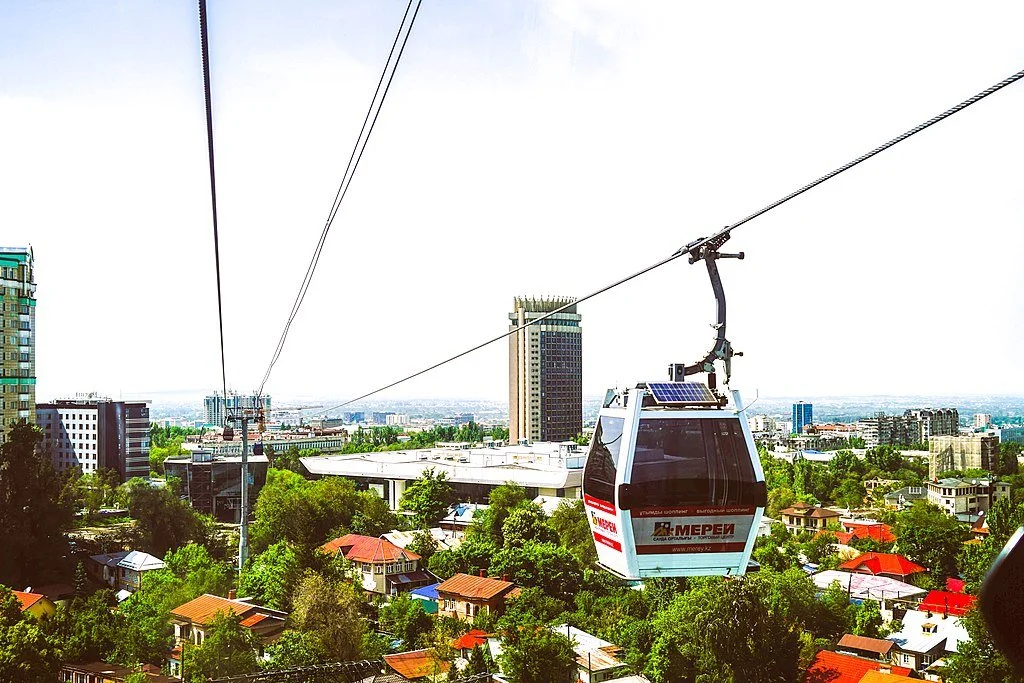
Kok Tobe cable car. Kalpak Travel. CC BY 2.0.
Before dark, I would make sure to ride the cable car to Kok Tobe, an amusement park built on a hill with panoramic views of the city. On Kok Tobe are some concessions and a small zoo, as well as walking trails. Kok Tobe also offers one of the best places to see the sunset.
Day 2
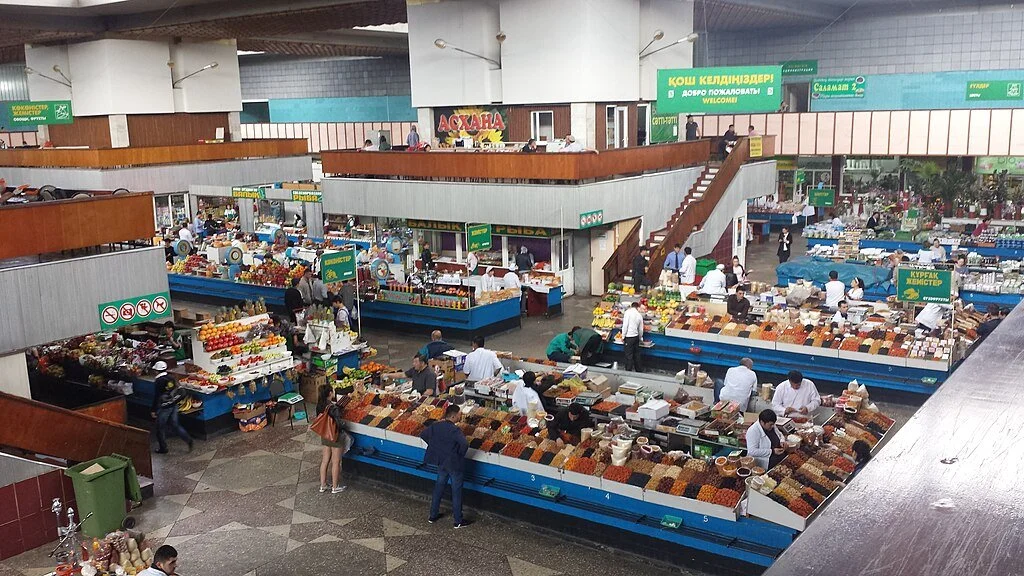
Green Bazaar. Spacekid. CC0.
On my second day, I would plan to spend the morning exploring the Green Bazaar. Founded in 1875 as a trading stop for traveling merchants and caravans, this labyrinthine, sprawling bazaar is home to beautifully stacked rows of fruits, nuts, spices and all varieties of foods. Beyond the orderly produce and dried goods, travelers can find almost anything in the market, from clothes, toys and sports equipment to home goods and souvenirs.
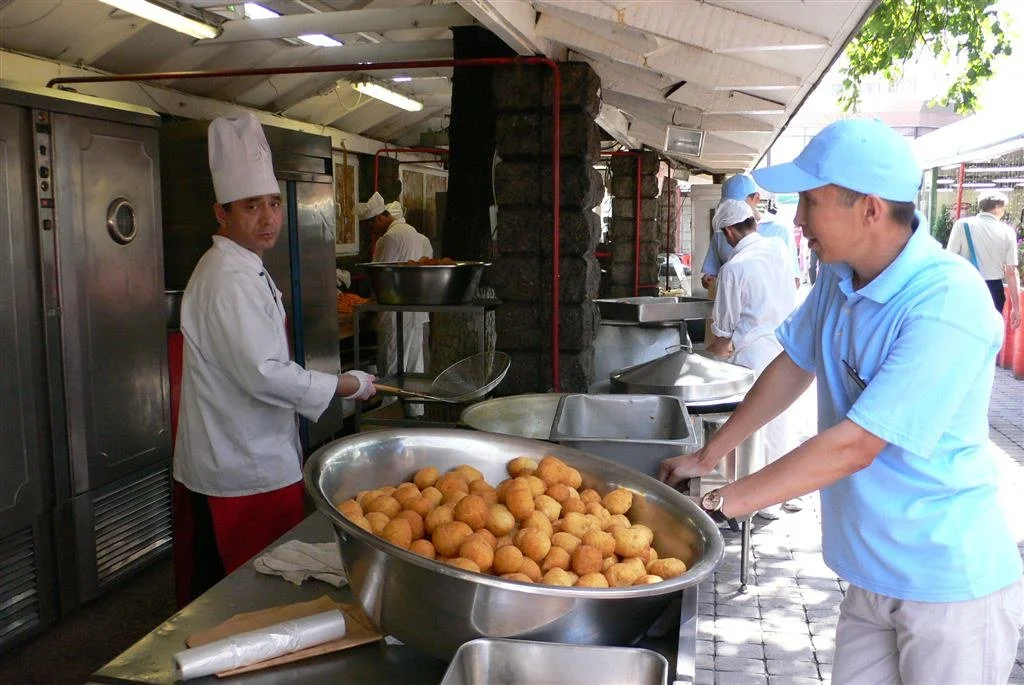
Baursak vendor in Almaty. f s. CC BY-ND 2.0.
Since I have a terrible fear of missing out, on the second day, I would make sure to eat some of the things you can only find in Kazakhstan and Kyrgyzstan, including beshbarmak, which translates to "five fingers." Beshbarmak contains wide, flat noodles, onions and stewed meat, which is usually horse or mutton. They say that traditionally, it should be eaten without utensils. Also on the agenda would be to find some kurt, or air-dried balls of yogurt. Kurt is very dry, but it has a sharp, tangy flavor. The food I miss the most from the region is baursak, which are little pillows of fried dough that pair with honey, jam and just about anything sweet. Of course, if it is summertime, sampling kumis, or fermented mare's milk, is a must.
Next door to the Green Bazaar is the Rakhat Chocolate Factory, founded in 1942. The chocolate company produces the iconic "Kazakhstan" chocolate bars, wrapped in sky-blue paper with the national imagery of the sun and eagle in gold.

View of Almaty from Shymbulak. Ken and Nyetta. CC BY 2.0.
Finally, I would make the trip to Medeu, a sports complex just on the outskirts of the city. Medeu is famous for being the site of the highest-altitude ice skating rink in the world. From Medeu, visitors can take a cable car to the ski resort Shymbulak in Ile-Alatau National Park. While Shymbulak has snow cover from November through May, I would not miss the opportunity to go hiking or mountain biking in the summer months.
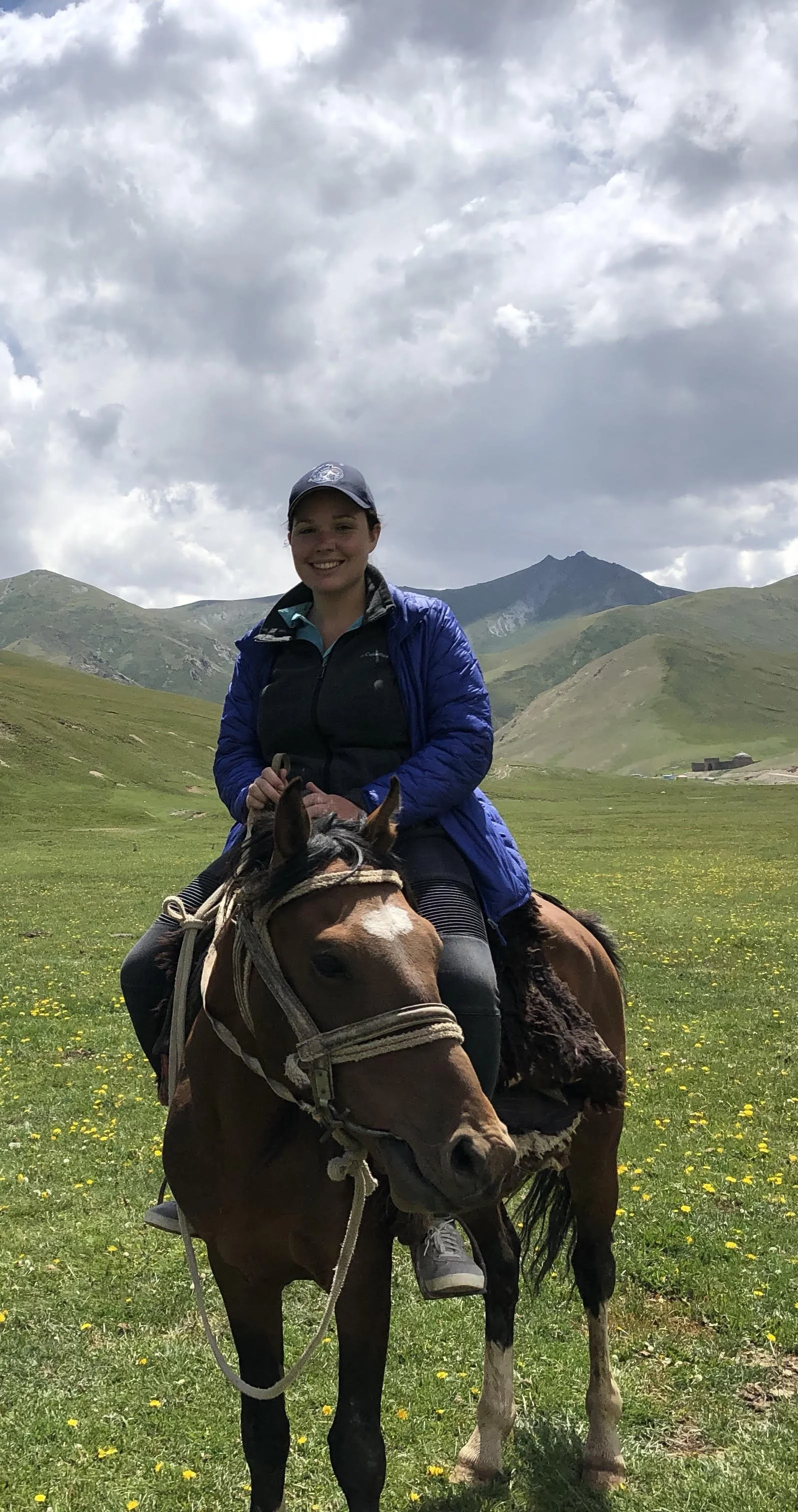
Ashley McDermott
Ashley is a PhD candidate in Linguistic Anthropology at the University of Michigan. She is committed to making her research useful for the communities she works with. Her work explores how families navigate language use and language shift in Bishkek, Kyrgyzstan. When she’s not working on her research, you’ll find her adventuring with her toddler daughter, whose commentary keeps every day interesting.