
Carol Khorramchahi
In Port-au-Prince, childhood is being replaced by survival as gangs shrink the space for school, safety and ordinary life.
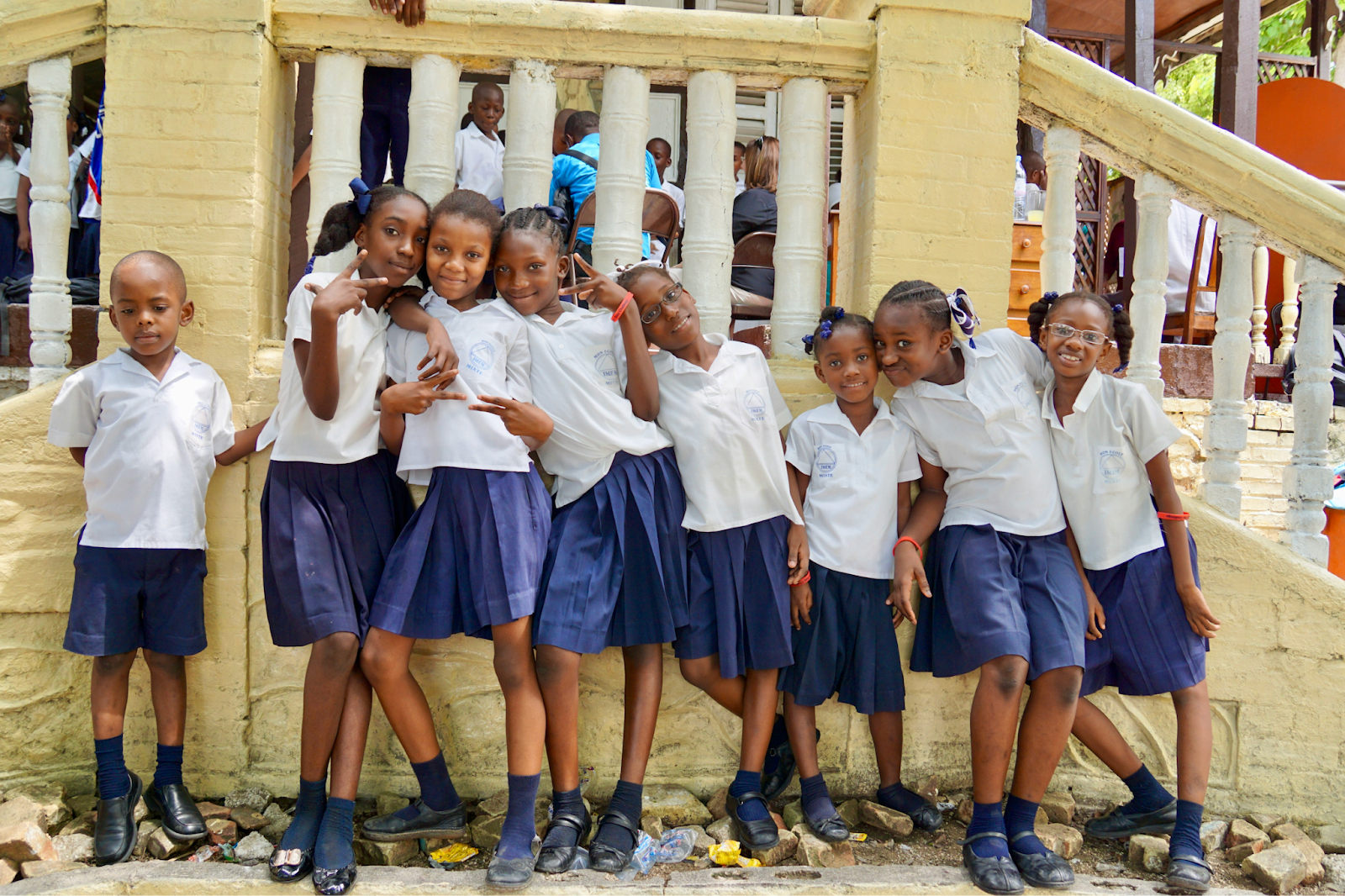
Haitian school children in Port-au-Prince. Heather Suggitt. Unsplash.
In Port-au-Prince, childhood does not end in one dramatic moment. Instead, it disappears in small, relentless ways: a school day that never starts because the road is unsafe; a playground that goes quiet as armed men control the neighborhood; a parent who learns to read the city by sound and timing, measuring risk in the distance between a home and a classroom.
Haiti’s gang violence has become a crisis for children, not only because kids are caught in the crossfire but because they are being absorbed into gang control itself. UNICEF says child recruitment in Haiti rose sharply in 2025, warning that armed groups increasingly rely on children to expand their reach. UNICEF Executive Director Catherine Russell described children’s rights as “non-negotiable,” calling for children recruited by gangs to be released and supported so they can return to learning and rebuild their futures.
The word recruitment can sound distant until you understand what it entails: a child is made to deliver messages; a boy is used as a lookout; a teenager is sent to collect extortion payments; a girl is trapped in exploitation because protection is offered as a bargain. A joint report from the U.N. Human Rights Office and the U.N. mission in Haiti describes child trafficking and exploitation as part of how gangs operate, not an exception. The report says most of Haiti’s active gangs are involved in child trafficking and outlines how children are lured with threats, hunger, drugs or the promise of safety.
For girls, the danger often includes sexual violence and coercion, which is widespread in areas under gang control. The U.N. High Commissioner for Human Rights, Volker Turk, warned that children in Haiti are being robbed of their childhoods and futures. He was not speaking only about trauma but also about the slow destruction of a society’s future workforce, caregivers and leaders.
Displacement has become the backdrop to this entire crisis. UNICEF reports the internal displacement of over 1.4 million people, more than half of whom are children. In displacement sites, privacy disappears, supervision becomes stricter and children are easier to target and harder to protect. Even when families escape immediate violence, instability follows them, and childhood narrows again.
School should be the strongest shield a child has, but in Haiti, it has been one of the first things to fall. UNICEF has warned that education is under attack, reporting that hundreds of schools have been destroyed or closed as violence spreads. When schools shut down, children do not simply lose lessons. They lose structure, meals, a safe space and a daily routine that keeps them visible to adults outside their household; gangs often fill the gap that is left behind.
Haiti’s crisis is typically described in the language of security and politics. Those words matter, but they can blur the most urgent reality. The stakes are not only territorial control or government capacity; they are a generation. When childhood becomes survival, the damage does not end when the shooting stops. It lives on in missed years of education, in trauma carried into adulthood and in a society that has been forced to raise its children in fear.
GET INVOLVED:
Support child protection and education work through UNICEF Haiti and Save the Children. For humanitarian updates and verified needs on the ground, follow ReliefWeb Haiti and the International Rescue Committee.

Carol Khorramchahi
Carol Khorramchahi is a student at Boston University, where she studies English and Psychology and minors in Journalism. She enjoys writing and reporting on stories that bring together culture, identity, and community, and has experience in both newsroom reporting and digital media. She is especially interested in thoughtful storytelling with a global lens.