
By Kathleen Shepard
With growing demand for palm oil, Borneo’s forests and orangutans’ habitats are being decimated.
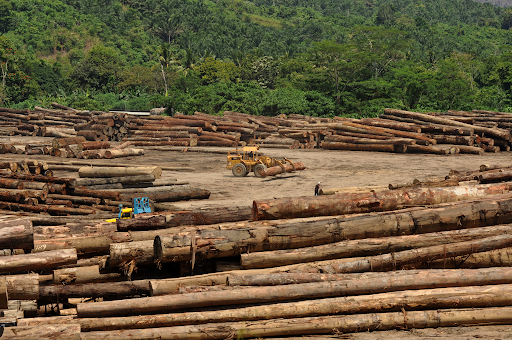
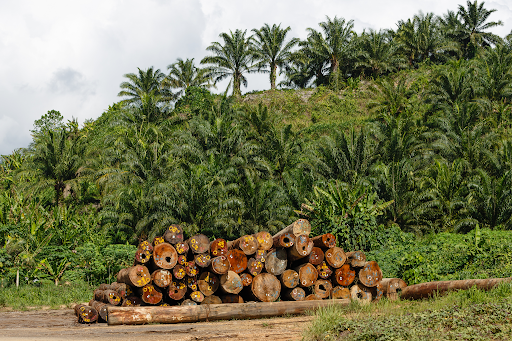
Logging in Sabah, Malaysia. T.R. Shankar Raman. CC BY-SA 4.0.
Since the 1980s, the Southeast Asian island of Borneo has been logged, cleared, mined and harvested for the extraction of one of the most coveted ingredients for processed foods and biofuels: palm oil.
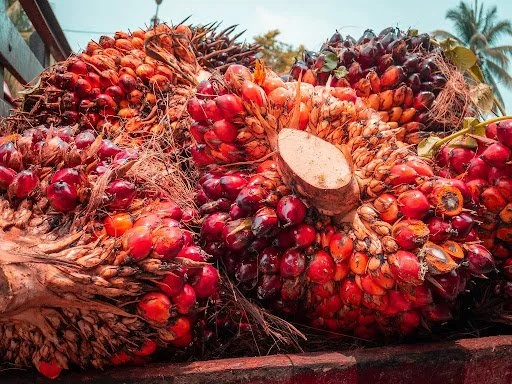
Ripened palm oil fruit. Stratman2. CC BY-NC-ND 2.0.
Found in nearly 50% of supermarket processed goods, palm oil comes from an incredibly efficient crop that supplies 40% of the world’s vegetable oil while using only 6% of the land devoted to vegetable oil crops.
The only problem? Over 87% of the world’s supply lies in Indonesia and Malaysia, where plantation expansion has contributed to deforestation. Borneo is one of the regions suffering from extensive deforestation.
Between 2000 and 2018, roughly 39% of Borneo’s forests, 8.2 million hectares, were logged and destroyed. Now only half of the Bornean rainforest remains.
As a result, Borneo’s endemic species have been decimated.
Found in nearly 50% of supermarket processed goods, palm oil comes from an incredibly efficient crop that supplies 40% of the world’s vegetable oil while using only 6% of the land devoted to vegetable oil crops.
The only problem? Over 87% of the world’s supply lies in Indonesia and Malaysia, where plantation expansion has contributed to deforestation. Borneo is one of the regions suffering from extensive deforestation.
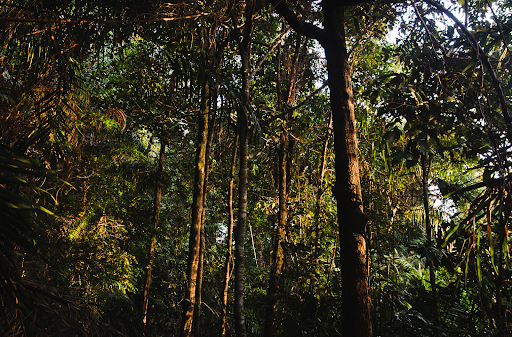
Borneo rainforest. Javi Sanchez. CC BY-NC-SA 2.0.
Between 2000 and 2018, roughly 39% of Borneo’s forests, 8.2 million hectares, were logged and destroyed. Now only half of the Bornean rainforest remains.
As a result, Borneo’s endemic species have been decimated.

Male Bornean Orangutan. Eric Kilby. CC BY-SA 2.0.

Solitary Orangutan Eating with Infant. Rawpixel. CC0.
Northwest Bornean Orangutans are the most affected subspecies, with only 1,500 remaining. Living within the heart of Borneo and Borneo’s logging areas, their populations are half of what they once were.
Not only are their habitats being exploited for agriculture and timber, but these mammals also have an incredibly low reproductive rate and take 10 to 15 years to reach sexual maturity, leaving them especially vulnerable.
Orangutans are sometimes shot in palm oil plantations, as they are seen as pests for eating the vegetation. Many are sold through the illicit pet trade each year, and frequent forest fires also kill them.
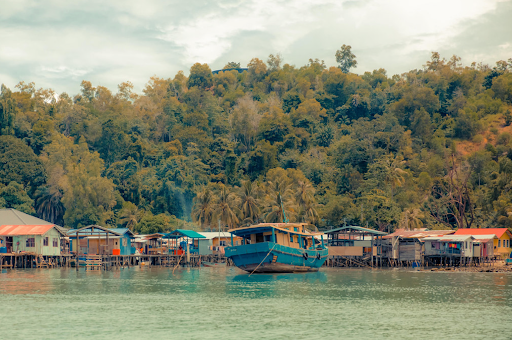
Pondo-Village in Sabah, Malaysia. Francoise Gaujour. CC BY-NC-ND 2.0.

The Iban people in Borneo. Borndeo 2018. CC BY-SA 4.0.
However, the palm oil industry has also helped lift thousands of Borneans from poverty. So attempting to solve the issue of deforestation remains contested.
At the governmental level, governments across Borneo have attempted to preserve the island’s rainforests.
Sabah, on the Malaysian portion of the island, has partnered with Rainforest Trust and the South East Asia Rainforest Research Partnership to identify logging operations, expand protected territories and eliminate unethical harvesting.
Sustainable Logging in Sandakan. Angela Sevin. CC BY-NC 2.0.
The international community has also gotten involved. One of the biggest advocates is the World Wildlife Fund through its Heart of Borneo program.
Beginning in 2007 as a collaboration between the governments of Indonesia, Malaysia and Brunei and supported by WWF, the Heart of Borneo program is one of the leading initiatives for sustainable forest management in Borneo.
Other programs, such as the Borneo Nature Foundation, partner with the indigenous peoples living in Borneo. After all, millions of people use these forests as their livelihood, including the Indigenous Dayak peoples.
According to research in the Public Library of Science, over 68% of locals view forests as necessary for health and over 48% view forests as culturally and spiritually beneficial.
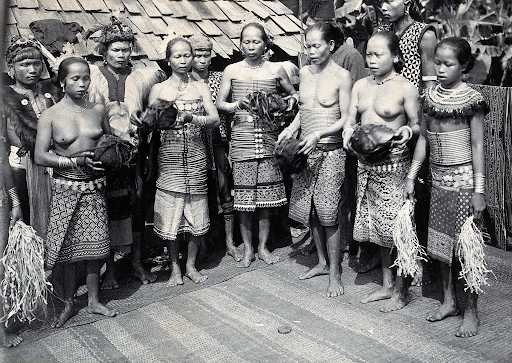
Sarawak: Sea Dayak Tribesmen at a Head Feast. Wellcome Collection. CC BY 4.0.
Support for both the forests and the people of Borneo is necessary. Palm oil production cannot be eliminated. But supporting sustainable, small-scale harvesting practices over large-scale plantations; instituting firefighting and replanting measures; and protecting community businesses that emphasize collaboration are essential.
GET INVOLVED:
Outside Borneo, consumers can support reforestation practices by avoiding excessive palm oil intake in their foods and household products. If palm oil is necessary, aim for products with the Roundtable on Sustainable Palm Oil (RSPO) label.
Another way to support is through funding. Through the WWF, you can symbolically adopt an orangutan to sponsor. You can support their research and veterinary care with The Orangutan Project.
Or you can conserve the peatlands specifically by donating towards peatland conservation and restoration in Borneo with The International Tropical Peatlands Center.

Kathleen Shepard
An English and Art History Major at Boston College, Katie loves all things writing, culture, and travel. When not canyoneering across the Swiss Alps, snorkeling in the Galápagos, or photographing wildlife throughout Botswana, you’ll find her documenting about it in her latest story. She believes that every place is uniquely, wonderfully beautiful, and she’s grateful to be a travel and social action writer for CATALYST PLANET. Whether it be promoting a new trail or advocating for what matters, she hopes to continue making her words count!