
Isabella Feraca
While light pollution has long detracted from most Americans’ ability to see a full sky of stars, these locations are pioneering efforts to preserve an untouched dark sky.
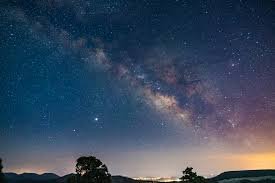
The Milky Way over Flagstaff, Arizona. Deborah Lee Soltesz. CC0.
Over 99%of people in the U.S. live under light-polluted skies. That means that for the vast majority of our population, the Milky Way is not visible to the naked eye. But beyond just obscuring the stars, light pollution can have adverse effects on human sleep cycles and interfere with the natural patterns of animals who rely on moon and starlight for orientation, migration and other evolutionary behaviors. Hatchling sea turtles, for example, have been known to confuse artificial lights with moonlight, leading them inland instead of toward the sea. As a result of such findings, there has been growing advocacy for the preservation of natural darkness and the implementation of responsible lighting practices. The International Dark Sky Places program certifies areas around the world that opt to protect natural dark skies. Many of these designated dark-sky locations exist in the U.S., offering not only a rare chance to see our night sky as it once looked, free of artificial light interference, but also a deeper connection to our natural world that is worth experiencing firsthand.
Flagstaff, Arizona
Flagstaff was the first city ever to be recognized as a dark sky city back in 2001 and remains a pioneer of the movement today. Its roots in these preservation efforts go back to 1958, when a law was put into place banning searchlights. The policy came as a result of the concentration of astronomy work, particularly with the Lowell Observatory, which was planning on unrolling a new high-powered telescope, and light pollution in the area was going to hinder its full potential.
Further efforts have continued to this day, and combined with its high elevation and arid climate, the city is one of the best areas in the U.S. for appreciating the night sky in its untouched state. Even just walking through downtown Flagstaff, you can see the Milky Way. Beyond that, designated spots for stargazing are scattered throughout the city, from the Lowell Observatory to the Sunset Crater Volcano National Monument. All in all, it is home to seven national parks and monuments within a maximum radius of 80 miles from the city.
Greater Big Bend International Dark Sky Reserve, Texas
Encompassing 9 million acres and multiple unified parks and communities across Texas and Mexico, the Greater Big Bend International Dark Sky Reserve is the largest protected Dark Sky Place in the world.
Among its array of locations is Big Bend National Park, which boasts the least amount of light pollution of any other national park unit in the lower 48 states. Big Bend Ranch State Park, too, maintains dark sky status, but it is also known for its ample recreation for daytime adventure. Its mountains, canyons and rivers offer prime hiking, kayaking and camping, with the added benefit of being able to enjoy the starry sky at night. For a more secluded and unique stargazing experience, visit the Big Bend Observatory, which offers private cabins with an observatory and SkyDeck to rent.
Arches National Park, Utah
Famous for its stone arches and red rocks, this national park has been certified as an International Dark Sky Park since 2019. Its dedication to preserving a natural sky is evident by its lack of artificial lighting, save for a few necessary amenities.
For those interested in RV camping, this park is especially great. Park your camper at the Moab Valley RV Resort and Campground for an array of amenities, from hot-tub access to grills to putting greens. Nearby hiking serves as a daytime adventure with ample stargazing available at night. For beautiful, cliffside views, park at the Spanish Trail RV Park, which also boasts luxury amenities, like a lounge and pool. It is also both nearby to ample hiking trails as well as offers easy access to downtown Moab.
Death Valley National Park, California
Spanning a large area of Southeastern California near the Nevada border, this national park is certified at the Gold Tier by the International Dark Sky Association. That means that it boasts the highest level of unobscured night sky possible under their criteria.
For a prime stargazing experience, it is best to visit during the new moon within the lunar cycle. This is because the lack of moonlight in the sky makes for the highest visibility of stars. It is even possible to catch a glimpse of the International Space Station at certain times of the year, and its website provides a guide on when to see it. To ensure the best views of the sky, it is best to stay somewhere with a higher elevation, as staying lower to the ground means that the park's mountains might obscure your view.
Isabella Feraca
Isabella is a junior at Carnegie Mellon University studying professional writing and music technology. In her free time, she can be found reading, making music, and playing shows with her band around Pittsburgh.