
Sofia Stidham
America can no longer rely on Malaysia to take its plastic, so where will it go now, and what’s next for the global waste trade?
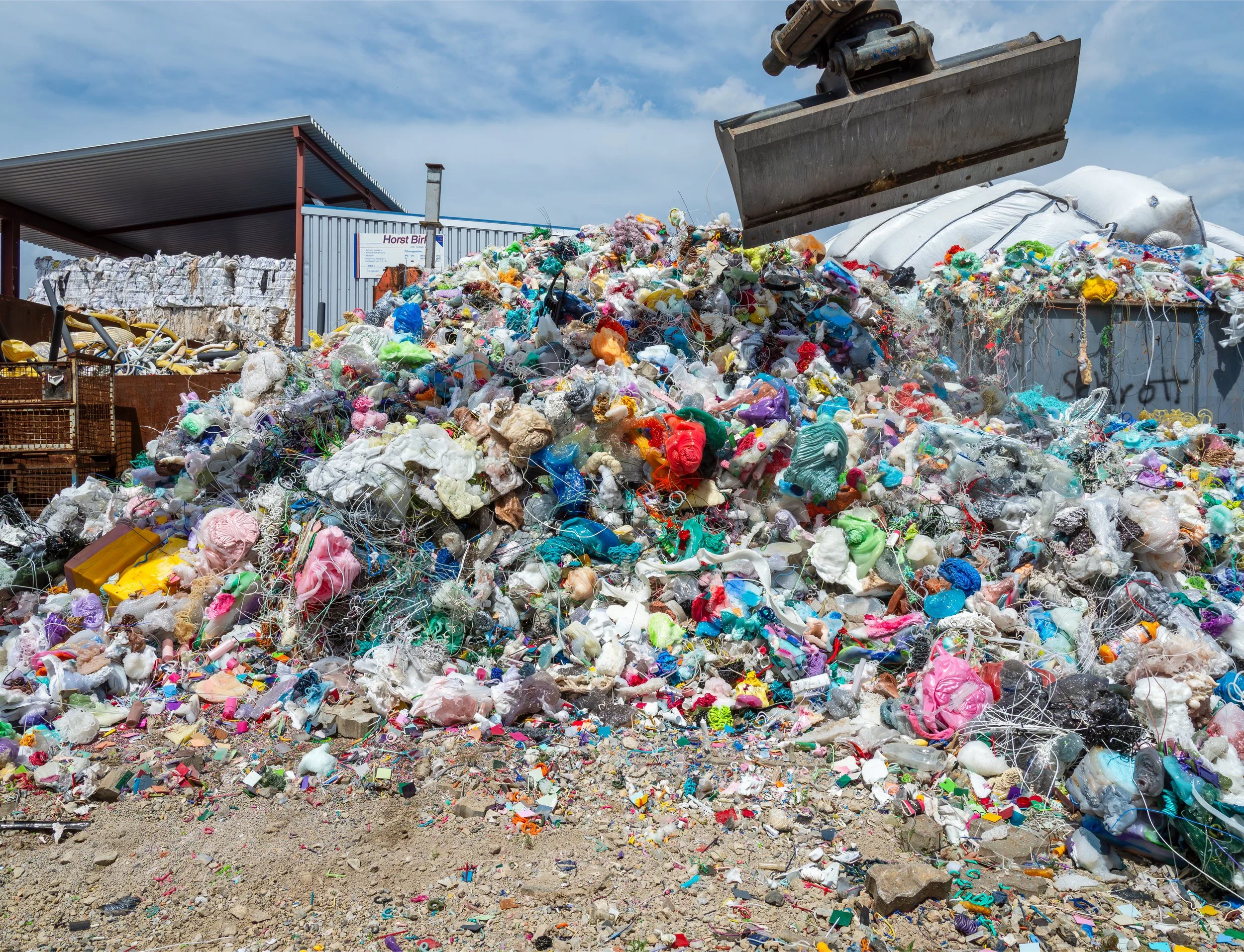
Recycled plastic sorting. Reinhold Moller. CC BY-SA 4.0.
Jim Puckett, founder of the environmental watchdog Basel Action Network, called recycling in the United States “a complete sham,” pointing out that plastic rarely ends up where the public thinks it does. Instead, it is “commonly dumped, burned, or released into waterways,” he said. As of July 1, 2025, one of these key disposal routes, which carried plastic exports to Malaysia, was officially shut down. The Malaysian government banned imports after the U.S. refused to sign the Basel Convention, which prevents the movement of hazardous plastic, like e-waste.
In 2024 alone, the U.S. shipped more than 35,000 tons of plastic to Malaysia. According to Puckett, most of it was virtually unrecyclable, with thin multi-layered packaging, like that of chip bags, that can’t be processed through standard systems. America’s contribution, combined with waste from other exporting countries, overwhelmed local capacity and helped place Malaysia as the top plastic polluter among developing nations.
Researchers such as Wong Pui Yi argue that Malaysia’s ecosystem and oceans are undergoing hardship on America’s behalf. “Our people and environment in Malaysia have suffered greatly from the pollution caused by imported plastic and electronic waste,” he said. In response, the government decided to take a stand. “We do not want Malaysia to be the world’s rubbish bin,” said Minister of Natural Resources and Environmental Sustainability, Nik Nazmi.
Malaysia, however, is not alone. The nation is part of a little-known but sprawling system, one that Konstantinos Velis, a senior lecturer in waste and resource engineering at Imperial College London, called a “widely diversified globalised trade.” China used to be the center of this waste web, taking in half the world’s plastic until 2018, when it abruptly stopped under the National Sword policy. This decision reshaped global waste flows, sending America’s discarded plastic to other Southeast Asian countries, including Malaysia.
But now, with Malaysia out, the question is: where will the plastic go? Kate O’Neill, an environmental science professor at the University of California, Berkeley, said Malaysia’s ban could redirect America’s trash to even less-equipped countries with weaker environmental oversight. “The recycling industry still hasn’t caught up with the disruption, so these exports are still needed,” she said.
Even though both Thailand and Indonesia also banned plastic waste imports this year, the U.S. still hasn’t slowed down; it’s just sent more to Mexico and Canada. Mexico was the only country that had a steep increase in imports of it from the U.S., jumping from 76 million kilograms a year in 2023 to 87 million kilograms a year in 2024.
This pattern reflects what experts call “waste colonialism,” where wealthy Western countries offload their trash onto the Global South for cheap prices due to lower labor costs. The economic convenience of this technique led to the global plastic waste management market being valued at $37 billion in 2023, and now it is projected to reach $44 billion by 2027.
Critics argue that the only way to combat this cycle of exploitation is to reduce America’s single-use plastic production rates. Until then, the world’s developing countries will continue to bear the environmental cost of a crisis they did not create.

Sofia Stidham
Sofia is a rising fourth-year English Literature student at the University of Edinburgh, having recently completed a year-long exchange at the University of Virginia. Outside of writing, she enjoys spending time with family and friends, going to concerts, curating her wardrobe, and zoning out on long walks. She hopes to pursue a career that allows her to channel her passion for writing into intersectional feminist advocacy.