
By Claire Garvin
As the Earth’s tilt produces never-ending daylight in Northern Norway, travelers have ample time to explore the region’s breathtaking offerings.
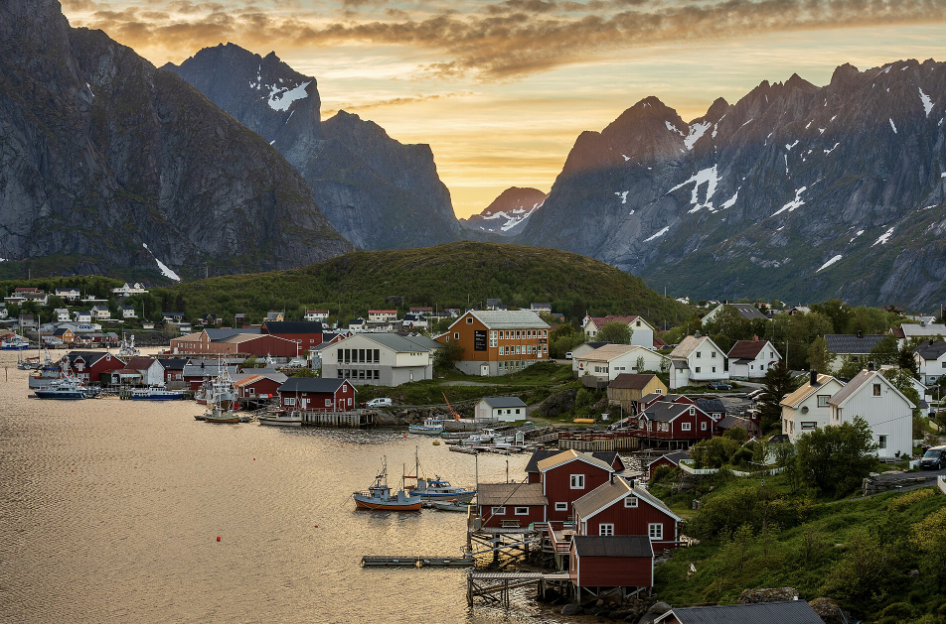
Houses of Reine village in Nordland, Norway. Ximonic. CC BY-SA 4.0.
Nicknamed the “Land of the Midnight Sun,” Northern Norway boasts up to 76 days of nonstop sun throughout the summer. When the rest of the world faces darkness at 11 p.m., Northern Norway basks in glowing, low-angled rays of light, drawing travelers from around the world. From midnight hikes to evening whale watching, the region abounds with countless possibilities to fill the never-ending days.
1. Helgeland
Helgeland, the southernmost district in Northern Norway, boasts the unique Vega Archipelago, a UNESCO World Heritage Site since 2004. For approximately 1,500 years, locals in the Vega Archipelago have acted as guardians of eider ducks, building tiny eider houses for the ducks each spring. After protecting the birds throughout the breeding season, the eider down feather is then collected, traded and sold by the islanders. Since the ninth century, the Vega Archipelago has been crucial suppliers of down feathers, despite their extremely exposed nature. Today, visitors can explore the unique eider houses, visit the Eider Duck Museum or even stay in an eider cabin.
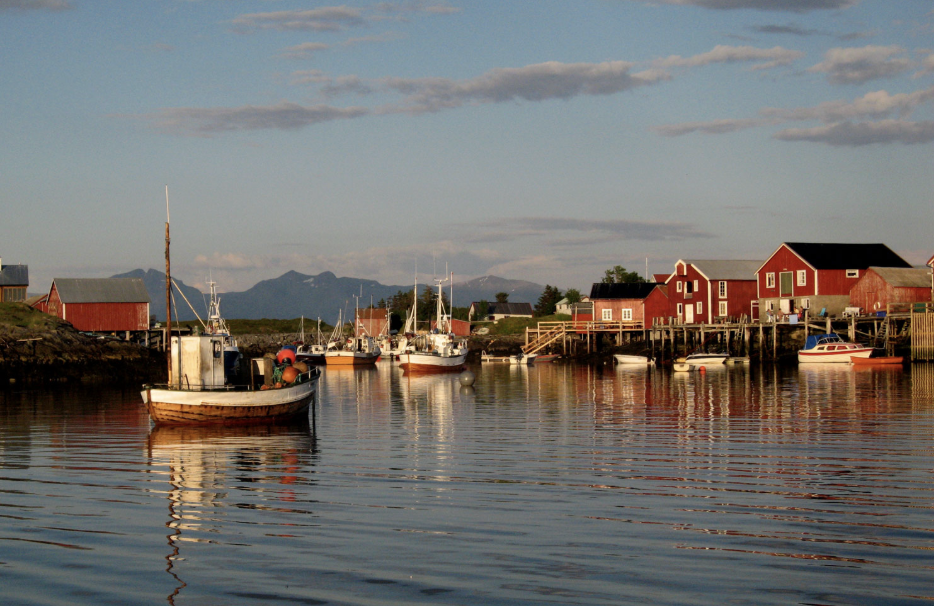
Nes Harbor on the Vega Archipelago, Norway. Dana Morris. CC BY-SA 3.0.
Further north along the Helgeland coast, one of Norway’s largest puffin colonies lies on the rocky northernmost slope of Lovund, a leisurely, rugged island that also boasts the world’s largest one-hole golf course. On nearby Alsta island, the seven mountainous peaks of the Seven Sisters can be admired from both afar and up close. According to common folklore, the mountainous range is named after seven troll sisters, each turned to stone while fleeing an enraged suitor down the Helgeland coast. Under Norway’s midnight sun, the peaks cast shadows over one another throughout the night, as their faces are reflected onto the shimmering ocean water.
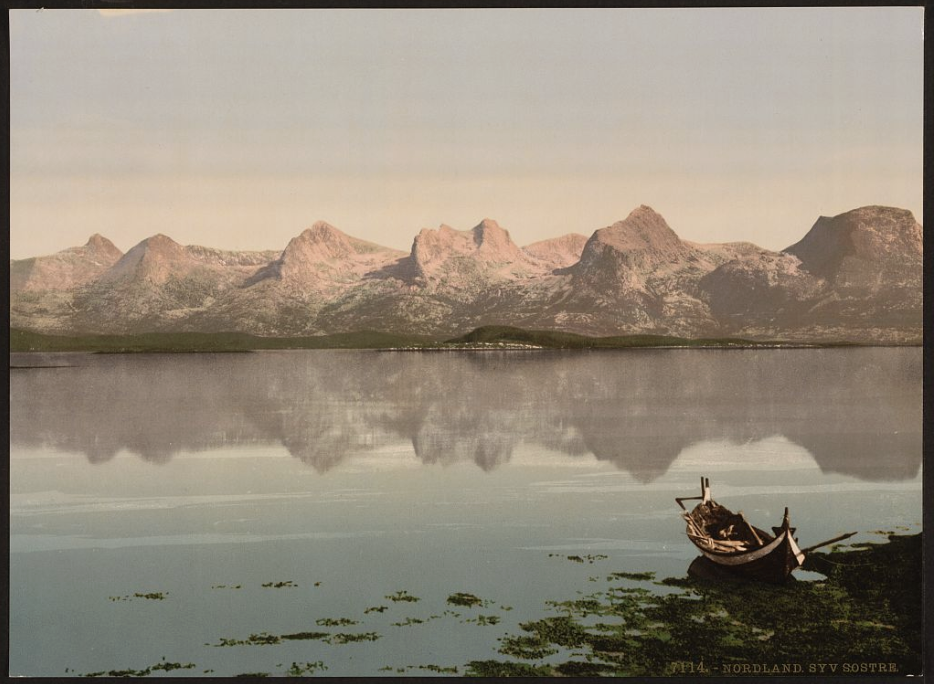
1905 print of the Seven Sisters mountain range in Nordland, Norway. Fae. CC0.
2. Lofoten Islands
The allure of the Lofoten Islands, an archipelago of over 80 islands, traces back to the Vikings. Visitors can discover how the Vikings lived under the midnight sun in the Lofotr Viking Museum, or explore the authentic fishing village of Reine, known as one of the most beautiful villages in the world. While there, Lofoten stockfish is sure to appear on almost any restaurant’s menu. This product holds Protected Geographical Indication status, a designation applied to the likes of France’s Champagne and Italy’s Parmigiano Reggiano. It is prepared using fish, typically Arctic cod, pollock or haddock, dried upon wooden poles. For centuries, this delicacy has brought wealth to the region, and historians today believe that the trade of stockfish funded the construction of much of Norway.
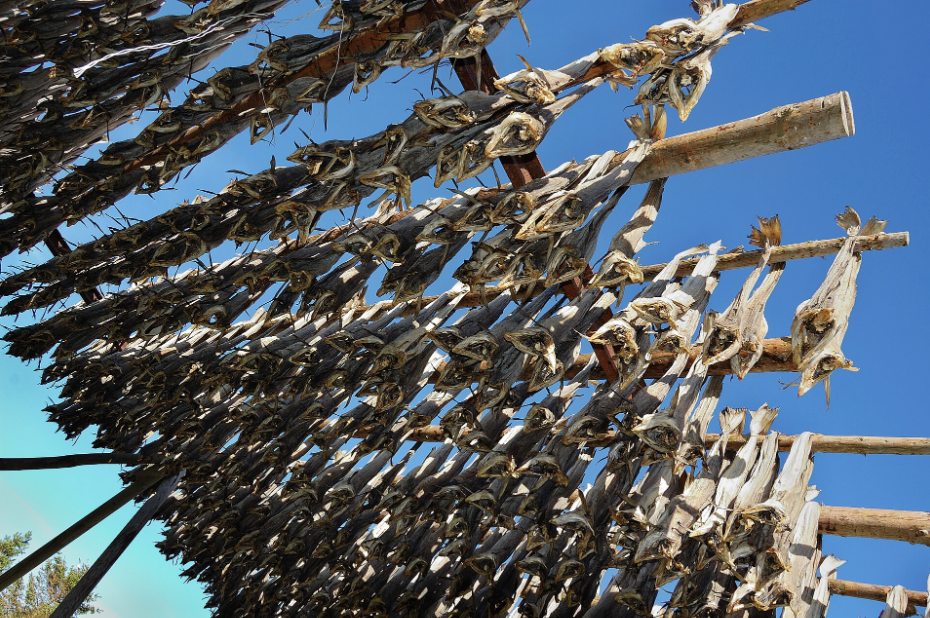
Rows of drying Lofoten stockfish. Sveter. CC BY-SA 3.0.
On the nearby artsy fishing island of Henningsvaer lies one of Norway’s most renowned contemporary art museums, the KaviarFactory, containing works of both acclaimed Norwegian and international artists. The island is a cultural hub for the arts, also housing the Engelskmannsbrygga, a workshop with open artist studios, featurning glassblowing, pottery and painting. Outdoors, travelers eager to soak in the endless daylight can try midnight surfing, wildlife safaris, horseback riding and kayaking throughout the Lofoten archipelago.
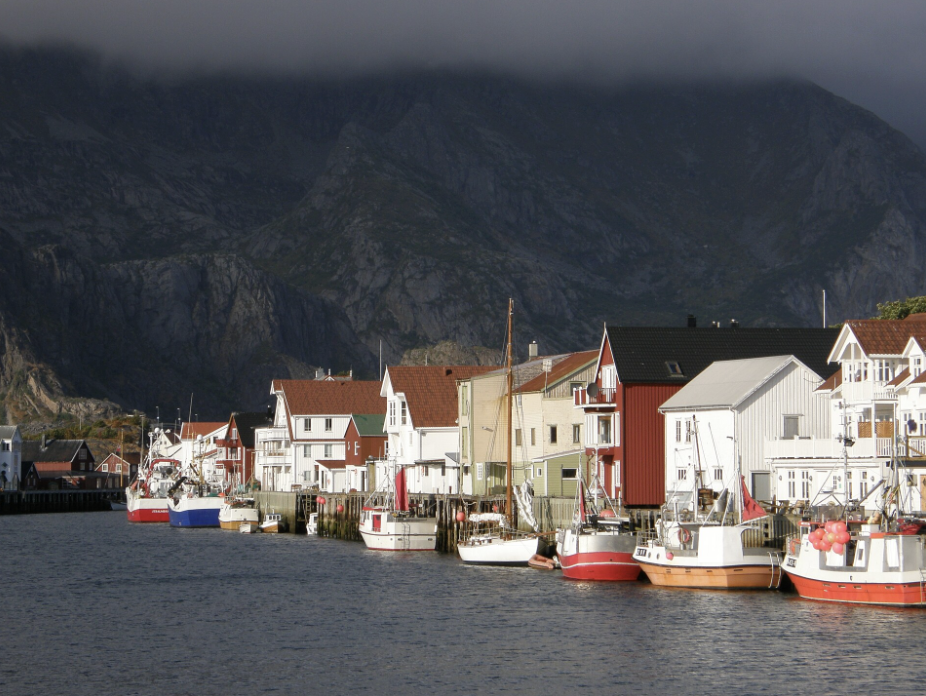
Henningsvaer Island, Norway. Paul Berzinn. CC BY-SA 3.0.
3. Vesteralen
East of Lofoten lies Vesteralen, an archipelago renowned for its year-round whale watching. The archipelago lies at the edge of the ocean’s continental shelf, attracting whales throughout the year to the nutrient-rich waters. Idyllic small towns dot the island cluster, including Andenes, the archipelago’s most popular destination; Sortland, boasting the exceptional Sortland Museum; and Bo and Sto,quaint fishing villages filled with sculptures, lighthouses and hiking routes.
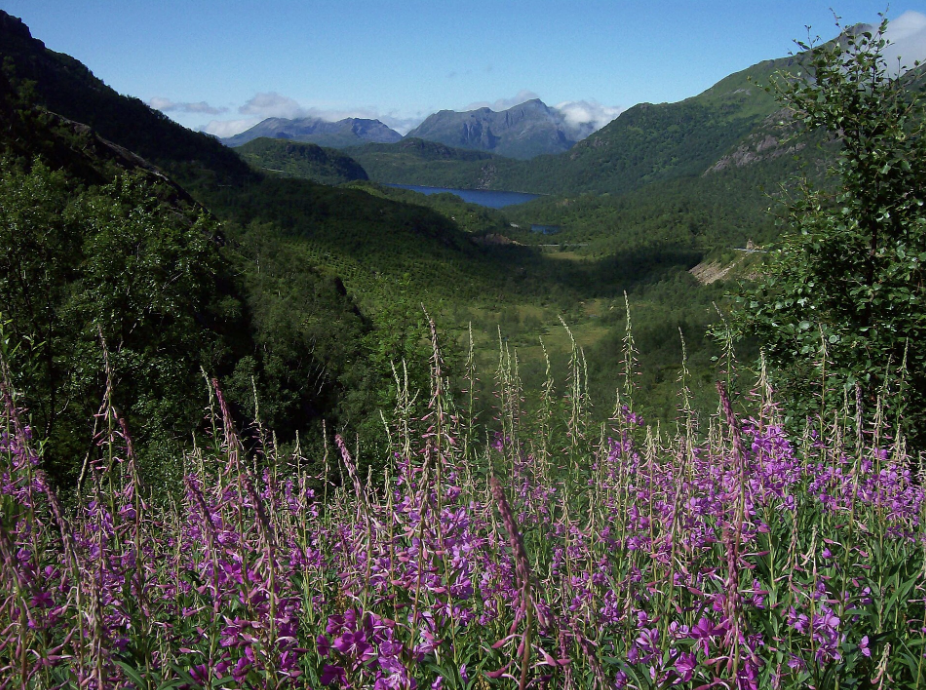
Bo Island in Vesteralen, Norway. Paul Berzinn. CC BY-SA 3.0.
4. Tromso
Tromso is the largest city in northern Norway, drawing visitors throughout the year for its alluring mix of stunning mountain scenery and buzzing city activities. Architecture buffs can explore the Arctic Cathedral, whose glowing white exterior and interior attract over 100,000 visitors each year. After exploring the Norwegian trinkets and vintage goods or relaxing in one of Tromso’s floating saunas, view the city from the top of Mount Storsteinen, either by riding the Fjellheisen cable car or by climbing up the 1,200 stone steps of the Sherpa stairs. The midnight sun defines the cultural landscape, with locals in the neighboring town of Sommaroy garnering international attention for their campaign to become the world’s first time-free zone.
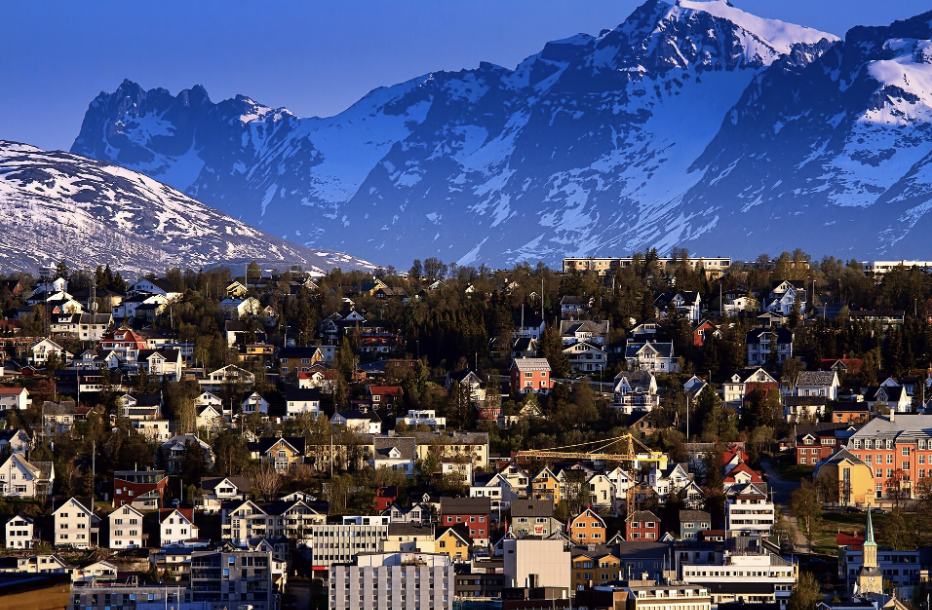
Tromso, Norway, cityscape in the summer evening. Mark Ledingham. CC BY 2.0.
5. Finnmark
As the northernmost county of Norway, Finnmark is likely synonymous with wintertime’s glistening Northern Lights for most travelers. In the summer, the icy snowcaps melt away into grassy peaks in a region rich in Sami culture. The towns of Kautokeino and Karasjok remain important centers of Sami culture. The Sami, also known as Saami, are the Indigenous people of northern Europe. Although the Sami faced extreme forced-assimilation policies throughout much of the 19th and 20th centuries, recent efforts have sought to preserve and strengthen the Sami culture, educating visitors on Sami customs and continuing ancient traditions for generations to come. In Karasjok, the Sami Parliament building remains the heart of the enduring Sami society, where Sami-elected representatives work on issues affecting Sami languages, culture and society. The building’s exterior, designed in the form of a traditional Sami tent, or lavvu, honors Sami heritage, while the library holds over 30,000 books in all nine Sami languages. Travelers can also visit the Sami Centre for Contemporary Art, where artisans continue to share traditional art forms, including pearl embroidery, shoelace weaving and knife making.
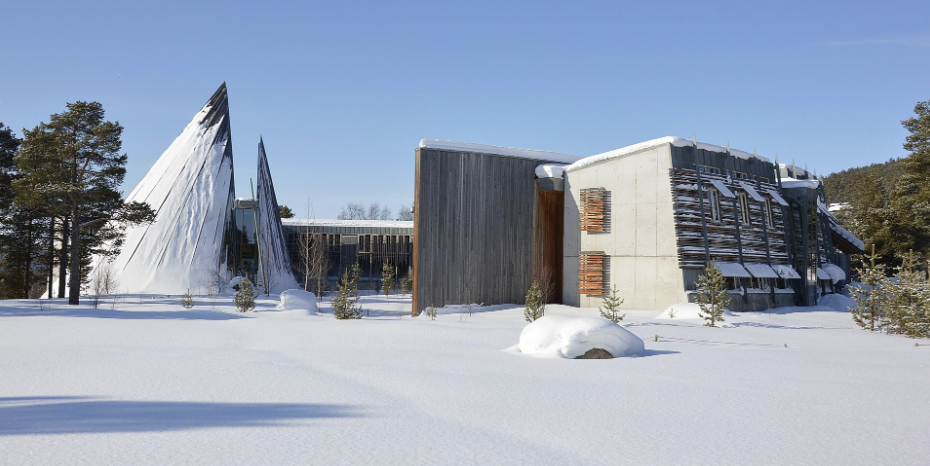
Exterior of the Sami Parliament building in Karasjok, Norway. Illustratedjc. CC BY-SA 3.0.
Finnmark also boasts the northernmost point in Europe reachable by car: the North Cape. Throughout the summer, endless rays of sunlight pierce the towering Globe Monument, a symbol of the North Cape’s geographical position at the edge of the world.
GET INVOLVED:
Learn more about the Saami Council, a nongovernmental organization dedicated to upholding and promoting the rights of Saami people. Explore the Norwegian Society for the Conservation of Nature, Norway’s oldest nonprofit organization dedicated to fighting environmental issues.
Claire Garvin
Claire is a fourth-year student at Barnard College, Columbia University studying Neuroscience. She is interested in writing as a means of understanding the world, and she hopes to ignite meaningful change through her journalism. Outside of class, she enjoys baking, painting, and reading.