
These photos of girls skating in Kabul will change your perception of Afghanistan. AJ+'s Ahmed Shihab-Eldin took a tour with photographer Jessica Fulford-Dobson around her interactive exhibit hosted by Qatar Museums, and got to meet some of the Skate Girls of Kabul.
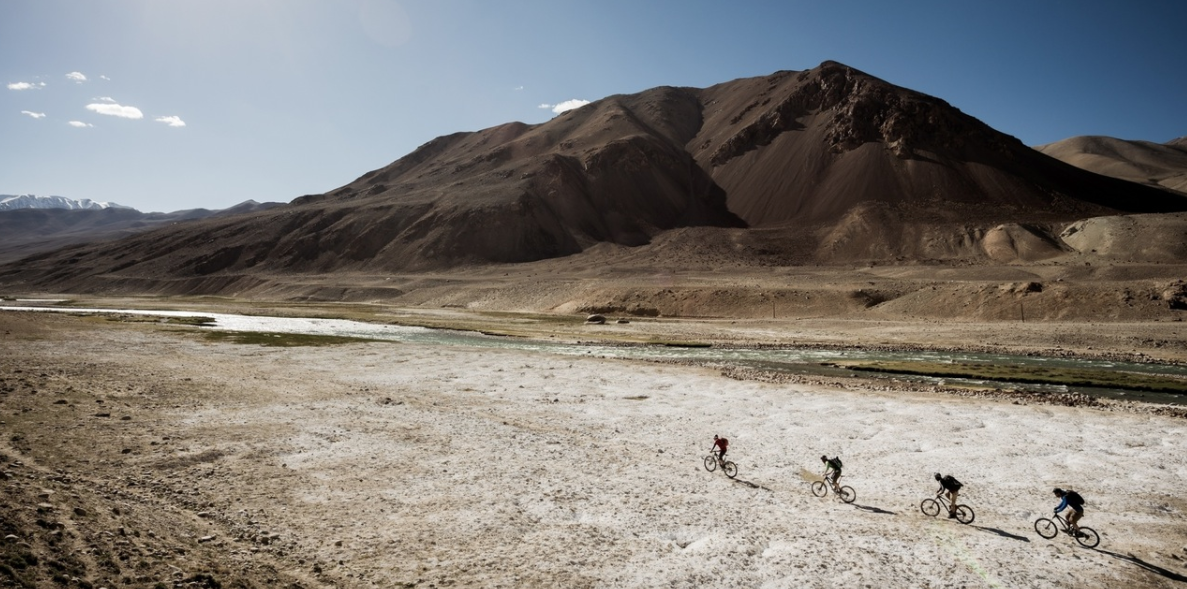
The Quest for Afghan Singletrack
“His name means ‘soldier’,” says Yaar Mahahammad, our translator. Yaar is talking about Askarkhan, a thirteen year old boy who has been hefting rocks to form the foundations for a new stone hut with the kind of ease that puts my own strength to shame.
Askarkhan looks at us with piercing, curious eyes from beneath his over-sized, hand-me-down clothes. Despite his military-sounding name, his clothes have no resemblance to a uniform, and he doesn’t need one. Here, at 4,305 metres amidst the swirls of a snowstorm in the remote Wakhan Corridor, Askarkhan is far from the war and troubles that have tragically become synonymous with his home country, Afghanistan.

Thirteen-year-old Askarkhan, whose family are semi-nomadic shepherds in the remote Wakhan Corridor.
In these regions the best weapon for survival is resilience, not a rifle. Guns are useful against marauding wolves, but it is resilience that will see Askarkhan brave the short, eight-week summer of herding yaks and sheep high on the mountainsides. Resilience that will arm him against the cold of night, the relentless snowstorms possible on 350 days of the year, and the thin air. I have a lot to learn. All in all, this is probably the harshest place I have ever been, so why the hell are we trying to ride bikes here?
Today, the snow buries our six bikes and tents alike. Above us, enveloped in dense fog, sits the way ahead. At 4,860 metres, the Karabel Pass is the second of three high passes that we have to brave during our twelve day pioneering mountain bike traverse through the Wakhan Corridor. Navigating each pass means an early 4am start, as we must give the pack animals carrying our supplies a good chance of crossing while the snowpack is still frozen hard. Each climb requires dragging ourselves from warm sleeping bags to force on frozen bike shoes hours before any sign of breakfast. But each pass, we hope, will deliver another brake-searing singletrack descent.
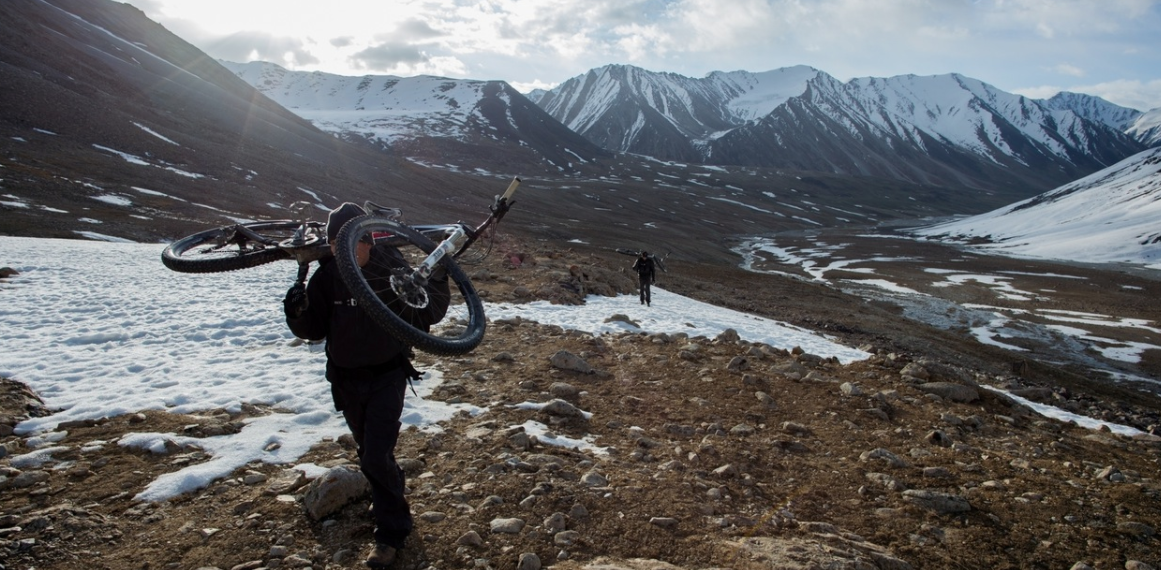
Colin Jones, half way up the 4,867 metre Shawal Pass. Early, first light starts, usually at 4am, mean that our pack animals can safely cross the snowpack while it’s still frozen.
As far as adventure-bike trips go, it doesn’t get more adventurous than this. The term ‘adventure’ seems to put such trips outside the normal remit for whinging. After all, if the going gets tough, then that is just part of ‘adventure’. Yet after thirty years of remote mountain biking trips, this one is stretching my resolve. If “hard-earned” is the price you pay for riding where no one has ever ridden before, then we are certainly paying the price in Afghanistan. There has been nothing easy about our ride so far, from hefting our bikes across perilous, icy river crossings in churning waters, to the massive temperature swings that deliver 30°C heat one day and snowstorms the next. It is day five when we meet Askarkhan. We have seven more to go. I am tired, my feet are wet and my hands numb.
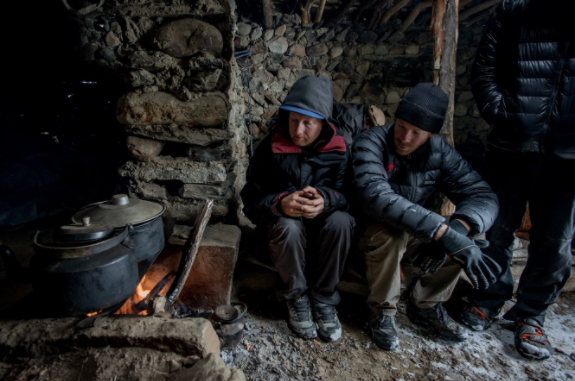
Pro rider Matt Hunter and cameraman Colin Jones huddle near the fire, inside a draughty shepherd’s hut during a day of blizzards at Karabel camp, 4,300 metres.
Every year the remote and wild Wakhan Corridor welcomes a small handful of intrepid trekkers, but nobody has tried to mountain bike across it until now. A week earlier, after the drive in, I start to understand why. With the road from Kabul deemed too dangerous for travel, the only way to enter the Wakhan is from the neighbouring capital of Dushanbe, in Tajikistan. It takes us four days of navigating dry, desolate boulder-strewn roads, fording rivers swollen with summer snow melt, in jeeps with bald tyres, cracked windscreens, and leaky radiators. We took turns to ride shotgun alongside our driver, while the cassette player tried but failed to drown out the car’s rattles, its interior constantly filled with clouds of dust.
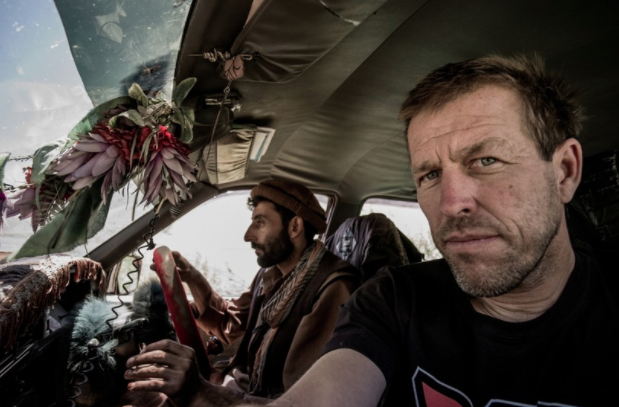
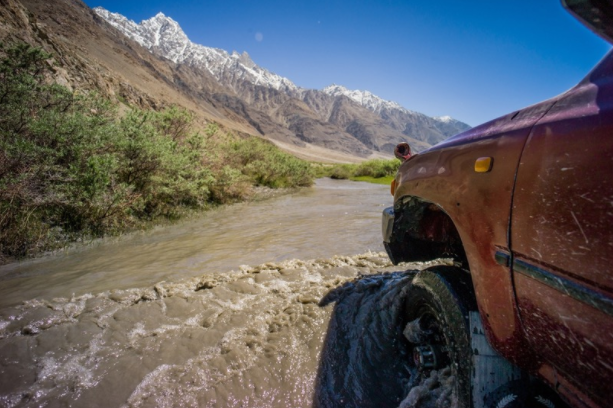
Riding shotgun in our Afghan jeep, a battered Toyota Hilux. There are few bridges in these remote regions and rivers are swollen with snowmelt.
Eventually we reach Sarhad, the village at the end of the dirt road and the starting point for our twelve day traverse of the Wakhan. Within the region’s arid landscape, such villages are an oasis of fertility. We spend two nights here, making arrangements to hire pack animals to haul the camping gear and the food we will need for the duration. For all of the assembled mountain bikers, including Canadian pro-rider Matt Hunter, the lure of this pioneering expedition is not about kudos or dubious bar-talk bravery.
It is the enticement of the unknown, of what lies beyond our usual boundaries. It is the magnetic appeal of hard-earned singletrack rewards that brings us to this unforgiving landscape.
Some might criticise venturing through such impoverished areas while flaunting our own relative wealth, but my experience suggests that such trips help break down barriers and educate both hosts and tourists alike. It is only through better understanding of different cultures that we can really do away with war.
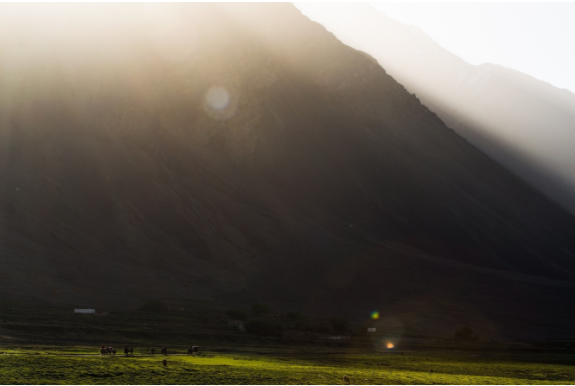
An oasis of green grazing lands surrounds the small Afghan village of Sarhad. At 3,400 metres it is the starting point for our ambitious traverse of the Wakhan.
Tom Bodkin, who runs adventure travel company Secret Compass and is the brains behind the outlandish expedition we have signed up for, lays out a patchwork of old 1980s Soviet maps on the grass. Without hacking into the US military’s drone programme, these old Soviet era maps are the only source of detail we have. The maps are a maze of tightly packed contour lines. As if adding items to a shopping list, Tom methodically points out a number of rivers swollen with snowmelt and high, snowy passes, any of which might prove un-crossable and cause our retreat.
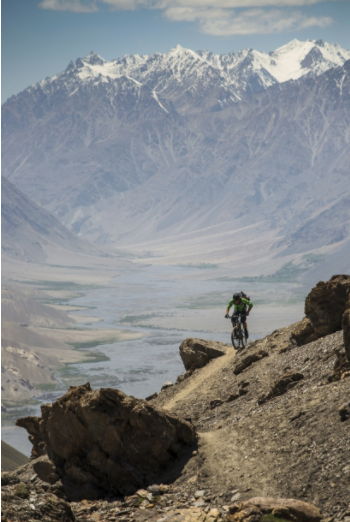
Canadian pro-rider Matt Hunter summits the 4,250 metre Dalriz pass, our first high pass of the twelve day traverse.
We strike out on day one, heading straight into a climb up the 4,250 metre Dalriz Pass, our first high pass of the ride, and a stunning view across the Little Pamir valley. Acclimatisation comes slowly to us, making the first two days a serious slog as we haul our bikes over these passes. Any semblance of vehicle, toilet, or cell-phone coverage is left behind us. Our tyres roll only on ancient trails chiselled into the dusty hillsides by centuries of determined pack animal traffic. For the first two days we follow part of the ancient silk route, beating its way East towards China, shadowed by the impossibly vertical peaks of Pakistan’s Hindu Kush.
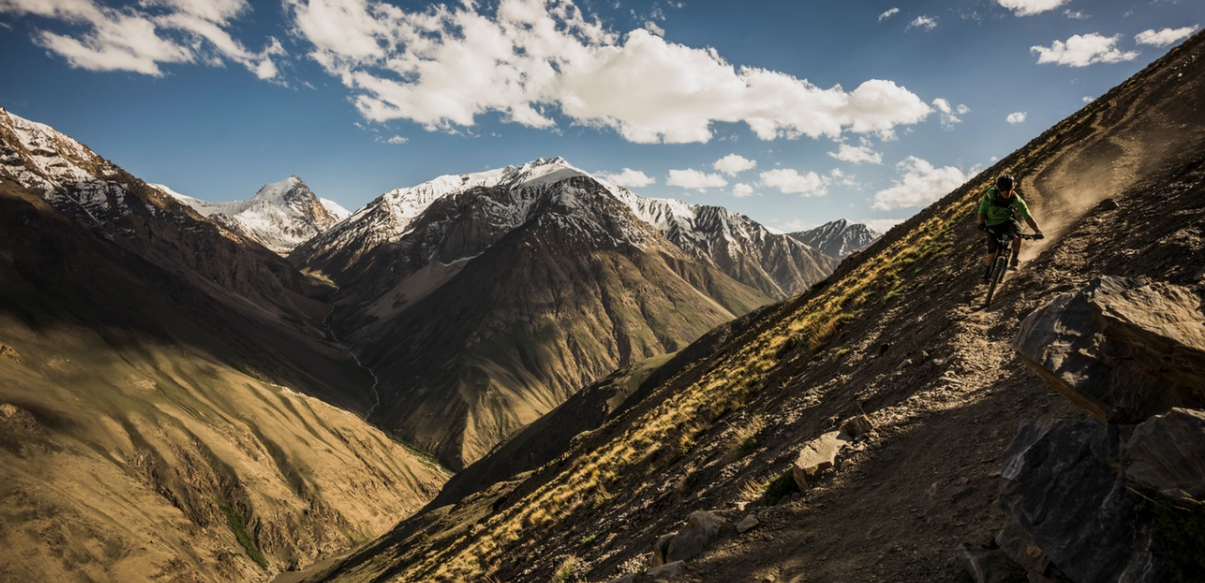
Wild, remote and high, the Wakhan Corridor’s landscape became the backdrop to the toughest expedition I have ever shot.
The locals here are among the hardiest and most resourceful people I have ever encountered. They have little choice to be otherwise. Surviving in this wild and unforgiving landscape is a constant challenge. There are few trees in the Wakhan, so yak dung is the default fuel for warmth and for cooking. Smoking fiercely when burnt, it fills the occasional stone huts our support team sometimes use for cooking duties with thick, eye-watering smoke.
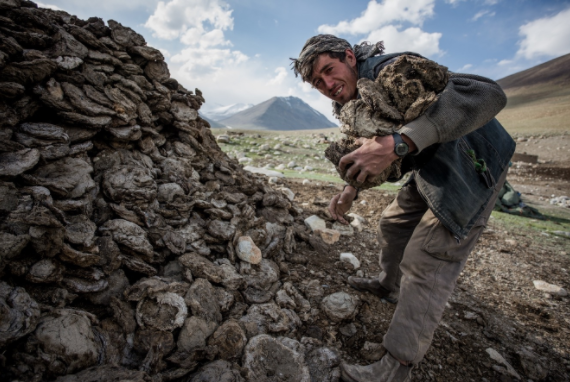
Collecting dried yak dung for the cooking fire. Respiratory complaints from the thick, acrid smoke the dung generates are common here.
We follow precarious trails perched high above the thundering Wakhan river, brown with meltwater silt. There is no shortage of off-camber, loose, narrow singletrack, making for challenging and nerve-racking riding, where a fall could spell calamity. For the first few days, getting the trail surface dialled proves to be a steep learning curve. Each of us deals with the exposure factor differently, but in the end it is the turbulent river crossings that become the single great leveller.
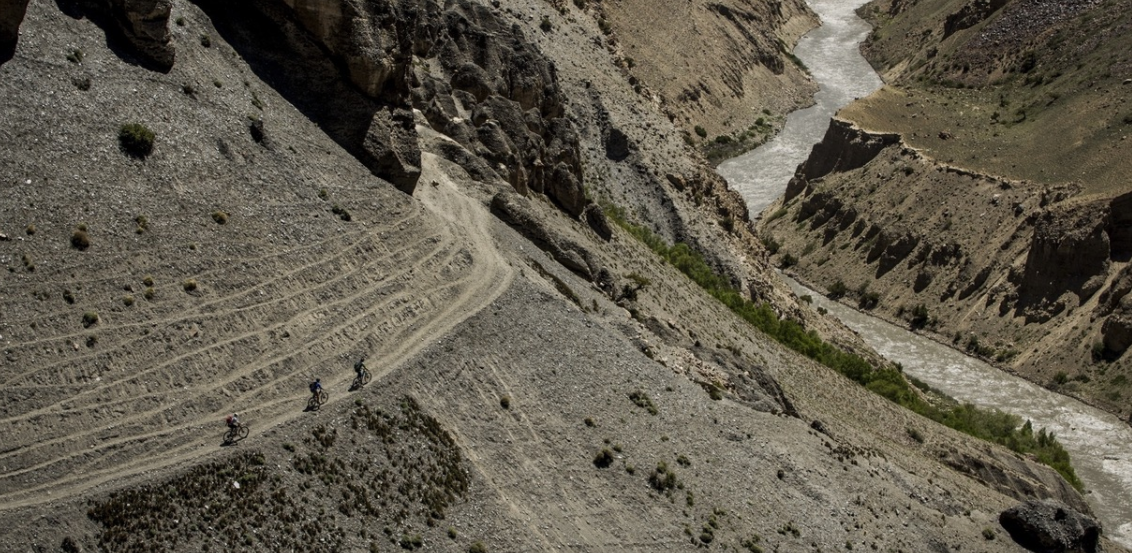
Navigating narrow, loose trails high above the churning Wakhan river, on day two. Rivers are swollen with meltwater in June.
In twelve days of riding, we only cross four bridges. For the remainder, we have no choice but to wade, often thigh deep, in icy cold, churning waters. At each river we stop, regroup and collectively plan a way across. A slip or fall here would mean a battering at best, and at worst losing a bike or even a life into the heaving mass of the Wakhan River below.
Every tributary we encounter is a raging torrent of ice-cold meltwater, formidably dark with silt. Carrying bikes becomes a game of nerves and balance. Numb feet become the targets for bowling-ball rocks, rolled along the riverbed by an angry current.
Meanwhile our enthusiastically grabbing, wildly shouting Afghan support team beckons from the far bank, adding to the drama. And then we have to get the donkeys across. It is a process we must repeat many times.
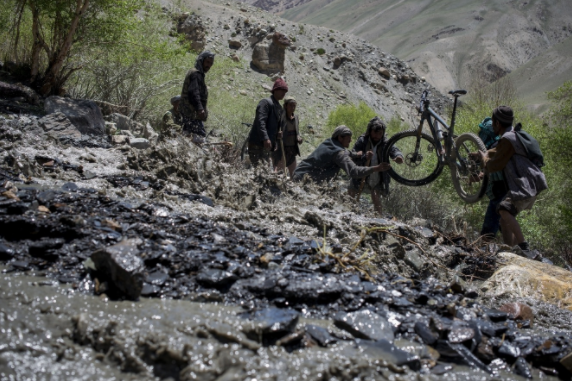
Rivers created anxiety equally within our group. Some were simple, while others were steep, muddy, raging torrents that could easily knock you from your feet. All were icy cold.
In truth, though, we would be going nowhere without the local support and hardy pack animals. In this forgotten land, where winter lasts eight months of the year, we are a valuable source of income for six locals, including our cook Amin Beg, his helper Amin Ali, and our translator Yaar Mahammad. Yaar’s English is basic, and he struggles to understand much of what Tom tries to convey to our horsemen. But without him we would be felled. Finding an English speaker in this remote corner of the world is nigh on impossible. When Tom put the word out, only three candidates showed up at the Tajik-Afghan border crossing at the town of Ishkashim. One of them had travelled for two days to pitch his service.
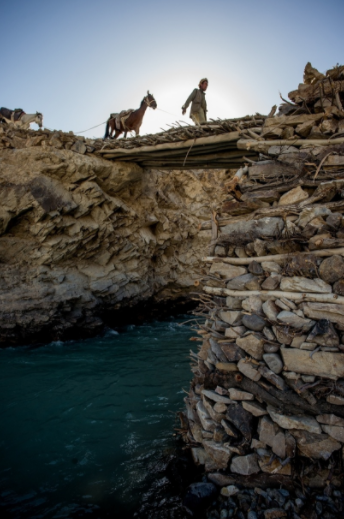
One of the only bridges we crossed during our traverse. Horses and yaks are the only possible forms of transport here.
For the first three days we work our way up the side of the thundering Wakhan river, crossing its tributaries and making the most of every dusty section of trail we can ride. We reach the magnificent rolling hills of Little Pamir, and follow a solitary horse trail up valleys and over passes. Spirits are high and group camaraderie is building, but the physical and mental challenges will take their toll before long. As the days pass, each of us suffers a low point, when energy and morale is lacking.
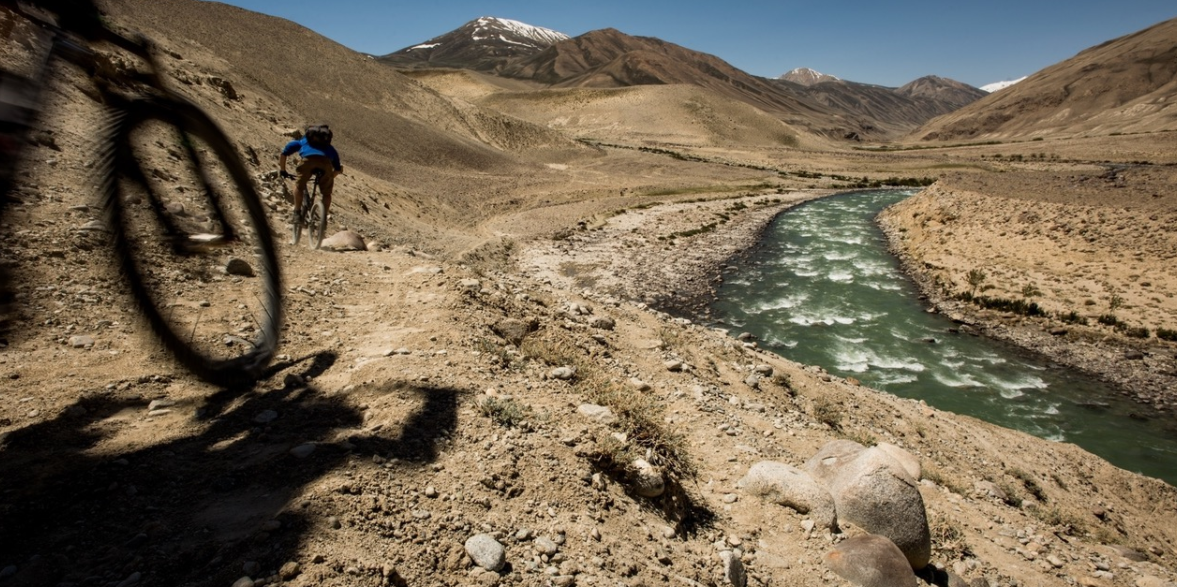
Dropping down to the Wakhan river, and towards one of the most unrideable two kilometres of trail we encountered. No-one can ride a bike through deep sand.
Where we stop to camp each night is dictated by water and the grazing needs of the pack animals, rather than by our own abilities. The distances we cover each day are not big by any standards, but I am thankful for that. We rapidly climb to over 4,200 metres, and then remain above 4,000 metres for much of the trip. Only time will allow us to acclimatise.
The vast emptiness of the Wakhan means that we are assured a permanent feeling of solitude. It is probably the most remote-feeling and wild place that I have ever journeyed through.
Sometimes we pitch our tents in open, exposed meadows surrounded by boulders etched with petroglyphs, sometimes we are squeezed into steep-sided river gorges. The people of the Wakhan are semi-nomadic, and there are are no permanent villages, so we camp wherever a shepherd’s outpost or hut can be found as shelter for our support team. On other nights, they hastily erect ad-hoc stone walls behind which they will sleep in freezing temperatures. None of us have met such a hardy, tough people, and resourceful too. The night before our first high mountain pass crossing, the Afghans sit melting the rubber soles of their shoes on the campfire to stick on patches of fabric. They tell us that these makeshift crampons will help them during the snowy hike ahead.
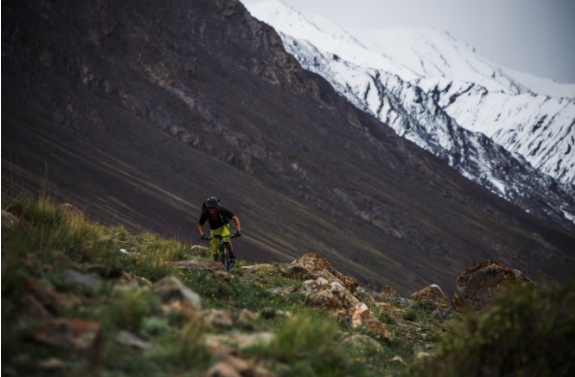
Matt Hunter dwarfed by the snowy Pamir mountains. We make the most of the times we can ride, rather than carry, our bikes.
The high passes become our biggest obstacle. Higher than any peak in Europe they are a challenge for fitness and lung capacity alike. With a 4am, sub-zero start each pass is a race against time, as we attempt to cross before the snow softens. After waiting out the blizzard on day five, with young Askarkhan and his fellow shepherds, it is the 4,860 metre Karabel Pass that finally defeats us. Without the previous night’s clear sky and sub-zero temperatures to freeze the snowpack, our horses flounder in the deep, soft snow. Although we have crested the pass, further progress is impossible without risking injuring an animal. We reluctantly beat a retreat knowing that tomorrow we will have to take a 45 kilometre detour to reach our staging post for the next pass.
This is the nature of pioneering expeditions: facing whatever challenge arises.
Back at Karabel camp, we laugh with our Afghan support team and the shepherds as they try riding our bikes, their first bike experience ever, and we try riding their horses in return. Inevitably, it is humour that most easily slices through the cultural and language barriers between us.
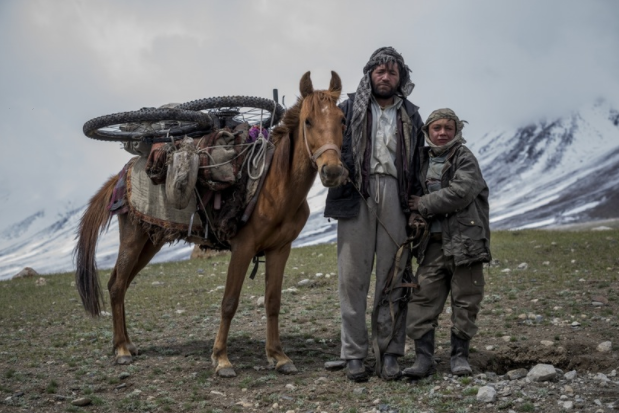
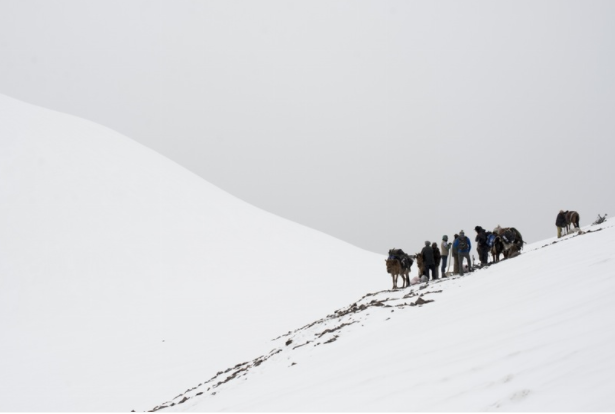
Preparing to cross the 4,860 metre Karabel pass, this was one of the few times we strapped a bike onto a horse to try and make the climb easier for us.
Riding bikes into uncharted territory like this is fraught with challenges that demand dogged resilience and a willingness to simply take what comes. At some point on this ride, we all hit ‘the wall’.
Now day seven, this detour up valley, in bleak weather of frequent snow storms, is the longest and most brutal we have endured. It is on this afternoon, in a swirl of freezing sleet, while pushing my bike across a half-frozen peat bog, I experience my moment of personal defeat. It is understandable. My feet are numb again, the weather is stacked against us, and we are eight hours into a gruelling day of physical duress. When we stop for a rest, I question our sanity. The group is silent. I get the feeling that others share my doubts, but no one wants to spoil the party. We press on, and of course later I will be glad that we did, but by the time we collapse at our camp at dusk, we will have been on the trail for fourteen gruelling hours.
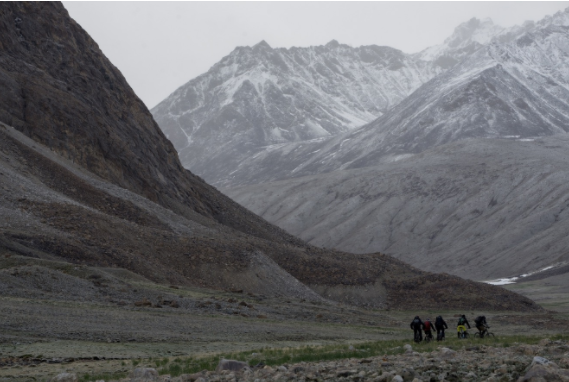
Partway through our gruelling fourteen hour detour, through peat bog and sleet storms, to avoid the Karabel Pass.
That night, we sleep at 4,400 metres beneath an enormous hanging glacier. It is possibly the most spectacular camp spot I have ever seen, but I am too exhausted to truly appreciate it. Six hours after crawling into a cold sleeping bag, we are up and hiking icy scree again, attempting to crest our third high pass, the 4,850 metre Showr Pass. When we finally cross it, the achievement is as much mental as physical. Representing a significant milestone, this pass divides the Wakhi-populated Little Pamir from the culturally distinct Kyrgyz-controlled Great Pamir. The descent is an eclectic mix of snow, mud and rocky singletrack, weaving between boulders and around bogs. The riding is as wild as our surroundings.
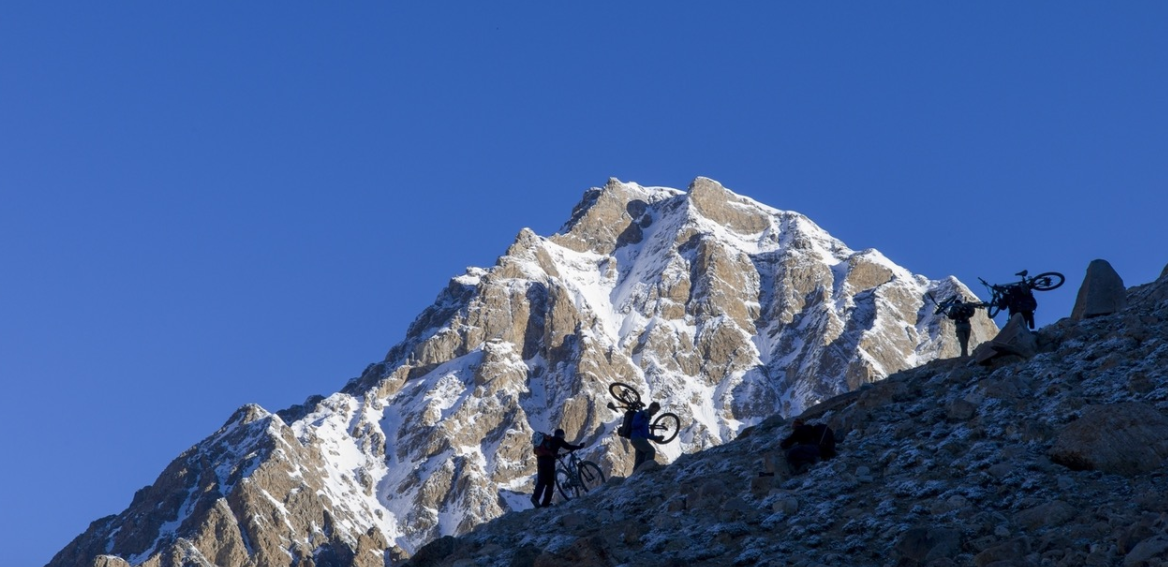
An early start to crest the 4,850 metre Showr Pass leaves our group silhouetted against the mighty peaks that welcome us.
While the Wakhan is isolated from the dangers associated with the rest of war-torn Afghanistan, its unruly, changeable weather and formidable terrain devoid of natural shelter make it a place to not come unstuck, and the locals know this. As we descend from the Showr Pass, we pause too long to photograph the late-afternoon scene, bathed in glowing light. Realising our support team are no longer in sight, we are faced with multiple junctions in the trail. The very real possibility of being lost hits us. Fortunately, the Afghans we are with have our backs. Before long, in the distance, we spot Amin Beg, our cook, running back on foot. When he finds us, his look of relief mirrors our own.
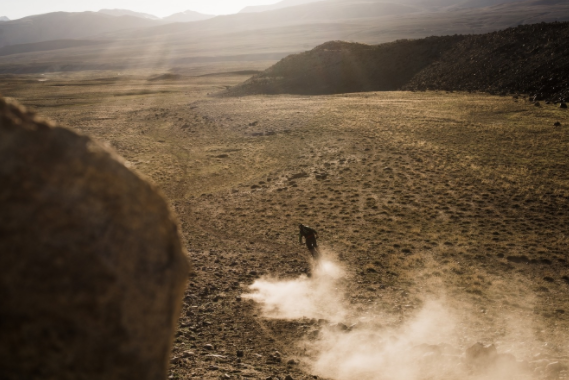
Heading into Wakhi-populated Big Pamir, we stop to photograph and re-photograph a spectacular section of trail glowing beneath the setting sun.
Eventually escorted safely to our camp for the night, we reach the Kyrgyz village of Rabot, the first permanent settlement we have encountered on our ride. Later that evening, through the limited English of our translator Yaar and our own efforts at sign language, we realise that our safety is of genuine concern to our support team. They may be surprised to find us trying to ride bikes through this unforgiving and wild land, but they will do everything in their power to help us succeed.
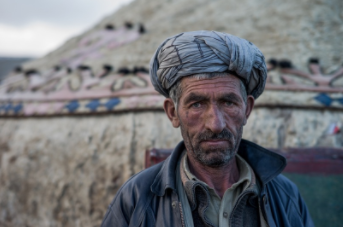
One of our Afghan support crew. There are few people as resourceful and tough as the Wakhan inhabitants.
The landscape opens up into a wide glaciated valley, and we roll through it, dwarfed by the scale our surroundings. The Kyrgyz are masters of horsemanship, and here, horses and yaks are the only practical modes of transport. Bikes have never made an appearance. As we descend further into the valleys, our bikes become the objects of intense interest. We realise none of kids here have ever handled anything like this before, let alone tried to ride a bike. The marvel that is the wheel is something that lights up dozens of faces as Matt hands one around to an eager cluster of children. They hold them up and spin, and spin, laughing.
To me, bikes will always be a great way to break down social awkwardness in remote places and regularly create smiles all round.
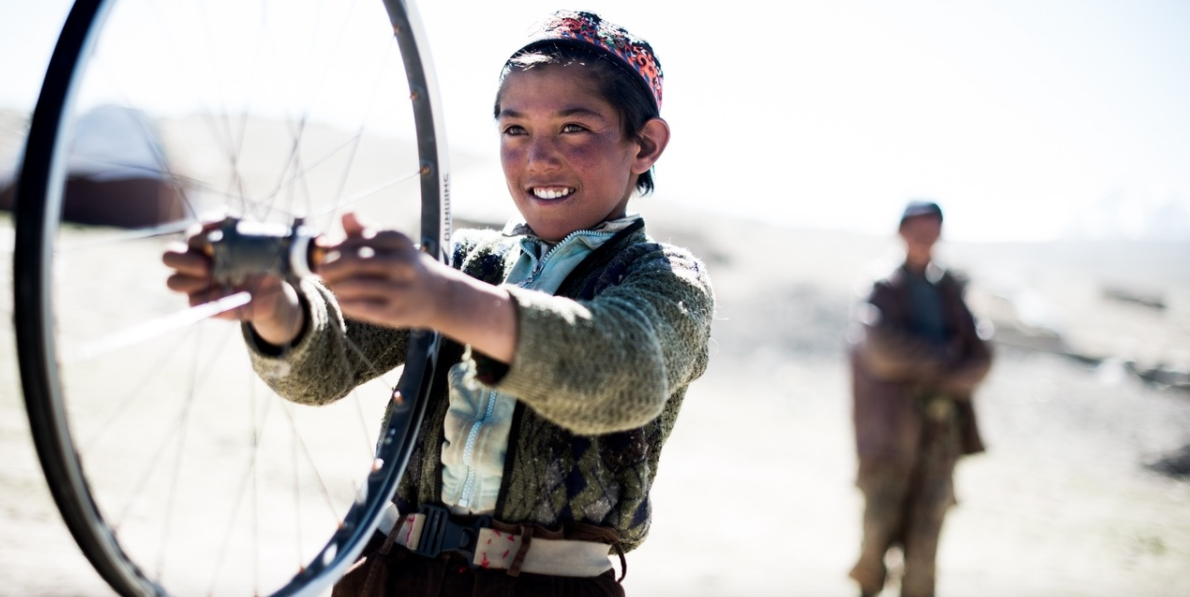
Fascinated, a young boy from the small village of Rabot in the Kyrgyz-populated Great Pamir, spins the wheel from one of our bikes.
We experience a dramatic change in culture in these valleys. Leaning our bikes up outside, we are welcomed into yurts to drink sour chai and consume fermented yak yoghurt, a staple of afternoon tea. The chief of the settlement welcomes us warmly, and a dusty rug is unrolled on which to share our meal. We are all as captivated by yurt life as the Kyrgyz are by our bikes. They laugh when we struggle to down the rancid yoghurt.
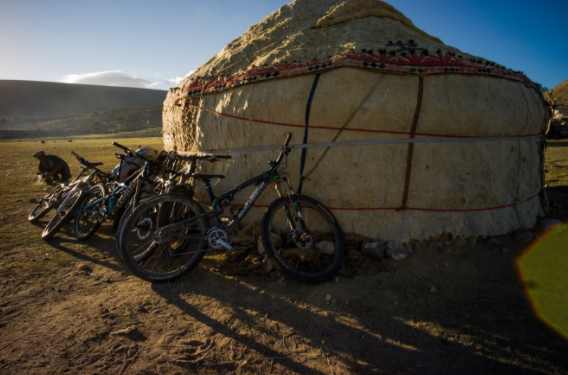
The first time that bikes have been leant against this, or any other yurt here.
Tonight, we are invited to sleep alongside our six-strong Afghan team in the shelter of the settlement’s guest yurt. It is our first chance to escape the frenzied flapping of tent flysheets pitched at the mercy of the Pamir’s relentless wind. We learn that Kyrgyz villages often have a guest yurt, something that seems unlikely in such a remote place, but given the harsh environment and changeable weather, it is customary to offer such hospitality to passing travellers. We accept gratefully, united in our appreciation of this incredibly beautiful, untamed landscape, and in our wonder and disbelief at the arduous lives of the inhabitants here.
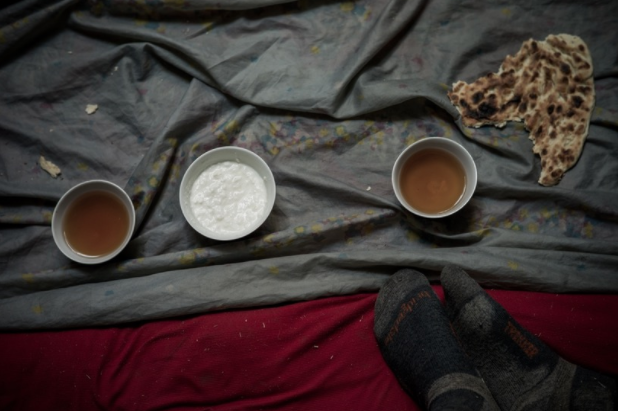

We are served tea and rancid yak-milk yoghurt, along with traditional flat breads. That evening, we are six westerners, and six Afghans, in one yurt.
Eleven days into our ride, and it is nearly time for us to leave these mountains to face the four-day drive back to the lives that we know. For now, the routine of ride, wade, eat, sleep has become normal. We are weather-beaten and at our physical and mental limits, but every day has brought incredibly rewarding experiences. Yes, hygiene has gone by the wayside, and the rivers are too cold for anything more than a token dip, but despite the daily challenge of covering distance, of climbing snowy passes or riding rocky, technical singletrack, life has become simple.
At times, the sight of bikes in this area has raised eyebrows and concerns from locals, and from us too. Faced with testing conditions this trip has become a learning experience for all involved, but also one full of rewards and rich experiences. It has to be one of the most beautiful and peaceful areas I have ever had the honour of visiting and photographing, and the people here some of the most welcoming I have ever met.
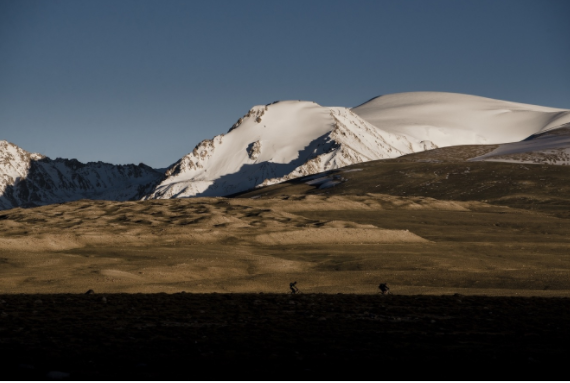
Silhouetted against the humbling grandeur of the Great Pamir, our group makes its way to camp at the end of day ten.
As I push my bike across another traverse too cluttered with fist-sized rocks to ride, I remind myself of this. The frustration of pushing a bike is something to which I am now accustomed. Before I know it, I will be boarding a plane bound for the comfort and luxuries of Europe. It is hard to pretend that I am not excited about the prospect of a real bed, or being able to turn on a tap to have drinkable water run freely from it. But at the same time I know I will never repeat what we are doing now. I will never have these same exact experiences again. And so for now I smile, revelling in the experiences that are clogging my senses in this moment.
It is the hardest thing I have ever done, but I love it. In this wild, harsh corner of the world I realise that I am between a rock and a hard place. Literally.
THIS ARTICLE WAS ORIGINALLY PUBLISHED ON MAPTIA.
DAN MILNER
Dan Milner is a British adventure travel photographer bent on shooting masochistic bike, snow or just-for-the-hell-of-it expeditions.
AFGHANISTAN: No Burqas Behind Bars
In this upcoming, feature-length documentary by Nima Sarvestani, the viewer is taken inside one of the world's most restricted environments: an Afghan women's prison. Through the prisoners' stories we explore how "moral crimes" are used to control women in post-Taliban Afghanistan. And no — full burqas are not allowed inside the prison gates!
Why You Should Ski in Afghanistan
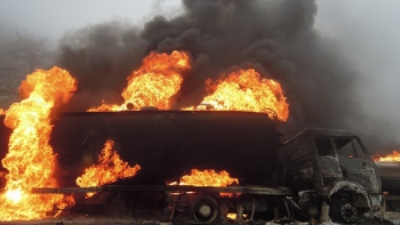
Afghanistan.
Just the mention of the word sends images into the mind. Military units driving through deserts, windswept mud brick villages and broken arid urban landscapes. When I mention the possibility of going skiing in Afghanistan it can get some strange responses. Forget about the risk, the first question is, “Is there any snow?”
Whilst it is true that much of Afghanistan is desert or semi-desert and that it hardly ever rains, it does snow. In the mountains it snows a lot. The snow is the lifeblood of Afghanistan. As it melts, it flows through the rivers that fill the canals that irrigate the fields. A good snowfall ensures that the people of small rural communities will have a good harvest and can feed their families and livestock. A poor snowfall often leads to a drought and a famine. However, the snow in Afghanistan is both a blessing and a curse. Heavy snow cuts off villages in the mountain and every winter people freeze to death or are crushed by avalanches.
Families wait for the snow to melt hoping to survive the winter until they can reap the reward that the snow will bring in the summer. For thousands of years there has been nothing for the people to do in the winter except wait for the spring... until now.
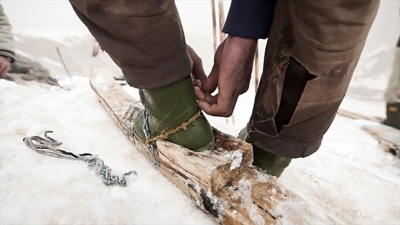
This winter young men from the villages of Kushkak, Jawzari, Ali Baig, and of the valleys of Qazan and Dukani and Foladi will pull on home made skis, crafted from wooden planks, with edges made from flattened tin cans and with poles snapped from a nearby tree. Some will be selected for training to represent their valley in a competition to see which valley can produce the best skier. They will be given modern ski gear to use. They’ll be taught how to ski, and they’ll receive basic training in first aid and avalanche awareness — skills they can take back to their village and potentially use to save lives.
A handful of young men from Bamian, in Central Afghanistan have already begun guiding foreign skiers—both ex-pats from Kabul and visitors from around the world who are trickling into the region to try out Afghan skiing first hand.
So how did this happen?
At the beginning of the winter of 2010 almost no one had skied in the province of Bamian. The valley's chief claim to fame had been the giant Buddha statues carved into the cliffs overlooking the town of Bamian. Tragically the two statues—which were about 1400 years old—were destroyed by the Taliban in 2001 robbing the world of two of its most important ancient Buddhist relics, and robbing the people of Bamian of one of their key sources of tourist income. For Afghans, Bamian province was also well known for the lakes of Band e Amir —a series of five lakes formed by natural travertine dams, that appear like a mirage in this high, arid landscape. In the summer Kabuli families come here to picnic and to escape the dust and heat.
Bamian is also home to the Hazara people. The Hazaras are recognisable by their Mongoloid features. They’re Shia Muslims, unlike most Afghans, who are Sunni. In popular tradition they are reputed to be the remnants of the Mongol armies who came to the region with Genghis Khan. Historically they have been looked down upon by the ethnic Pushtuns and Tajiks who make up most of Afghanistan’s population. Some radical Sunnis—such as the Taliban—have seen them as heretics because of their Shia faith. Modern Afghanistan has always been ruled by Pushtun kings or Pushtun dominated governments who have tended to overlook the Hazaras. However, there have been important changes in Bamian since the fall of the Taliban in 2001. It is no Shangri-La—there is little electricity, the province is one of the poorest in the country and by any standard it ranks as one of the least developed places on the planet. However, for the first time in decades there are signs of progress and positive change.
Ten years ago, Bamian province had never had a hospital, a paved road, or a university. Now these all exist. There are still many problems, of course, but the Bamian valley is relatively secure and there is none of the anti-government fighting that plagues large parts of the rest of Afghanistan.
An international development agency, the Aga Khan Foundation, saw the potential of promoting tourism in Bamian as a way of giving the people of the province an additional source of income. The Foundation has helped to develop guest houses, organise cultural festivals and provide information about the places of interest in and around Bamian.
That’s fine in the summer when tourists come to the valley, but what about the winter, when guest houses lie empty? Well, the people of Bamian fall back on their timeless winter pastime of just surviving and waiting until the Spring.
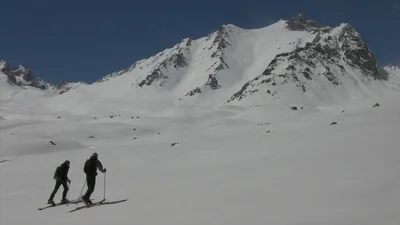
But taking their cue from other mountainous developing countries it was clear that any winter income was better than none so the Aga Khan Foundation began the Ski Bamian programme. With no infrastructure or lifts, the idea was to make the Koh-e-Baba mountains a new destination for ski-touring.
In 2010 two American skiers were employed for the winter to map out potential routes. They brought only their own equipment so the Afghans had to get creative if they too wanted to ski along with them. Anyone with a small knowledge of Afghan military history will tell you that not having state of the art equipment never stopped the Afghans with competing with foreign powers. Skiing with no ski equipment was not an insurmountable problem. Strips of wood with battered oil tins for edges were formed—so, the bazaar ski was born.
It quickly became clear that the mountains of Bamian were perfect for skiing and in 2011 a foreign ski trainer arrived to train the first batch of Afghan ski guides. It was early in 2011 that Ali Shah met Nando the Italian ski trainer at his village of Khushkak. Ali Shah was fit, young and spoke good English. Nando asked him what he wanted to be?
“An engineer” said Ali Shah.
“Why you wanna be an engineer? In Kabul there are a thousand engineers. You shoulda be a mountain guide. It's the best job in the world. You spend your whole life in the mountains with beautiful women.”
It may not have been a textbook interview but Ali Shah is now Afghanistan’s best ski guide and Nando's singular teaching style set the basis for the success of the project.
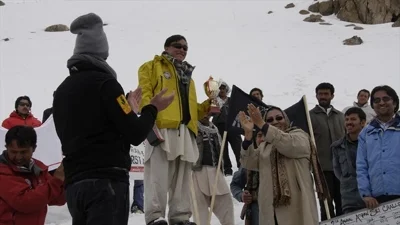
During 2011 and 2012 the annual Afghan Ski Challenge race (Rule number one — no weapons) was organised by a Swiss journalist and has became a focal point for the ski season (www.afghanskichallenge.com). With most Afghan Challengers having only one month’s ski training the Swiss organisers thought it an unfair challenge. They divided the race into Afghan and non-Afghan categories. The challenge is a classic ski touring route which includes skinning up as well as skiing down. They were right to divide the competition as most of the Afghans had finished before the foreigners had even got to the top.
With donations from western organisations like gear4guides (www.gear4guides.com) there is now a well equipped ski rental shop in Bamian serving the local community and the ex-pat and international skiers that trickle in.
My connection with skiing in Afghanistan began in 2009 when I bumped into a Scottish lad who worked for an Afghan aid agency. Ken was hiking with his girlfriend in the Wakhan region of Afghanistan in the far North East and I was leading a group of trekkers. The Wakhan region is the only other part of Afghanistan safe enough to consider these types of outdoor trips.
He told me of a group of British and French skiers working in Afghanistan who regularly skied near Kabul in the winter and if I was serious about being an Afghan tour operator then I should be offering ski trips to Afghanistan. I said I'd join him on a trip that winter.
On the first trip I made we took one of our regular drivers, Ali. For someone who has never skied it is quite hard to explain what we planned to do. Once we loaded up the poles and skis he had a rough idea of what we were up to and wanted to help. At the bottom of the Salang Pass, which crosses the spine of the Hindu Kush, Ali stopped at a small teahouse and ordered food for all of us. As any Afghan will tell you the best thing for breakfast if you are going to spend all day in the snow is Cow’s Foot. Boiled for hours, this gelatinous lump of bone, fat and gristle is never appealing to non-Afghans and the French skiers particularly do not like it. We made a quick note that for the commercial trips, we wouldn’t let the drivers choose the dining options.
But it was then that I saw how skiing was something that really appealed to all the Afghans who saw it. Standing next to Ali as we watched Ken fly down the slopes, he was awestruck. “He is a Djinn,” was Ali's response. Hazaras believe there are mountain spirits and clearly Ken was one.
In the tea house where we stopped on the way back, Ali regaled the owners with the tale of Ken's exploits. Ken was described as a Djinn and I as a Boz (a goat). I hoped it was a way to describe my sure footedness in the mountains but I think it was more to do with my erratic skiing style.
In keeping with Afghan tradition, the story was heavily exaggerated but it started a long discussion about skiing, mountains, snow conditions, avalanches and Afghanistan’s future.
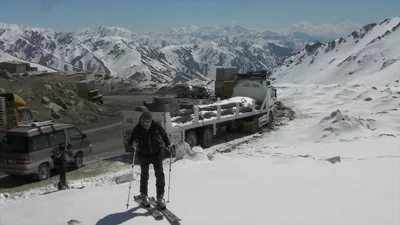
It was not only Ali who became a convert. I realised that, Cow’s Foot aside, this was an awesome way to experience Afghanistan in the winter. Skiing was something that was very foreign but the snow and the mountains was a common factor that could bring people together as it had done in that tea house. I also thought Bamian could be the perfect place for skiing.
It has not always been smooth. A few elders in one or two villages are suspicious about the skiing fuss. They worry the young men will hurt themselves—preventing them from doing the hard farming work—or that skiing will be the thin end of the wedge and they'll get caught up in other foreign un-Islamic ways. This generally does not stop the young boys from hiking up the hills and skiing. “The only say it is bad because they don't know how to ski,” said one boy from Jawzari village.
All the trailheads start from the villages and we have a code of conduct to help ensure that skiers behave properly. The Aga Khan programme representatives have discussed the skiing idea with all the local villages. We pay our respects to the village leaders and maybe take a cup of tea. There are many ways in which thoughtless skiers can cause offence, generally to do with women. In a country where the majority of people are illiterate and there is very limited access to the media, in these isolated rural communities, rumour is often taken as fact. If someone tells a man that the foreigners took a photo of his wife and put it on display in Kabul he will probably believe it. So Rule Number One is—Don’t take pictures of the women. Ever.
Cultural sensitivity is key to the future of skiing in Afghanistan.
When guiding a group of snowboarders last winter we spent a good hour discussing with the headman of one village what we wanted to do in their valley. The snowboarders were professional and were heading to a steep area that had not been ridden, so the villagers were suspicious. It took a great deal of persuasion until he agreed and let us pass around his village.
As we walked around the village we were watched closely by the men on the rooftops, with no smiles or handshakes. We travelled far up the valley and soon the snowboarders were making jumps from the top of large cliffs. On the second attempt one of them failed to make his landing and crashed in a huge cloud of snow. Suddenly huge cheers rang out from the village below. All the village stood watching on the house rooftops. They liked all the action, but they liked the crashes best of all.
On the way back down there was still staring and silence but we knew the ice had been broken.
We went back to that area for three days and by the end we were inside drinking tea and joking with the local people.
The key to a successful trip is that the Afghan villagers have a positive experience as well as the visiting skiers.
Afghanistan has always presented a contrast of lifestyles. An abiding memory of my first visit back after years away was of an old man and a young boy herding sheep down an unmade road. With his turban and billowing shalwar-kameez—a long, loose shirt and trousers, the man looked almost Biblical. A closer inspection revealed that his son was wearing a Megadeath t-shirt (presumably a charitable donation). The road they were walking along had a traffic calming feature—a half buried tank caterpillar track to stop cars speeding through the village. Introducing skiing to a small valley in the Hindu Kush seems to build on such contrasts.
A typical night is spent in rooms heated by wood fire stoves called Bukharis. These are very efficient heaters. You fill them to the maximum before bedtime. It might be -25C outside but we would be sitting in our rooms in shorts and a t-shirt. As the night passes and the fire burns out the temperature plummets in the room and at dawn we'll be inside sleeping bags and the glass of water by the bed will have a layer of ice.
Breakfast could be eggs or pancakes. Where we stay, the cook was trained at a US agency guesthouse. He knows exactly what hungry Westerners like to eat. Recently married, he returned to Bamian from working in Helmand province. The wages are much lower in Bamian but it is safer. In Helmand he always had to carry his ID card to get into the compound. However, if the Taliban stopped him and found this ID card he would be killed.
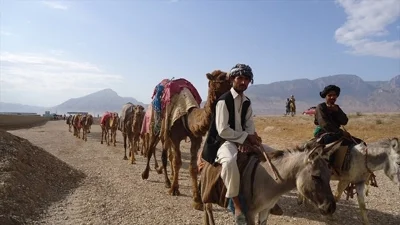
On a very cold night the diesel will freeze in the vehicles used to take us to the mountains. We'll drink tea whilst a fire is built under the engine to defrost it, and perhaps watch the daily UN helicopter coming in to land at the Bamian military base, managed by the New Zealand army.
Once in the villages at the top of the valleys, when we start to skin up we'll be invited in for tea by the village elders. Depending on the weather we'll either accept or continue uphill to make the most of the snow. I'll remind people that they should always remove their shoes when entering a house, never speak directly to the women—and above all, no matter how serious their latest case of Kabul Belly, NEVER to fart in a room with their Afghan hosts. This is perhaps the greatest social faux pas of all.
Often we'll be joined for all or part of the day by the local youths on their home-made skis. Making light work of skinning up and paying little or no attention to our avalanche warnings. they just laugh – “Inshallah” – if God wills it
There is not much to do in the evenings. Alcohol is forbidden, but there is plenty of hearty traditional Afghan food and drink—kebabs, rice and hot drinks. With alcohol forbidden, we like to call this the Apres-Tea scene.
Skiing will not solve all the problems in Afghanistan. It won't solve the problems of Bamian but in a few small valleys in the Hindu Kush they are making a small positive impact to a handful of people and that is something worthwhile.
ORIGINALLY PUBISHED ON TETON GRAVITY RESEARCH
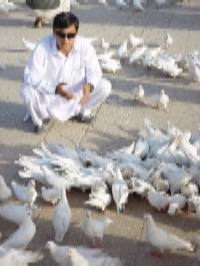
KAUSAR HUSSAIN
Kausar has travelled every inch of Pakistan and Afghanistan and has friends almost everywhere from the bustling bazaars of Kabul to sleepy, poppy growing villages in the Tribal Areas. When not leading tours and running Untamed Borders. Hussain works as a photographer and journalist. He is the chief reporter for "World Problems" magazine and also works freelance. For ten years he has worked with foreign correspondents allowing them access to restricted areas in Afghanistan and Pakistan. He also works with Prince as part of the "World Welfare Organisation", a Peshawar based NGO. He speaks 9 languages and for the last 5 years spends time teaching English to Afghan refugees based in the camps that surround Peshawar. He arranges ski trips to Bamian every year through http://www.untamedborders.com
AFGHANISTAN: The Mine Kafon
As a child, Massoud Hassani played on desert playgrounds where it was not infrequent for his toys to be destroyed by exploding land mines. Twenty years later, he has created the ultimate live-saving toy—a wind-powered structure made from bamboo and biodegradable plastics, the "Mine Kafon" intentionally detonates unexploded ordnance. Landmine clearance typically costs $1200 per mine, and his device can clear one for $50. This film is a finalist in the $200,000 FOCUS FORWARD Filmmaker Competition.
VIDEO: Girl Skaters in Kabul
Curious about what's going on in skateboarding classes for girls in Kabul? Watch this. Skateistan is a Kabul-based NGO that has been encouraging youth through skateboarding and education since 2007. Since then, it has grown from a handful of students to more than 400 per week. More than 40% are girls, which is more than any other coed sport in Afghanistan. Go girls!
AFGHANISTAN: Breaking the Rules By Bike
Afghanistan is one of the few countries in the world where women are not allowed to ride bicycles. How did Shannon Galpin become the first to do it? Watch as she mountain bikes across the Panjshir Valley, a mountainous region in northeastern Afghanistan.
LEARN MORE AT Mountain2Mountain
Frame By Frame (2015) Documentary On The Afghan Press
In 1996 the Taliban banned photography in Afghanistan. In 2014 as foreign troops pull out, international media will follow and the future of local afghan journalism is unknown. Frame by Frame is a documentary that explores the revolution of local photojournalism in Afghanistan.
AFGHANISTAN: Touch Down in Flight
This short film by Augustin Pictures takes us on a breathtaking tour of Kabul and Mazar-e Sharif, Afghanistan. "As each of us has his own impression of Afghanistan that is predominantly marked with pictures of foreign forces, explosions and terror," the filmmakers have said, "we were privileged to have access to capture daily life and portray the people of Afghanistan."