
Julia Kelley
As South Korean women suffer under the inequality facilitated by traditional gender stereotypes, many call for change through feminist movements and passionate demands for political reform.
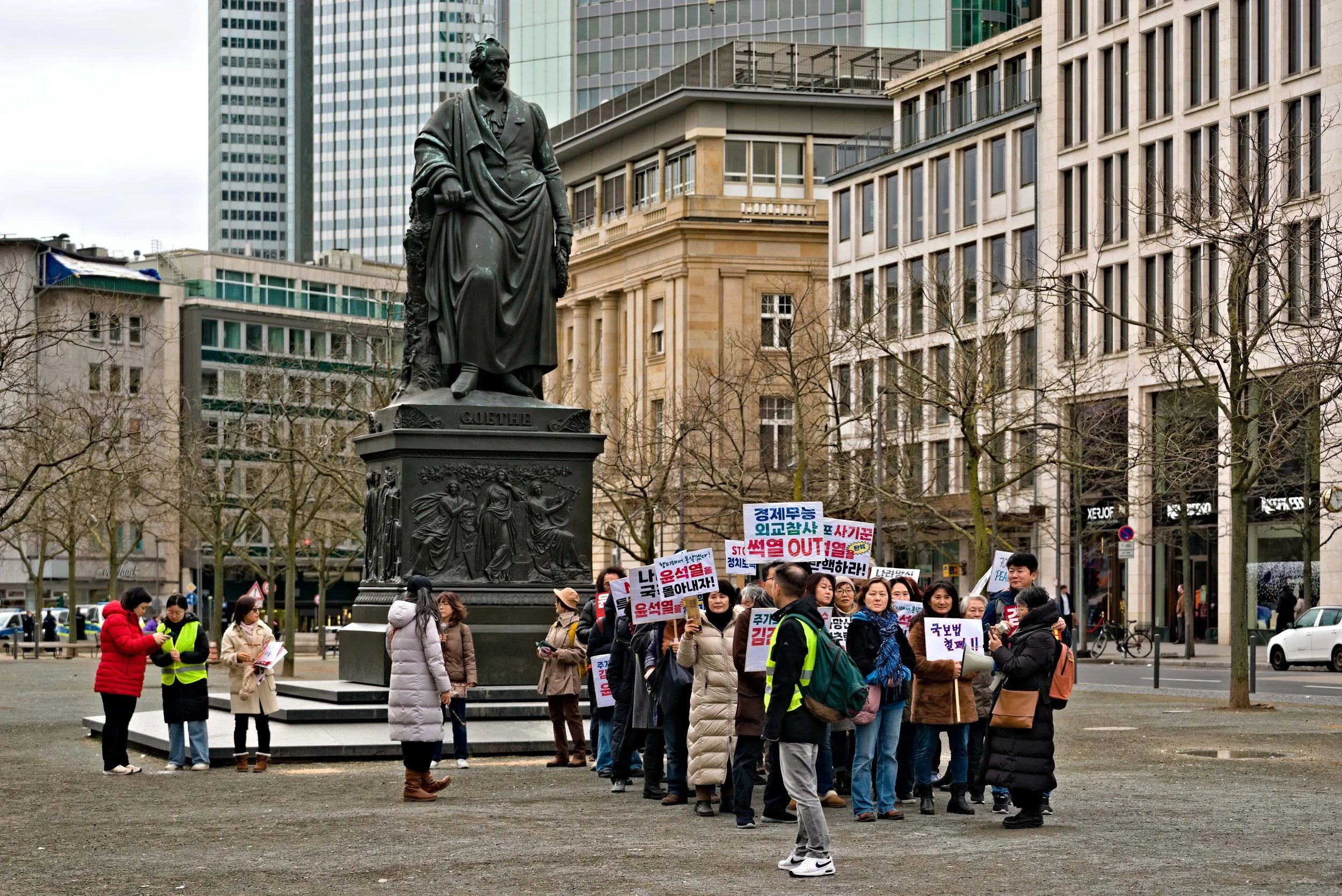
South Korean women protest Yoon Suk-Yeol. Conceptphoto.info. CC BY 2.0.
For years, South Korean women have been fighting back against steadily increasing inequality that has resulted from traditional gender roles and subsequent workplace pay gaps. Rated on a scale of 0% to 100% based on economic, political, educational and health factors, the 2025 Global Gender Gap Index found that the gender gap in South Korea was about 69%, ranking it 101 out of 148; in comparison, Iceland stands at first with a 92.6%. This number, which describes the percentage of the gender gap that has been closed, is a decrease from 2024, in which South Korea scored a 70%, demonstrating a worsening imbalance between men and women. In particular, societal norms shape contributing aspects, such as economic opportunity and political empowerment, as cultural customs encourage men to be the primary family providers, while women are expected to prioritize childcare.
These traditional gender roles have manifested in other detrimental ways, including the rise of hostile sexism throughout South Korea. This discrimination is characterized by a majority of young men labeling women according to derogatory views, including their being incompetent or manipulative. Extreme misogyny and sexual harassment have pushed South Korean women to develop revolutionary feminist movements, including the well-known 4B movement, which originated in 2019. The name depicts four Korean words, all of which are preceded by “bi”, the Korean word for “no,” that represent four key ideas the movement’s women completely refuse from men. These objectives are bihon, bichulsan, biyeonae and bisekseu, respectively meaning marriage, childbirth, dating and sex. Radical feminism, such as this, comes as a result of larger social commentary that believes sexual inequality is justified, in which feminist ideals are blamed for low birth rates, resulting in government programs that incentivize families to have more children by paying them and further positioning women as child-bearers. Additionally, despite men and women beginning on equal footing, women are more likely to be affected by career interruptions, such as marriage or childbirth, while men tend to make more progress, causing gendered wage disparities.
In the recent 2025 South Korean presidential election, this gender inequality came to the forefront for many young women. In the months leading up to the election, politicians' responses to gender-related policy were generally dismissive of sexism; the People Power Party conservative Kim Moon-soo remained silent on the matter altogether, while Reform Party candidate Lee Jun-seok called for deconstructing the Ministry of Gender Equality and Family. This issue was even more present after the successful impeachment of former president Yoon Suk-yeol and his infamous anti-feminist rhetoric, which was largely facilitated by young women-led protests but ultimately left them sidelined after only males were nominated. Seeking substantial change, women across the country resolved to support the Democratic Party's progressive contender, Lee Jae-myung, who claimed his intention to address subjects like gender violence in the previous presidential election. However, when asked about women-related pledges in 2025, he responded, “Why do you keep dividing men and women? They are all Koreans.”. Despite this, on June 3, 2025, Jae-myung won in an election that saw, among voters in their 20s, 58.1% of women supporting the progressive candidate, 37.2% of men voting for Lee Jun-seok and 71.4% of men voting conservatively. The wide gap between young men’s and women’s voting in the election was seen to parallel the worsening gender stereotypes rampant throughout South Korea.
Despite his initial remarks on gender divides, President Jun-seok has taken a step toward addressing such issues, as he called for broad structural reforms in early September that would establish gender equality, acknowledging systemic discrimination. A few days later, however, data from the Ministry of Gender Equality and Family showed persisting evidence of large gender pay gaps in Korean corporations. Although the president has set the stage for reform, millions of women still feel the effects of the rigid sexism and gender inequality of traditional norms, holding hope that the new administration will enforce this change.
GET INVOLVED:
Those looking to help support women’s communities in South Korea and address gender inequality can check out organizations like the Kering Foundation, which supports survivors of gender-based violence, the Korea Foundation for Women, which raises awareness of gender inequality and women’s human rights, or Korean Women’s Associations United, which facilitates collective actions among women’s groups. In addition, you can look into charities, including the WINGS program, Korea Women’s Hot-Line or Korean Women in Need, which seek to help victims of gender-based violence in a variety of ways, including legal advocacy or support groups.

Julia Kelley
Julia is a recent graduate from UC San Diego majoring in Sociocultural Anthropology with a minor in Art History. She is passionate about cultural studies and social justice, and one day hopes to obtain a postgraduate degree expanding on these subjects. In her free time, she enjoys reading, traveling, and spending time with her friends and family.