
Ashley McDermott
Cuyahoga Valley National Park tells a story of restoration, with its 53-year-long transformation from a place once known for a river so polluted it caught fire at least a dozen times to a green refuge in the urban Midwest.
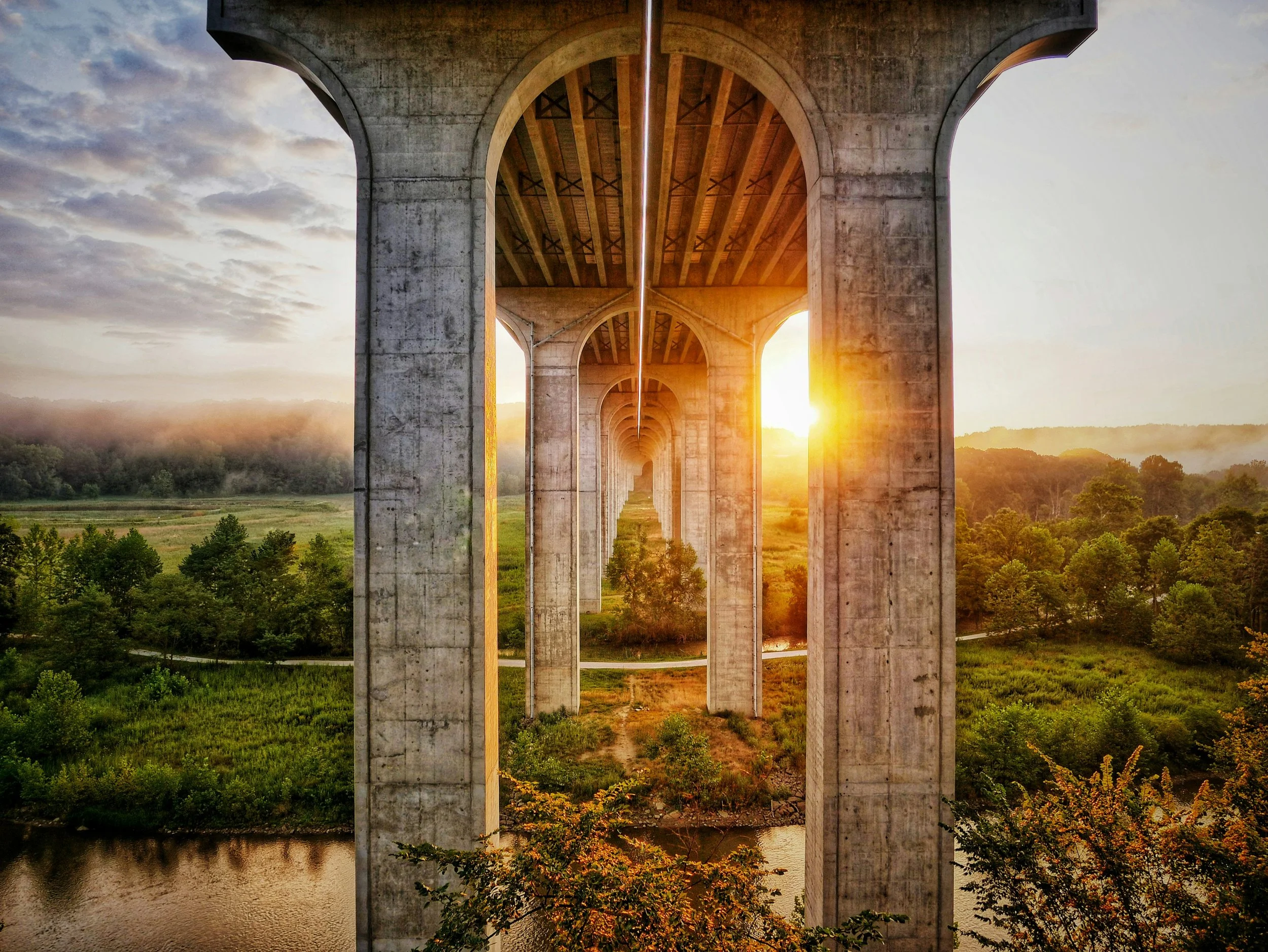
I-80 bridge over Cuyahoga Valley National Park. Igor Oliyarnik. Unsplash.
Arriving in Cuyahoga Valley National Park felt surreal. One moment, I was riding on the interstate in a thoroughly urban corridor, and the next, I was surrounded by a lush valley. The only reminder of the nearby metropolises is the massive bridges spanning the valley, such as the Interstate 80 bridge carrying traffic 215 feet above the park. Situated between Cleveland and Akron and surrounding the Cuyahoga River in one of the 20 most populous regions of the U.S., it is unexpected to find the awaiting dense forest, waterfalls and abundant wildlife, such as herons and beavers.
The Cuyahoga River was once so polluted that it caught fire at least 12 times. The land along the river was bare from mining and farming, and numerous waste dumps existed alongside it. No fish could survive in the water, and with the food chain so disrupted, there was little wildlife.
A river fire in 1969 made global news and brought attention to the extreme pollution in U.S. waterways, sparking a public dialogue and influencing legislation, such as the Clean Water Act of 1972. In 1974, President Ford signed legislation protecting the land as a National Recreation Area, and it would become a national park in 2000. In the intervening years, concerted conservation efforts transformed junkyards into beaver ponds and tackled the pollution in the river that "oozed" rather than flowed.
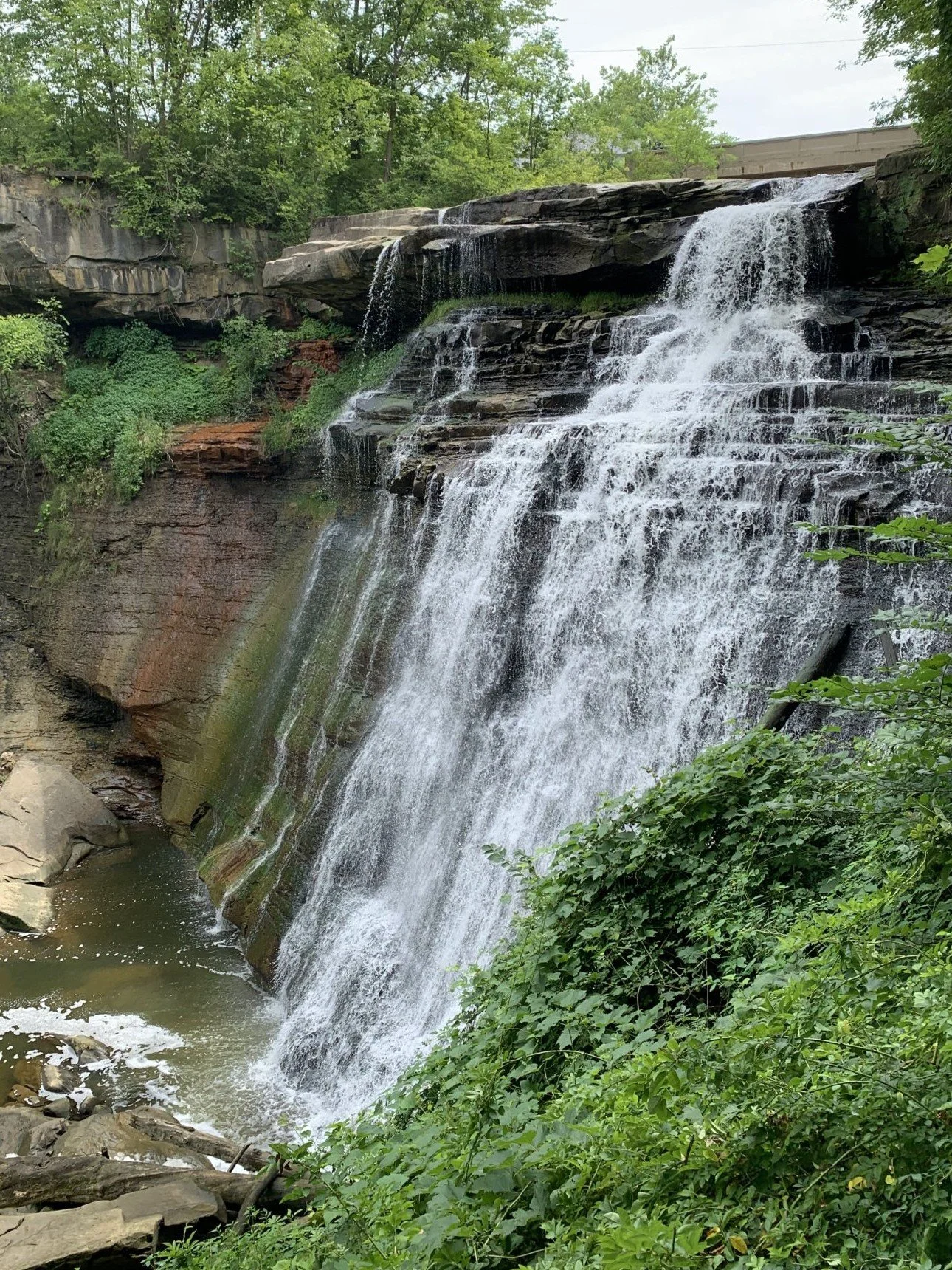
Brandywine Falls. Lee McDermott.
With only a day in the park before I headed back to Michigan, I was advised by the ranger to see Brandywine Falls and the Ledges. Since my partner has incredible FOMO (fear of missing out), we also managed to squeeze in a visit to the Canal Exploration Center minutes before it closed at 4 p.m.
On my trip, Brandywine Falls was only accessible from the Boston Trailhead, but the 4-mile loop was a lovely hike. Beginning at the general store, we walked along the old towpath trail, where mules once guided riverboats along the Ohio and Erie Canal in the early 19th century. The route passes through meadows that were once farmland, and the remnants of farm life are still visible in the historic Stanford House along the trail. As the trail proceeded up toward the falls, we were treated to young forests dotted with wildflowers, which culminated in the impressive 60-foot Brandywine Falls. Surrounding the falls are the ruins of another historic farming village, Brandywine. Though most known for Brandywine Falls, the park boasts 100 waterfalls.
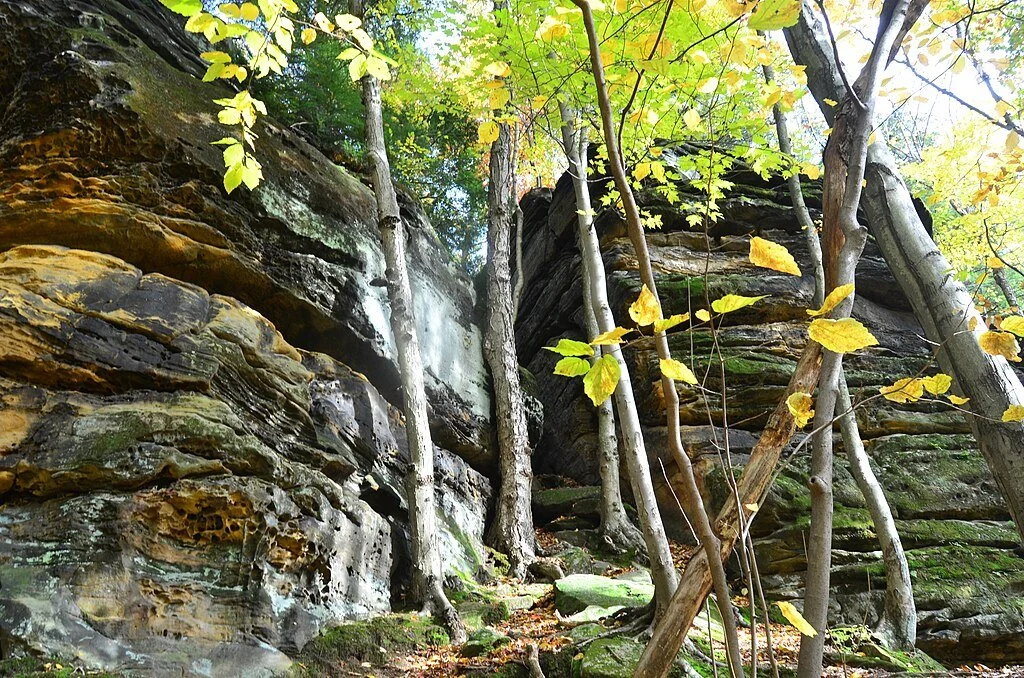
The Ledges. Erik Drost. CC BY 2.0.
After completing the loop and treating ourselves to ice cream at the Boston Store, we headed to the Ledges. The Ledges Trail is a 1.8-mile loop that winds through the forest to impressive sandstone cliffs and crevices, covered with beautiful lichen and moss and surrounded by verdant ferns. Alongside the cliffs, we found strange 200-year-old carvings of human heads made by William Goeppert, who once owned part of the land that would become the park. After tracing the bottom of towering cliffs, the trail leads back up to an overlook of the Cuyahoga Valley.
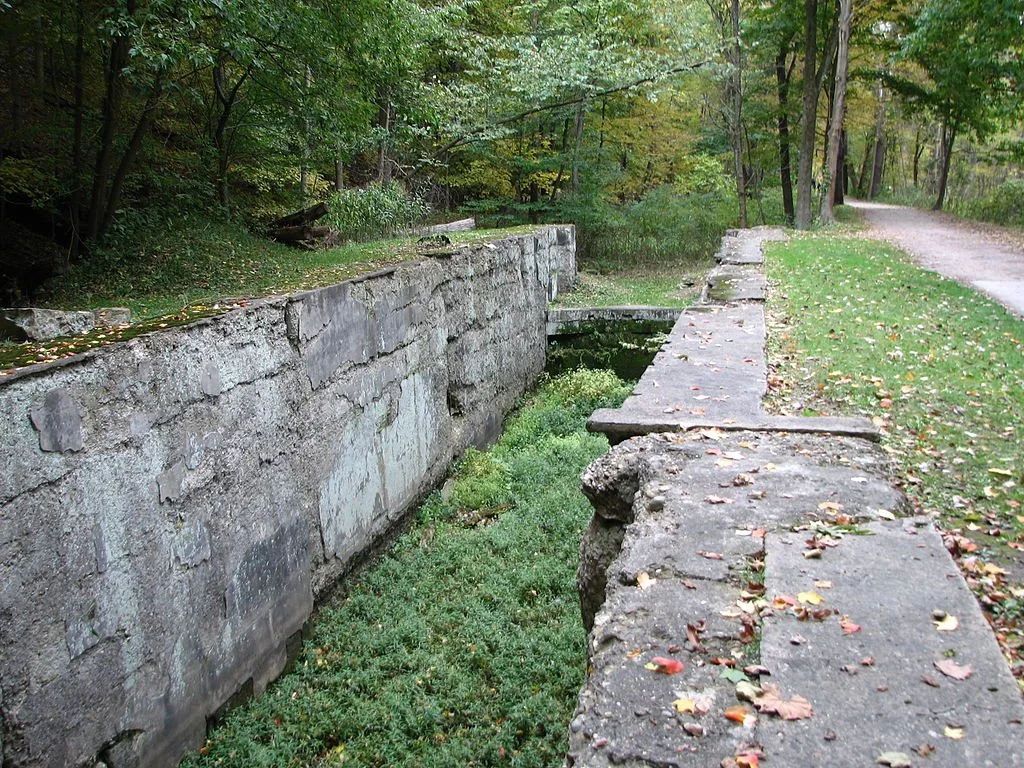
Remnants of Lock 30 in Cuyahoga Valley National Park. Kevin Payravi. CC BY-SA 4.0.
Cuyahoga National Park also offers a unique perspective on the short "canal era" of the United States' history, when canals linking the Great Lakes to major rivers served as one of the main means to transport goods across the country. Cuyahoga National Park features portions of the Ohio and Erie Canal, built in the 1820s and 1830s to connect Lake Erie to the Ohio River. The Canal Exploration Center museum features exhibits on the history of the canal and a restored canal lock, which staff operate seasonally for demonstrations.
Though Cuyahoga Valley National Park never makes top national parks lists, it is one of the parks I often think about returning to and regret my short time in, with its unexpectedness, understated beauty and story of hope for restoration and conservation efforts.
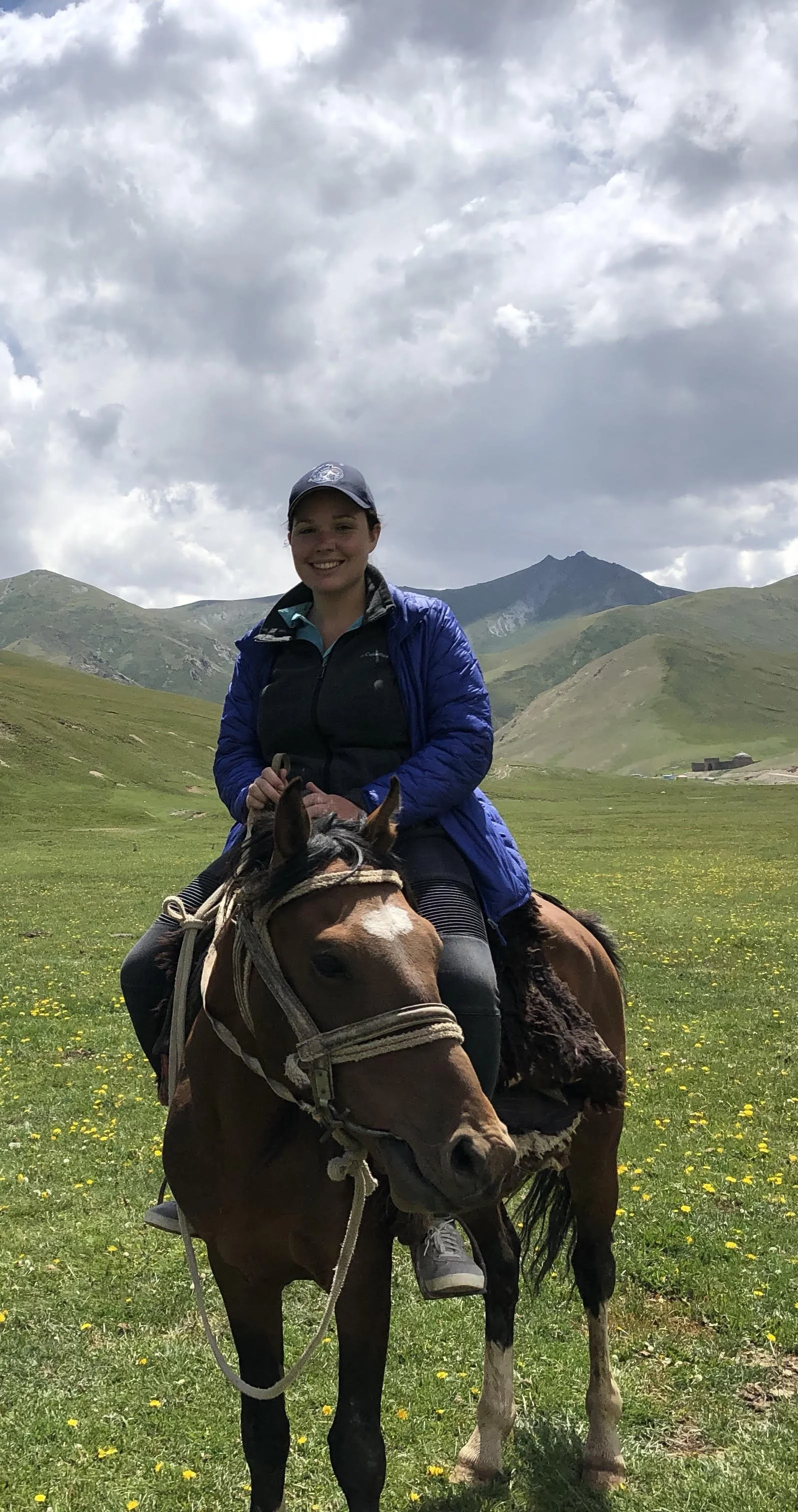
Ashley McDermott
hley is a PhD candidate in Linguistic Anthropology at the University of Michigan. She is committed to making her research useful for the communities she works with. Her work explores how families navigate language use and language shift in Bishkek, Kyrgyzstan. When she’s not working on her research, you’ll find her adventuring with her toddler daughter, whose commentary keeps every day interesting.