
Kelcie Lee
Taiwan’s old bunkers were built out of fear of invasion, but today they carry different meanings for Taiwanese people.
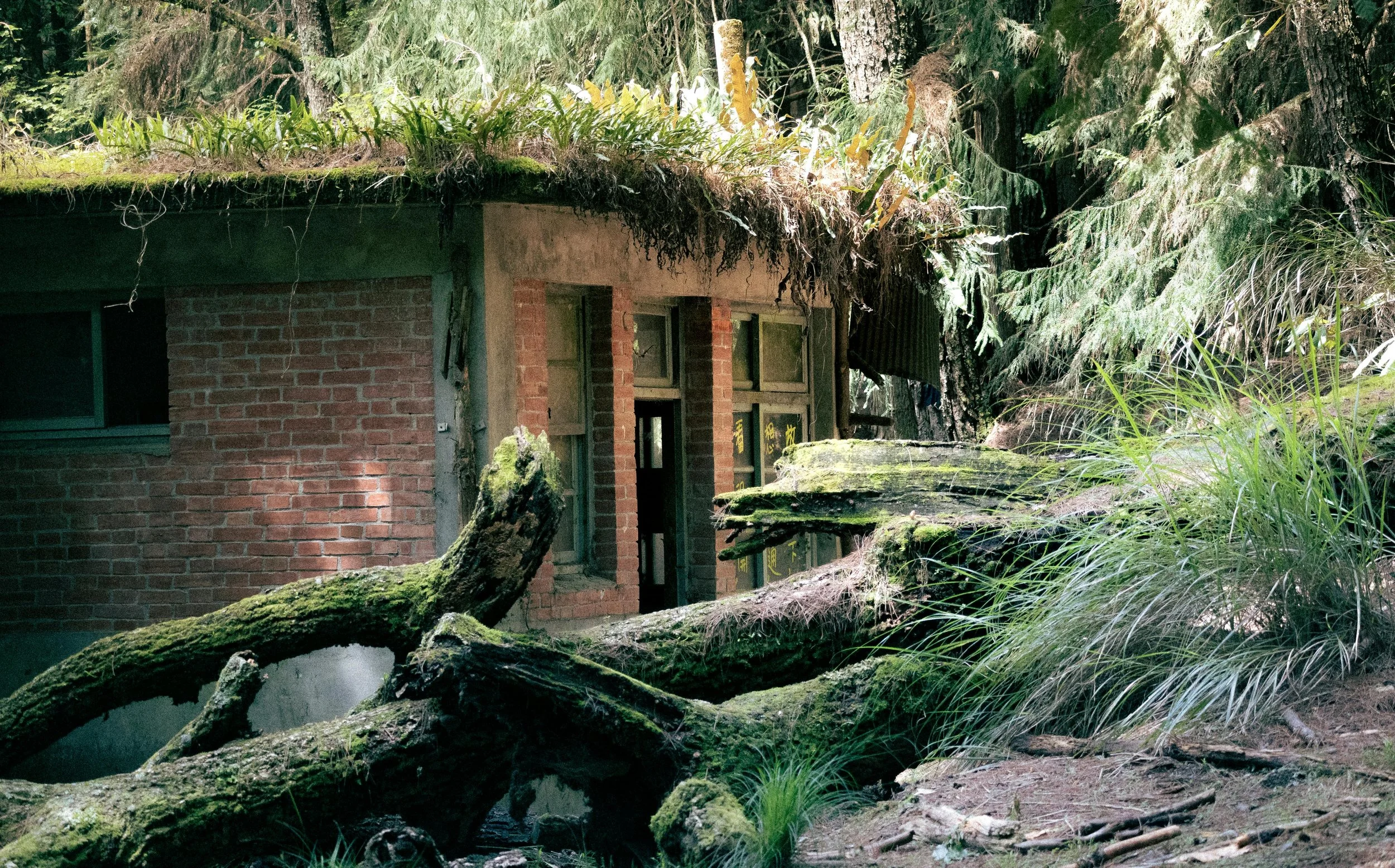
Abandoned brick building in Taiwan. Marek Piwnicki. Pexels.
All around Taiwan lie bomb shelters and abandoned bunkers built near the end of World War II. But more recently, these structures have been transformed into creative projects for urban renewal, especially in the heavily fortified city of Keelung.
Taiwan sits about 100 miles off the coast of mainland China. Throughout its long history, the island has been a colony of the Netherlands, Japan and China. Following Japan’s defeat in World War II, the Chinese government asserted control over Taiwan, and since then, a complicated claim to the land has been set into place. While the Chinese government maintains that Taiwan is a territory of the People’s Republic of China, Taiwan does not agree with this rhetoric.
Most of the abandoned bunkers date back to Japan’s rule over the island, which began in 1895 and lasted until 1945. Japan started building the bomb shelters near the end of World War II, facing the threat of Chinese invasion.
“I find it very bizarre - across Taiwan there are numerous bunkers, a mark of war, but if you ask residents what is it, when was it built and for what purpose, no one knows now,” said Chen Kuo-ming, a military site enthusiast who has researched and mapped the bunkers since 2002.
Although not all residents understand what these old bomb shelters might’ve been for, others describe them as a key part of their childhood. Local official Lin Zi-xing remembers trying to sneak into the old bomb shelters to play as a child, and he defends them as an important part of Taiwanese history. In order to carry on these memories, he turned one old bunker into a climbing play structure for children and another one into a history exhibition center for tourists. However, some residents in the area were upset by these transformations because the reminder of war is not something the older generation is fond of.

Railway station in Keelung, Taiwan. Jimmy Liao. Pexels.
Approximately 700 bomb shelters are still scattered throughout the city of Keelung. Today, they have been transformed for a variety of uses, including storage sheds for the fire department, art galleries, mural canvases and tourist attractions.
Nonetheless, Chen finds that the bunkers, whether they have been transformed or remain in their original form, can serve as a reminder that the tension between Taiwan and China still remains, describing it as “a hostile state.”
Despite some residents’ efforts to transform these old bomb shelters, the unsettling political environment often puts them into a bitter light. As Taiwan continues to grapple with uncertainty, the threat of attack differs depending on whom you may ask.
“We’re Taiwanese, we have nothing to do with China,” said local Wang Chen Shu-mei. “We don’t know when the bombs will come. We hope they never come.”

Kelcie Lee
Kelcie is a second-year student at UC Berkeley majoring in history and sociology, with a minor in journalism. She developed her passion for writing and journalism in high school, and has since written for a variety of news and magazine publications over the last few years. When she isn't writing, Kelcie can be found drinking coffee, listening to music or watching the sunset.