
Evelyn Garcia Medina
A tool once used by sulfur miners on Mount Ijen is now a human-powered trolley taxi, carrying tourists up the steep volcano for a closer look at its acidic crater and blue fire.
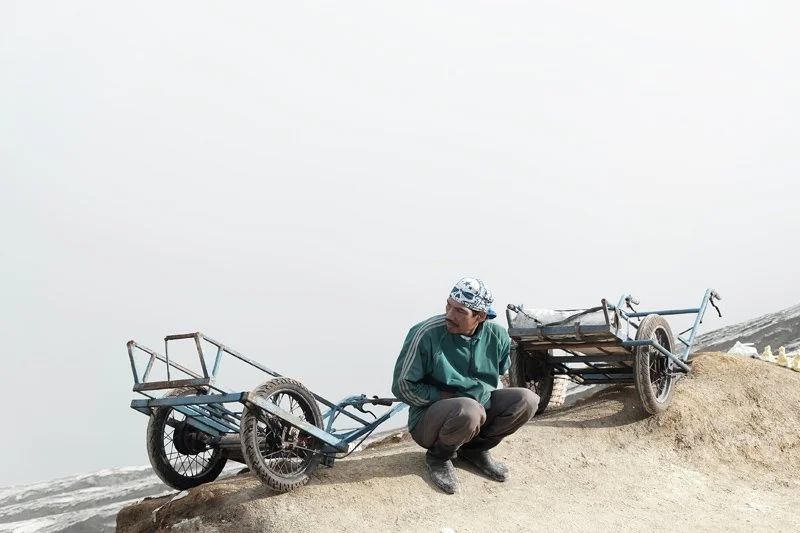
Miner crouches between two trolleys. Sarah Tirona. CC BY-NC 2.0.
Indonesia is home to various natural landscapes, but there’s one spot that seems to grow in visitors each year. East Java, Indonesia, has been described as rugged, with its abundance of volcanoes, craters and scenic viewpoints. The Ijen UNESCO Global Geopark is one of the province’s traveler hotspots, and as tourism here has grown, so has a unique form of transportation: a trolley taxi. Former sulfur miners of the Mount Ijen volcanic complex have redirected their labor efforts toward getting visitors to the top of Mount Ijen and back down. Some have questioned the job’s principles, but through some exploration, we can find out what a trolley carrier’s job fully entails.
The Ijen UNESCO Global Geopark is popular for its volcanoes and acidic crater lake. Travelers visit and hike the park to take in the views, with the lake being especially coveted because, according to UNESCO, it is “the most acidic lake in the world” and creates what they dub a “blue fire phenomenon.” Sulfuric gases and extremely high temperatures mesh together to create a unique blue fire that emerges from the crater, a natural marvel that can only be experienced if you hike up the volcano. The hiking guide platform Alltrails reports that the hike to the Ijen crater is estimated to be about four hours long, being a 6.1-mile-long walk with almost 2,000 feet of elevation gain. Based on reviews, Alltrails considers the trail “quite difficult, rocky, and steep.” The most common way to see this scientific spectacle is to hike to it with a local guide, but former sulfur carriers and miners now offer a “taxi” that gets you to the top of the volcano.
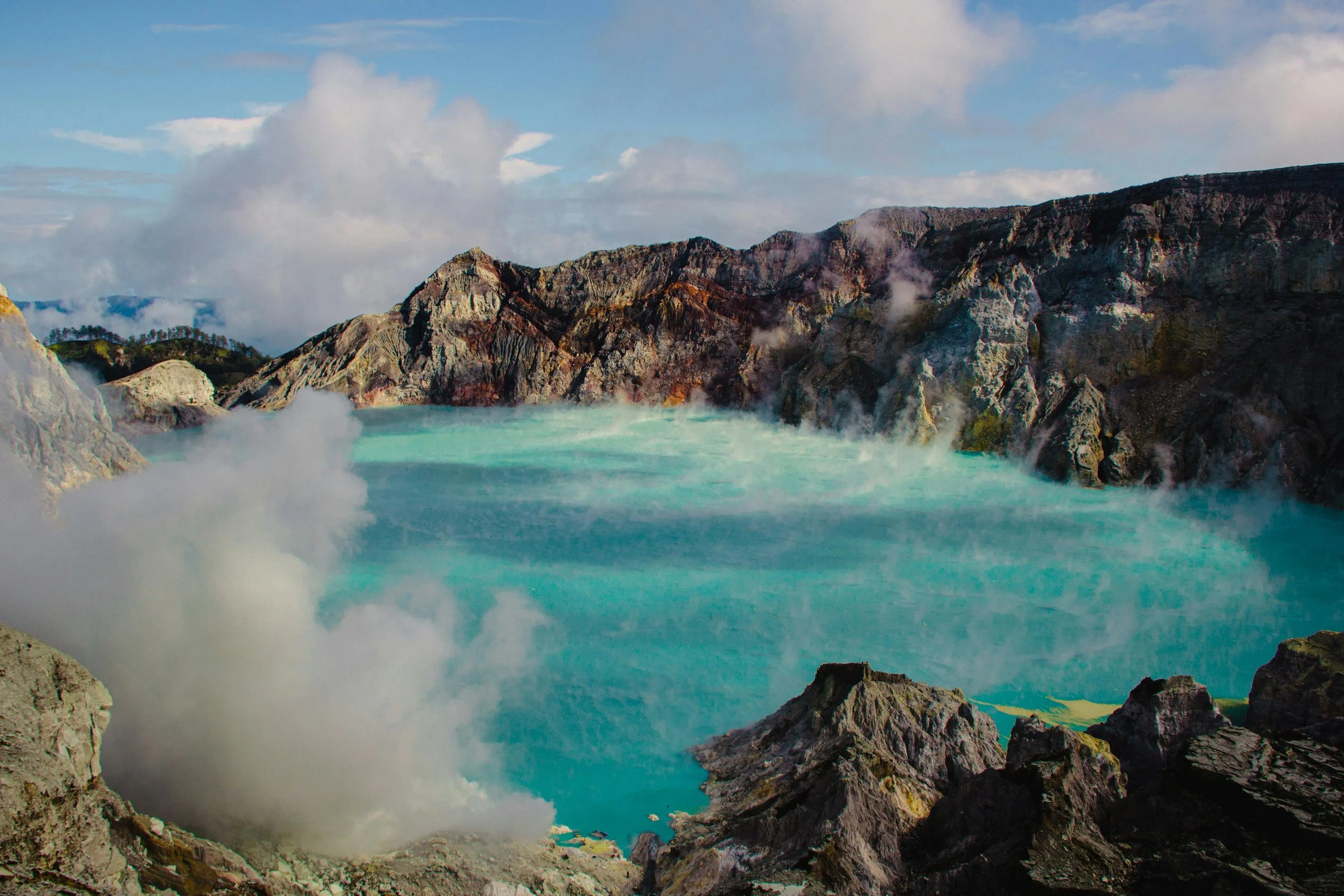
Ijen volcanic mountain and crater lake. Berkan Kiyak. Pexels.
The taxi service is a two-wheeled trolley with a handlebar that is pushed up by human carriers so park visitors can get to the top of Mount Ijen. But the trolley system didn’t start as a tourist-carrying trolley; it was actually for sulfur miners in the Ijen crater to transport sulfur without having to carry it on their shoulders during the climb. Over time, the miners introduced their taxi service, which they call ojek trolley. The miners and carriers wanted to make a reliable transportation method for people with disabilities or health issues who couldn’t climb Mount Ijen. Carriers made some improvements to the trolleys and made them more comfortable, but they still have a simple push-cart design. The trolley is usually pushed by three people and is considered expensive in Indonesian currency because of the effort it requires. It's priced at about 1,500,000 rupiah, or $91, but the travel booking platform Ijen Plateau reports that the price is usually negotiable.
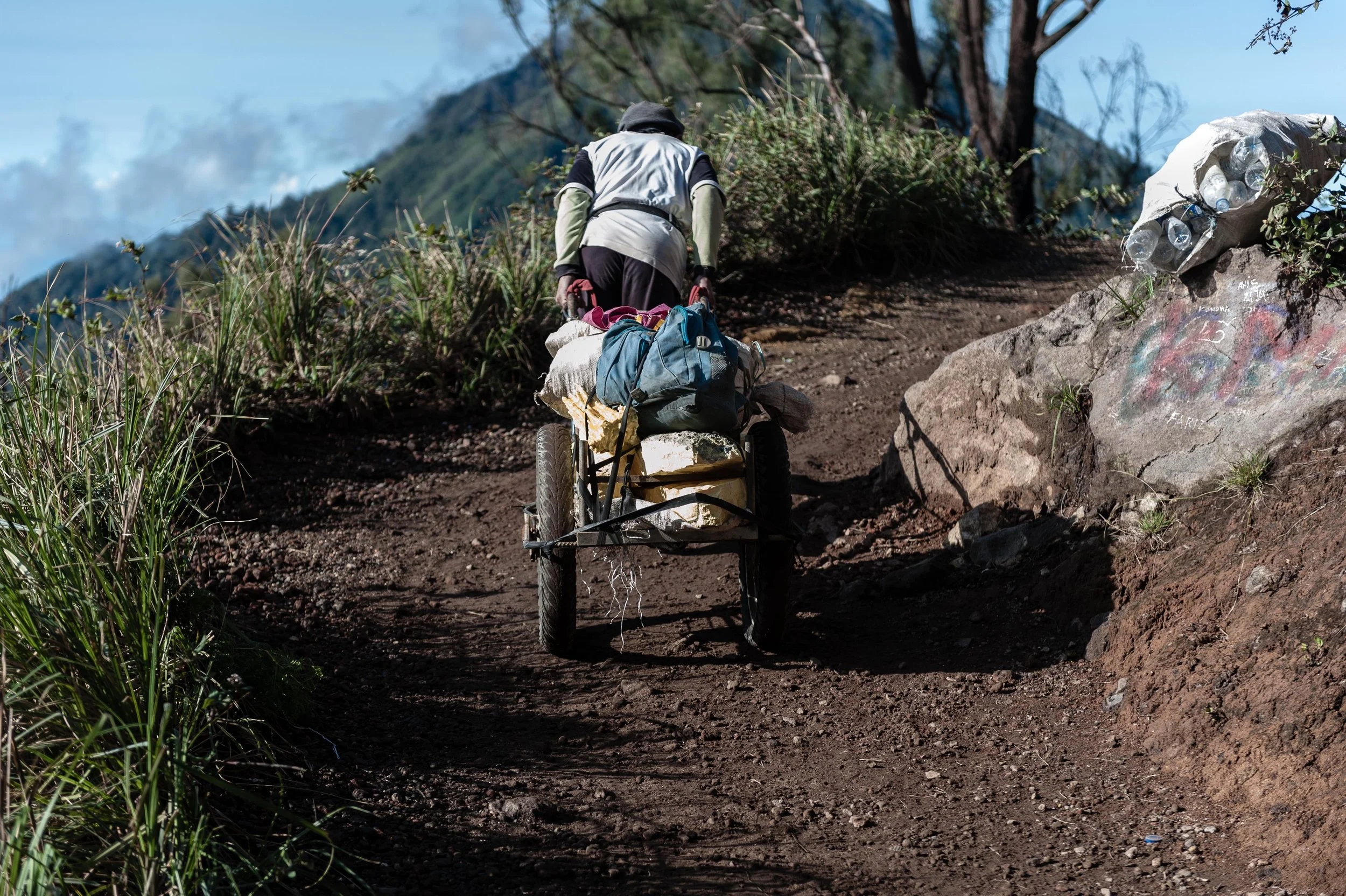
Miner pulling a trolley with supplies. Jens Moser. CC BY-NC-ND 2.0.
The ojek trolley’s origins boast inclusivity and keep disabled people in mind, but there are conflicting opinions about it; some believe it to be an exploitation of labor due to the extensive effort it takes to push someone uphill. However, though we cannot speak for the carriers, one tourist company, Ijen Authentic Tour, claims that trolley carriers “prefer carrying tourists than working at the mining.” As well, Ijen Expedition says that there are advantages to the carriers pushing people instead of mining. They claim that carriers make a stable income through an increase in visitors, while the mining job relies on mining results and is considered an unhealthy occupation due to the toxic gases. The ethics of the ojek taxi service have been questioned, but the stability of income and improved health conditions in the workplace seem to override this, thus far.
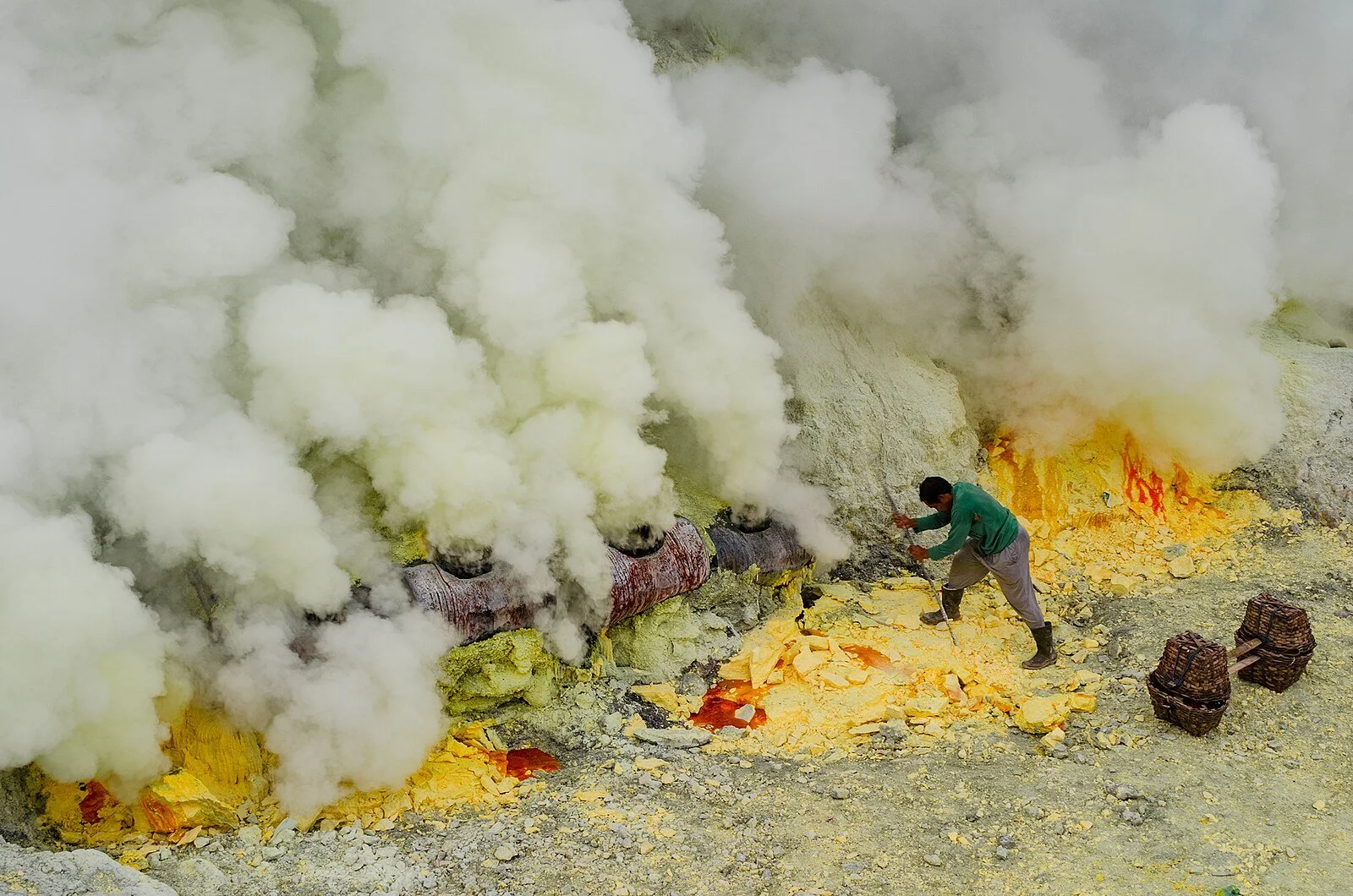
Sulfur extraction at Mount Ijen. Candra Firmansyah. CC BY-SA 4.0.
Tourism on Mount Ijen has changed the landscape of East Java’s economy and the labor that moves through it. The ojek trolley service may be controversial to some, but it’s also a direct result of shifting roles in a place where work was once defined by sulfur and smoke. What was once a trail for miners carrying bright yellow blocks of sulfur has become a pathway for park visitors seeking Indonesia’s views. And as long as visitors keep coming, the men behind the trolleys will likely keep pushing uphill toward something better than before.
Evelyn Garcia Medina
Evelyn is a recent Chicana graduate with a B.A. in English and Comparative Literature. Born and raised in the Bay Area, she draws inspiration from her passions: her cultural roots, environmentalism, and human rights. In her free time, she goes on hikes and enjoys learning about current social issues, history, and animals.