
By Cove Johnson Rabidoux
Gender violence and limited access to healthcare have left Sudanese women increasingly vulnerable as war continues.
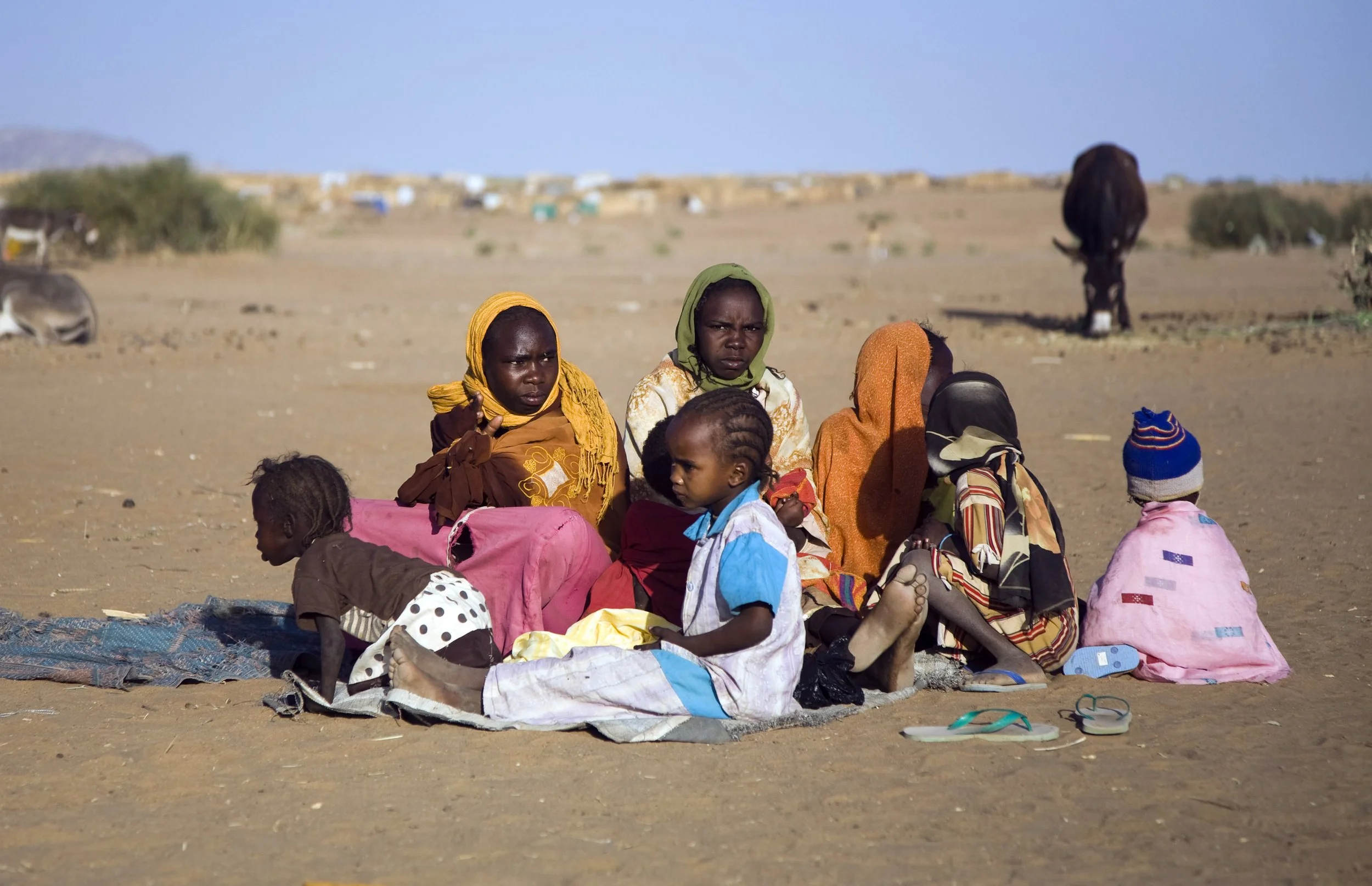
Sudanese women and children. Albert Gonzalez Farran. CC BY-NC-ND 2.0.
Civil war in Sudan started in April 2023 following the collapse of negotiations between the Sudanese Armed Forces (SAF) and the Rapid Support Forces (RSF). Since then, the country has been decimated by violence, widespread famine and a crumbling healthcare system, all of which make it nearly impossible for humanitarian support organizations to provide aid.
According to the United Nations, the situation in Sudan is the world’s worst humanitarian crisis, with more than 33 million people in need of support. Women and girls have been disproportionately affected, facing alarming rates of food insecurity and displacement.
Millions of women have had to relocate to refugee and displacement camps, where they face shortages of food, clean water and medical supplies. At these camps, they experience the additional risk of gender-based violence, both by fellow civilians and members of the SAF and RSF themselves.
The United Nations described rape, sexual slavery and violence as common war tactics used throughout the country. They report that sexual violence has not only been used to exert control over communities but to instill fear and deepen the psychological trauma of survivors and their families. One woman told Human Rights Watch, “Every time I try to sleep, I see how my parents and husband were killed, and I remember all the things they did to me. It is torturing me.”
Her experience is far from unique. Survivors of sexual violence, especially that which is war-related, often experience long-term trauma, including depression, post-traumatic stress disorder and sleep disturbances. Many also face social stigma within their communities, which can lead to further isolation. In Sudan, these challenges are compounded by the deterioration of the healthcare system and limited humanitarian access. With little international aid, survivors are left without medical care, counseling or legal assistance.
Additionally, without reliable healthcare, pregnant women and new mothers are unable to receive adequate maternal support. This often increases the likelihood of preventable complications for both mothers and infants.
Yet despite these conditions, Sudanese women are committed to protecting their communities. Across the country and within displacement camps, women-led groups have helped distribute food, protect children from violence and provide midwifery and other medical assistance.
But as fighting persists across the country, humanitarian groups argue that greater international attention is crucial in addressing the crisis. Sudan has received comparatively limited international coverage compared to other global conflicts. Experts suggest this is partially because more “geopolitically influential countries” are often prioritized in media coverage, leaving other large-scale humanitarian crises underreported.
In the case of Sudan, Tom Perriello, former U.S. special envoy to Sudan, said, “I don’t think I’ve ever seen as big of a disconnect between the scale of a crisis and the scale of media coverage in my life, and that is both because the scale of the suffering in Sudan is so high and because the [media] coverage is abominably low.”
The statement reflects ongoing concerns about the visibility of the crisis and its impact on its civilians. For many Sudanese women and girls, support remains uncertain as they continue to navigate the world’s worst humanitarian emergency.
GET INVOLVED:
Sign Amnesty International’s petition to demand an arms embargo in Sudan. Spread the word about the atrocities facing women in Sudan today. Support female protection and aid by donating to UN Women. For updates and additional information, follow UNICEF and ReliefWeb.
Cove Johnson Rabidoux
Cove is an English student at the University of California, Los Angeles. Her writing can be found in the Daily Bruin, The Teen Magazine, Piece of Cake Magazine, and other publications. In her free time, she enjoys reading and traveling.