
Julia Kelley
As minority native languages worldwide disappear at a rapid rate, Indigenous scientists look to new AI language learning models and community participation as a way of preserving their cultures.
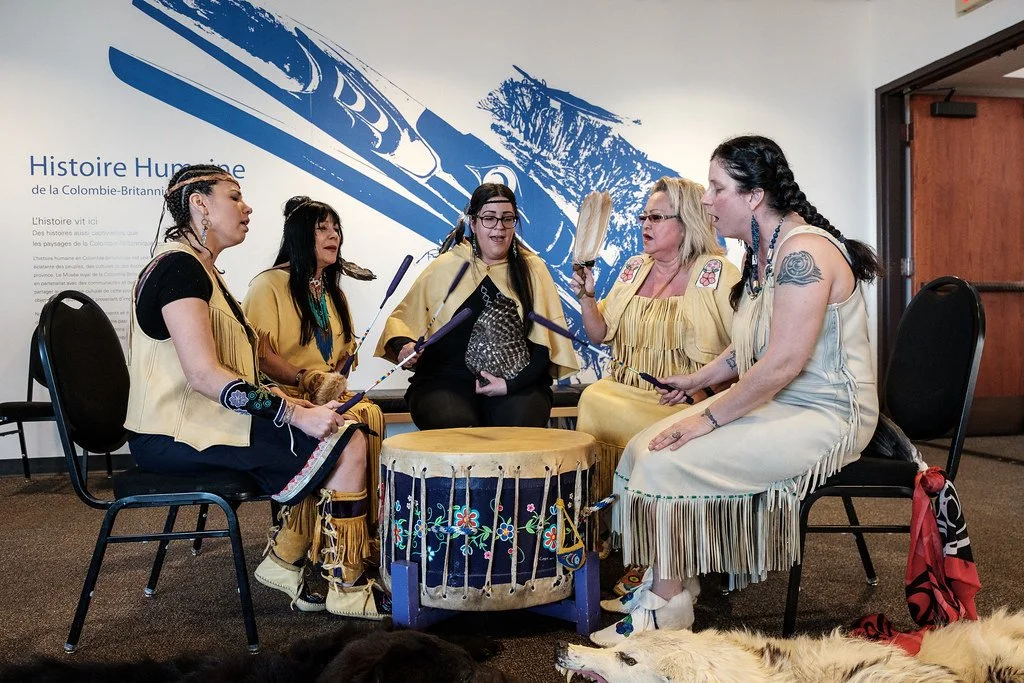
Language Revitalization in Canada. BC Gov Photos. CC BY-NC-ND 2.0.
Out of approximately 7,000 languages worldwide, there are currently about 3,000 that are endangered, risking extinction. Experts predict that in the worst-case scenario, 90% of these will disappear within 100 years, whereas in the best-case scenario, only 50% will survive, with 10% being considered safe over the next century. A large number of these languages come from Indigenous cultures, such as those of Australian Aboriginal or Native North and South American communities. Beginning in the 15th century, years of European colonization resulted in children being separated from their cultures through forced assimilation, rendering them unable to learn their native language. Gradual globalization has additionally prioritized dominant languages, like English, in systems like educational institutions, governments and job markets, reducing the use of minority languages. This was worsened by a decrease in the native elder populations, who were unable to pass on cultural knowledge.
This will represent not only a loss of words and communication, but also a loss of centuries-old heritage and understanding, as Indigenous worldviews and methods of self-expression have been preserved in languages. To curb these alarming risks, Indigenous scientists have begun looking to artificial intelligence as a way to safeguard their language systems. AI has become increasingly powerful in the past decade, with chatbots, in particular, becoming prominent in everyday society. These large language models have been trained on only 100 languages, many being dominant languages like English, creating a bias in AI use when trying to write or speak in another language.
Many researchers have responded to this by building bots through their own language models, including Jared Coleman of the Big Pine Paiute Tribe in the Owens Valley of California. After finding an archive with an old dictionary and audio recordings of his elders speaking the tribe’s native language, he began learning the language and built an online dictionary. However, it was not until he and his advisor, Bhaskar Krishnamachari, developed a large language model-assisted rule-based translation tool that he could start revitalizing the language. In this program, the two would give the AI a set of semantic rules or would have native speakers speak to it to train the model, then combine that information with the regular processing abilities of a large language model. The result was successful, meaning that the AI program could effectively learn the language and translate, unlike regular large language models.
Another leading Native American scientist, Michael Running Wolf, has also made advancements in language revitalization through speech recognition models and virtual reality. After completing a master’s degree in computer science, he began Indigenous in AI, an international community of Indigenous engineers, and has led First Languages AI, an AI initiative to build speech recognition models. He has focused on ethically and consciously creating AI tools geared towards native languages, including amassing hundreds of thousands of recordings from local communities to build a system that can translate the languages into English. Recently, he has begun working on using virtual reality to create a cultural immersion experience that creates interactive scenarios for language learning.
Through the use of such AI models, indigenous scientists have been able to not only reinvigorate their languages but also preserve them for future generations. Protecting against the rapid loss and worsening endangerment of such forms of communication is necessary in safeguarding Indigenous heritage. Native speakers taking the forefront of this fight have also made way for these systemically oppressed groups to help empower their communities. Kyra Kaya, a native Hawaiian, demonstrates this sentiment to NBC News: “AI and the tech industry have the power to either uplift or silence marginalized groups like mine. That’s why Indigenous people can and should play a large role in it.”
GET INVOLVED:
Those looking to help support the fight against language loss can check out different organizations or initiatives that work towards preventing such tragedies, including The Language Conservancy, Living Tongues, The Endangered Languages Project or The Foundation for Endangered Languages, all of which focus on preserving endangered languages and providing education. In addition, you can look into different Indigenous-led AI initiatives that are being used to fight against this, such as First Languages AI, run by Michael Running Wolf, IndigiGenius, Tech Natives or Wihanble S’a Center for Indigenous AI. Furthermore, if you are someone who speaks an endangered language, consider participating in protection projects, such as The Living Dictionaries Project, or sharing the language with others.

Julia Kelley
Julia is a recent graduate from UC San Diego majoring in Sociocultural Anthropology with a minor in Art History. She is passionate about cultural studies and social justice, and one day hopes to obtain a postgraduate degree expanding on these subjects. In her free time, she enjoys reading, traveling, and spending time with her friends and family.