
Alex Jung
Honduras has one of the highest rates of femicides in the world, with more than 4,000 women killed between 2013 and 2025.
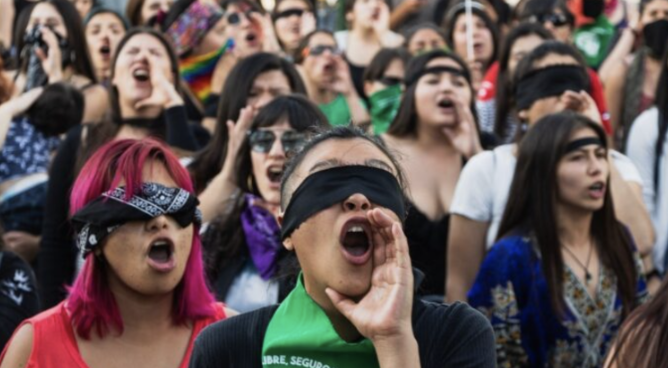
Anti-femicide protest. Jacqueline Staforelli Castillo. CC BY-NC-ND 4.0.
Femicide is the intentional, targeted murder of women or girls due to their gender. Honduras is a nation where femicide is highly prevalent, with a rate of about six per 100,000 women killed as a result, making it one of the highest rates of femicides in the world. Femicide rates are also high in many other Latin American countries, including the Dominican Republic, with a rate of three per 100,000 women, and El Salvador, with 2.5 per 100,000 women. Honduras also has high rates of gender-based violence. Each year, there are 16,000 reports of domestic violence and 3,200 reports of sexual crimes. Significantly, many cases of domestic violence and femicide do not result in trial or punishment. Feminist activist and writer Diana E. H. Russel, at the UN Symposium on Femicide, claimed, “The so-called maniacs who commit these atrocities are acting out the logical conclusion of the woman-hatred which pervades the entire culture.” Gender-based violence and femicide in Honduras continue to harm families and communities today.
Gang violence is a primary cause of these femicides. There are many gangs operating in Honduras, including Mara Salvatrucha 13 (MS-13) and Barrio 18 (Pandilla 18 or 18th Street gang). Up to around 40,000 individuals in the country are involved or associated with gangs. Although a large amount of criminal activity in gangs is through the extortion of drugs, violence is also often exercised between them for territory and influence. The killing of wives and daughters of rival gang members is done as a form of intimidation and an assertion of dominance. Additionally, the women are often raped and sexually harassed before they are killed. The reality is that many cases of gang-related femicides and violence toward women go unnoticed and unrecorded, making it difficult to estimate the scale of the issue in Honduras.
Under Honduran law, femicide is considered a serious felony, with a maximum of 40 years of imprisonment. However, this sentence is often unfulfilled, as approximately 90% of Honduran femicides go unpunished; this statistic, being an estimation, also reflects that the Honduran government does not release official statistics regarding the number of trials and convictions, emphasizing a lack of transparency and action. According to The Advocates for Human Rights, "While Honduras has established several laws and mechanisms to protect women from violence, little has changed on the ground for victims of gender-based violence." Furthermore, though the proposal for a new law against violence toward women was presented to the country’s National Congress on March 8, 2022, it has yet to be deliberated. But progress was not entirely void, as in 2023, the national General Budget included a section with a gender focus for the first time, with a budget of $4 million.
Despite the ongoing issue and a large spike in femicides during the COVID-19 pandemic, according to the UN Sustainable Development Group, local NGOs and feminist activists have been actively working to address the issue. The law on safe houses, which has yet to be discussed by the National Congress, was proposed by feminist activists who believed safe houses should be funded for survivors of family and domestic violence. "The Other Pandemic” campaign was also launched during the pandemic to raise awareness on gender-based violence in Honduras; this included a docuseries with testimonies of women survivors, education campaigns at various schools and the spreading of the campaign’s mission on national TV networks. Media activism is also integral when addressing the issue. This calls for the gathering of accurate, truthful information and data regarding femicides and gender-based violence. A study by the Spotlight Initiative found that nine out of 10 news stories in Honduras covering the topic of femicide omit details, creating many misrepresentations of the reality.
GET INVOLVED
Anyone interested in addressing and supporting the activism regarding femicide and gender-based violence in Honduras can do so by engaging with various national and international NGOs, including the Spotlight Initiative, End Violence Against Women, Foro de Mujeres por la Vida and Proyecto Aldea Global.
Alex Jung
Alex is from New Zealand and South Korea, and is currently a student at the University of Chicago. He is majoring in Political Science and International Relations, and minoring in Middle Eastern Studies. He is passionate about social justice for minorities and indigenous communities. In his free time, he enjoys learning languages (Korean, English, Mandarin, and Persian) and writing novels and short stories.