
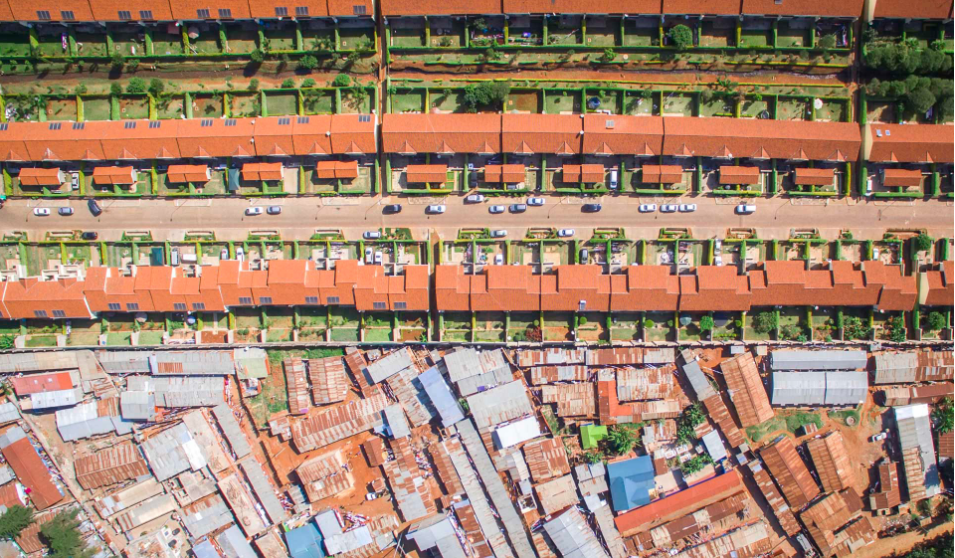
“It has been estimated that the richest 10 percent of the population of Nairobi accrues 45.2 percent of income, and the poorest 10 percent only 1.6 percent,” according to a 2009 study on urban poverty by Oxfam.
Statistics on inequality and poverty are ubiquitous in the developing world. They are often underwhelming, however, in their impact. What does 45.2 of income look like? What does “urban poverty” look like? As, of course, every statistic is relative.
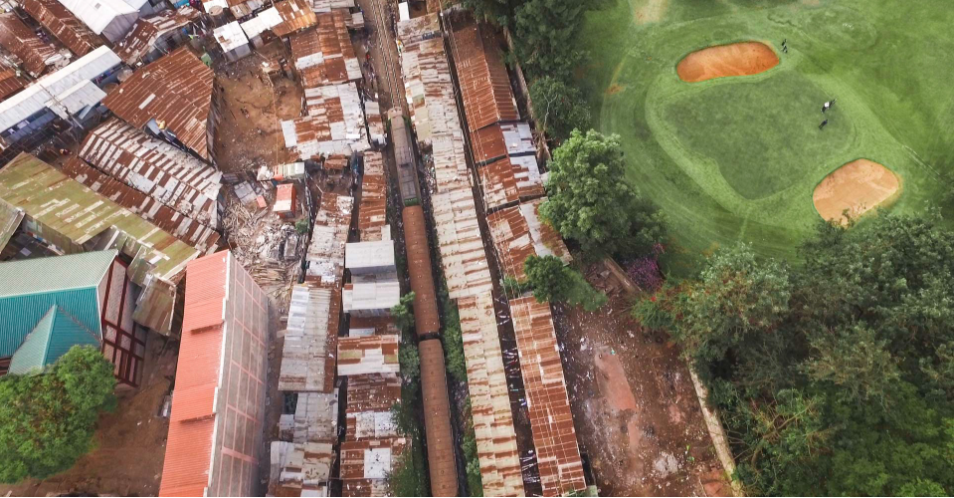
The Royal Nairobi Golf Club sits directly adjacent to Kibera slum. Twice a day, a passenger train barrels through the slum, less than a meter away from people's homes and businesses. Next door, people play the game surrounded by greenery.
In Nairobi, a city of chaos, dynamism, and incredible unequal growth, this is even more difficult to portray. Yes, it has easily the poorest urban slums I’ve ever visited. In Kibera, a hilly community, every drainage is choked with tons of raw sewage and rubbish. Children play on live train tracks, running through the middle of the slum. Government services, aside from electricity, are nonexistent. The houses are made from a mixture of mud, sticks, and tin.
But also, yes, the wealthy parts of Nairobi are more difficult to see. They are hidden behind gated communities, ensconced in shopping malls, or wrapped in dingy-looking apartment buildings. Moreover, researching these inequalities is made difficult by the lack of searchable data sets, a draconian drone flying environment, and Nairobi’s infamous traffic problems.
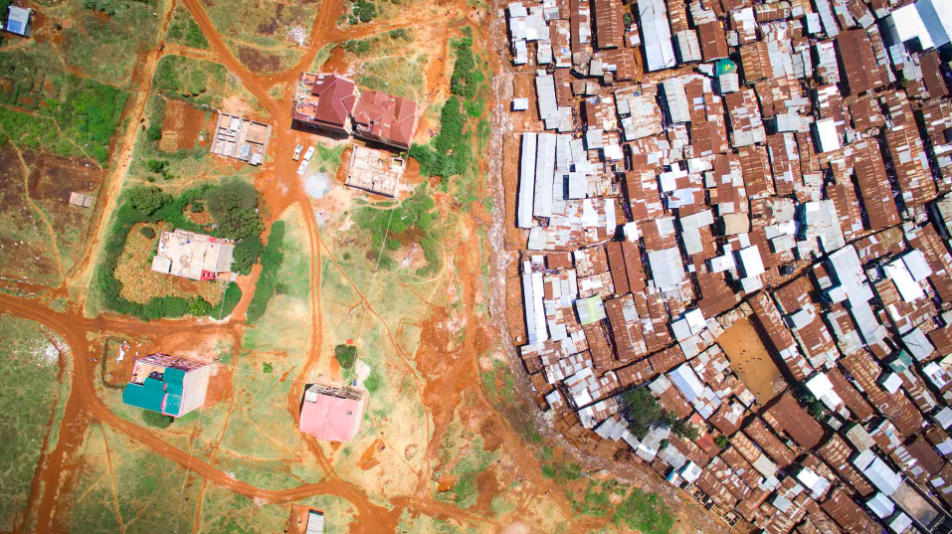
Kibera is constrained not only by infrastructure but also the natural environment. The "river" at the bottom of the slum drains thousands of tons of rubbish into the Nairobi Dam every year.
The Unequal Scenes I have found in Nairobi are a mixture of traditional “rich vs. poor” housing images, but also depictions of how infrastructure constrains, divides, and facilitates city growth, almost always at the expense of the poorest classes. During my time there, I focused on a planned road that will bisect Kibera, Nairobi’s largest slum. This road will cut the slum neatly in two, displacing thousands of people, and tens of schools and clinics that are in its way. This road will help alleviate the city’s traffic problem, but it may cause more problems than it will solve. Just to the south, a new road has already cut off part of Kibera, causing people to cross it illegally, resulting in many deaths. From interviews with residents, it is unclear whether or not the planned infrastructure upgrades have adequately taken into account the public opinion.
This dynamism contributes to make Nairobi one of the most fascinating cities I’ve ever been to.
Read more at http://www.thisisplace.org/shorthand/slumscapes/#nairobi-48752

The Southern Bypass road has already lopped a portion off of Kibera, in the quixotic search for a less congested city. Although there is an underpass (visible at the bottom), people often cross the road from above, resulting in many accidents.
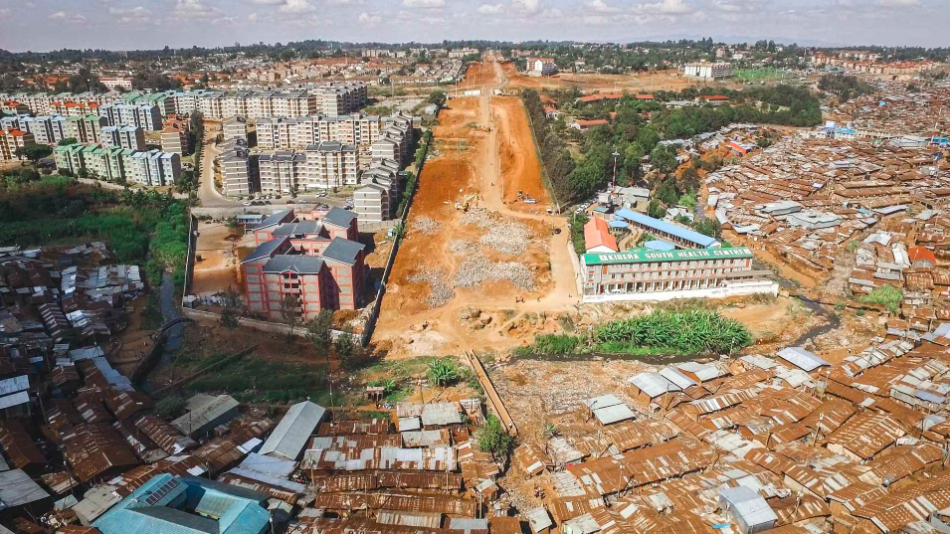
A planned road will bisect Kibera slum in Nairobi, displacing thousands of people.
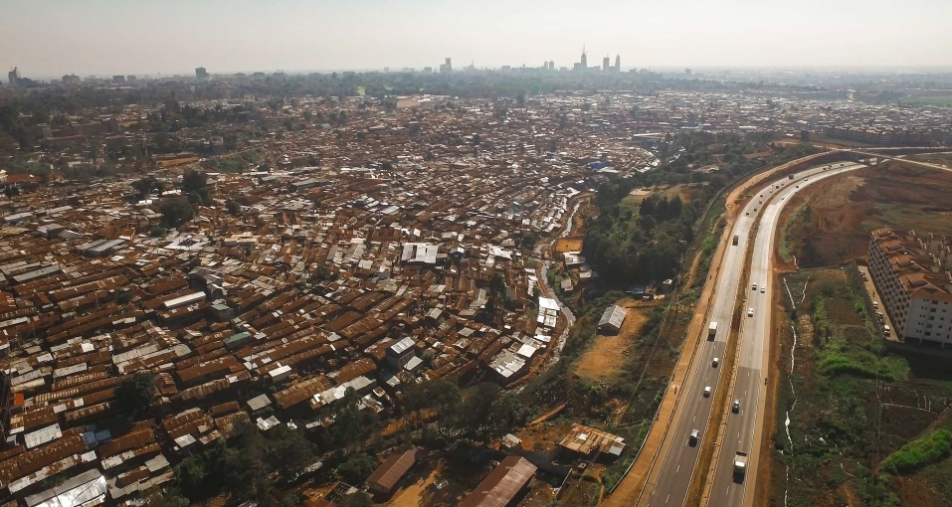
The Southern Bypass road follows the contours of the river and slum next to it. In the distance, you can see the construction beginning on the new road, which will connect Ngong Rd to Langata Rd.
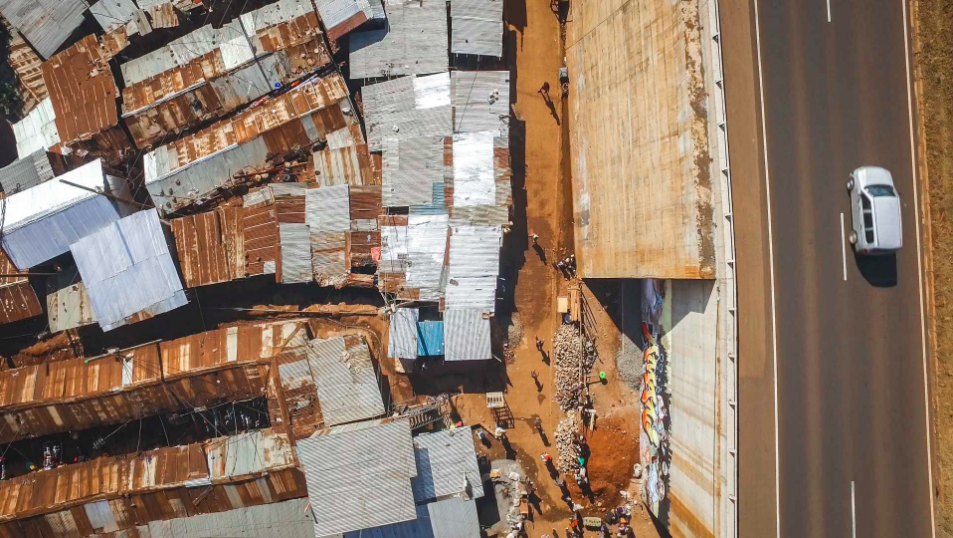
Cars glide over the brand new road, above the slum below.

The suburb of Loresho is home to the wealthy and the poor alike.
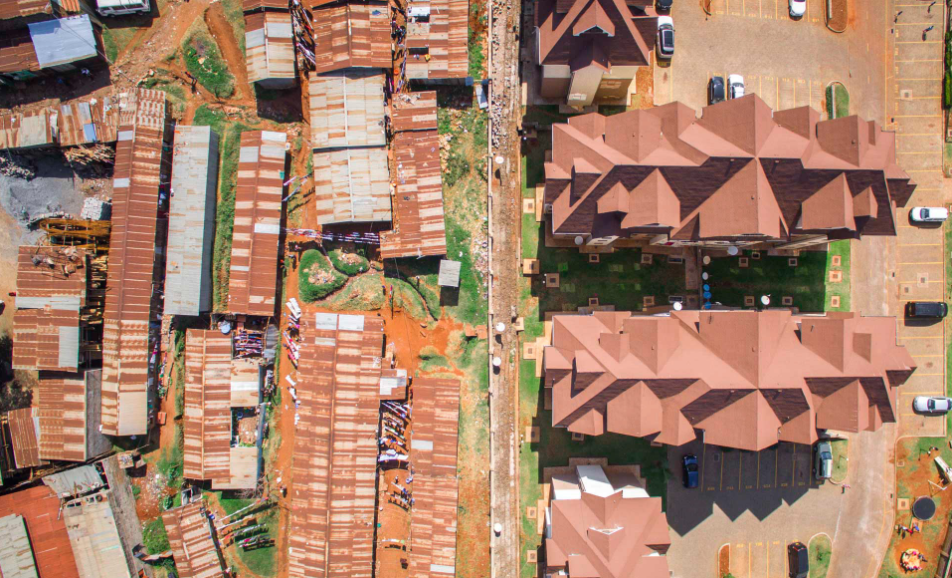
As in many places around the world, the rich and poor are separated by only a thin concrete barrier. But it represents much more than that.

These barriers, whether concrete or imaginary, represent an entire class separation, one that may not be surmounted for generations to come.
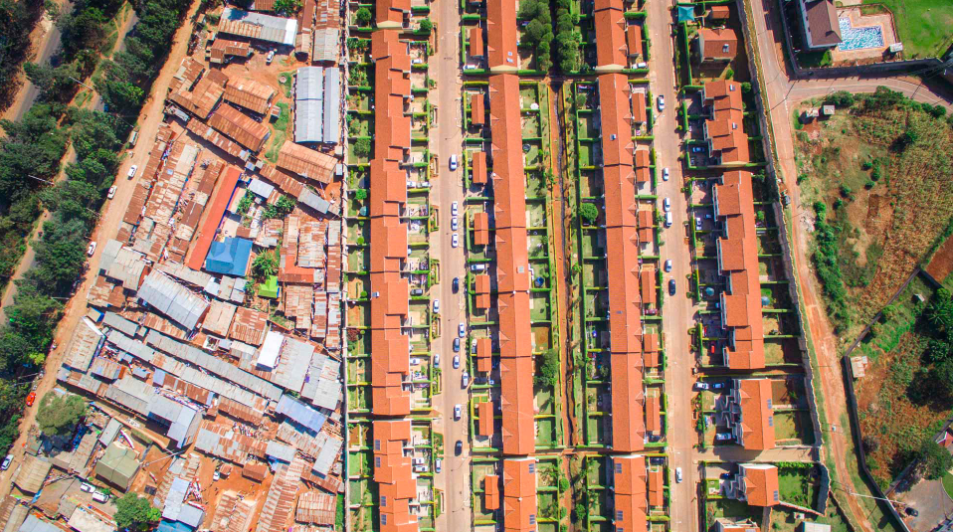
Amazing geometric patterns emerge from the air. "Straight" lines become slightly curved.
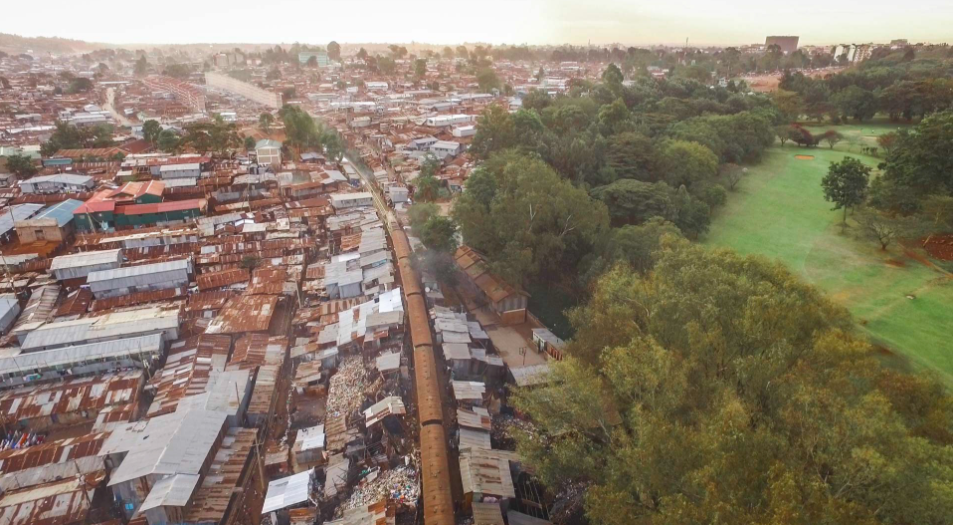
The train is a part of life to Kibera, a source of transportation, of annoyance, of time passing.
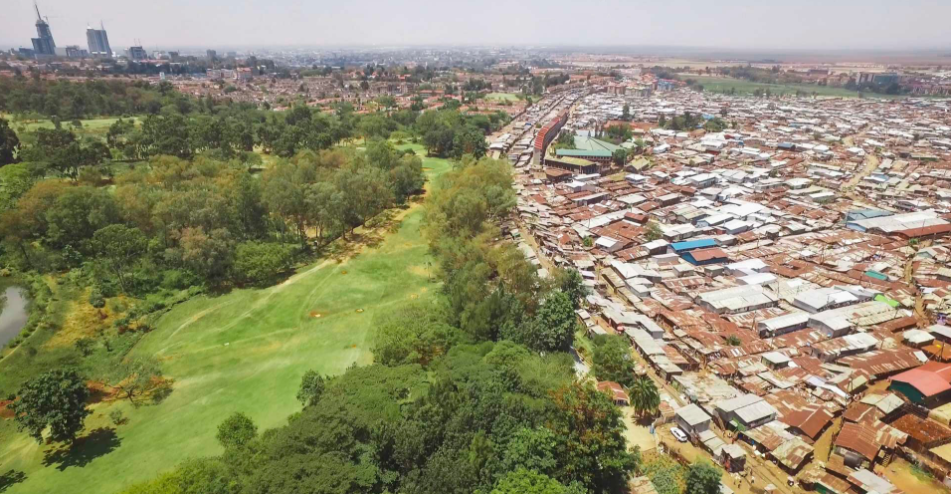
The chaos, noise, and density of the slum is neatly juxtaposed with the orderly calm green of the Royal Nairobi Golf Club, which opened in 1906.
THIS ARTICLE AND PHOTO SERIES WAS ORIGINALLY PUBLISHED ON UNEQUAL SCENES.
JOHNNY MILLER
Johnny Miller is a freelance documentary photographer and filmmaker based in Cape Town, South Africa. His 'Unequal Scences' project is meant to show the stark inequality seen in South Africa and in cities around the world. Check out his website and Facebook to find out more.