
Kennedy Kiser
In the highlands of the Caucasus, this stone-built village keeps going despite isolation, harsh winters and a changing world.

Ushguli village in Svaneti, Georgia, with Shkhara in the background. Giorgi Abdaladze. CC BY-SA 4.0.
The country of Georgia is often left out of conversations about Europe or Asia, even though it sits at the crossroads of both, wedged between Russia and Turkey. It has its own alphabet, language and complicated history, shaped by empires and Soviet rule. While many visitors stay near the capital city of Tbilisi or tour its famous wine regions, some head north into the Caucasus Mountains. That’s where you’ll find Ushguli.
Ushguli is one of the highest permanently inhabited settlements in Europe, sitting at over 7,000 feet above sea level. It's located in the region of Svaneti, known for its fiercely independent residents, who speak Svan, a separate language not mutually intelligible with Georgian. Historically, this area was so remote that the people developed their own customs and oral traditions separate from the larger country, as well as built fortified stone towers to protect their homes during raids or avalanches.
Reaching Ushguli is difficult by design. From the regional hub of Mestia, a 28-mile drive takes anywhere from three to six hours, depending on road conditions. Parts of the road are gravelly, narrow and prone to rockslides. Some travelers hike in over multiple days, choosing footpaths through valleys and over rivers to reach the village independently. There’s no public transportation. No gas stations. No reliable cell signal.
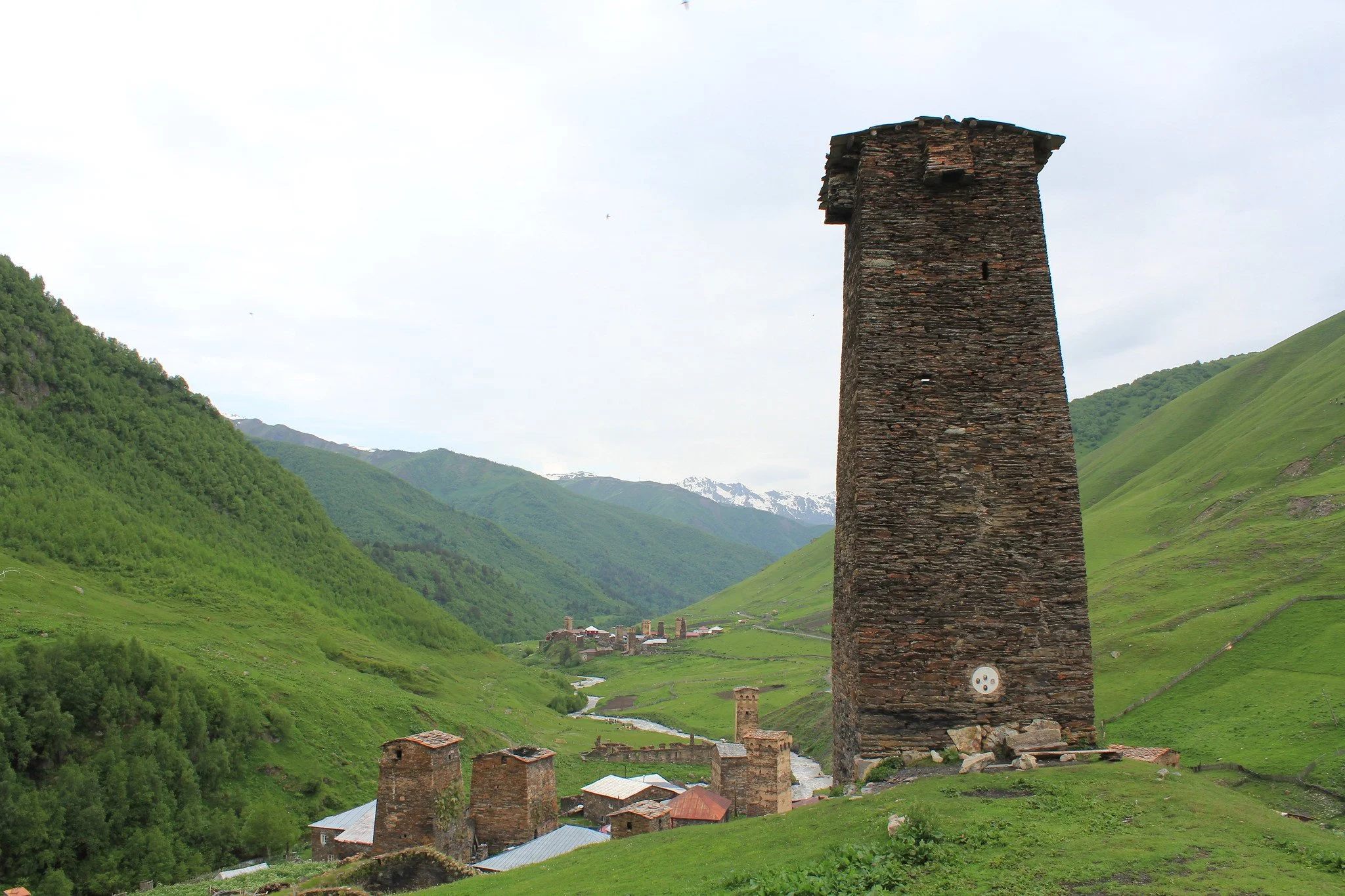
Tamar's Tower in Ushguli. Arian Zwegers. CC BY 2.0.
Once you arrive, Ushguli doesn’t feel like a curated heritage site. It’s not clean or polished. Horses wander through the streets. Power outages happen frequently, and winters can last up to six months, with snowfall blocking the road entirely. But the village is still very much alive. A few hundred residents remain, spread out across four clusters of stone houses. Many families open their homes as guesthouses to visitors, offering meals and beds for the night, although electricity is not guaranteed.
The most visually striking part of Ushguli is its dozens of medieval defense towers. These were built roughly between the 9th and 12th centuries and were used to store food, house families and provide protection. Some towers still stand firm. Others tilt and crumble. In 1996, UNESCO declared Ushguli a World Heritage Site, but preservation hasn’t erased the fact that people still live, work and raise children there.
Meals are simple and usually home-cooked. You might be served khachapuri, a hot, boat-shaped bread filled with cheese and eggs, lobio, a bean stew, or pickled vegetables from someone’s cellar. One local custom is to offer guests a glass of chacha, a homemade brandy that can easily reach 60% alcohol. English is rarely spoken. Hospitality doesn’t come in the form of a front desk or a tour guide. It’s more like being handed a plate and a blanket, then left to figure the rest out.
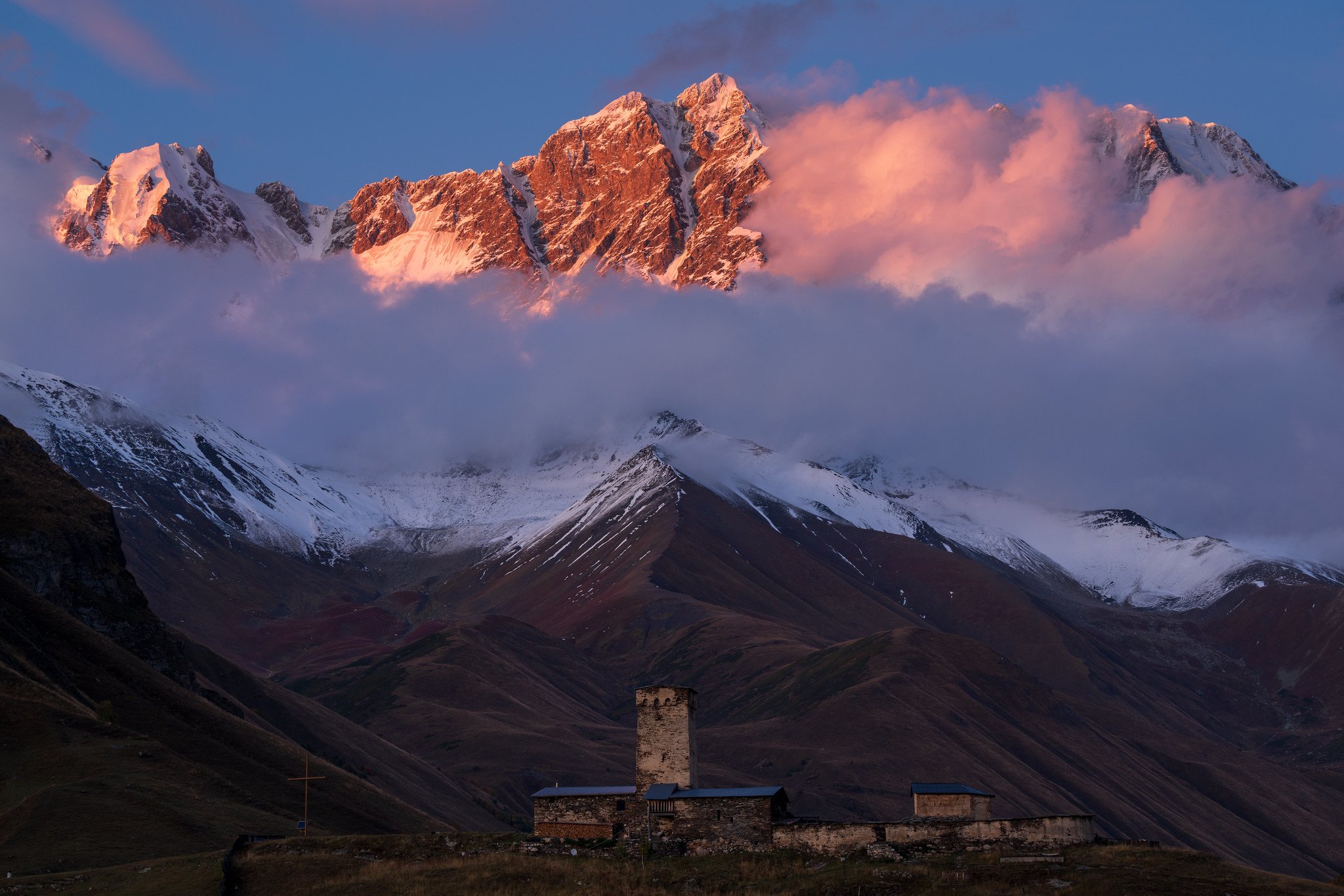
Sunset over Ushguli. Alex Berger. CC BY 2.0.
There are few “attractions” in Ushguli, and that's part of the point. There’s a small church at the top of the hill, with murals barely visible inside. There are views of Mount Shkhara, Georgia’s tallest peak, which looms in the distance on clear days. And there’s the feeling of being somewhere that doesn’t care whether or not you showed up.
Tourism is increasing, and small changes have followed, including solar panels, satellite dishes and newer roofs. But Ushguli hasn’t been hollowed out. People still farm. Kids still run up the hills after school. Some families leave, but many return. It’s not easy living there. It never has been. And yet, for residents, there’s still enough to stay for.
TO VISIT:
The closest hub to Ushguli is Mestia, a small town in Georgia’s Svaneti region, reachable by daily flights from Tbilisi or Kutaisi or a nine-hour marshrutka, or mini-bus, ride. From Mestia, visitors can hire a 4x4 driver or join a guided tour for the three-to-six- hour off-road journey to Ushguli. Lodging in Ushguli consists of family-run guesthouses, many including home-cooked meals, with rates averaging US$20 to US$40 per night. Late summer to early autumn (July to September) offers the clearest weather for hiking, though some travelers come in winter for the stark beauty and near-total quiet. There are no ATMs, pharmacies or gas stations in Ushguli. Bring cash, and prepare for basic conditions.

Kennedy Kiser
Kennedy is an English and Comparative Literature major at UNC Chapel Hill. She’s interested in storytelling, digital media, and narrative design. Outside of class, she writes fiction and explores visual culture through film and games. She hopes to pursue a PhD and eventually teach literature! @kennedy_kiser