
Zoe Lodge
How authoritarian regimes are weaponizing Internet use and the global resistance fighting back.
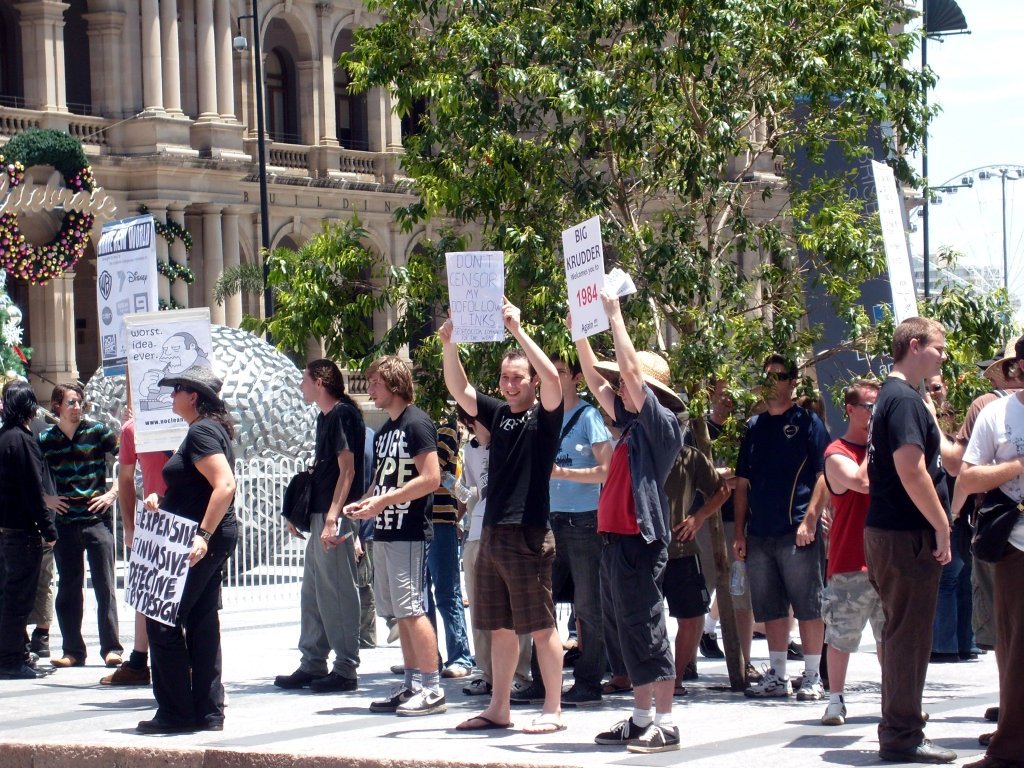
Civilians protesting internet censorship in Australia. GnuChris. CC BY-SA 2.0.
In the digital age, the fight for freedom of expression has moved beyond the streets and into cyberspace. Activists, journalists and ordinary citizens across the globe are increasingly being targeted by authoritarian regimes using digital tools not just to monitor, but to silence, intimidate and punish dissent. Freedom House contributor Adrian Shahbaz writes, “Disinformation and propaganda disseminated online have poisoned the public sphere. The unbridled collection of personal data has broken down traditional notions of privacy. And a cohort of countries is moving toward digital authoritarianism by embracing the Chinese model of extensive censorship and automated surveillance systems.” From Myanmar to Iran to Russia, cyberspace has become the latest battleground for human rights. Authoritarian governments have long used traditional surveillance and censorship to suppress opposition. Now, they are adapting their tactics to the digital era by employing spyware, social media manipulation and cyberattacks. In Myanmar, following the 2021 military coup, the junta imposed internet blackouts and blocked social media sites to stifle pro-democracy protests. The junta also used facial recognition technology and SIM card registration laws to track protesters and limit free communication.
In Iran, the government has routinely shut down internet access during protests, most recently during the 2022 demonstrations sparked by the death of Mahsa Amini. The shutdowns were coupled with arrests of online activists and widespread use of spyware, such as the Pegasus software, which has been linked to state surveillance in multiple countries. Iranian authorities have increasingly turned to hacking dissidents' accounts and monitoring encrypted messaging apps to preempt resistance.
Russia, additionally, has honed its digital repression arsenal. From deploying troll farms during the 2016 U.S. election to introducing the sovereign internet law, which allows for tighter government control over the web, the Kremlin has leveraged both domestic tools and foreign disinformation tactics. Russian opposition leader Alexei Navalny’s team has been repeatedly targeted by phishing attacks and spyware, a trend detailed in Citizen Lab’s cybersecurity investigations.
Despite these escalating threats, resistance is growing. Journalists and activists are turning to encrypted platforms like Signal and Tor to communicate securely. These tools help users bypass censorship and avoid detection, offering lifelines to those in high-risk regions. Citizen journalism networks in Myanmar, such as Myanmar Now, continue to publish under threat, using pseudonyms and secure communication methods to report on military abuses. There is growing momentum to regulate the global surveillance industry. The United Nations has called for a moratorium on the sale and use of spyware technologies until robust human rights safeguards are in place. The European Union recently proposed a Digital Services Act that would compel platforms to address disinformation and state-sponsored harassment campaigns.
However, as technology advances, so do the tools of oppression. AI-driven facial recognition, biometric data collection and increasingly sophisticated spyware pose new challenges to global free expression. The fight for digital freedom will require a coordinated effort across borders, encompassing legislation, technology development, education and awareness. The internet was once heralded as a democratizing force. Today, it’s a space where freedom of speech is both threatened and fiercely defended.
GET INVOLVED:
International organizations like Access Now and Electronic Frontier Foundation are working to expose digital rights violations and offer digital security training. In response to spyware threats, groups like The Digital Security Lab Ukraine and Privacy International provide crucial resources for frontline activists.

Zoe Lodge
Zoe is a student at the University of California, Berkeley, where she is studying English and Politics, Philosophy, & Law. She combines her passion for writing with her love for travel, interest in combating climate change, and concern for social justice issues.