
Evelyn Garcia Medina
The global seafood industry’s demand has fueled illegal fishing practices, like forced labor and human trafficking, with Thailand being a hotspot of these illicit affairs.
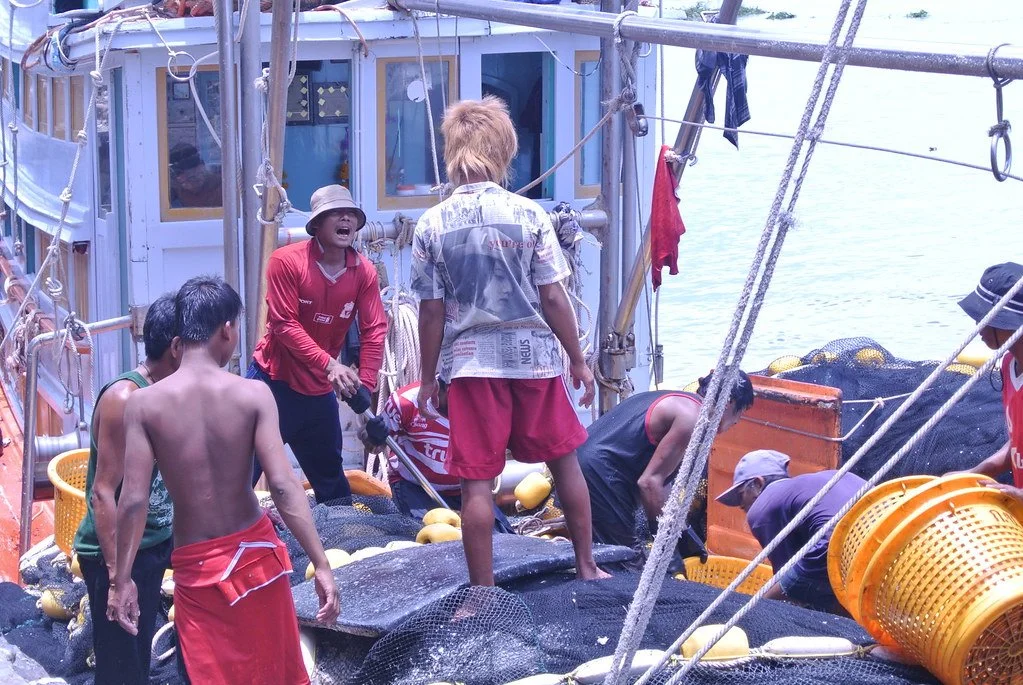
Fishermen receiving instructions. ILO Asia-Pacific. CC BY-NC-ND 2.0.
The global demand for seafood is not only about what is on your plate, but also where it comes from. Seafood production is a result of the hard work that fishermen do on the daily, and yet the fishing industry has contributed to illegal fishing practices, like forced labor and human trafficking. Thailand specifically has faced international scrutiny for its history of labor abuse. Allegations against seafood companies continue to surface, and the ones who suffer the most are the workers.
When a seafood company has a high demand for products, it resorts to overfishing to keep up the supply, but oftentimes this can lead to exploitation and the trafficking of workers. Illegal, unreported and unregulated (IUU) fishing prioritizes higher profits, thus ignoring laws and exploiting workers to reduce costs. Oceana says that human trafficking manifests as “the transfer and containment of persons on board vessels, where they are forced to work as crew by means of violence, threat or debt.” Oftentimes, victims endure extreme unethical conditions on fishing vessels, such as being at sea for very long periods, , little to no pay, unsafe working conditions, physical, psychological and sexual abuse and sometimes even murder. Assistant Professor at the Friedman School of Nutrition Science and Policy at Tufts University, Jessica Sparks, says, “Forced labor is not a one off. It’s not a bug. It’s a feature of the system.” The fishing industry is substantial, and it’s plausible that some of the brands we know of and consume may be involved with IUU fishing.
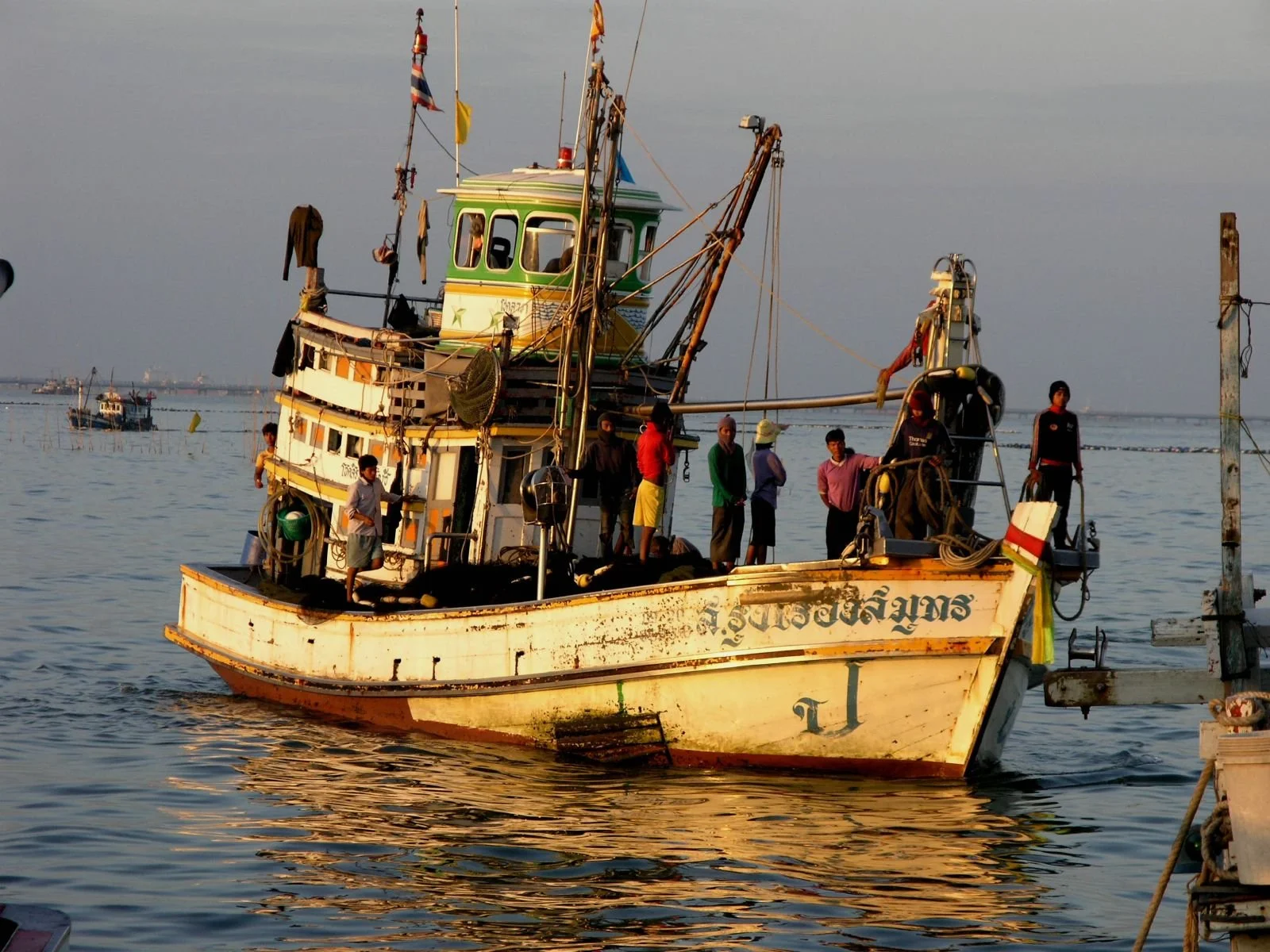
Thai fishing boat. SeaDave. CC BY 2.0.
Human trafficking resulting from IUU fishing isn’t something new, and it can occur anywhere, but Thailand has a track record of overexploitation. Dialogue Earth's editor, Tyler Roney, says, “In 2014, the US downgraded Thailand to Tier 3 (the worst ranking) in its Trafficking in Persons report.” Overfishing, unreported catch and illegal activity overall have existed in Thailand since the 1950s, but sanctions and criticism led to a landmark fisheries ordinance in 2015. Roney explains, “This law introduced much-needed regulations to an industry rife with labour abuse, as well as illegal, unreported and unregulated (IUU) catch.” Thailand had finally addressed the issues in its fishing industry, but now there’s a risk that the progress they made will fade away.
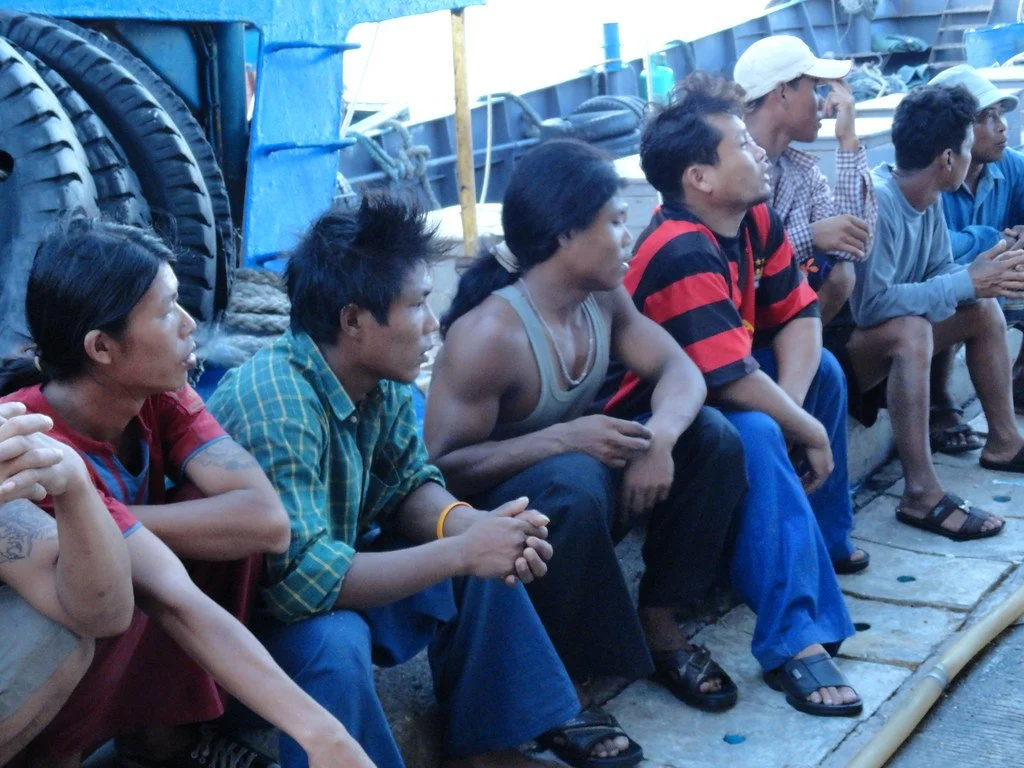
Migrant fishermen waiting on a dock. ILO Asia-Pacific. CC BY-NC-ND 2.0.
As aforementioned, Thailand released the Royal Ordinance on Fisheries in 2015: an ordinance that “aims to reorganize fisheries in Thailand and in waters at large with a view to [prevent] IUU fishing” and “protect the welfare of seamen and prevent all forms of forced labour in the fisheries sector.” Tyler Roney explains that under those regulations, “a factory identified to have forced or child labour must suspend operations until an investigation is completed.” But policies may regress through the Thai government’s proposed amendment of the fisheries ordinance. The amendment would ultimately inhibit the authority of the regulations, as factories that are under investigation would be allowed to resume operations as normal. Despite progress with jobs and human rights in the industry, Thailand may return to its old, illicit ways.

Worker on a Thai fishing boat. ILO Asia-Pacific. CC BY-NC-ND 2.0.
There are various accounts of forced labor and human trafficking in Thailand’s fishing industry that date back years. In the 2010s, before the fishing ordinance, the reports of forced labor were rampant, with survivors like Prasert Sriwaurai sharing their stories. And while the ordinance led to a more progressive fishing industry, reports of abuse still continue today. In 2025, American tuna giant Bumble Bee was sued by Muhammad Syafi and three other crew members on one of the company’s fishing vessels. According to the Seafood Stewardship Index, “Bumble Bee is one of the oldest canned seafood companies in the US and holds the country’s largest market share for canned and pouched tuna.” The lawsuit claims that the company violated human trafficking laws and benefited from forced labor and other forms of abuse. Bumble Bee’s sustainability practices are rated a 1.27 out of 5 because they don’t seem to address “any adverse human rights impacts,” says the Seafood Stewardship Index.
Although forced labor and human trafficking keep occurring in the fishing industry, enforced regulations can be a valuable way to protect workers. If there were more transparency about fishing vessels, detailed registries and trackers, as well as a public history of human rights abuses, there could be a decrease in illicit activity. Seafood is the main source of protein for many communities, and it plays a vital role in numerous lives, but without reform and strong enforcement, workers at sea cannot be protected
GET INVOLVED
The International Organization for Migration (IOM) Thailand provides international cooperation concerning migration issues, aids in the research for finding solutions to Thailand’s migration problems and gives humanitarian aid to migrants.” To help, you can spread awareness through storytelling videos, provide important information to others, volunteer, donate and more.

Evelyn Garcia Medina
Evelyn is a recent Chicana graduate with a B.A. in English and Comparative Literature. Born and raised in the Bay Area, she draws inspiration from her passions: her cultural roots, environmentalism, and human rights. In her free time, she goes on hikes and enjoys learning about current social issues, history, and animals.