
Ashley McDermott
More Americans are paying for the chance to live and work in historic lighthouses, blurring the line between volunteering and vacationing.
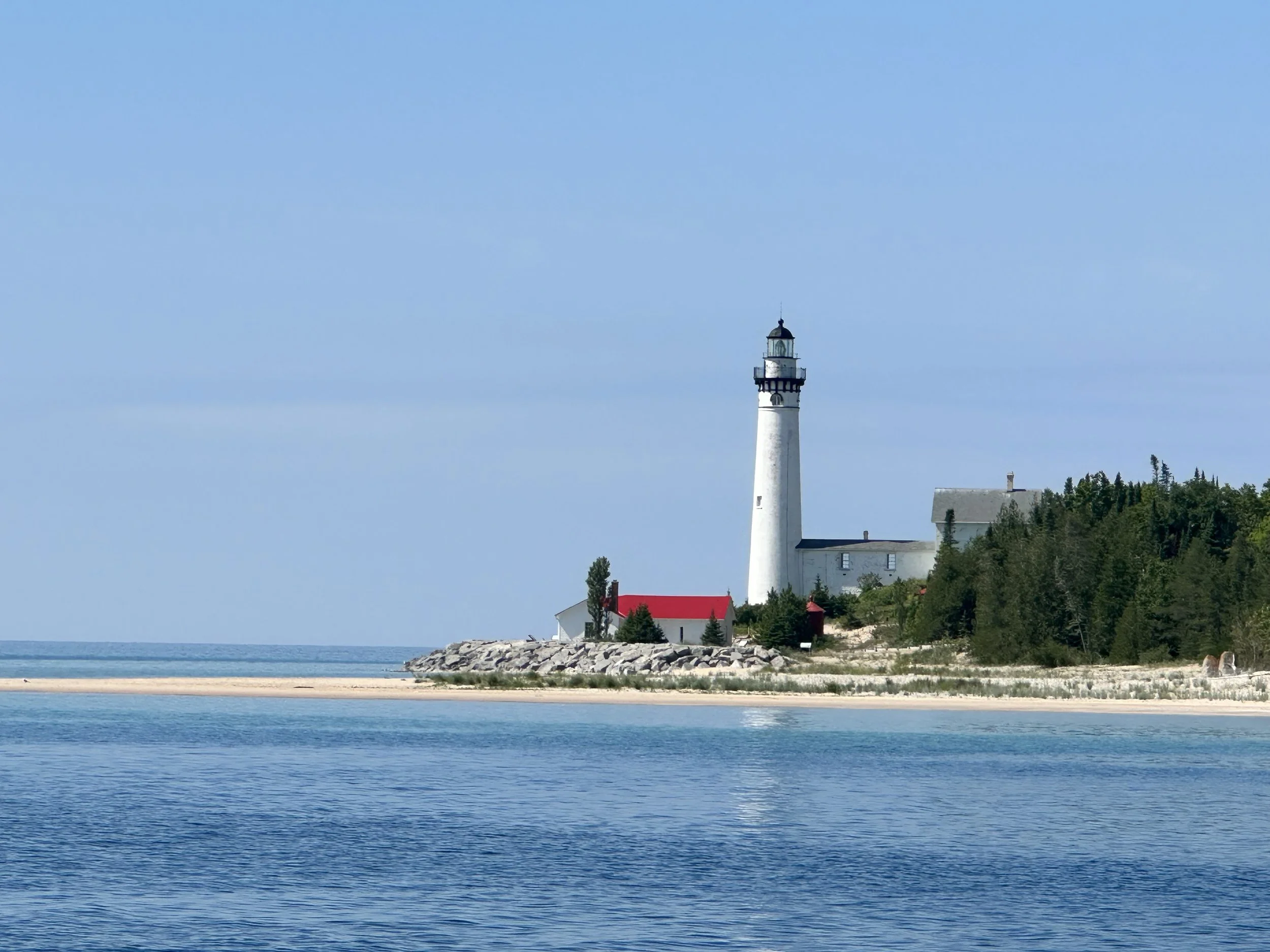
South Manitou Island Lighthouse. Lee McDermott.
The day begins with passengers boarding a 50-foot ferry. For about 90 minutes, they journey through the perilous Manitou Passage, whose waters are notorious for harboring more than 50 known shipwrecks. As the ferry approaches the docks, the first building passengers will see is the 100-foot-tall white brick tower of the 154-year-old Manitou Island Lighthouse, stark against the surrounding dark forest. These visitors, largely backpackers and daytrippers, are guided up the 117 historic steps of the lighthouse by two volunteers, who stay on the island for a six-week duty period, for an incredible view of the island. At the end of the day’s visits, the volunteers retire to the sparse accommodations provided on the mostly uninhabited island.
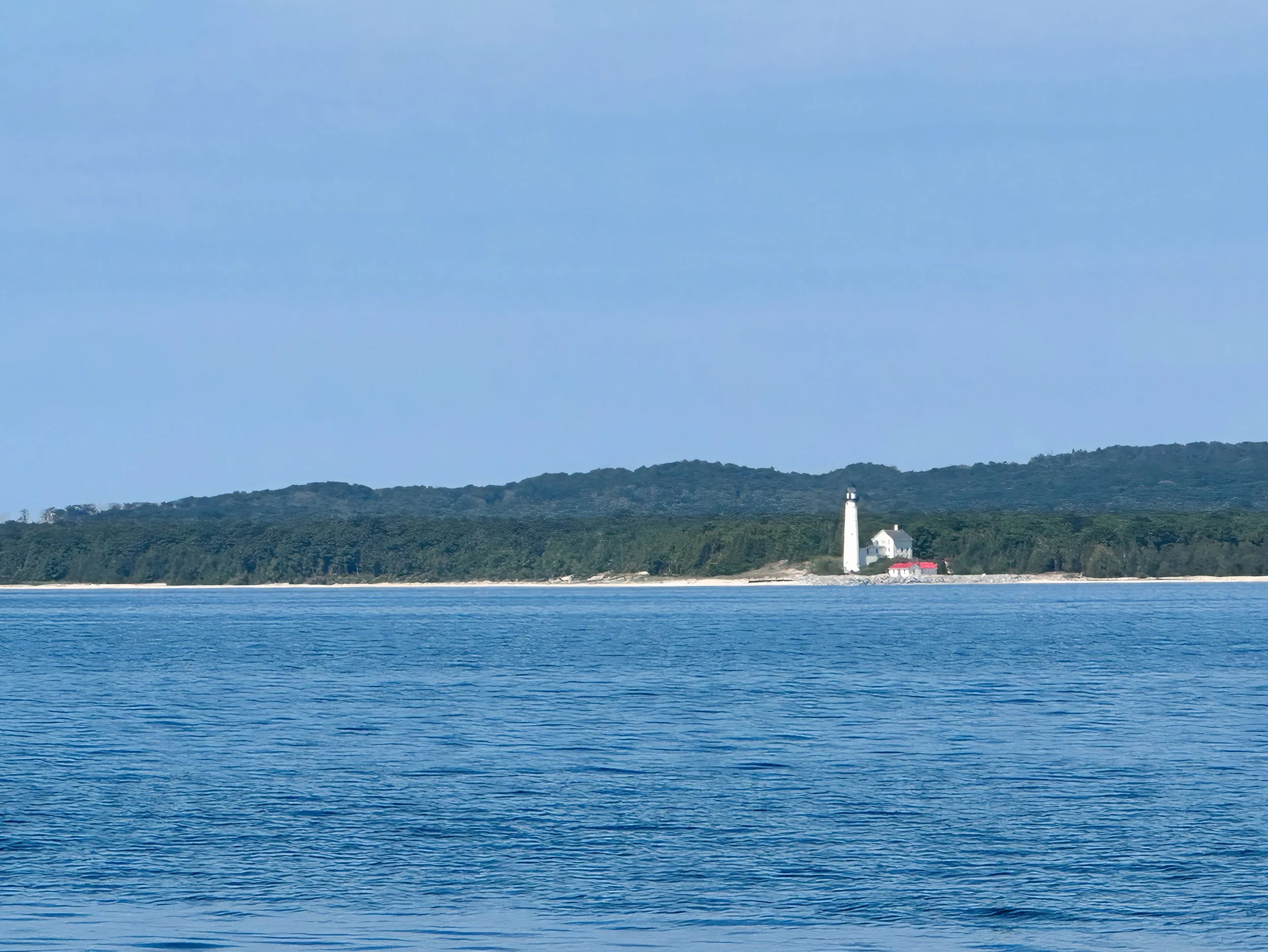
Approaching South Manitou Island Lighthouse. Lee McDermott
Across the United States, volunteer lighthouse keeper programs, where participants stay from one week to several months in exchange for welcoming guests and leading tours, have become a sought-after experience, with some coveted positions getting filled within one day of applications opening. People are drawn to the experience of "keeping the light," intrigued by unusual lodgings, remote scenic locations and the opportunity to stay in an otherwise lowly inhabited area. However, what is a dream working vacation for some is becoming more exclusive; volunteer-keeping programs have surged in popularity post-COVID, and more are moving to a model requiring volunteers to pay for the privilege to work and live in a lighthouse. In certain cases, though, lighthouses are being restored, with the goal of offering paid overnight lodging.
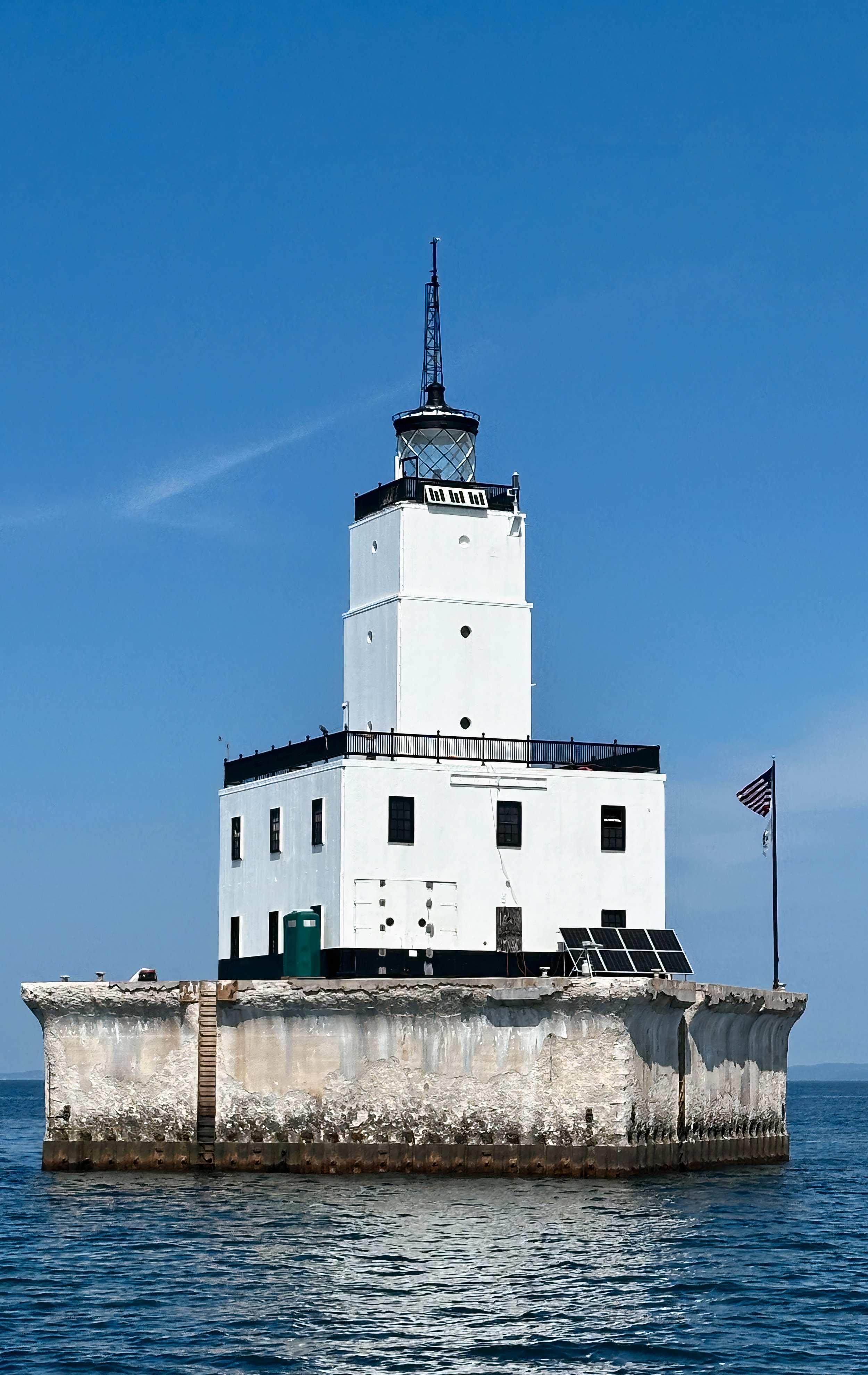
North Manitou Shoal Light. Lee McDermott.
Volunteer lighthouse keepers' duties are usually far from those of historic lighthouse keepers; they do not haul oil for the light, trim the lantern's wicks, polish the Fresnel lens or act as first-responders to shipwrecks. At most posts, keepers greet guests, provide information about the history of the lighthouse, care for artifacts, lead tours or run the gift shop. Executive Director of Sable Lighthouse Keepers Association Jack Greve describes the volunteer position at White River Light Station in Whitehall, Mich., as "light work," with the lighthouse offering what is essentially a studio apartment and "creature comforts you can expect in any normal household."
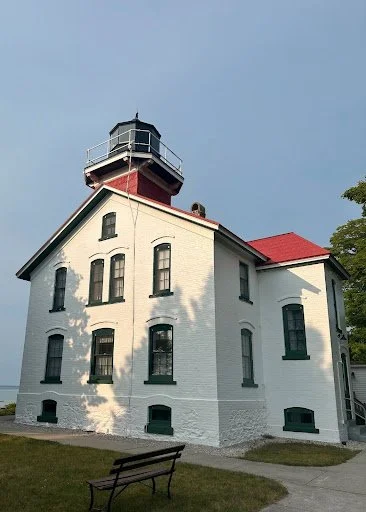
Grand Traverse Lighthouse. Ashley McDermott
More traditional keeper experiences can still be found. At White Shoal Lighthouse, a "crib" lighthouse sitting 13 miles offshore, volunteers participate in round-the-clock watch duties, including monitoring mechanical systems, keeping a daily log and maintaining accurate headcounts of all personnel and guests. Additional responsibilities include refueling generators, recording weather conditions, performing basic maintenance, preparing meals and ensuring the safety of overnight visitors.
Accommodations at the lighthouses maintained by the National Parks Service only offer the very basic amenities and vary according to location. In general, electricity is provided, but it is unreliable, and volunteers should be prepared to use battery-powered lanterns or flashlights. Cell phone coverage can be inconsistent or unavailable. Potable water may not be accessible, and a number of locations use pit toilets. At several sites, maritime weather may make transport to and from the lighthouse dangerous for up to one week. NPS warns volunteers to keep a very flexible schedule and bring extra supplies in the event that they are stranded.
Despite the sometimes rugged accommodations and work duties, many volunteers are willing to pay for the experience of living and working in a lighthouse. While NPS volunteers stay for free, volunteers for the nonprofits that own various historic lighthouses may pay up to $240 for a two-night stay. Even White Shoal Lighthouse offers a three-night "Overnight Adventure" package, costing $3,000 for a queen room at the most remote lighthouse in Michigan. While the opportunity to keep the light has become increasingly exclusive, now accessible mainly to those who can afford the privilege, the fees volunteers pay are helping preserve these historic beacons for future generations.
Eldred Rock Lighthouse - the oldest original lighthouse in Alaska.
Location: Haines, Alaska
Cost: $25 per person
Duration: One week
Battery Point Lighthouse - only accessible on foot at low tide.
Location: Crescent City, Calif.
Cost and Duration: Contact Del Norte County Historical Society.
Cape Blanco Lighthouse - the oldest operating lighthouse in Oregon.
Location: Cape Blanco State Park, Ore.
Cost: None listed
Duration: One month
New Dungeness Lighthouse - the first U.S. lighthouse on the Strait of Juan de Fuca on the U.S.-Canada border.
Location: Sequim, Wash.
Cost: $35 membership fee and $520 per person per week
Duration: One week
Ocracoke Lighthouse - the oldest continuously operating lighthouse in North Carolina.
Location: Ocracoke Island, N.C.
Cost: None listed
Duration: Memorial Day to Labor Day
Cape Ann Light Station Thacher Island & Straitsmouth Island Light Station - the last light station established before the Revolutionary War.
Location: Thacher and Straitsmouth Islands Association (TSIA)
Cost and Duration: Contact Thacher & Straitsmouth Islands Association
Seguin Island Light Station - located 2.5 miles off the coast of Maine at the mouth of the Kennebec River.
Location: Georgetown, Maine
Cost: None listed
Duration: Memorial Day to Labor Day
Tawas Point Lighthouse - the only Victorian-style lighthouse on the Great Lakes.
Location: East Tawas, Mich.
Cost: $40 application fee and $250 per person
Duration: Contact DNR-TawasKeepers@Michigan.gov
Canadian Lighthouses of Lake Superior - includes opportunities at several Canadian lighthouses
Location: Lake Superior
Cost: $470 per person
Duration: One week
Litloy Lighthouse - located on a small Island in Arctic Norway.
Location: Vesteralen, Norway
Cost: None listed
Duration: One month or more
Ashley McDermott
Ashley is a PhD candidate in Linguistic Anthropology at the University of Michigan. She is committed to making her research useful for the communities she works with. Her work explores how families navigate language use and language shift in Bishkek, Kyrgyzstan. When she’s not working on her research, you’ll find her adventuring with her toddler daughter, whose commentary keeps every day interesting.