
Evelyn Garcia Medina
The Amazon Rainforest is a place of environmental diversity and hidden danger, where rare species face growing threats that make their protection critical for both biodiversity and the planet’s future.
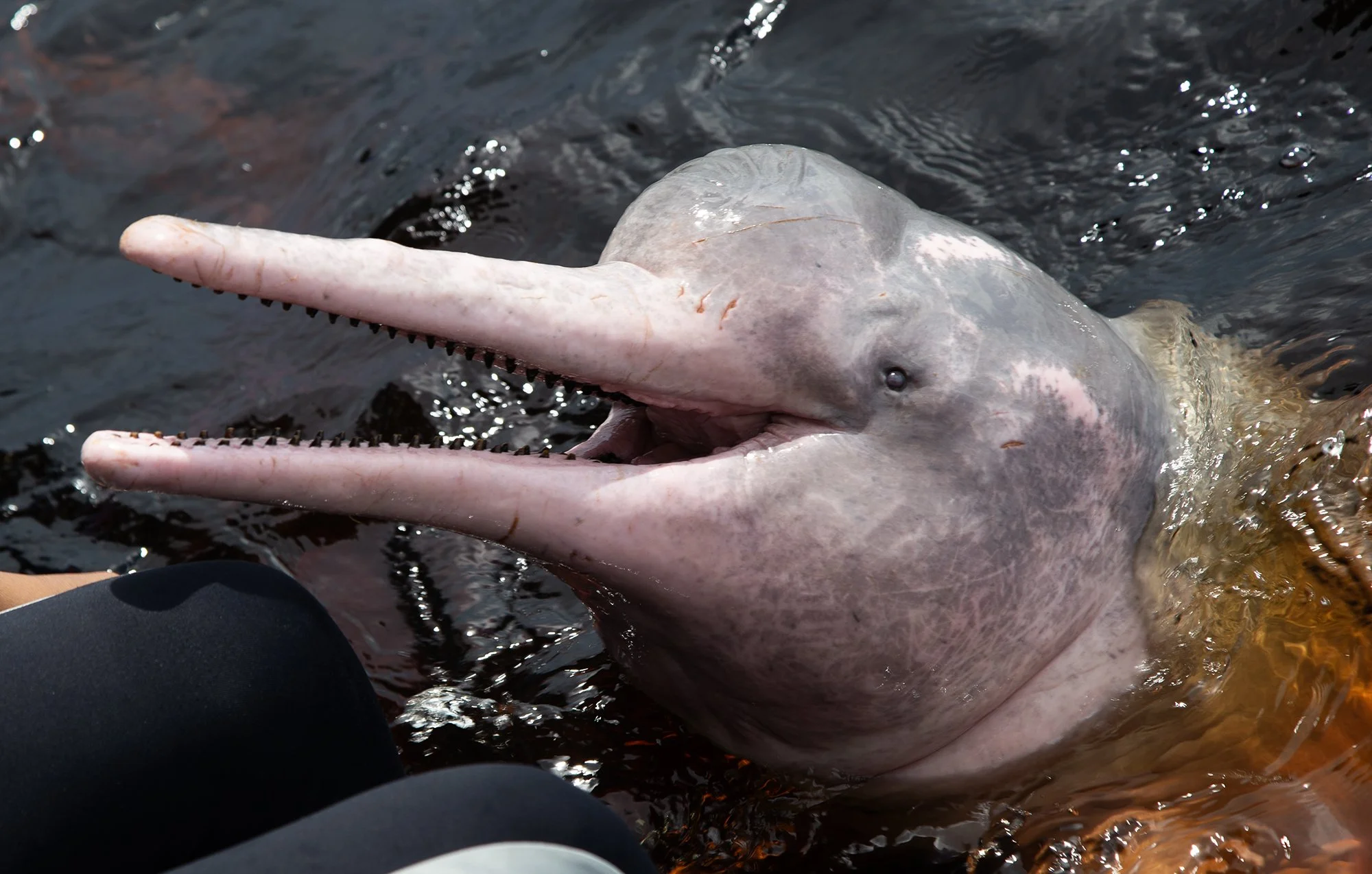
Amazon river dolphin. Angeles Estrada. CC BY-NC-SA 2.0.
There are places on this Earth covered in lush vegetation and with a plethora of unique animals, and one of the most diverse ones is the Amazon rainforest. Not only is it the biggest rainforest and river basin in the world, but it is also so biologically diverse that most of its species have still been undescribed. There’s no doubt that there are a lot of living and breathing things in the rainforest, and while it all sounds exciting and cool, many of the animals in the Amazon can be dangerous or harmful to humans, and many species are also at risk of endangerment. The rainforest is also home to some Indigenous and ethnic groups, and it’s important to learn about them so we can understand why the best way to protect their home is to leave it be.
1. Flannel Moth (Puss) Caterpillar
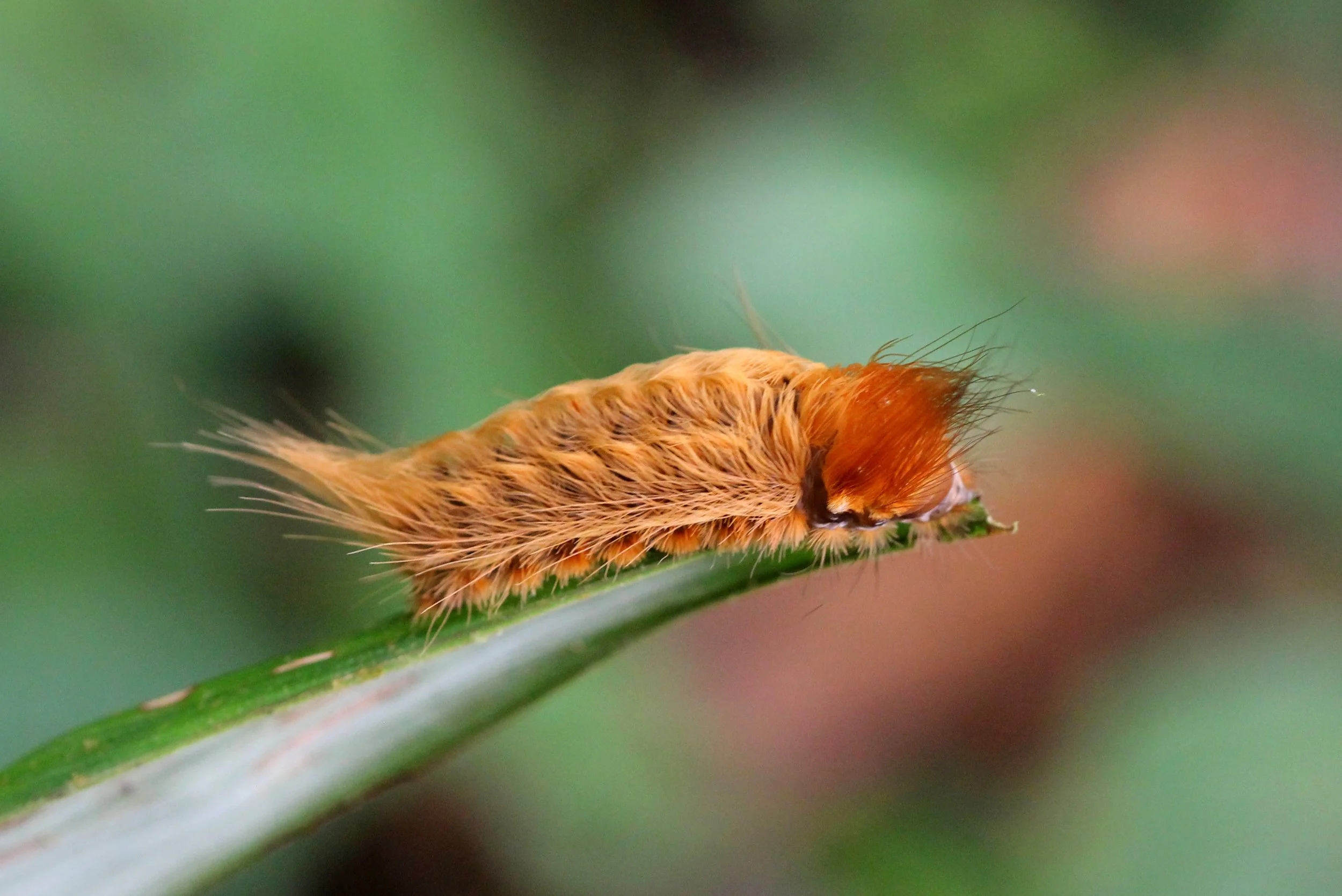
Flannel moth caterpillar on leaf. Wayne W G. CC BY-NC 2.0.
There’s a small, furry caterpillar that roams the leafy parts of the northern Amazon rainforest, but despite its cuddly appearance, interaction with the flannel moth caterpillar can be very painful. Also known as a puss caterpillar, this tiny creature only grows to be about 1-2 inches long. Its fur tends to be reddish brown, and its head is yellow, but there’s more than just fuzz to this caterpillar. Under its soft fur, there are spines with a venom gland at the bottom that, if touched by a human, can cause severe pain, such as chest pain, nausea and shortness of breath. Even larvae are venomous, but a larger caterpillar would result in a more painful interaction. A sting from the puss caterpillar has been reported to feel like a knife wound, blunt force trauma or even a broken bone. Currently, there is no record of the number of bites from flannel mother caterpillars, but Indigenous tribes that live in the Amazon have their own protection methods against insects. Some tribes create a barrier by covering their bodies in clay, while others use vegetable dyes as a natural repellent. If you ever encounter a flannel moth caterpillar, it’s best to watch from afar to prevent any painful accidents.
2. Blue Poison Dart Frog
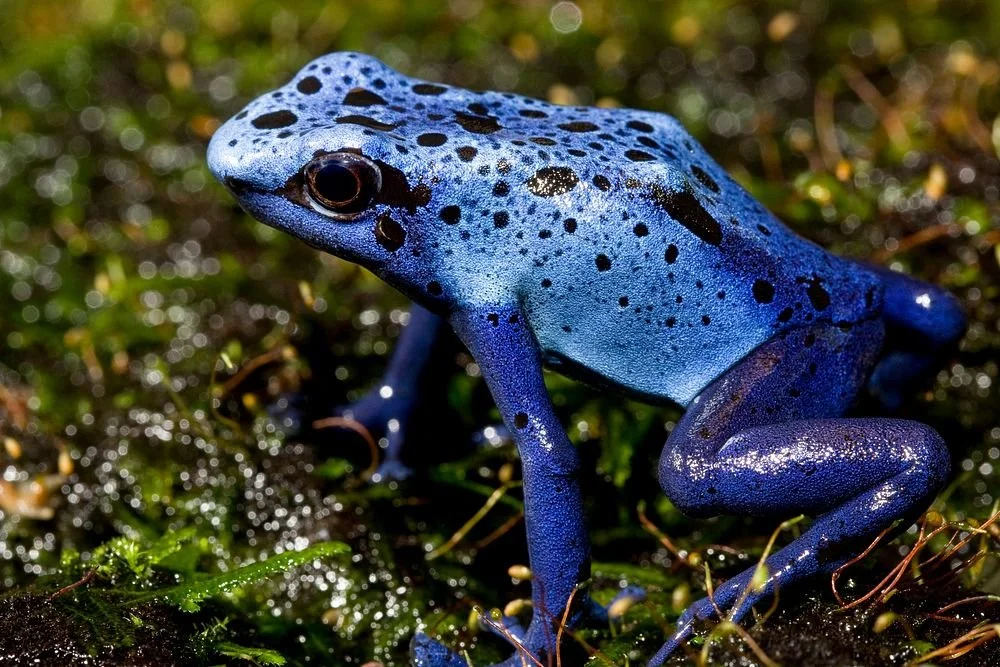
Blue poison dart frog. Smithsonian Institution. CC0.
These small, 2-inch poisonous frogs have light blue upper bodies, dark blue limbs and unique patterns of spots, which act as fingerprints that differentiate each frog. They have mostly smooth skin that contains toxic compounds, dangerous for humans and prey alike, possibly causing paralysis or death if consumed in high amounts. Interestingly enough, blue dart frogs don’t maintain the toxins on their own; the toxic compounds in their skin derive from the high percentage of toxins present in the prey they consume. There are currently no reported human deaths from poison dart frogs, but there’s also no antidote. This frog species may be hard to spot since they prefer to hide among mossy rocks and water, often being territorial and bold, resorting to frog chases and even wrestling with each other. They keep to themselves, but when necessary, blue dart frogs won’t go without a fight.
3. Amazon River (Pink) Dolphin
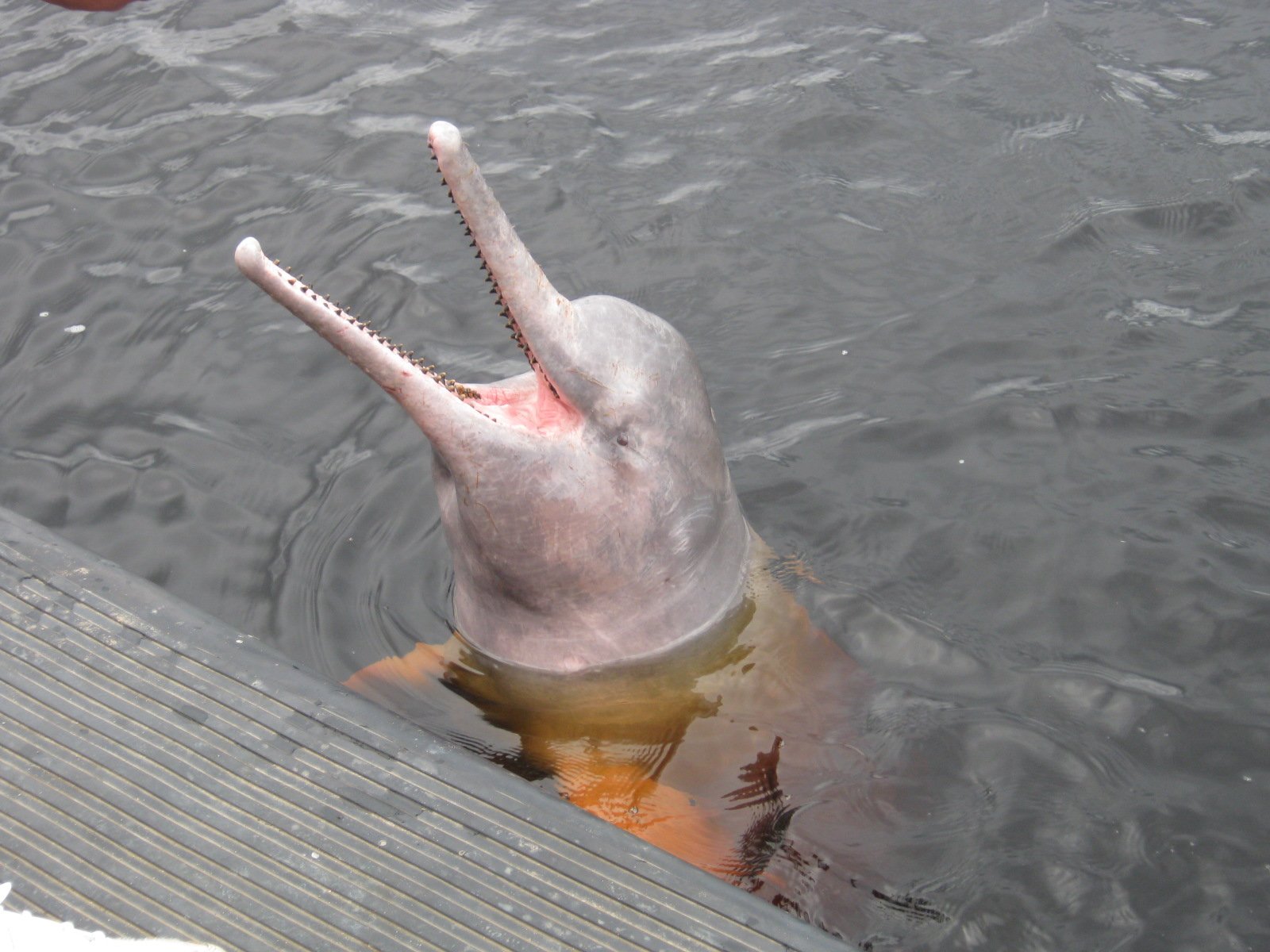
Amazon river dolphin. Jorge Andrade. CC BY 2.0.
The dolphins we know tend to be gray and live in the ocean, but there are also freshwater species, like the pink Amazon river dolphins. They’re originally born gray, but they turn pink as they mature and get even pinker if they grow scar tissue. They can be up to 9 feet long and almost 400 pounds, making them the largest river dolphin species. Similar to other kinds of dolphins, pink dolphins use echolocation, a production of sounds through air spaces in their head, allowing for sounds to be echoed back to them. This unique sensory ability is used to find food when conditions make it hard to see and identify predators from long distances. They also have very flexible necks that turn up to 180 degrees, a trait that helps them move through the water swiftly and efficiently to find prey. Pink dolphins appear playful and curious because of their sudden pivots and ability to swim backward and upside down, making them a fun animal to observe.
4. Glasswing Butterfly
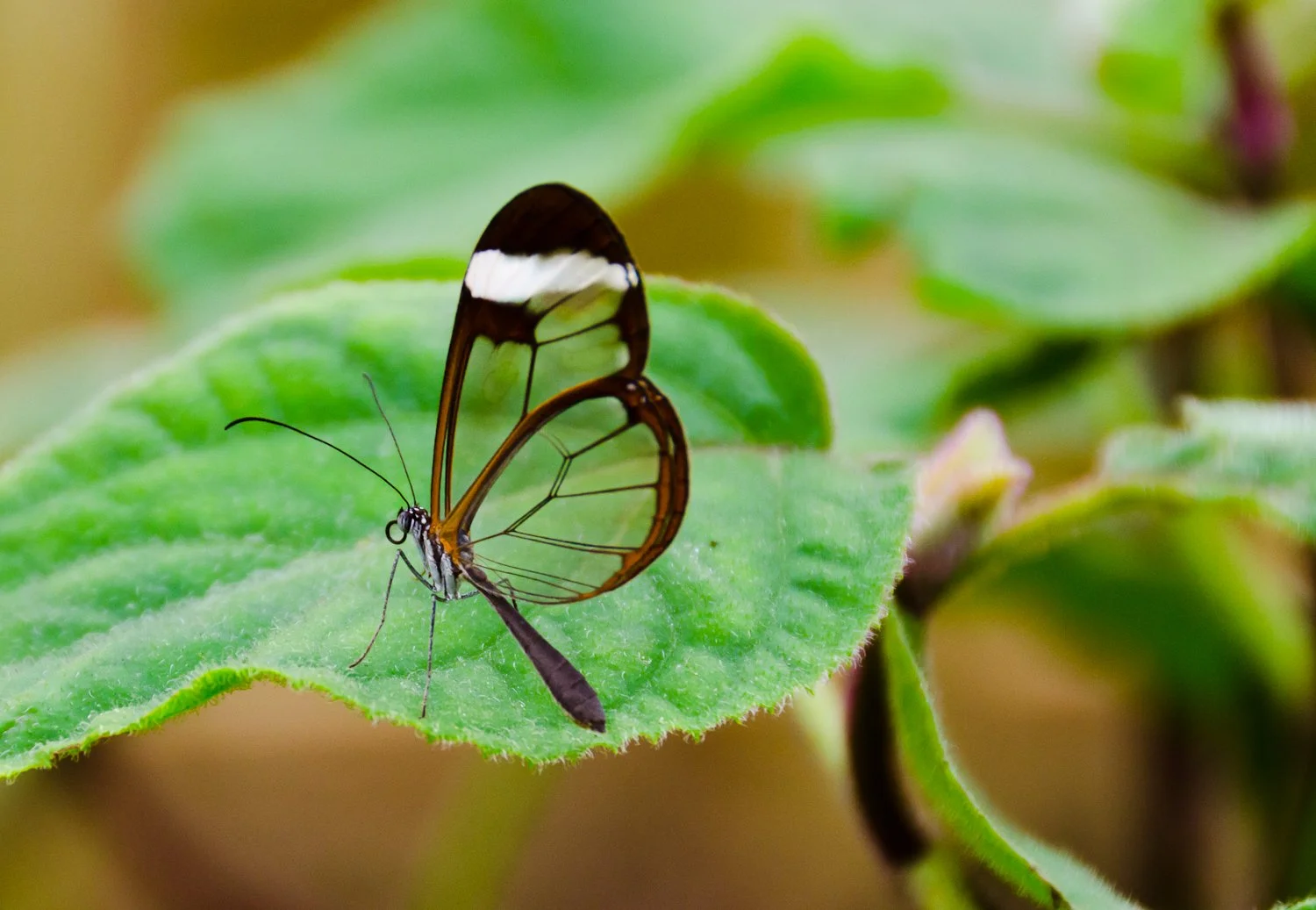
Glasswing butterfly on leaf. Scott Wylie. CC BY 2.0.
They may be hard to spot, but the glasswing butterfly can be found near the flora of the rainforest. Its wings are mostly transparent because the tissue between its veins has no colored scales, which is what gives other butterflies their color. This butterfly is quite small, only growing to be a little more than an inch. As enchanting as they are, glasswing butterflies store toxic alkaloids extracted from the poisonous flowers they consume, thus making them a threat to predators. The alkaloid compounds they carry could cause liver damage, or in the worst cases, death, to a human if someone were to consume one. Their toxicity and hard-to-see wings make it difficult to be eaten or even seen by flying birds. If a human were to simply touch one, nothing would happen because the toxins are only fatal for predators, but they could make you sick if ingested.
5. Eyelash Pitviper Snake

Eyelash pit viper snake. Geoff Gallice. CC BY 2.0.
There are many snakes in the Amazon, but the eyelash pit viper snake is quite eye-catching, with its bright-colored body and enlarged, eyelash-like scales by their eyes. This snake comes in different widths and reaches up to 2 1/2 feet in length. Eyelash pit vipers can be yellow, green, gray-brown or even have some red tint, along with some spotting on their bodies. They are often found in middle to lower elevations of the rainforest in bushes, trees and other plants near water sources. They generally come out at night to hunt for prey, using heat-sensitive pits on their face and their “eyelash” scales to blend into the vegetation and confuse prey. These snakes are venomous, but they’re not considered aggressive since bites and fatality are considered somewhat rare. Neighboring countries like Costa Rica see more frequent eyelash pit viper bites, but they are almost always resolved with antivenom.
6. Goliath Birdeater Spider
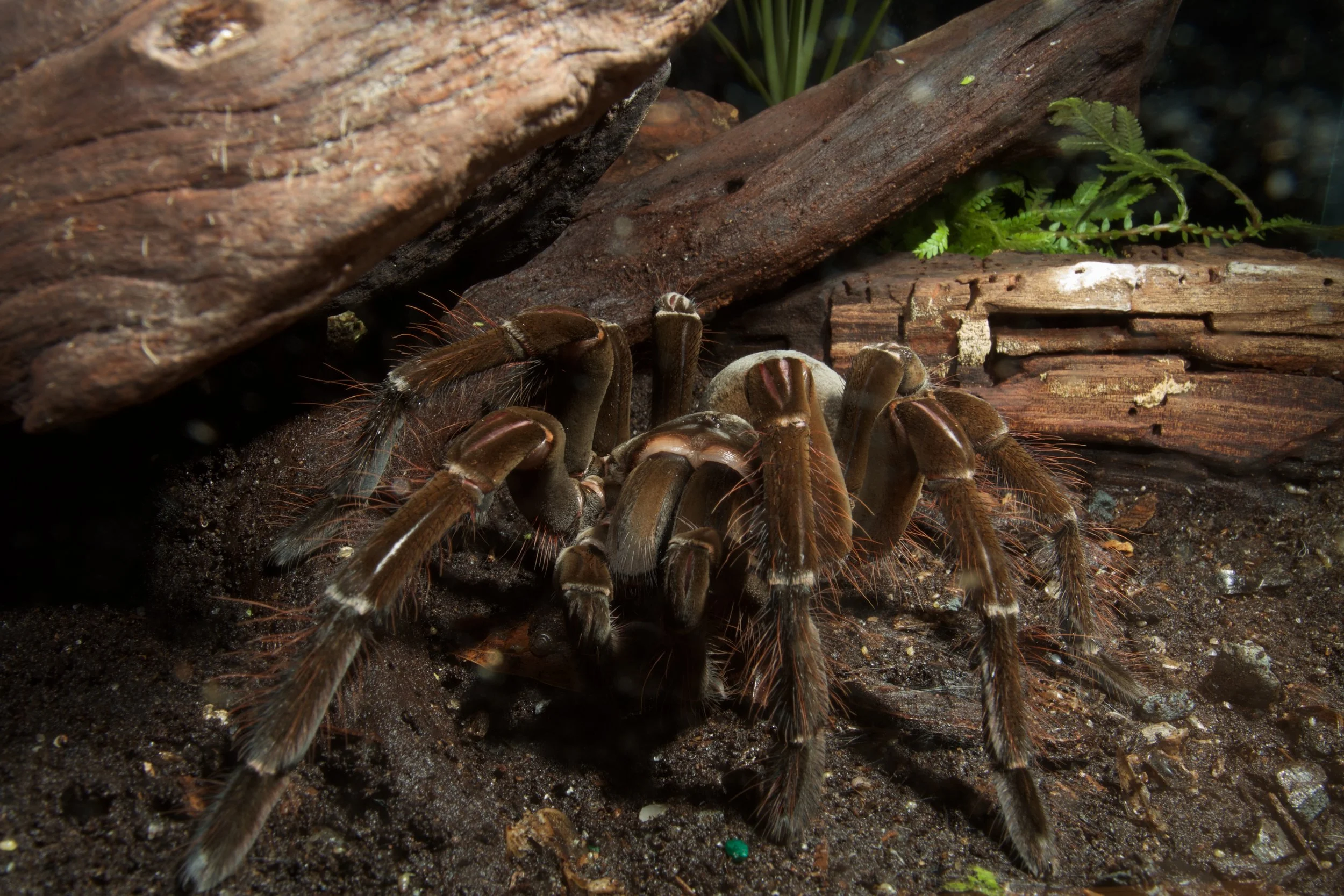
Goliath birdeater spider. Brian Gratwicke. CC BY 2.0.
As one of the largest tarantulas in the world, the Goliath birdeater spider resides in the Amazon, with its body measuring up to 4.75 inches and its leg span reaching 11 inches. This brown spider has a few defense mechanisms, including its hair; when it rubs its hairs together, it makes a loud hissing noise you can hear from 15 feet away. Their hairs can also loosen enough for the goliath spider to fling them at predators. They also have large fangs filled with venom strong enough to kill small prey or scare predators away. And they’re not called birdeaters for no reason. The goliath can eat small mammals and reptiles, like birds, mice, frogs and invertebrates. Spiders may be considered creepy by many, but it's undeniable that their biology and behaviors are distinct.
7. Emperor Tamarin Monkey
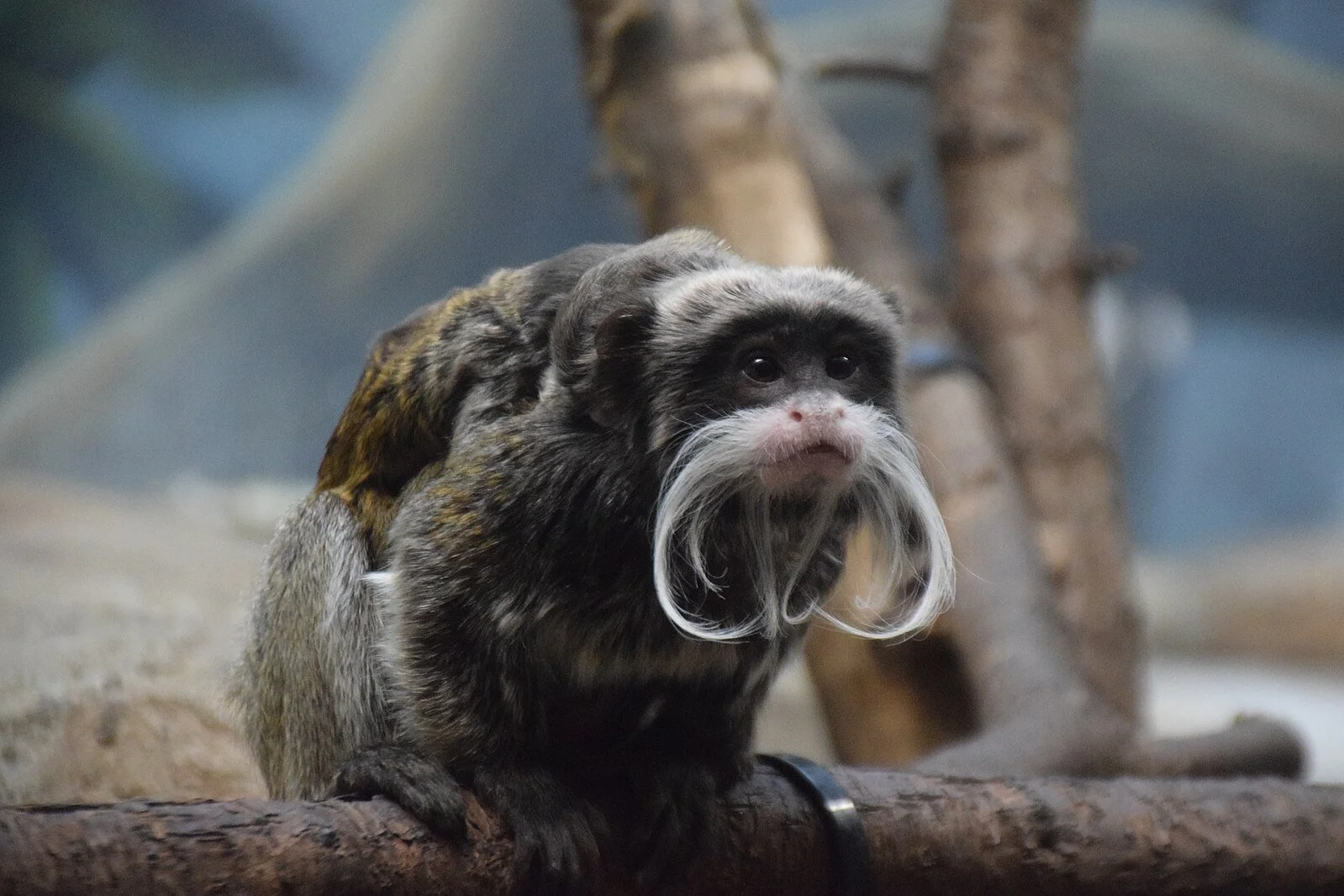
Emperor tamarin monkey. Archisarey. CC BY 4.0.
Believe it or not, mustaches aren’t only for humans; some animals, like emperor tamarin monkeys, have mustaches, too! It isn’t for aesthetic purposes, however, and is used as a form of identification between the species. The emperor tamarin is relatively small, with long white whiskers that resemble a mustache and a tail longer than its body. Its face and ear fur is dark compared to the rest of its mostly gray body, with some red, white or golden fur sprinkled around. This monkey is usually found in groups of two to eight, but groups can reach 15 members. Sometimes emperor tamarins live with other types of tamarin monkeys and help each other against predators. Because of their small size, they’re impressively agile and capable of effortlessly traveling through the trees, another way to evade predators and continue being their playful selves.
The Amazon’s wildlife and ecosystems face many threats from deforestation, climate change and resource extraction. Scientists warn that nearly a third of the forest could vanish by 2030, endangering species, like pink river dolphins and blue poison dart frogs, and destabilizing global climate systems. Protecting the Amazon isn’t just about preserving biodiversity—it’s about safeguarding one of Earth’s most vital lifelines. From mindful consumer choices to amplifying the voices of Amazonian peoples, individuals can play a role in ensuring this rainforest, and the life it sustains, endures.
GET INVOLVED:
The World Wildlife Fund helps conserve natural resources for local communities and has multiple ways for people to help, including volunteer work, petitions urging corporations’ attention and daily individual changes you can make to help environmental conservation. The Amazon Conservation Team is a nonprofit organization that works directly with local and Indigenous communities to protect and conserve the Amazon rainforest, accepting donations here.
Evelyn Garcia Medina
Evelyn is a recent Chicana graduate with a B.A. in English and Comparative Literature. Born and raised in the Bay Area, she draws inspiration from her passions: her cultural roots, environmentalism, and human rights. In her free time, she goes on hikes and enjoys learning about current social issues, history, and animals.