
Moroccan food is known for its warm spices and magnetic aroma. When walking the streets, just passing by food stalls, restaurants or a home kitchen will make your stomach growl.
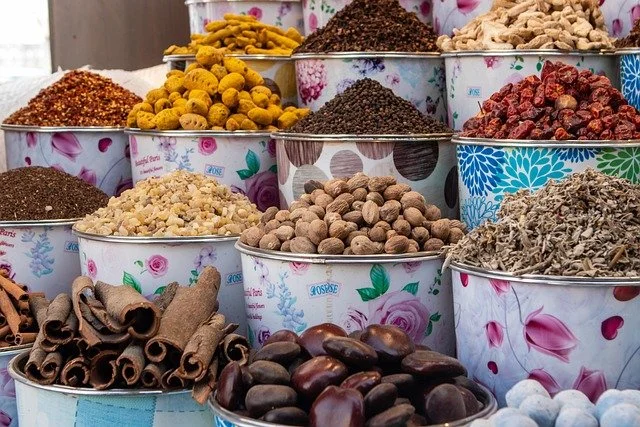
Spices in Morocco. FlorianJung. Pixabay.
Local Cuisine and Popular Dishes:
Moroccan cuisine often uses warm spices, like cayenne, cinnamon, turmeric, ginger and cumin, as staples, giving the dishes a warm and hearty feel. Lamb and couscous are common ingredients, with many dishes rotating around their incorporation. Expect to find varieties of soups, warm breads, stews and grilled meats, each one more delicious than the next.
Since Morocco is a Muslim country, most of its residents abide by halal standards. When it comes to food, this means that you will most likely not find pork meat or other pork products. While not prohibited, alcoholic beverages are not consumed by those who consider themselves halal, and so they will be easier to find in more touristic areas as opposed to more remote or local spots.
Moroccan food may vary from region to region, but here are some of the most popular dishes you might find:
Tagine/Tangia:
Tagines typically refer to a slow-cooked meat stew in a clay pot. Tangia is specific to Marrakech and refers to a stew built with lamb, spices and sometimes dried fruit.
Couscous:
This steamed grain may be served under almost anything, such as meat or vegetables, and is typically eaten every Friday by Moroccan families.
Msemen:
Msemen is a flatbread. It is served warm and can be filled either savory or sweet. Msemen with honey could be eaten for breakfast, while a filling with veggies or meat makes it a heartier meal or midday snack.
Bisara:
Bisara is a soup made from fava beans. It is seasoned warmly, with turmeric, paprika and cumin. This creamy soup will heat you up on a chilly winter day, though it is often enjoyed at all times of the year.
Mint tea:
Mint tea is everywhere in Morocco. Often served as a warm gesture of hospitality, a hot cup of mint tea will soon resonate deeply with your Moroccan experience. It is fresh, soothing, warm and deeply tied to the culture.
Unique food and drink experiences you can’t miss:
Eating in Morocco is delicious in whichever avenue you wish to go to. Each meal is bound to be unforgettable, whether in a restaurant, at a street food stall or in your accommodation., If you’re lucky enough, you might even enjoy a home-cooked meal in someone’s home.
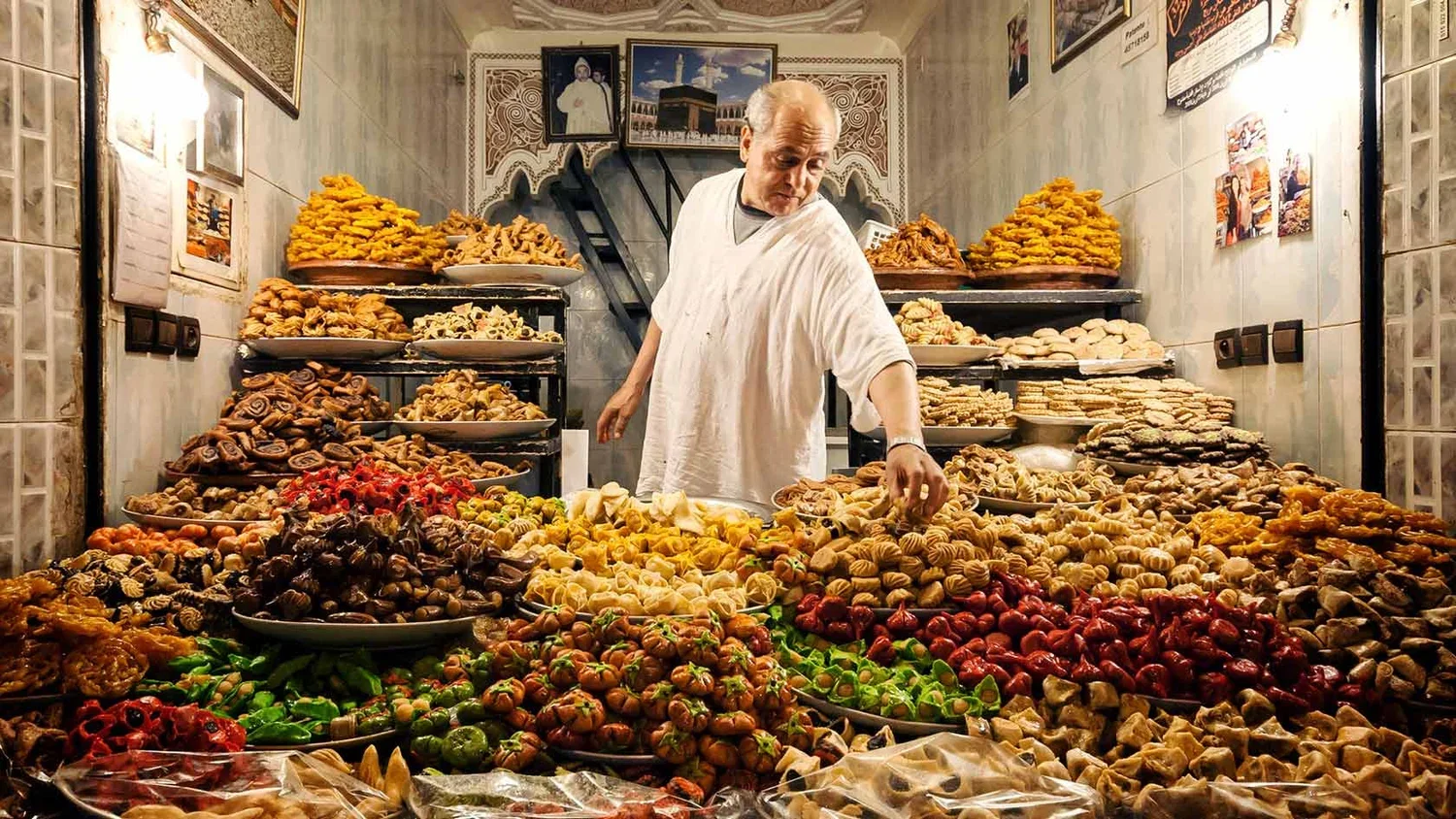
Food stall in Marrakech. Afcone. CC BY-ND 2.0
A trip to Marrakech isn’t truly complete without indulging in street food. Out in the square, you might find some of the most delectable culinary experiences and be completely immersed in the local life. Some popular street foods are tagines, grilled meats, beef kefta, skewers and kebab. If you’re feeling adventurous, try some snail soup, a local delicacy.
→ For an unforgettable food experience, book a street food tour. We recommend an evening tour, as the markets really come alive after dark. The guides will direct you to the best places to go and help you navigate the squares.
Recommended restaurants and cafes:
In Morocco, though local food is abundant and insanely delicious, you can find restaurants offering food from every corner of the world.
Al FASSIA Gueliz, located in the heart of Marrakech, is a restaurant highly coveted by many. Serving traditional Moroccan food in a beautiful setting, this dining experience is elevated and delectable. Try one of the many varieties of tagine offered. Prices typically range between 50 to 260 dirhams (US$5-$27).
In Casablanca, enjoy a variety of cuisines. Try La Sqala for traditional Moroccan dining in a beautiful location. Prices range between 75 to 210 dirhams (about US$7-$22)
Le Tanjia is a lovely restaurant specializing in traditional Moroccan food and known for its lamb tagine. Located in a several-story riad, many rave about its rooftop and enjoy looking out over the lively streets while enjoying dinner. As well, often in the evenings, there might be a dance performance, bringing both dinner and a show. Prices range between 50 to 190 dirhams (US$5-$20).
Stop in at Salut Maroc, the beautiful seaside restaurant in Essaouira. With great vibes and even greater food, enjoy locally caught seafood and traditional Moroccan meals. Plan your dinner for the sunset to enjoy the best views here.
Folk Marrakech is also located in Gueliz in Marrakech, offering traditional Moroccan cuisine. The restaurant features a cozy, warm yet elegant interior. And, with nightly dance performers or live music, Folk is a guaranteed lively atmosphere. Meals range from 50 to 260 dirhams (US$5-$27).
Try Mediterranean food in Rabat at the lovely Paros cafe. Feel like you’re stepping into Greece with the cafe’s curated design and menu.
Dietary restrictions and preferences:
Attracting many international travelers with a developed restaurant scene, the major cities in Morocco are very used to dietary preferences and restrictions. When going out to eat, as long as you communicate your dietary needs and preferences, it is very likely that they may be accommodated. If you have serious food allergies or strict dietary preferences, maybe exercise a little extra caution at street markets or food stalls, where they may not have the same facilities, to avoid contamination. We recommend learning some phrases or writing them down to accurately communicate your allergies and restrictions.