
Patagonia spans over 260,000 square miles of Southern Chile and Argentina. Among this vast expanse of land, the region encompasses a wide variety of climates, from glaciers and fjords to rainforests and deserts. The region has an interesting history, first inhabited by nomadic Indigenous tribes who made a home among this vast and harsh landscape, but it was later explored by European settlers who introduced ranching, which is now present in contemporary “estancia” culture. The cultures of some European settlers have stayed in the region, as is evident in the Welsh settlements in the Chubut Valley. Travelers have been coming to the area for its world-renowned hiking, fishing, kayaking, and vibrant culture; with millions of visitors a year to the region, Patagonia is a must-see destination for any nature enthusiast.
Currency: Chilean Peso (CLP) and Argentine Peso (ARS)
Language: Spanish (official language); Some local Indigenous communities speak Mapuche.
Average Temperature: Average temperatures vary greatly depending on the season, region, or even time of day in Patagonia. To make a general estimate, Southern Hemisphere summer temperatures average around 60 degrees Fahrenheit, while winter temperatures average around 35 degrees Fahrenheit.
On Season: December - February
Off Season: June - August
Avg. Cost per day; Budget—Luxury: $60 - $500+
Government: The Patagonia region spans both Chile and Argentina.
Chile: Chile’s government is quite centralized, meaning that many decisions and laws are federal. There are three branches: executive with the president as head, legislative with two houses, and the judicial branch with the supreme and constitutional courts.
Argentina: Argentina’s government is a presidential democratic republic. In this, similar to the setup of the United States, there is an elected president who heads the executive branch, a legislative branch in its National Congress, and a judicial branch with a Supreme Court.
Entry Requirement: Entering Chile: Many tourists entering Chile do not need a pre-approved visa. However, you must have a valid passport that is current during your time of travel and show proof of sufficient daily funds of at least $46 USD. There are a number of methods travelers can provide proof of funds, including printed bank statements, credit cards, or cash. Upon arrival, you will be given a “Tarjeta del Turismo,” valid for 90 days.
Entering Argentina: Many tourists entering Argentina also do not need a pre-approved visa for stays of up to 90 days, however, check this based on the country that issues your passport. To enter, you must have a valid passport and proof of onward travel.
BEYOND BORDERS
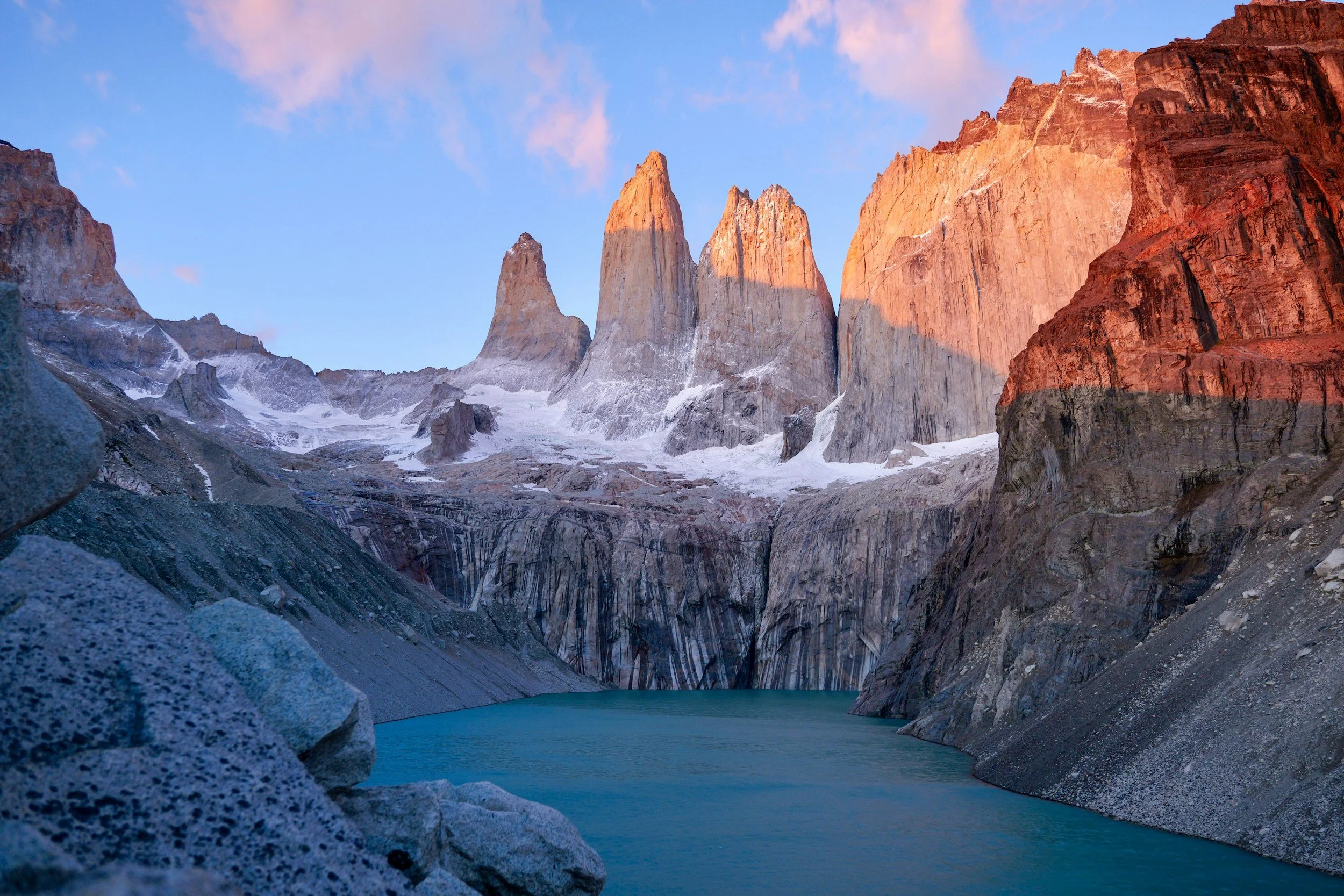
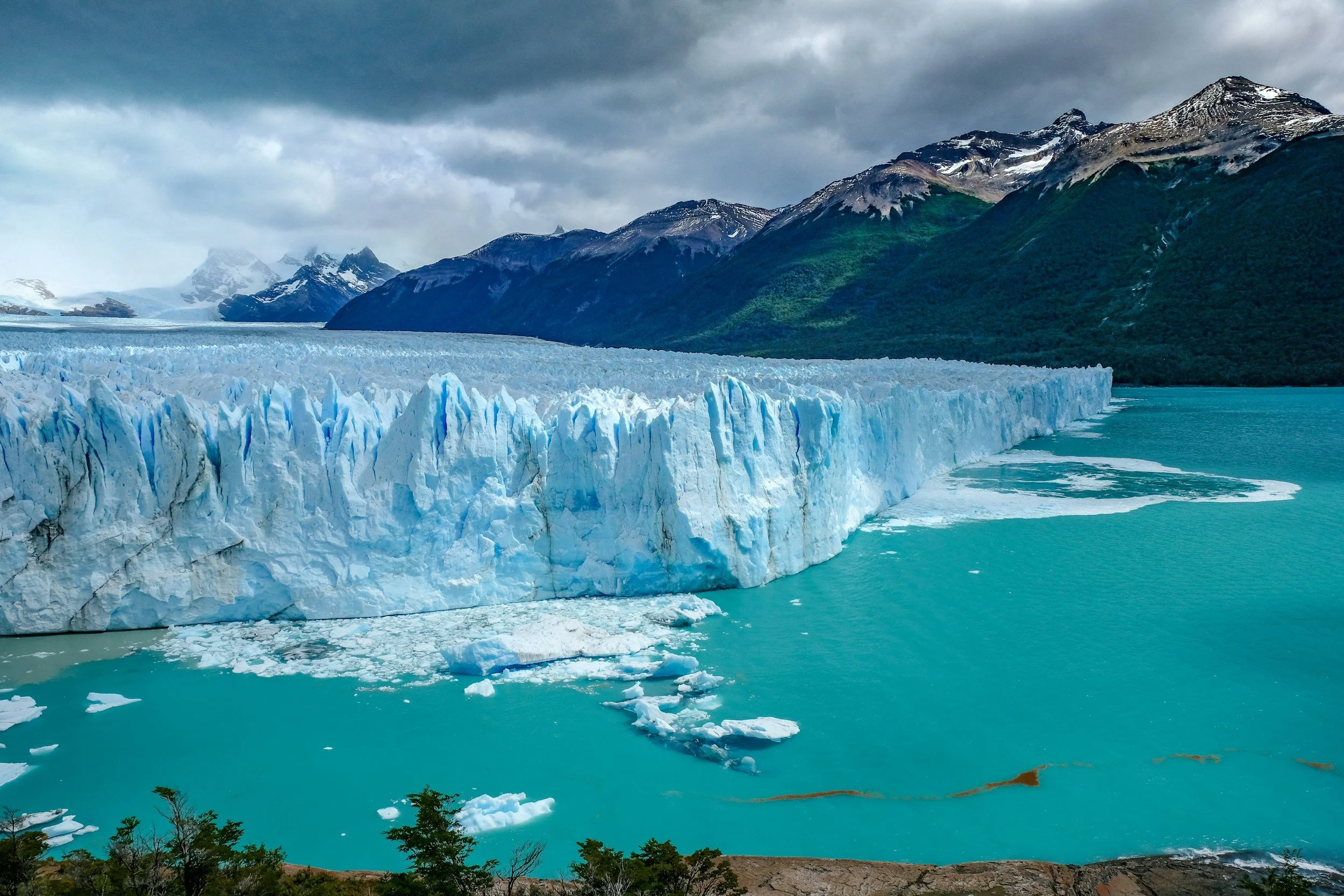
Patagonia spans much further than just the Torres del Paine National Park or Perito Moreno Glacier. The region is a massive area that covers parts of Southern Argentina and Chile. In this wide span of land, the region covers a range of climates, from deserts and mountains to farmland and glaciers.
These categorized “regions” of Patagonia are a bit dynamic, with borders that may depend on your perspective and source, though each area offers a distinct and unique flavor to Patagonia.
The Lake District: The area known as the Lake District is in the Northwestern corner, encompassing Chile and parts of Argentina. This area, in line with its namesake, is home to beautiful blue lakes, which are decorated with backgrounds of mountains and volcanoes. This region has a plethora of national parks, from Chile’s very first park: Vicente Perez Rosales, to the UNESCO Biosphere reserve of Conguilio NP. You can enjoy hiking, swimming, or beautiful boat rides in this region. See beautiful vistas in the European-feeling Bariloche, Argentina, or start your adventure to the Patagonian fjords and glaciers in Chile’s Puerto Montt.
Patagonian Desert: On the Eastern end of Patagonia, encompassing most of the Argentinian part of the region until you reach the southern archipelago, is the Patagonian Desert. This desert is considered the eighth largest in the world and is a sparsely populated expanse. Though it is not as frequently visited as other parts of Patagonia, tourists may marvel at the unique landscapes, rock formations, wildlife, and amazing stargazing.
Archipelago: The southernmost parts of both Chile and Argentina are considered the Patagonian archipelago. In these areas, discover the beautiful Torres del Paine and Tierra del Fuego national parks. Hike to your heart’s desire and revel in the natural beauty of this end of the Earth. Reach Chile’s Puerto Natales, a hub to visit Torres del Paine or check out Patagonia’s southernmost cities of Punta Arenas and Ushuaia. These areas are also known as gateways to Antarctica, if you’re considering extending your trip ;)
Fjords: The Southeastern region, between the Lakes District, Archipelago, and the desert, is the Fjord area. This region encompasses many of the fjord areas of Chile. Much of this region is quite remote and only accessible by boat, but take advantage of this beautiful scenery by hopping on a sightseeing cruise or wildlife tour!
Glaciers: Sandwiched between the fjords and the desert is the Glacier region. In this area is the well-renowned Argentinian town of El Chaltén, the gateway to Mount Fitz Roy. Or, check out the lovely town of El Calafate as your stop before heading to the esteemed Los Glaciares National Park.
Aysén region: This less-visited region of Patagonia promises stunning views and adventures you don’t want to miss. Trek through the rainforests, mountains, and lakes of the Aysén region, and you’re sure to avoid the crowds. Stop in at the capital of the region and view the beautiful town and markets of Coyhaique.
-
The best time to visit Patagonia is during the Southern Hemisphere’s Summer (December to February). This is the time when the weather tends to be the most fair, allowing you to enjoy the most of the great Patagonian outdoors. The summer is ideal for hiking, camping, and taking advantage of the long daylight hours.
The shoulder seasons, Spring (October to November) and Autumn (March to April) are great times to visit with fewer crowds, more availability, and cheaper prices. However, with the shoulder season comes shoulder weather, so be prepared with your layers to enjoy the great landscapes. Each season brings its own special character to the region, so you are in for a treat with Fall foliage and Spring’s bloom.
Visiting Patagonia in the Southern Hemisphere’s winter (May to September) is better suited for winter sports adventurers. With shorter days, tough weather, and many closures, the region tends to be best for those interested in planning a ski trip or going ice climbing.
-
Patagonia is a massive region, and navigating the area may be done via cars, shared shuttles, flights, and buses.
Flights:
There are several domestic airports around the Patagonia region. These are in Punta Arenas in Chile, and El Calafate, Ushuaia, and Bariloche in Argentina. You can connect these with flights to the larger ports of Buenos Aires and Santiago. Many choose to first fly in internationally to Buenos Aires or Santiago, then take a transfer to one of the smaller domestic airports before renting a car.
Flying tends to be more expensive, but it is a good option for quick travel over far distances.
Renting a car:
Renting a car can be one of the best methods for navigating independent travel around Patagonia. It can be essential if you are not using guides or tours to explore more remote areas, especially when public transport might not run in those areas.
Rental car prices differ based on the region and season, however, expect to pay anywhere from 80-150 USD per day for a car.
Some extra things to note when renting a car:
-Keep a careful eye on the weather. This region is known for wild and unpredictable weather, so be safe and plan accordingly.
-Four-wheel drive is best if traveling to more remote places with difficult road conditions
-If you are planning on crossing international borders in your rental car, check with the agency to be sure that you are allowed to do so. You may have to purchase a permit.
-If you are traveling in the peak summer season, book your rental in advance.
Buses:
Several long-distance bus options can be great for travelers on a budget or for those who do not want to fly or rent a car for long drives.
These bus routes cover far distances like Bariloche to El Chaltén, an over 24-hour route, or shorter, more local ones to popular attractions, like the one-and-a-half-hour journey between El Calafate to Perito Moreno Glacier. Bus fares often fluctuate depending on the distance, but may range from 10 to 80 USD.
These buses sometimes have comfy reclining seats, so you may catch up on some Z’s while covering the distance.
Although the bus system is incredible, note that buses do not run everywhere in Patagonia. Be sure to check out the bus routes before you plan your trip, and note that buses may not be in the more remote areas.
If traveling in peak season, plan and book your buses early. The buses do not run frequently and may sell out. You can buy tickets in person at bus stations, online, or through travel agencies. Your hotel may also be able to help you with booking tickets.
Shared Shuttles:
Shared shuttles are somewhat similar to buses, however often more direct and expensive, and with more possible routes. They often will not run the long distances that the buses may, but are a great option for getting around within a region. Some examples of a route shared shuttles may take include traveling between the airport of Punta Arenas and the town of Puerto Natales, or between El Calafate to El Chaltén.
You may book shared shuttles through your accommodation, local travel agencies, or online. Shuttle prices vary by route, but you can expect to pay anywhere between 10-50 USD.
Some backpackers on a budget have been known to hitchhike around Patagonia. If you are planning on hitchhiking, be sure to have a safety system in place, with someone who knows your plans and estimated timing.
-
Language:
Though English is spoken in large tourist hubs, knowing a bit of Spanish will go a long way when traveling through smaller towns. Speaking Spanish may allow you to get to know locals who speak limited English — these connections can be some of the most beautiful things about traveling.
Here are some Spanish phrases that may be helpful. The links will take you to Google Translate, where the speaker button will provide these Spanish translations:
Hello- Hola
Good morning: Buenos Días
Thank you– Gracias
Where is the bathroom - Dónde está el baño?
How much does it cost? - Cuánto cuesta?
Please- Por favor
Where is…. – Dónde esta…
I need… – Necesito…
Can you help me?- Me puede ayudar?
Do you speak English? – Usted habla inglés?
-
Cultural etiquette:
A good rule of thumb when traveling in Patagonia, and anywhere, is to be polite. Warmth and kindness will get you a long way — greet those around you, ask before doing something if you are unsure, and take it all in.
When dining out or using guides with your tours, know that tipping is common. The tipping percentages are not as much as they might be in the U.S., but you may typically leave a 10% tip on meals at a restaurant and a small tip for your guides.
When enjoying the beautiful parks or nature, be sure to pack out trash with you. You do not want to leave anything behind but your footprints.
Be friendly, enjoy the different pace of life, and take it easy — you’re in Patagonia!
-
While credit cards are often accepted in larger towns, carrying cash is advisable. Small notes of cash are useful for bus fares, entrance tickets, or camping fees. Cash can also be essential in more remote areas.
If you are bringing USD or Euros with you to exchange for local currency, the bills must be clean and not ripped. Larger bills tend to have better exchange rates, but smaller USD notes can be spent as is when tipping or for small fees in Argentina. Many recommend bringing cash for exchange rather than using the ATMs to withdraw, as there may be heavy ATM fees or they are often known to run out of cash in the touristy areas.



-
Patagonia has long been renowned as a great destination for solo travelers. The great expanses of nature are a beautiful environment to get outside and relax. As a solo traveler, and for solo female travelers, we recommend staying vigilant of your items in the busier touristy areas, as some petty crime may occur. If you are headed out on a big hike alone, be sure to keep someone aware of your plans and estimated time of return. Carry all necessary outdoor gear to prepare for a safe hiking/camping/biking experience.
-
Patagonia is regarded as a welcoming place for 2LGBTQIA+ travelers. Same-sex marriage is legal in both Chile and Argentina, and the countries’ capitals have thriving LGBTQ+ communities. In smaller towns, PDA is not always typical, and more remote regions may be more conservative than the more touristy areas.
-
Patagonia is regarded as a generally safe destination for Black travelers. Patagonia is a region that attracts tourists from all over the world, with the larger cities growing in diversity. Still, the more remote areas may lack some diversity, which sometimes results in curiosity or ignorance from locals. This may manifest in questions or stares, but likely without poor intent. The region remains very safe for all travelers with low crime rates.
-
Although Patagonia is known for its rugged terrain and hiking trails, which are barriers to many with physical disabilities, some inclusive tour companies have partnered with wheelchair manufacturers to create experiences that allow all to explore Patagonia. Wheel the World offers trips designed for those with physical disabilities and has specific chairs that have been made for Patagonia’s rugged terrain and trails. As well, some major attractions in the region have updated their accessibility. For example, the Perito Moreno Glacier has an accessible viewing platform, allowing those with different mobility needs to check out the beautiful scenery!
TRIPS
Patagonia

EDITORS PICKS
Patagonia