
Zoe Lodge
As travel to the barren continent increases, travelers and agencies are rushing to shape Antarctica as the face of “rugged luxury.”
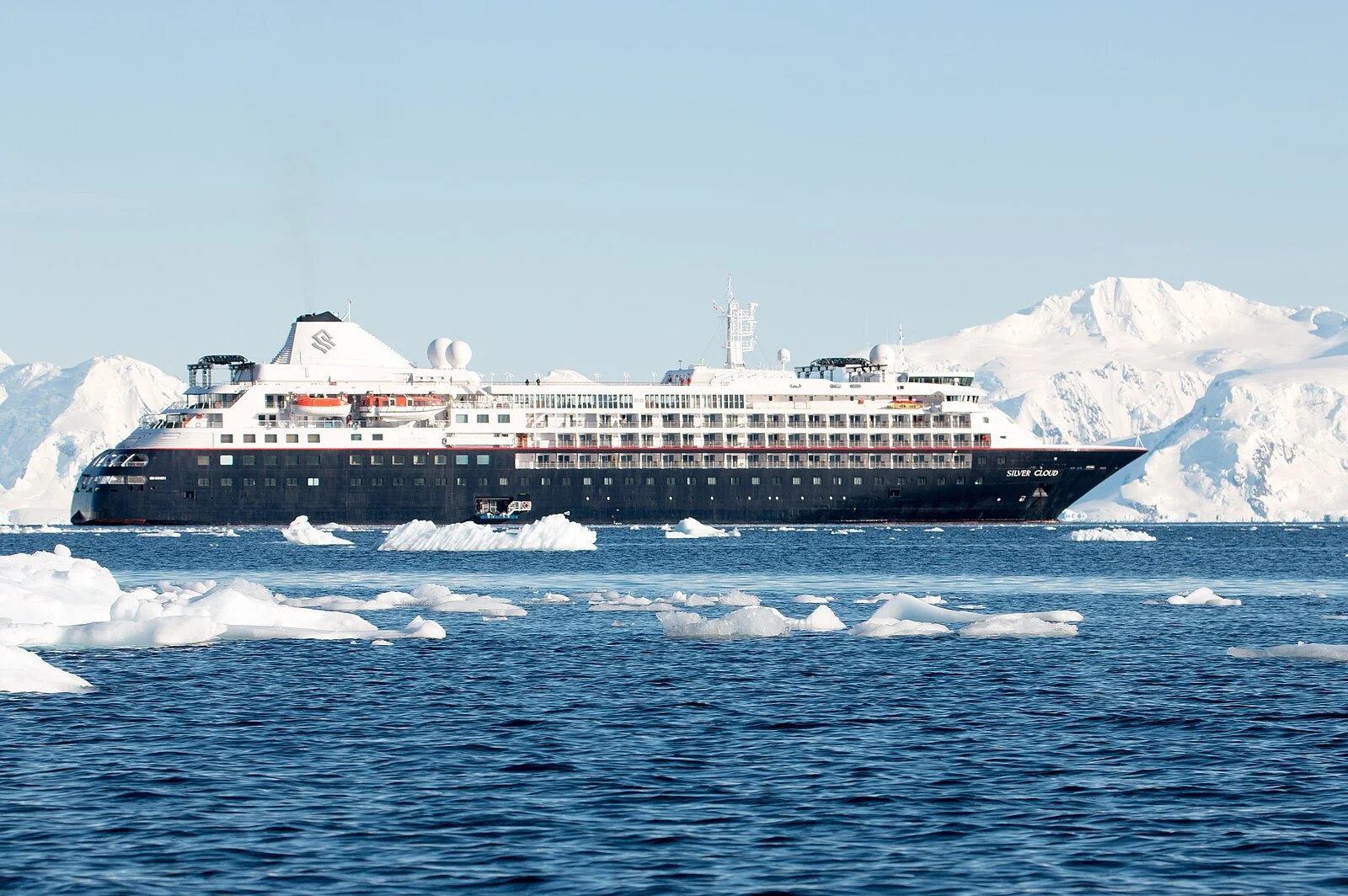
A cruise ship in Antarctica. Gary Bembidge. CC BY 2.0.
Antarctica, for so long known only as a frozen continent reserved for scientists and survivalists, has quietly become one of the world’s most exclusive travel destinations. Once accessible only through national research programs, the southernmost continent has unlocked a new demographic: luxury travelers willing to pay high prices for the chance to experience the true wilderness. This emerging form of “rugged luxury” attempts to combine adventure, comfort and environmental responsibility, an unusual combination that reflects the ever-changing trends and priorities of modern travel.
The journey to Antarctica begins long before a traveler steps onto the ice. Most expeditions depart from the southernmost locations of Ushuaia, Argentina or Hobart, Australia, where small groups board ice-strengthened vessels or ultra-luxe expedition ships outfitted with amenities that rival boutique hotels. These ships are designed to operate in volatile Southern Ocean conditions. Inside, guests find heated suites, curated tasting menus, hydrotherapy spas and expert-led lectures on glaciology, marine biology and conservation policy. Though travelers are headed to a destination that expects many to be humbled by nature, they also expect unrivaled comfort along the way.
What makes Antarctica unique as a high-cost travel destination is that the experience is not built around consumption but immersion. Daily excursions bring visitors face-to-face with vast ice shelves, colonies of emperor and gentoo penguins and pods of humpback whales weaving between floes. Guided by naturalists and polar researchers, guests learn how to read the landscape from the bluish tint of compressed glacier ice to the shifting patterns of sea ice that support entire ecosystems. These trips prioritize learning and environmental awareness, a departure from traditional luxury tourism that often centers on privacy or indulgence.
Quark Expeditions is an agency that offers tours via boat and helicopter, focused on providing a range of expeditions for any traveler, with one ship focused on scientific missions and others fitted with deluxe amenities. These expeditions tend to be pricey when done right, with Quark’s ranging from $12,000 to $40,000 per person, varying based on length and type of expedition. Larger companies, like Viking, also offer cruises to Antarctica, starting at $13,000 with airfare included. Lindblad Expeditions is paired with National Geographic to bring travelers and scientists to the remote continent, and it is also known for bringing the first group of travelers to Antarctica over fifty years ago.
Tourism operators in Antarctica work under strict regulations set by the International Association of Antarctica Tour Operators. These guidelines protect the continent’s fragile ecosystems and require companies to maintain small group sizes, minimize wildlife disturbance and follow rigorous biosecurity procedures. Because of this structure, travel companies increasingly collaborate with scientific teams, offering logistical support, sharing observational data or funding specific research initiatives. Some itineraries even allow travelers to assist with simple data collection, like photographing whale flukes or logging bird sightings for population studies, providing a sense of purpose beyond sightseeing.
However, the increasing environmental impact has raised concerns, including flights to departure ports, fuel-intensive sea crossings and specialized equipment that collectively create a significant carbon footprint. As a response, many companies now incorporate carbon-offset programs directly into their bookings. These offsets fund reforestation efforts, clean-energy projects or coastal ecosystem restoration, an attempt to counterbalance the emissions generated by polar travel. While not a catch-all solution, their integration indicates that travelers are becoming more aware of the environmental cost of luxury travel, and the industry is adapting to meet those expectations.
Despite its rising popularity, traveling to Antarctica remains inaccessible to most, both financially and logistically. For travelers who do make the journey, Antarctica offers something few destinations can match: a glimpse into a world that feels untouched, where icebergs the size of cathedrals drift across silent bays and the horizon seems impossibly wide. It is a place that reminds visitors of their smallness, their impact and their responsibility.
GETTING THERE:
There is a range of operators offering voyages to Antarctica, varying from outdoor expeditions to lush accommodations. Though often expensive, there is also a range of prices accessible to as many travelers as possible.
G Adventures is known as a leader in small group travel and offers voyages to Antarctica. The lower end starts at approximately $7,000 per person for 11 days and spans to the high end of $20,000 for over 20 days.
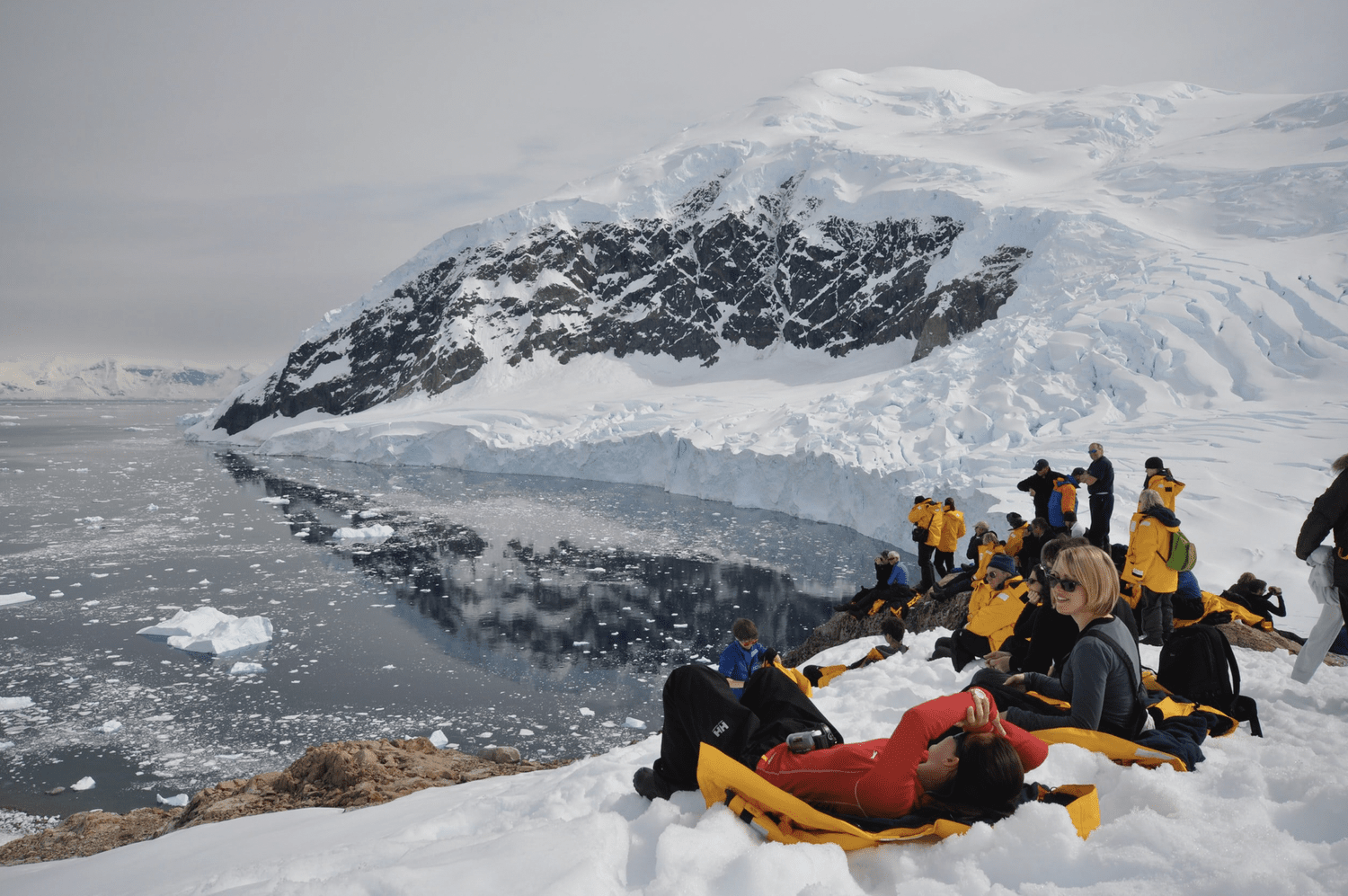
Quark Expeditions is for the more adventurous type, offering a blend of boat and helicopter expeditions to Antarctica that include charter flight and hotel prices from $11,000 to $37,000 per person, varying based on location and type of expedition. Quark is unique as it is solely focused on the polar regions.
Poseidon Expeditions offers wildlife and adventure-focused expeditions, sailing between the Southern Ocean and the Antarctic Circle at $10,000 to $16,000 per person for nature sightings, camping and kayaking opportunities.
Ponant is a French company focused on small-ship luxury expeditions, offering comfortable elegance when enjoying the views of the icy continent. Ponant cruises range from $17,000 to $25,000 per person, which includes luxury accommodations, such as high-end dining on board.

Zoe Lodge
Zoe is a student at the University of California, Berkeley, where she is studying English and Politics, Philosophy, & Law. She combines her passion for writing with her love for travel, interest in combating climate change, and concern for social justice issues.