
Julia Kelley
From enjoying mooncakes in China to throwing marjoram in Iran, cultures worldwide commemorate abundant harvests through traditional customs, family gatherings and celebrating nature.
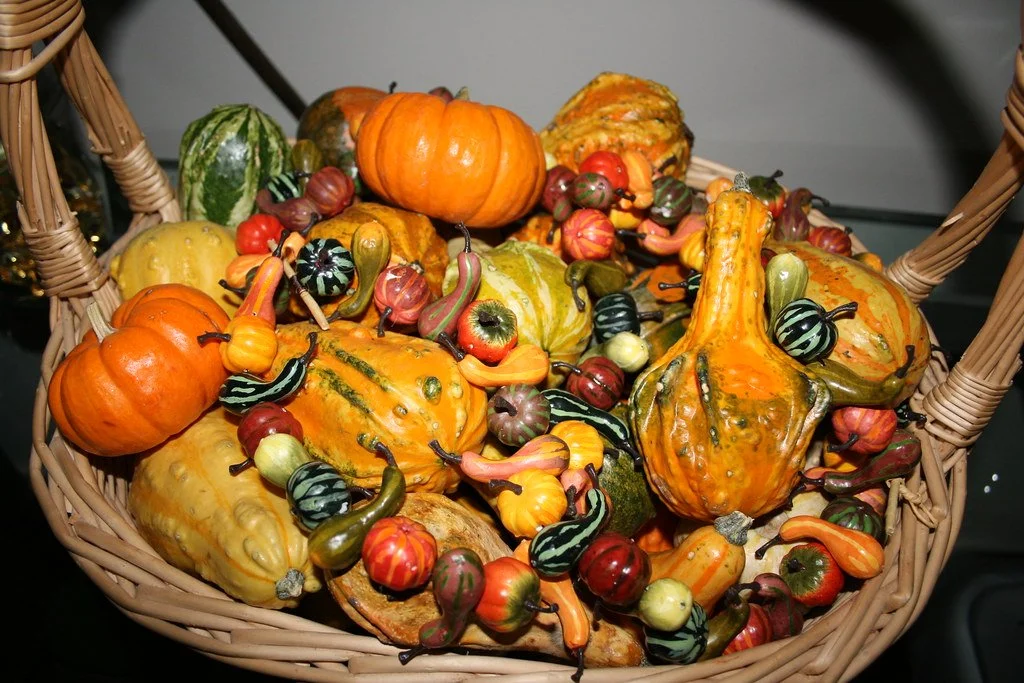
American Thanksgiving decor. Alasam. CC BY-NC-ND 2.0.
One of the most well-known annual holidays in the United States and Canada, Thanksgiving has been a cultural staple since both countries’ origins. Conventionally marked by an abundance of food, such as roasted turkey, mashed potatoes and green beans, the day has long symbolized giving thanks for a bountiful feast. This tradition is not limited only to North America, however, as cultures all over the world express gratitude through harvest festivals in a similar fashion. From Asia to the Caribbean, different places celebrate community gathering and crop yields according to their respective customs. Many fall under periods of seasonal transition or during the autumn months in commemoration of family, friends and giving thanks for the natural world.
1. The Mid-Autumn Festival, China
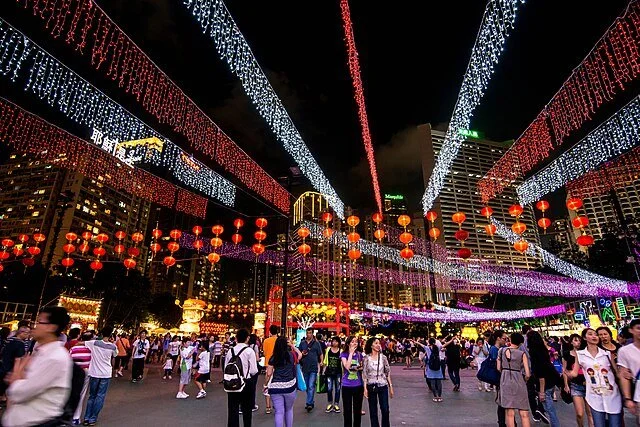
Mid-Autumn Festival lanterns. Alex Ho. CC BY-SA 2.0.
In several parts of Asia, particularly China, many people celebrate the Mid-Autumn Festival. The holiday annually falls during the autumn months on the 15th day of the eighth lunar month, according to the Chinese lunar calendar, when the moon is projected to be the fullest and brightest. This year, it will be held on October 6, during which families will celebrate the moon together through reunion dinners, and farmers will commemorate their harvests. For over 3,000 years, the origin stories of the tradition have varied; however, that of Hou Yi and Chang'e is the most popular. According to legend, Hou Yi was given an immortality elixir from the Western Queen Mother in exchange for his good deeds, which he wanted to share with his wife, Chang’e. However, after a man named Feng Meng tried to force Chang’e to give him the elixir, she drank it all and was lifted to the moon. In commemoration, Hou Yi placed Chang’e’s favorite foods in a garden, and to this day, people admire and worship the moon to give thanks for their harvest.
Today, the festival is a symbol for family reunions, good health and happiness. The round shape of the moon is said to represent the coming together of family; during the festival, which usually spans over three days, people living far from their family members reunite or spend time with their friends. Lanterns are also widely used as decoration, to be released in the sky, or as a way to gaze at the moon. Adorned with a variety of patterns and images of animals, plants or flowers, lanterns have long symbolized luck, light and family in Chinese tradition. Observing the moon is also a significant way to celebrate, often commemorated by the cultural practice of eating mooncakes, thick pastries with lotus paste filling.
2. The New Yam Festival, Nigeria
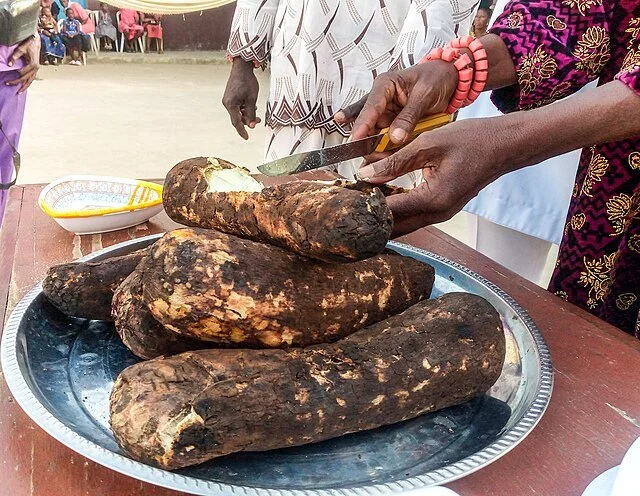
Iri Ji Ceremony. Frankincense Diala. CC BY-SA 4.0.
Traditionally held sometime between August and October, the New Yam Festival in Nigeria commemorates the beginning of the yam harvest season. The annual festival date varies from community to community, often following the lunar calendar or guidance from the elderly men in respective villages, including local chiefs or council members. A range of Igbo-speaking states take part in the tradition and celebrate based on their own customs; in Onitsha, for example, the Ofala Festival is held at the end of the New Yam Festival as a time when the King can commune with his people and offer blessings.
Across southeastern Nigeria, however, this period is generally celebrated as a feast dedicated to showing gratitude for bountiful yam harvests. It is marked by cultural dances, traditional music and local cuisine. Over three days, community members take part in cooking foods, from roasted yams to a variety of soups, which are eaten by friends and family gathered around the table together as they celebrate cultural heritage and each other’s well-being. Masquerade parades and rituals are another significant part of celebrating the day and recognizing local ancestors, including the Iri Ji (First-Fruits) Ceremony. According to this custom, before any yam is publicly eaten, the priests and the king must bless the new yams and offer them to the gods and ancestors.
3. The Mehregan Festival, Iran
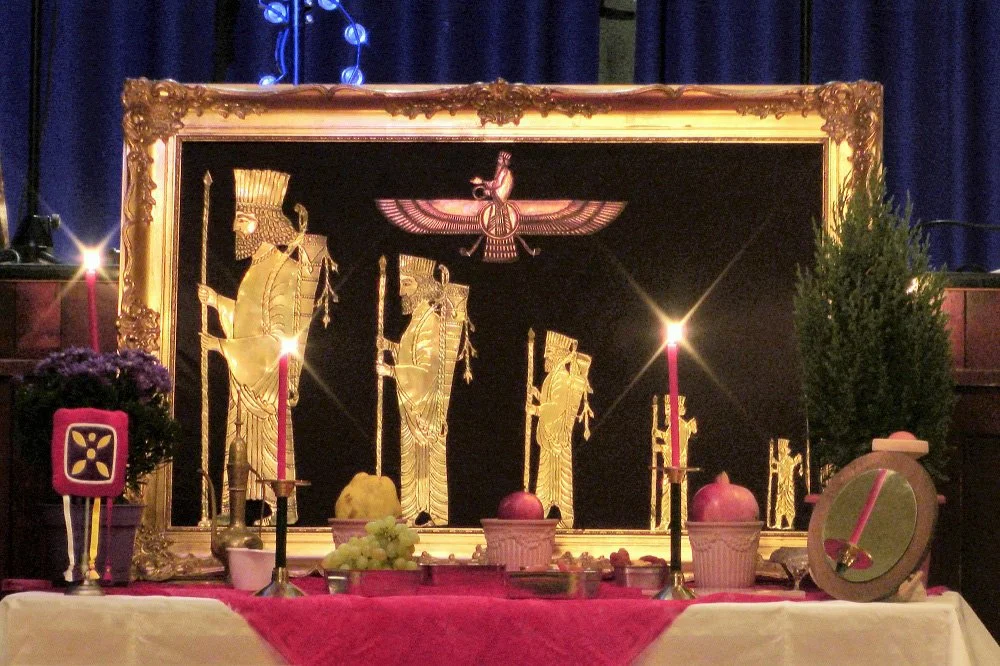
Traditional Mehregan table. PersianDutchNetwork. CC BY-SA 3.0.
On October 2, 2025, Persian communities both in Iran and across the world will celebrate the Mehregan Festival. Much like other Autumn traditions, the holiday follows its own cultural Persian solar calendar, annually falling on the 16th day of the seventh month, marking the start of Autumn. The day is dedicated to Mithra, the Zoroastrian deity of friendship, affection and love, but many utilize the day as a traditional way to give thanks for bountiful harvests. It is only one of the few festivals from the pre-Islamic era that continues to be celebrated, but it remains an important cultural holiday.
During Mehregan celebrations, participants decorate tables with vibrant tablecloths embellished with dry wild marjoram while wearing new clothes. Celebrants take part in a ceremony that includes their holy book, the Avesta, as well as a mirror and Sormeh Dan, an antimony, which are all surrounded by a variety of vegetables, fruits and flowers. To begin, family members pray in front of the mirror, then they drink sherbet and rub Sormeh Dan around their eyes as a good omen. Together, everyone embraces each other while wild marjoram, senjed seeds and sugar plum are thrown over their heads. In addition to this, local dishes and nuts are served, community members dance and sing and flower exhibitions are organized. Through this coming together, communities promote solidarity and express gratitude for not only their livestock and crops but nature as a whole.
4. The Crop Over Festival, Barbados
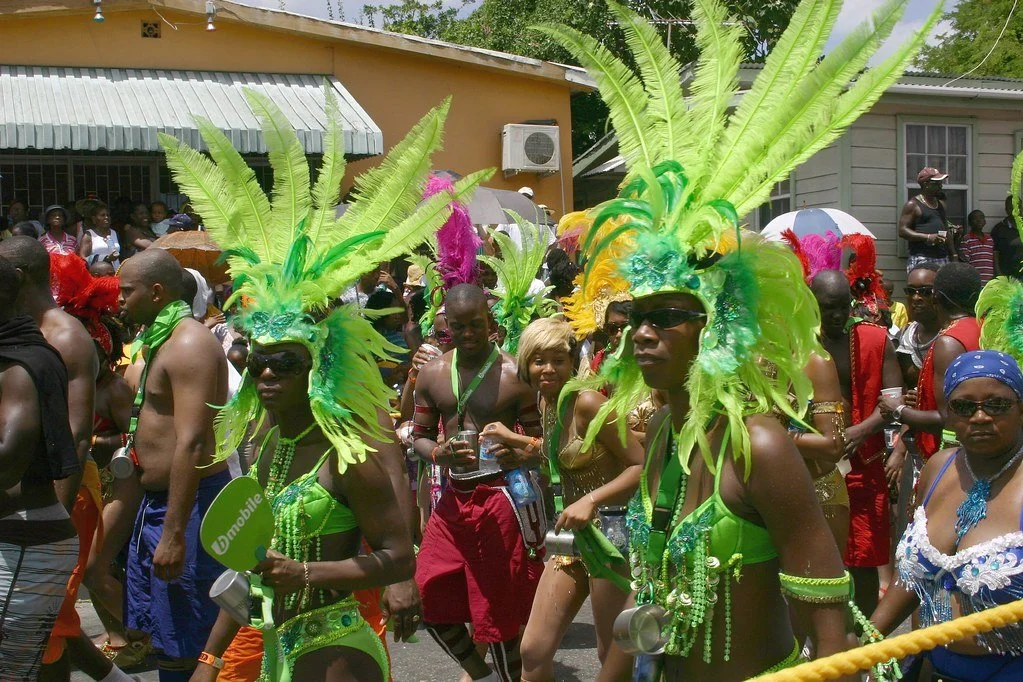
Crop Over parade. Hugh Fiske. CC BY-NC-ND 2.0.
Celebrated over a 3-month-long period, the Barbadian Crop Over Festival begins in May of every year and ends on the first Monday of August in a large celebration known as the Grand Kadooment. One of the oldest festivals in the western hemisphere, the tradition initially began in the 17th century as a way to celebrate the end of the plantations’ crop season with a harvest. During the Second World War, the custom got less attention, as plantations closed due to a decrease in the demand for sugar. However, it was given a full revival during the 1970s because of its historical significance in Barbadian culture.
Today, Crop Over is commemorated by vibrant parades, traditional rituals and colorful dances that honor Caribbean culture and Bajan heritage. At the beginning of these three months, the Opening Gala and Ceremonial Delivery of the Last Canes are held in a custom where the King and Queen of the Sugar Cane Crop Season are crowned based on their performances in cutting sugar cane. The ending Grand Kadooment is a large carnival parade in which bands, with members dressed in themed costumes, play lively music. The Designer of the Year prize is given based on the costume cohesion, and participants party with more music, eat a variety of food and swim in local beaches. Calypso music is another key element of celebrations, as community members gather in tents to compete for prizes and titles, including the Party Monarch and Sweet Soca, through different competitions.
5. Erntedankfest, Germany
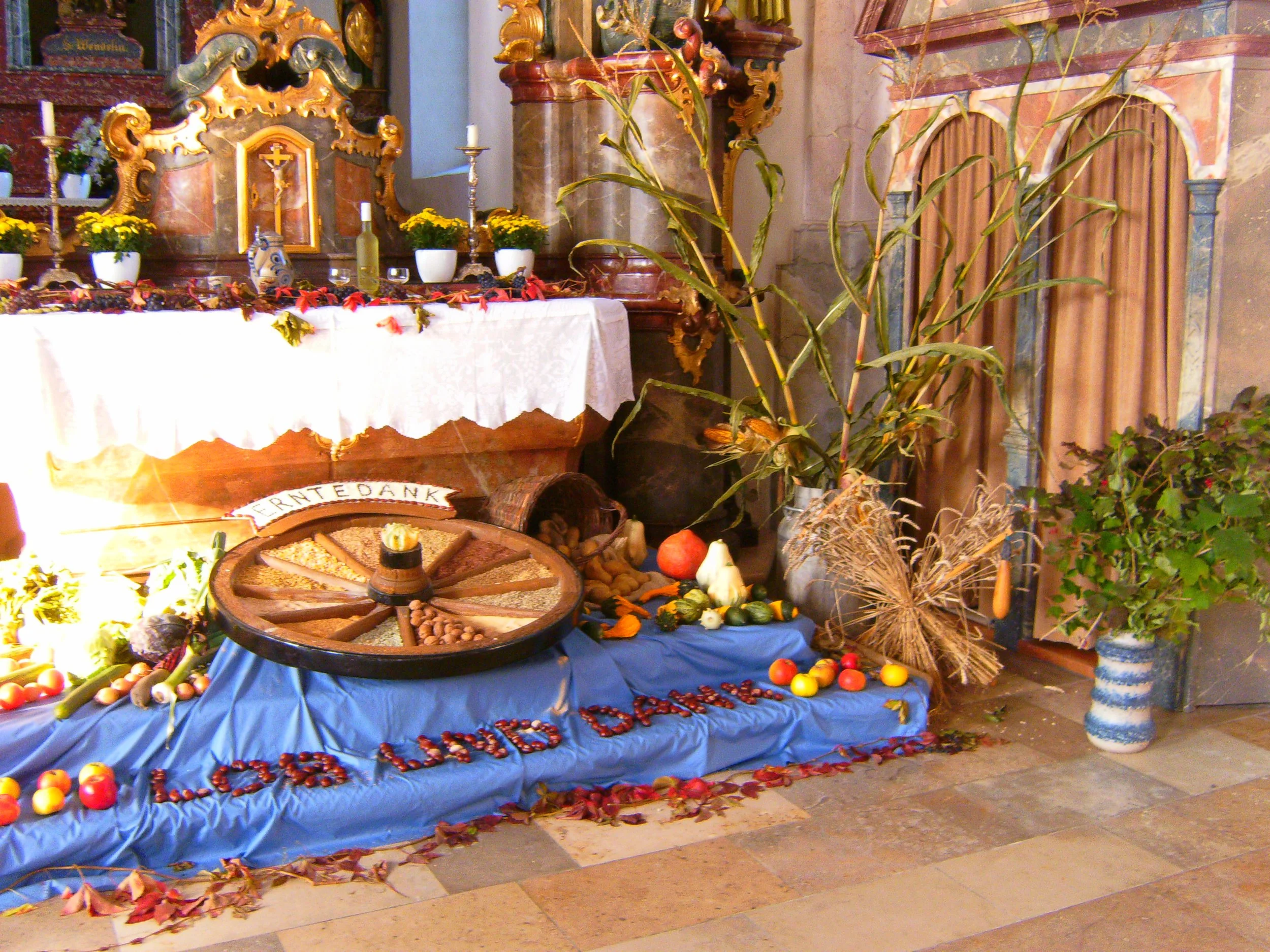
Erntedankfest church altar. Roland.h.bueb. CC BY 3.0.
Dating back to pagan times, Germany’s Erntedankfest is emblematic of the country’s deep agricultural history. The holiday was celebrated by German tribes on the autumn equinox as they shared food, gave thanks to nature and harvest gods and made offerings for future crop success. As Christianity spread over hundreds of years, new customs were also embraced, including the spread of produce in churches or thanking God for a good harvest and weather. Today, the holiday is held on the first Sunday of October, observed in rural, religious communities that retain many of these Christian elements.
This year, the festival will be held on October 5. Participating communities hold fairs, parades and, most notably, church services and processions. Church altars continue to be decorated with wheat constructed into large crowns surrounded by seasonal fruits and vegetables. Moreover, as part of showing gratitude for harvests, many areas also give food to the needy. Much like American Thanksgiving, family gatherings and meals are also a staple of the holiday, and large meals, filled with traditional German foods that include meat, potatoes and goose, are eaten at dinner. Parades with elaborately decorated floats and participants wearing traditional clothing are common as well, and communities end their celebrations through evening church services.
6. Lammas Festival, United Kingdom
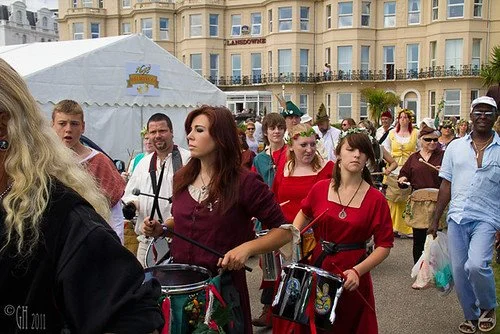
Lammas Festival. Graham Huntley. CC BY-NC-ND 2.0.
Lammas, also known as Lughnasadh, is observed in many areas throughout the United Kingdom, historically in Gaelic communities in Ireland and Scotland. Typically held on August 1, the day marks the first harvest of each year, an important point in the agricultural cycle and transition into seasons. Traditions date back to the pre-Christian pagan era, in which groups followed Celtic customs. At this time, community members would celebrate the harvest by offering bread, baked from newly harvested wheat, to deities as a symbol of gratitude. According to mythology, Lammas is also associated with Lugh, the god of skill and craftsmanship, who would give sacrifices to ensure the prosperity of the land.
In contemporary times, the festival now includes many Christian elements, including placing loaves of bread on church altars as a symbolic way of thanking God for the bounty. People across the United Kingdom use this day as a way to celebrate not just food and harvest but also to come together as a community. Many places host their own county fairs, harvest markets and agricultural exhibits that include festivities like traditional dancing and competitions. Lammas continues to be very spiritual for many people as well; pagan rituals and traditions are performed as a way to give thanks for harvests, including the bread breaking ritual, in which community members each take part in kneading dough that will be baked into bread shared by everyone, and the corn rituals, which are celebrations that include popcorn or cooking food with corn as the main ingredient.
Julia Kelley
Julia is a recent graduate from UC San Diego majoring in Sociocultural Anthropology with a minor in Art History. She is passionate about cultural studies and social justice, and one day hopes to obtain a postgraduate degree expanding on these subjects. In her free time, she enjoys reading, traveling, and spending time with her friends and family.