
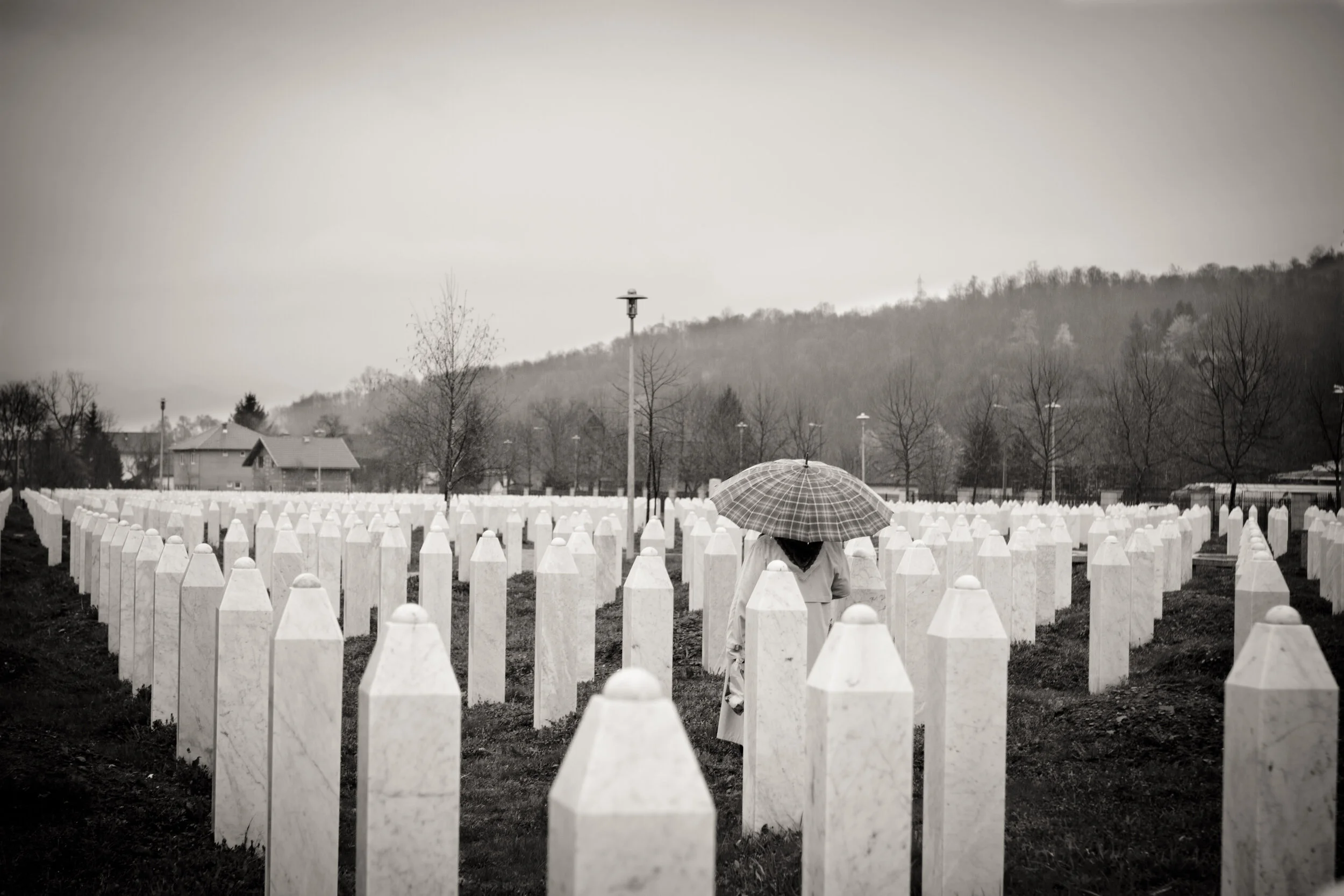
On July 11, mourners gathered for a memorial service at the Srebrenica Genocide Memorial in Potocari, Bosnia, to commemorate the 25th anniversary of the Srebrenica massacre. The service, which included the burial of nine recently identified victims, comes as many Bosnians continue to mourn the loss of loved ones during the massacre.
The commemoration was not limited to the region around Srebrenica. Sarajevo, the capital of Bosnia-Herzegovina, played sirens throughout the city at noon on July 11 in memory of the victims of the massacre.
Serge Brammertz, chief prosecutor of the U.N. International Criminal Tribunal for the Former Yugoslavia until its shutdown in 2017, spoke on the importance of honoring the massacre’s victims - and of labeling the event as a genocide, something many Serbs refuse to acknowledge.
“To truly honor the memory of those lost 25 years ago, and to recognize the victims and survivors with us today, it is our responsibility to keep fighting for justice and truth and to call what happened in Srebrenica by its name, genocide,” Brammertz said.
The Srebrenica massacre was the killing of more than 8,000 majority-Muslim Bosniak men and the mass deportation of Bosniak women and children from the area around the town of Srebrenica during the Bosnian War in 1995. Units of the Bosnian Serb army led by Gen. Ratko Mladic carried out the atrocities. The massacre was formally classified as a genocide by the United Nations in 2004.
In the 25 years that have followed, not all who call Srebrenica home have felt like the racial tensions which brought about the massacre have been addressed. According to a 2018 poll, 66% of Serbs in Republika Srpska, Bosnia-Herzegovina’s Serb-run entity, deny the genocide.
Almasa Salihovic, a survivor of the massacre, discussed in an interview with Al-Jazeera about how there are those within the community who celebrate July 11 as “the day of liberation of Srebrenica” from the Bosniaks.
“That's what scares me the most,” Salihovic said. “Even if we don't have incidents in Srebrenica like physical fights, we still have these hidden attacks which is far more worse … You have people who would still do the same thing tomorrow if they have the chance and if we don't speak even more loudly than we do now, then I'm really not sure where this is going.”
This misinterpretation of the genocide is not limited to the massacre’s sympathizers in Bosnia-Herzegovina. Shortly after the commemoration events began throughout the country, Serbian Prime Minister Ana Brnabic publicly referred to the genocide as one of several “misunderstandings from the past.” The Serbian government has previously apologized for the massacre, but has not yet recognized the event as a genocide.
For the time being, Bosnia-Herzegovina continues to urge the international community to counter any denial of genocide. The European Union, the United States and a number of other countries have officially recognized the massacre as a genocide, while Russia, notably, denies the event’s scale. Additionally, efforts to identify victims of the massacre within Bosnia-Herzegovina and abroad are ongoing.
Jacob Sutherland
is a recent graduate from the University of California San Diego where he majored in Political Science and minored in Spanish Language Studies. He previously served as the News Editor for The UCSD Guardian, and hopes to shed light on social justice issues in his work.