
Julia Kelley
As the amount of plastic entering our oceans soars, environmentalists turn to artificial intelligence as a way to identify debris, track waste dispersal and bolster community efforts in the fight against pollution.
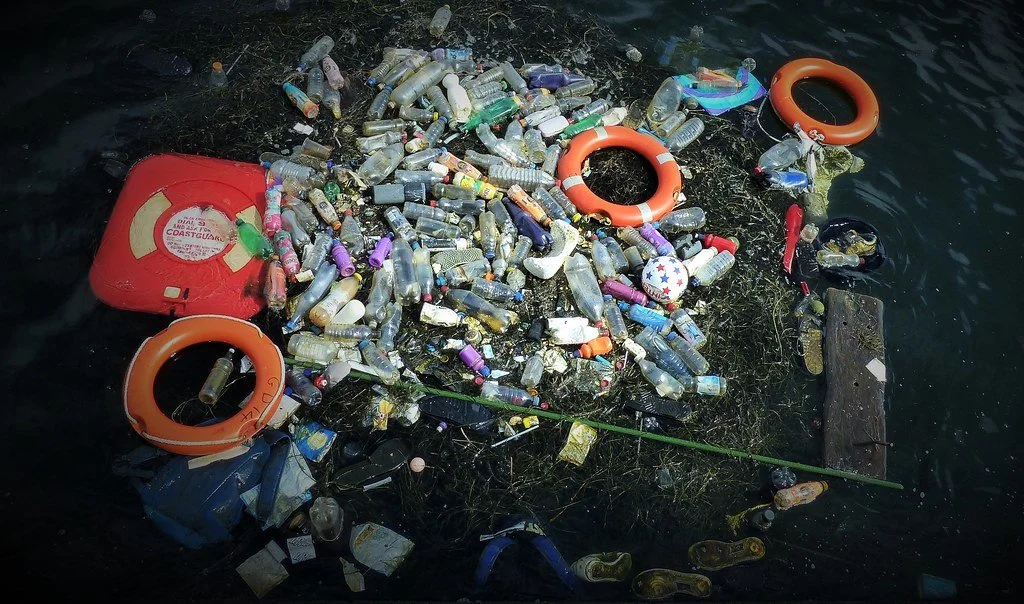
Plastic in the ocean. Charos Pix. CC BY-NC-SA 2.0.
Among the threats that Earth’s oceans face, pollution has become increasingly dire. Global plastic production has sharply risen over the past 70 years, from the world producing about two million tons in 1950 to currently producing over 450 million tons annually. In 2024, researchers estimated that 14 million tons of this waste enter our oceans annually, suggesting that by 2050, there will be a greater weight of plastic than fish. In a race for lasting solutions against dying marine life, toxic chemicals and unsustainability, scientists are utilizing technological advancements, such as artificial intelligence (AI), as an optimistic step forward.
Using the machine learning capacity of AI, organizations have found the ability to identify and track plastic pollution. For example, The Ocean Cleanup, a nonprofit focused on advancing technologies to rid the oceans of plastic, utilizes images taken from its previous oceanic missions to train AI object detection in a new algorithm. After learning how to identify debris, the technology can then successfully verify objects in water from photos taken on new missions. Not only is the algorithm able to recognize the waste, but researchers can use GPS coordinates on the images to create maps of plastic concentrations, giving them the ability to track pollution densities. Although the organization’s research was first established in 2021, in the years following, they have been able to strengthen their algorithm and apply larger AI models. In July 2025, the company began a collaboration with Amazon Web Services that will allow researchers to operate with the company’s AI, machine learning and cloud computing capabilities. Together, The Ocean Cleanup states a goal of removing 90% of floating ocean plastic by 2040. Another company, Clearbot, uses autonomous solar-powered boats to collect trash. The vessels operate using two different cameras, one for navigation and another for identifying waste when they pick up debris from the sea. Much like The Ocean Cleanup, this project relies on AI models trained through experiments and research to both distinguish found objects as pollution and to navigate the water by itself.
Moreover, AI can be used to broaden community efforts. Sustainable Coastlines is a New Zealand-based charity that has long had a mission of cleaning up waste along the coastlines of Aotearoa, New Zealand. It has also empowered communities to help take action through clean-up events on local beaches, educational programs, public awareness and, most notably, litter data collection. Their national database, Litter Intelligence, monitors and reports on debris, which helps communities collect data and gain information about how to clean up and prevent litter accumulation. In 2019, Sustainable Coastlines won Microsoft’s AI for Earth grant, a strategy to utilize AI technologies in protecting the planet. Through this support, the charity plans to develop its already extensive databases by using AI as a scaled-up approach. In a statement about this collaboration, co-founder Camden Howitt remarked, “Technology plays a critical role in ensuring that data collected by citizen scientists are recognized as credible and usable to inform decision-making worldwide,” and that the grant would put them “one step closer to taking this innovative program to the world.” Whether through artificial intelligence’s identification abilities or potential for database support, however, the progress made through organizations such as these provides hope for cleaner oceans.
Alongside the evidence of AI’s assistance in cleaning our oceans, the harmful environmental consequences of artificial intelligence pose a contrasting concern. From carbon dioxide emissions to excessive water consumption, it is important to understand the duality of AI and its impact on our planet. To explore more about this, see our article on AI and climate change.
GET INVOLVED:
Those looking to help support the clean-up of plastic pollution in Earth’s oceans can look into local action and contribution, such as joining community beach clean-ups or even lessening plastic use in one’s own home. On a larger scale, check out organizations aimed toward protecting the oceans and clearing out waste, including The Ocean Foundation, Oceana and the Ocean Conservancy, as well as the nonprofits mentioned here that are utilizing AI in their efforts: The Ocean Cleanup and Sustainable Coastlines.

Julia Kelley
Julia is a recent graduate from UC San Diego majoring in Sociocultural Anthropology with a minor in Art History. She is passionate about cultural studies and social justice, and one day hopes to obtain a postgraduate degree expanding on these subjects. In her free time, she enjoys reading, traveling, and spending time with her friends and family.